运动户外

Search documents
消费行业新股专题研究报告:情绪经济风起,消费新股涌动
Wanlian Securities· 2026-03-17 06:27
Investment Rating - The report maintains a "stronger than market" rating for the consumer sector [4]. Core Insights - The report highlights that the expansion of domestic demand policies and the structural optimization of the financing environment for the consumer sector present opportunities for new consumer stocks [2]. - The government is focusing on building a strong domestic market, with initiatives such as a 250 billion yuan special bond for consumer goods and 100 billion yuan in financial support to stimulate domestic demand [2][19]. - The rise of emotional consumption is driving the popularity of new consumer products, leading to a strong willingness among companies in the new consumption sector to go public [2][3]. Summary by Sections 1. Expansion of Domestic Demand Policies - The government has prioritized expanding domestic demand as a key task, with various measures aimed at increasing residents' income and consumption capacity [19]. - Local governments are also implementing collaborative policies to support consumption, enhancing the multi-layered policy framework [19][22]. 2. Investment Opportunities in New Consumption Sectors - **Trendy Toys**: The market is rapidly expanding, with leading companies going public. Factors such as rising disposable income and the popularity of emotional consumption are driving growth [3]. - **Gold and Jewelry**: This sector combines consumption and investment attributes, with high growth potential in traditional gold markets due to rising gold prices and cultural trends [3]. - **Cosmetics/Medical Beauty**: The beauty economy is creating a billion-dollar market, with domestic brands poised to benefit from the shift towards self-expression and emotional healing [3]. - **Outdoor Sports**: Increased health awareness and policy support are driving growth in outdoor sports, presenting investment opportunities in related brands [4]. - **Tea Drinks**: The market is steadily growing, but competition is intensifying, leading to industry differentiation [4]. - **Snacks**: The rise of bulk purchasing models is contributing to steady industry expansion, particularly in lower-tier markets [9]. - **Pets**: The emotional economy is driving growth in the pet market, with expectations for both volume and price increases [9]. 3. Market Dynamics and Trends - The report notes that the consumer sector is experiencing a structural shift, with a significant number of companies opting for listings in Hong Kong due to favorable conditions compared to A-shares [26]. - The IPO environment for consumer companies in mainland China has become more challenging, leading to a notable increase in listings in Hong Kong [26][31]. - The report emphasizes the importance of high-quality consumer enterprises in stimulating market vitality and releasing domestic demand potential [25][26].
2025中国出海新锐消费品牌榜单报告-飞书点跃&益普索
飞书点跃&益普索· 2026-02-27 06:35
Investment Rating - The report does not explicitly state an investment rating for the industry Core Insights - The industry is transitioning from a "selling" model to a "branding" model, with supply chain stability, compliance capabilities, and AI applications becoming new thresholds for entry [6] - Consumer perception of Chinese brands is mixed, with 45% of global respondents reporting improved impressions and 61% including them in their top 5 preferences, although trust barriers remain, especially in high-risk categories [6] - The D-MES model reveals that leading brands are building systematic capabilities across digitalization, mental influence, product innovation, and commercialization, rather than relying solely on single hit products [6] - Categories are showing varied performance, with "powered" categories (consumer electronics, home appliances) accounting for nearly half, while scenario-based categories (sports and outdoor) are rising, and trend-based categories (beauty and fashion) are declining [6] - Emerging markets are becoming growth engines, with 80% of Latin American consumers and 73% of Middle Eastern and African consumers favoring Chinese brands, significantly higher than the 62% in the U.S. [6] - AI is deeply integrated into business operations, with leading brands achieving a 15% increase in click-through rates, a 10% increase in conversion rates, and a 30% reduction in defect rates through AI applications [6] Summary by Relevant Sections Research Background - The report is a collaboration between Meetsocial and Ipsos, leveraging diverse data sources including consumer surveys, e-commerce platform data, and social media sentiment [3] - The methodology includes the D-MES model, assessing brand capabilities across four dimensions [3] Scope and Boundaries - The focus is on consumer brands going global, particularly in sectors like consumer electronics, home appliances, personal care devices, sports and outdoor, beauty and skincare, fashion, and home goods [4][5] - The geographical analysis includes both mature markets (North America, Europe) and emerging markets (Latin America, Middle East and Africa, Southeast Asia) [5] Key Data Highlights - 45% of global respondents reported an improved impression of Chinese brands [9] - 61% of global respondents included Chinese brands in their top 5 preferences [9] - 80% of Latin American consumers favor Chinese brands [9] - 73% of Middle Eastern and African consumers favor Chinese brands [9] - Nearly 50% of top brands are in high-ticket categories like consumer electronics and home appliances [10] - A 30% reduction in defect rates was achieved through AI quality inspection [10]
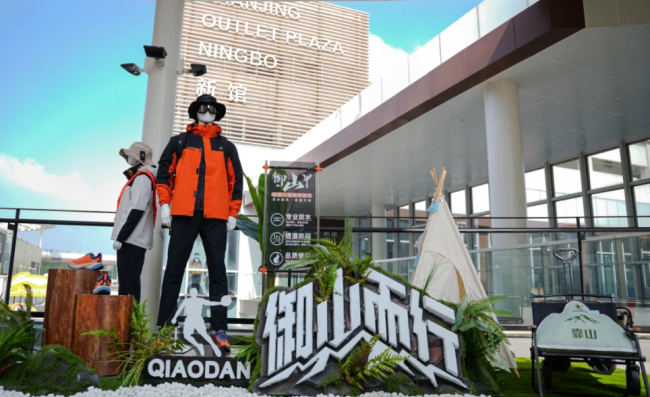
运动赛道分化加剧:始祖鸟们狂奔,耐克们承压丨消费参考
2 1 Shi Ji Jing Ji Bao Dao· 2026-02-26 04:45
Core Insights - The outdoor sports market is experiencing increasing polarization, with companies like Amer Sports showing significant growth while others like Li Ning and Anta are struggling [1][3][5]. Financial Performance - Amer Sports reported a 27% year-on-year revenue increase to $6.566 billion for the fiscal year ending December 31, 2025, with adjusted net profit rising to $545 million from $236 million in 2024 [1][2]. - In Q4 2025, Amer Sports' revenue grew by 28% to $2.101 billion, with adjusted net profit reaching $176 million, up from $90 million in the same quarter of 2024 [2]. - The Greater China region was a key growth driver for Amer Sports, with annual revenue increasing by 43.4% to $1.86 billion, and Q4 growth reaching 41.8% [2]. Market Comparison - In contrast, Li Ning's sales in Q4 2025 showed a low single-digit decline across all channels, with offline retail and wholesale channels experiencing mid-single-digit declines [3]. - Anta's main brand retail revenue also saw a low single-digit decline, while Nike's sales in China dropped by 16% to $1.423 billion [4]. Market Dynamics - The disparity in performance between Amer Sports and its competitors may be attributed to the resilience of the high-end consumer market, represented by brands like Arc'teryx, compared to the mid-range market [5]. - The outdoor sports market is perceived to have substantial growth potential, prompting increased investments from competitors like Nike and Li Ning in this segment [6][7].


纺织服装海外跟踪系列六十九:亚玛芬2025年收入增长27%,2026管理层指引收入增长16-18%
Guoxin Securities· 2026-02-25 13:19
Investment Rating - The investment rating for the industry is "Outperform the Market" (maintained) [1] Core Insights - Amer Sports is projected to achieve a revenue growth of 27% in 2025, reaching $6.566 billion, with a further guidance of 16-18% growth for 2026 [2][3] - The growth is driven by strong performance from brands like Arc'teryx and Salomon, as well as the DTC (Direct-to-Consumer) channel, particularly in the Greater China region [3][4] - The company has shown significant improvements in profitability, with adjusted net profit expected to rise to $545 million in 2025, up from $236 million in 2024 [2][7] Summary by Sections Financial Performance - For the fiscal year 2025, Amer Sports reported a revenue increase of 27% to $6.566 billion, exceeding Bloomberg consensus expectations [3][4] - The adjusted net profit for 2025 is projected to be $545 million, reflecting a substantial increase from the previous year's $236 million [2][7] - The fourth quarter of 2025 saw a revenue increase of 28% to $2.101 billion, with adjusted net profit reaching $176 million [2][7] Business Segments - Technical Apparel segment revenue grew by 30% to $2.856 billion, driven by strong performance in footwear and women's products [5][24] - Outdoor Performance segment revenue increased by 31% to $2.404 billion, with significant growth in DTC channels [5][25] - Ball & Racquet segment revenue rose by 13% to $1.307 billion, benefiting from strong global sales momentum [5][26] Regional Performance - The Greater China region experienced a remarkable revenue growth of 43.4% in 2025, reaching $1.862 billion [7][26] - Other Asia-Pacific regions saw a 50.7% increase in revenue, while North America and EMEA regions also reported double-digit growth [7][26] Management Guidance - For 2026, management expects revenue growth of 16-18%, with an operating profit margin of 13.1-13.3% [3][55] - The guidance reflects confidence in the outdoor sports industry and the operational capabilities of the company's brands [3][59] Investment Recommendations - The company's performance has surpassed both Bloomberg consensus and previous guidance, indicating strong momentum in key markets and segments [3][59] - The anticipated growth in 2026 is expected to lead the industry, showcasing the company's confidence in its brand operations and market potential [3][59]
纺织服装海外跟踪系列六十九:亚玛芬2025年收入增长27%,2026管理层指引收入增长16-18%
Guoxin Securities· 2026-02-25 13:18
Investment Rating - The investment rating for the industry is "Outperform the Market" (maintained) [1] Core Insights - Amer Sports is projected to achieve a revenue growth of 27% in 2025, reaching $6.566 billion, with a further guidance of 16-18% growth for 2026 [2][3] - The strong performance is driven by brands like Arc'teryx and Salomon, direct-to-consumer (DTC) channels, and significant growth in the Greater China region [3][4] - The company has shown improvements in gross margin and operating profit margin, with a notable reduction in financial costs due to optimized debt structure [3][14] Summary by Sections Financial Performance - For the fiscal year 2025, revenue increased by 27% year-on-year to $6.566 billion, with adjusted net profit rising to $545 million from $236 million in 2024 [2][7] - The fourth quarter of 2025 saw a revenue increase of 28% year-on-year to $2.101 billion, with adjusted net profit reaching $176 million [2][7] - Gross margin improved by 2.2 percentage points to 57.6% for the year, with a further increase in the fourth quarter [14] Business Segments - Technical Apparel segment revenue grew by 30% to $2.856 billion, with a strong performance from Arc'teryx [24] - Outdoor Performance segment revenue increased by 31% to $2.404 billion, driven by Salomon's DTC channel growth [25] - Ball & Racquet segment revenue rose by 13% to $1.307 billion, with Wilson brand showing double-digit growth [26] Regional Performance - The Greater China region experienced a revenue increase of 43.4% to $1.862 billion, with a strong fourth quarter growth of 41.8% [26] - North America revenue grew by 14.3% to $2.126 billion, while EMEA saw a 19.3% increase to $1.806 billion [26] Management Guidance - For 2026, management expects revenue growth of 16-18% and an operating profit margin of 13.1-13.3% [55] - The guidance reflects confidence in the outdoor sports industry and the operational capabilities of the company [59]
萨洛蒙加速,始祖鸟放缓,母公司亚玛芬财报发布后股价跌了
Nan Fang Du Shi Bao· 2026-02-25 11:45
Core Viewpoint - Amer Sports reported a 27% year-on-year revenue growth to $6.566 billion for the fiscal year ending 2025, indicating sustained high growth momentum despite a high base [2]. Financial Performance - The fourth quarter revenue increased by 28% to $2.101 billion, slightly down from a 30% growth in the third quarter [2]. - Net profit attributable to shareholders surged over seven times to $132 million in the fourth quarter, with adjusted net profit rising 94% to $176 million [2]. - For the full year, operating profit grew by 49% to $702 million, and adjusted operating profit increased by 45% to $838 million, with an operating margin improvement of 160 basis points to 10.7% [2]. Segment Performance - The technical apparel segment, led by Arc'teryx, remains the core growth driver, with a 30% revenue increase to $2.856 billion, accounting for nearly 43% of total revenue [4]. - The outdoor sports equipment segment, including Salomon, saw a 31% revenue growth to $2.404 billion, making it the second-largest revenue source, representing about 36.6% of total revenue [5]. - Salomon's revenue surpassed $2 billion for the first time, achieving a 35% growth [5][7]. Geographic Performance - The Asia-Pacific region (excluding Greater China) led growth with a 50.7% increase to $772 million, while Greater China grew by 43.4% to $1.861 billion [9]. - The Americas and EMEA regions experienced more moderate growth, with increases of 14.3% and 19.3%, respectively [9]. Market Dynamics - The Chinese market is identified as a significant growth driver, contributing 45% to Arc'teryx's global revenue [10]. - However, the competitive landscape in China is intensifying, with local brands and international competitors increasing their presence [10]. - Despite the positive growth indicators, the company's stock fell over 5% following the earnings report, reflecting investor caution regarding future growth prospects [10].

冬奥赛场内外“商战”暗涌 运动户外品牌展开全方位竞逐
Zheng Quan Ri Bao Wang· 2026-02-14 03:34
Group 1 - The 25th Winter Olympics in Milan marks the largest participation of Chinese athletes and teams in an overseas Olympic event, highlighting the competitive landscape for sports brands [1] - Anta Group provides equipment support for 13 Chinese national teams, while FILA supports multiple countries, showcasing the global reach of Chinese sports brands [1] - Li Ning, as an official partner of the Chinese Olympic Committee, has developed innovative outfits for the Chinese sports delegation, emphasizing the blend of technology and design in sports apparel [2] Group 2 - The competition among sports brands extends to technological advancements in equipment, with companies like Adidas and Nike introducing innovative features to enhance athlete performance [3] - The collaboration between brands and athletes is becoming increasingly sophisticated, with different brands sponsoring various aspects of an athlete's gear, reflecting a complex commercial landscape [3] - The commercial value of athletes is multi-dimensional, with their visibility and expertise enhancing brand image and exposure, indicating a competitive spectrum in the global sports branding arena [4]


运动户外赛道高速增长,杉杉奥莱突围引领“山系”热潮
Sou Hu Wang· 2026-02-04 07:53
Group 1 - The outdoor sports market is experiencing explosive growth, driven by the rise of "mountain lifestyle" and "urban outdoor" trends among young consumers, with the outdoor sports sector leading e-commerce growth at 268% year-on-year during the 2025 Double 11 shopping festival [1][3] - Consumers are increasingly seeking specialized performance, design aesthetics, and scene adaptability in outdoor products, leading to a diverse and professional demand for equipment across various outdoor activities [3][5] - The company has successfully captured market trends by adjusting its brand portfolio and optimizing the layout of outdoor sports categories, creating an immersive shopping experience to build a differentiated advantage in competition [5][6] Group 2 - The company focuses on three key aspects: specialization, quality, and scene creation, continuously introducing leading outdoor brands and creating high-recognition offline shopping spaces to overcome brand homogenization in the outlet industry [6][8] - The Harbin outlet has introduced a high-end trail running store, while the Ningbo outlet features popular brands, establishing flagship stores to enhance consumer trust through high brand concentration [8][10] - By concentrating brands and designing experiential spaces, the company reduces consumer choice costs and amplifies attractiveness through brand synergy, becoming a core traffic entry point for stores [10] Group 3 - The company positions itself as a "brand growth partner, regional consumption upgrade engine, and consumer quality of life service provider," building a value bridge for multiple stakeholders in a highly competitive outlet industry [11] - The company helps brands like Salomon and Kelon penetrate the mass market quickly, achieving scalable sales growth while deepening brand recognition through experiential marketing [11] - The rise of the outdoor sports sector reflects not only a shift in consumer trends but also a reconstruction of the commercial ecosystem, with the company leading the promotion of the "mountain lifestyle" and driving high-quality industry development [13]
2025年度消费榜单:从指数看趋势,解码消费新浪潮
值得买科技· 2026-01-31 09:39
Investment Rating - The report does not explicitly state an investment rating for the industry Core Insights - The report highlights the dual focus of consumer behavior on "rational health" and "emotional satisfaction" in the food and beverage sector, indicating a shift towards higher demands for nutritional value and product traceability while also catering to emotional needs through enjoyable and affordable snacks [40][54] - The rise of "active health" consumption among the elderly demographic is driving growth in categories such as smart monitoring devices and high-purity nutritional products, with brands like 诺特兰德 and 鱼跃 leading the way [46] - The integration of AI and innovative product forms is creating significant brand differentiation in the 3C digital sector, with companies like Apple and Huawei establishing strong market positions through advanced technology [19][21] Summary by Sections Annual Data Overview - The report provides a comprehensive overview of consumer trends across 12 key industries, including 3C digital, food and fresh produce, home appliances, and more [11][10] Key Industry Observations - **Food and Fresh Produce**: The sector is characterized by a focus on essential goods like grains and fresh foods, with brands like 伊利 and 蒙牛 emphasizing transparency and nutritional value [15][40] - **3C Digital**: Brands are leveraging AI and innovative designs to create competitive advantages, with Apple and Huawei leading the brand rankings [19][21] - **Home Appliances**: The industry is moving towards smart home solutions, with brands like 海尔 and 美的 focusing on health and technology integration [28][29] - **Sports and Outdoor**: Domestic brands like 安踏 and 李宁 are capitalizing on the outdoor trend, merging functionality with aesthetic appeal [22][24] - **Beauty and Personal Care**: The sector is shifting towards efficacy-driven products, with brands like 雅诗兰黛 and 珀莱雅 focusing on scientific formulations [31][33] - **Pet Products**: The market is evolving towards premium offerings, with brands like 麦富迪 and 蓝氏 focusing on high-quality ingredients and innovative products [25][26] - **Automotive**: The industry is experiencing a transition towards electric and smart vehicles, with brands like 比亚迪 and 丰田 leading the charge [37][39] - **Healthcare**: The focus is on proactive health solutions for the elderly, with brands like 诺特兰德 and 鱼跃 providing comprehensive health management products [46][48] Annual Hot Categories - The report identifies key hot categories for the year, including grains and seasonings, mobile communications, and home appliances, with respective heat index scores indicating consumer interest [17][15] Brand Rankings - The report lists top brands across various categories, highlighting their annual heat index scores, which reflect consumer engagement and popularity [18][21][24][33][35][39][41][48] Consumer Trends - The report outlines emerging consumer trends such as the "atmosphere economy," where consumers seek to create immersive experiences through their purchases, and the shift towards outdoor lifestyles as a form of identity expression [68][71]





穿越“K型”周期,解码运动户外品牌的增长密码
Di Yi Cai Jing Zi Xun· 2026-01-29 13:07
Core Insights - The outdoor sports industry is demonstrating strong growth potential despite macroeconomic challenges, driven by a shift towards health economy, emotional connections, and technological innovation [1][5][36] Group 1: Industry Trends - The industry is transitioning from traditional retail to a new paradigm focused on health, emotional connections, and technology [1] - The growth of the outdoor sports sector is supported by favorable policies and urban development strategies, with cities increasingly branding themselves around sports and outdoor activities [5][6] - The industry is characterized by a strong external influence, with products like camping gear creating a complete camping economy [6] Group 2: Consumer Behavior - The outdoor sports market has a user base of 400 million, with a penetration rate of one-third of the national population, indicating significant growth potential compared to developed countries [7] - The industry is expected to achieve a compound annual growth rate (CAGR) of 15.5% over the next five years, driven by increased penetration among existing users rather than population growth [7] - Consumer demand is evolving towards specialization, technology integration, and quality, with a notable rise in high-end and value-for-money products [8] Group 3: Market Segmentation - The current consumer market is experiencing a K-shaped differentiation, where the upper segment continues to thrive while the lower segment faces challenges [11] - Growth in the outdoor sports sector is primarily driven by three demographic groups: women, middle-aged and elderly consumers, and youth, each with distinct consumption patterns and preferences [11][12] - The market is witnessing a dual trend where luxury brands are shifting online while maintaining a strong offline presence, indicating a complex consumer landscape [12][13] Group 4: Investment Insights - The valuation logic of the outdoor sports industry is shifting from traditional retail metrics to a focus on health economy factors, emphasizing direct-to-consumer sales, supply chain technology, and community building [14][16] - Investors are increasingly interested in brands that demonstrate resilience, community engagement, and a clear product philosophy, as these factors contribute to long-term growth [19][18] - The integration of AI and technology is becoming essential for brands to enhance operational efficiency and consumer engagement [32][34] Group 5: Marketing Strategies - Successful brands in the future will focus on niche markets, innovation, and creating strong mental associations with their products [29] - Brands should prioritize user engagement and community building over sheer scale, focusing on enhancing customer lifetime value [30] - The marketing approach must adapt to dynamic consumer profiles and leverage multiple channels for effective communication [31]