Sketch

Search documents
未知机构:弘则研究科技国内外AI应用冰火两重天模型和应用的矛盾加剧发布于2026年-20260120
未知机构· 2026-01-20 02:40
Summary of Key Points from the Conference Call Industry Overview - The report focuses on the structural changes in the global AI industry as of early 2026, particularly highlighting the divergence in AI application markets between China and the United States [1][1]. Macro Trends and Market Divergence - The AI application market in China and the U.S. is experiencing a stark contrast, described as "ice and fire" [1][1]. - U.S. software stocks have significantly declined since January 2026, primarily due to concerns raised by Anthropic's release of an Agent product capable of fully automated workflows, which has disrupted market perceptions of software development costs and value [1][1]. AI Application Ecosystem - The Chinese AI application ecosystem is more inclined towards "closed-loop integration," with leading companies leveraging their own traffic and ecosystems to rapidly implement Agent functionalities [2][2]. - Since August 2025, upstream computing power (chips, devices, storage) has shown strong performance, while downstream application sectors (internet, software companies) have exhibited weakness [2][2]. Technology Evolution and Model Landscape - Basic models are entering a linear growth phase, with the first tier consisting of Anthropic, OpenAI, and Gemini, while the second tier includes Grok, Zhiyu, and Kimi [3][3]. - Domestic models like Tongyi Qianwen are lagging, while Deepseek V4 is expected to challenge the first tier [3][3]. - There has been no breakthrough leap in capabilities, but overall abilities are steadily improving [4][4]. - Multimodal capabilities are becoming critical, with models like Google’s NanoBanana enhancing Agent performance in various applications [4][4]. - Vertical models are shifting towards a "post-training + reinforcement learning" approach, internalizing expert reasoning rather than relying on external retrieval systems [4][4]. Comparison of Domestic and International AI Applications - In China, companies like ByteDance, Tencent, and Alibaba are integrating AI into their ecosystems effectively, with Alibaba's Tongyi Qianwen being recognized as the first true consumer-facing Agent [5][5]. - In contrast, international players like Anthropic focus on programming workflows, while OpenAI and Google are still primarily chatbot-oriented, lacking in task planning capabilities [5][5]. Investment Logic and Recommendations - Upstream sectors such as storage (DRAM/HBM/SSD), semiconductor equipment, and power equipment are expected to benefit from the shift in AI inference demand and TSMC's planned capital expenditure increase of 30%-40% in 2026 [6][6]. - Platform companies that integrate ecosystems, models, and traffic are highlighted, with Alibaba and Tencent being key players in China [6][6]. - Recommendations for terminal scene companies include Meitu, Roblox, and Reddit, while ToB tool companies like Adobe and Figma are noted for their collaborations with large model companies [7][7]. Core Judgments and Outlook - The year 2026 is termed the "third year of the Agent," with high market premiums but uncertain outcomes [7][7]. - The core competitiveness of Agents is shifting from "general dialogue" to "automated workflow execution," particularly in vertical fields like programming and healthcare [7][7]. - Domestic AI applications are advancing rapidly in consumer markets due to closed ecosystems, while international markets are more disruptive in B2B workflow automation [7][7]. - Storage demand is transitioning from training to inference, with SSDs expected to become the foundational infrastructure for the next generation of Agents [7][7]. - The document emphasizes a critical turning point in the AI industry from "model competition" to "application implementation," with clear divergence in paths between China and the U.S. [7][7].


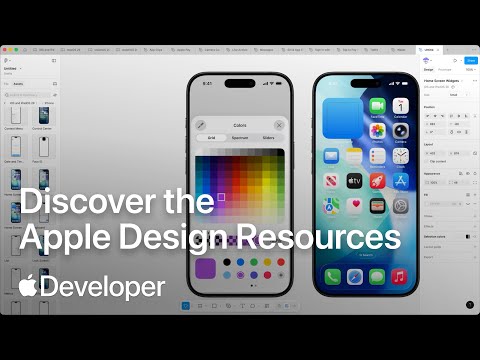
Discover the Apple Design Resources
Apple Developer· 2026-01-06 17:00
The Apple Design Resources are really a collection of different materials that we provide to people for designing apps. So that includes things like UI kits or design libraries that are made for Sketch or Figma, hardware bezels, so that you can put screenshots of your app inside of device frames and then use that to present your work. We also have tools like Icon Composer, and SF Symbols.Our intention behind the design resources is to make it really easy for someone who wants to create an app to just grab t ...


百惠金控:2025年最大科技股IPO出炉 投资Figma潜力与挑战并存?
Sou Hu Cai Jing· 2025-08-26 07:55
Core Viewpoint - Figma's IPO has generated significant interest, with an initial offering price of $33 per share, highlighting its disruptive cloud-based design collaboration platform that has transformed product design processes [1][3] Company Overview - Figma operates a cloud-based design collaboration tool that integrates workflows among designers, product managers, and engineers, enhancing team collaboration and efficiency [3] - The platform's "Google Docs-style" collaboration allows real-time editing and feedback, significantly reducing the time from concept to execution [3] Financial Performance - Figma has demonstrated exponential revenue growth in recent years, maintaining a healthy gross margin due to its "Product-Led Growth" strategy, where users start with free trials and convert to paid subscriptions [4] - Despite high growth, Figma is currently operating at a loss due to substantial investments in marketing, R&D, and administration, raising questions about its future profitability [4] Market Potential - The digital transformation trend presents a vast market opportunity for Figma, as efficient design collaboration is essential across various sectors, including software development and marketing [4] - Figma's user retention is strong, as transitioning design processes to its platform incurs high switching costs, leading to predictable annual recurring revenue (ARR) [4][5] Competitive Landscape - Figma's high IPO valuation reflects market expectations for its future growth, with its stock price recently dropping to around $70 per share, indicating the need for sustained performance to justify its valuation [7] - Competition from major players like Adobe poses a significant threat, as they have extensive user bases and resources that could impact Figma's market position [7] Economic Environment - The current macroeconomic climate, characterized by rising interest rates and slowing growth, may lead companies to cut software budgets, potentially affecting Figma's customer acquisition [7] Investment Outlook - Figma is viewed as a company with disruptive technology and strong growth potential, but its high initial valuation suggests that investors should approach with cautious optimism [8] - A more rational investment strategy may involve considering Figma as a growth asset within a diversified portfolio, focusing on long-term growth rather than short-term gains [8]


X @The Wall Street Journal
The Wall Street Journal· 2025-08-11 21:44
Tony Hale Hale discusses his new film “Sketch,” being a girl dad, crafting for friends and what it’s like to be an empty-nester https://t.co/pBEmNMEYnm ...
X @The Wall Street Journal
The Wall Street Journal· 2025-08-11 12:37
Tony Hale Hale discusses his new film “Sketch,” being a girl dad, crafting for friends and what it’s like to be an empty-nester https://t.co/dH9wLFxkCs ...
专家分享:Figma竞争优势、设计协作平台市场展望
2025-08-05 03:20
Summary of Figma Conference Call Industry Overview - The design collaboration platform market is rapidly expanding, driven by increasing user experience demands across various industries, including technology, manufacturing, and finance [4][11]. - AI technology is significantly impacting the design collaboration platform landscape, enhancing automation and providing optimization suggestions through data analysis [4][13]. Company Insights: Figma - Figma's competitive advantage lies in its highly integrated and real-time collaboration capabilities, addressing inefficiencies in traditional design software like Sketch and Photoshop [2][5]. - The platform supports multi-device and multi-environment usage, allowing seamless collaboration across different operating systems [2][3]. - Figma's browser-based rendering technology is leading-edge, achieving a graphic rendering engine that is among the best globally, making it difficult for competitors like Adobe to bypass its patent protections [9][10]. Market Position - Figma has captured nearly 80% of the market share in the design collaboration space, significantly reducing the market presence of traditional tools like Sketch, XD, and Photoshop [11][21]. - In China, Figma faces challenges due to a lack of localized operations and competition from domestic players, but it still maintains strong global appeal [11][12]. Technological Advantages - Figma employs a container nesting logic that aligns closely with front-end code structures, facilitating seamless integration and reducing the workload for front-end developers [19][20]. - The platform's design outputs are more easily understood by AI, resulting in higher quality code generation compared to traditional design tools [20]. Community and Ecosystem - Figma's online platform fosters an active community, simplifying the process of creation, sharing, and collaboration compared to traditional local software [7]. - The platform's openness allows companies to develop plugins tailored to specific business needs, enhancing its ecosystem [8]. Future Prospects - Figma is expanding its reach into product management and development teams, indicating potential for further market share growth [21]. - The company is also exploring AI capabilities to enhance its offerings, positioning itself to compete with content generation platforms like Canva [13][14]. Competitive Landscape - Adobe remains competitive in specific areas such as 3D modeling and complex vector rendering, where Figma has limitations [22]. - Adobe's previous attempt to acquire Figma for $20 billion highlights the competitive threat Figma poses to established players [23]. Investment Consideration - Figma is viewed as a leader in the design collaboration platform sector, with significant innovation and market performance, making it a worthy consideration for investors [24][25].
“CEO一登录,网站就崩了”,工程师紧急排查:AI写的Bug,差点甩锅给老板!
猿大侠· 2025-08-02 04:12
Core Viewpoint - The incident at Sketch.dev highlights the hidden risks associated with AI-generated code, where seemingly correct code can introduce significant bugs due to subtle changes during code refactoring [4][5][16]. Group 1: Incident Overview - Sketch.dev experienced a series of mini outages starting on July 15, attributed to CPU spikes and slow system responses [6][7]. - The initial investigation revealed that the outages coincided with the CEO logging into the system, leading to the temporary suspension of the CEO's account [3][9]. - Further analysis traced the root cause to a logic error introduced during a large-scale code refactoring, which involved AI-generated code [13][16]. Group 2: Technical Analysis - The problematic code was a result of moving code from one file to another, where a critical change from "break" to "continue" led to an infinite loop [15][16]. - The incident exposed the inadequacies of current tools in detecting minor code changes, particularly when large modifications obscure small but significant errors [16][18]. - AI-generated code is more prone to such errors due to its method of rewriting rather than directly copying and pasting, which increases the likelihood of transcription mistakes [18][22]. Group 3: Preventive Measures - To mitigate future risks, Sketch.dev has implemented a "clipboard" feature that allows the AI to copy and paste code, aiming to preserve the original logic [23]. - The team plans to integrate more advanced code formatting tools to ensure proper indentation and structure when pasting code [23][24]. - There is a call for Git to enhance its capabilities in detecting cross-file changes, which would significantly improve error detection in AI-generated code [24]. Group 4: Broader Implications - The incident at Sketch.dev is not isolated, as other developers have reported similar issues with AI tools leading to significant operational failures [25][28]. - A recent survey indicated that 66% of developers frequently encounter AI-generated code that is almost correct, leading to increased debugging time [35][36]. - Trust in AI tools remains low, with only 3% of developers expressing high confidence in their reliability, while 46% explicitly distrust them [37][39].

学什么技术好有前途?这几个方向让你工资翻倍还不内卷
Sou Hu Cai Jing· 2025-05-06 02:46
Core Insights - The job market is increasingly challenging, but there are promising IT career paths for individuals with no prior experience [1] Group 1: IT Career Opportunities - Python is highlighted as an accessible programming language, with many companies hiring Python developers, especially for data analysis roles, offering an average salary increase of 2K for those who know Python [3] - Front-end development is in high demand, with frameworks like Vue and React being popular among developers, leading to a competitive job market where many graduates quickly secure positions [3] - Data analysis skills using tools like Pandas and Tableau are becoming essential across various industries, including retail, with a notable gender representation in the field [3] - Cybersecurity roles are increasingly valuable, with professionals in penetration testing and vulnerability assessment commanding salaries upwards of 30K after three years of experience [3] - UI design is another entry point into the IT industry, with tools like Figma and Sketch being user-friendly for those with a good aesthetic sense [3] Group 2: Training and Education - The importance of selecting the right training institution is emphasized, with recommendations for programs that provide hands-on project experience and accessible instructor support [4] - Completing practical projects is crucial for job applications, as employers prefer to see a portfolio of work rather than theoretical knowledge [4] - English proficiency is not a barrier for entering programming, as the required vocabulary is basic and many development environments offer auto-completion features [4] Group 3: Market Trends - The current job market for IT roles is more equitable compared to other industries, as success is primarily determined by skills rather than connections [5] - The demand for IT skills continues to grow, making it a viable option for career transition despite increased competition compared to previous years [5]