
SmolVLA

Search documents
a16z 最新洞察:具身智能从 Demo 到落地,必须跨越的5个鸿沟
3 6 Ke· 2026-01-16 14:02
Core Insights - The article discusses the challenges faced by the robotics industry in transitioning from research to practical deployment, highlighting that the real bottleneck lies in the production system rather than the strength of the models themselves [2][10]. Group 1: Current State of Robotics - The robotics industry has seen significant advancements in the last decade, particularly with the emergence of Visual-Language-Action (VLA) models, which integrate semantic understanding with robotic control [5]. - Despite the progress in research, the deployment of these technologies in real-world scenarios remains limited, with most industrial robots still performing highly deterministic tasks [10][11]. - The gap between research and deployment is characterized by a lack of integration between research labs and industrial systems, leading to a disconnect in capabilities [12][13]. Group 2: Factors Limiting Deployment - Five key factors are identified as barriers to the widespread adoption of embodied intelligence: distribution changes leading to performance drops, reliability thresholds, computational and latency challenges, system integration issues, and maintenance complexities [10][14][17][21][24]. - The performance metrics in research settings do not translate effectively to production environments, where variations in conditions can drastically reduce success rates [15]. - The need for high reliability in production systems contrasts with the performance maximization goals of research, creating a fundamental divide [18]. Group 3: Solutions and Future Directions - To bridge the gap between research and deployment, the industry needs to develop infrastructure akin to DevOps in software, focusing on data collection and operational reliability [28]. - The evolution of robotics is likely to occur in an ecosystem manner, where general capabilities are refined for specific tasks, expanding application boundaries over time [31]. - The competition between the U.S. and China in robotics is framed as a race to solve deployment challenges, with the ability to convert technological advantages into economic value being crucial for future success [32].
AnywhereVLA:在消费级硬件上实时运行VLA
具身智能之心· 2025-09-29 02:08
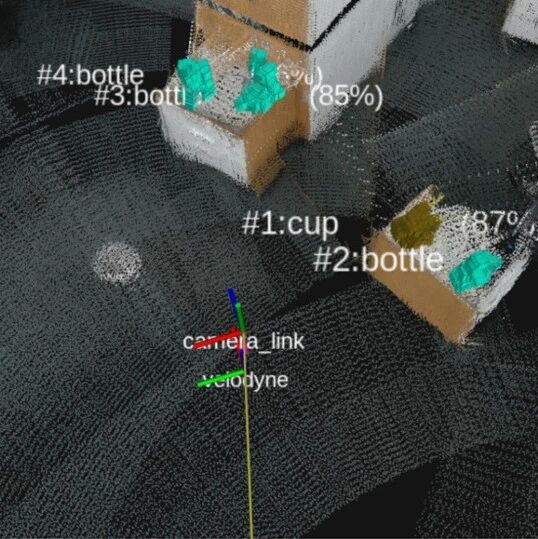
Core Background and Objectives - The current mobile operation technology is expanding from closed, structured work units to open, unstructured large indoor environments, requiring robots to explore unfamiliar and cluttered spaces, interact with diverse objects and humans, and respond to natural language commands for tasks such as home service, retail automation, and warehousing logistics [3] - AnywhereVLA proposes a modular architecture that integrates the robustness of classical navigation with the semantic understanding capabilities of VLA models to achieve language-driven pick-and-place tasks in unknown large indoor environments, capable of real-time operation on consumer-grade hardware [3] Review of Existing Solutions: Advantages and Limitations - VLA models and lightweight optimization strategies are discussed, highlighting their limitations in spatial perception and adaptability to large environments [4] - Existing solutions like MoManipVLA and SmolVLA show performance close to larger models while reducing resource requirements, but they lack spatial awareness for large environments [4] - The limitations of visual-language navigation (VLN) and classical navigation frameworks are outlined, emphasizing the need for improved language understanding and semantic reasoning capabilities [4] AnywhereVLA Architecture: Four Core Modules and Workflow - The AnywhereVLA architecture processes natural language commands through four modules to output low-level control instructions for driving base wheels and robotic arm joints [4] - The workflow includes language instruction parsing, guiding VLA operations, constructing 3D semantic maps, and executing operations based on the identified targets [7] VLA Model Fine-tuning and Hardware Platform - The SmolVLA model is fine-tuned to enhance its operational capabilities, with specific input data and key steps outlined for optimizing performance [13][15] - The HermesBot mobile operation platform is designed specifically for AnywhereVLA, balancing sensing and computational capabilities [16] Experimental Results: Performance and Effectiveness Validation - In an unknown multi-room laboratory setting, 50 pick-and-place tasks were executed, with a core success rate of 46%, and the fine-tuned SmolVLA operation module achieving an 85% success rate [17][22] - The performance metrics for various modules are provided, indicating robust SLAM performance and varying success rates for active environment exploration, navigation, object detection, and VLA manipulation [22] - Time efficiency metrics show that the average task completion time is under 133 seconds for a 5m exploration radius, meeting real-time scene requirements [23]

VLA-Adapter:以0.5B参数实现机器人智能新高度,还无需预训练
具身智能之心· 2025-09-17 03:14
Core Viewpoint - The VLA-Adapter model, developed by leading institutions, represents a revolutionary breakthrough in the Vision-Language-Action (VLA) model for robotics, offering a lightweight design with 500 million parameters while achieving performance comparable to larger models, thus lowering the barriers for training and deployment in robotic applications [4][11][30]. Summary by Sections Introduction to VLA-Adapter - The VLA-Adapter model has been jointly developed by top institutions and is designed to enhance the efficiency and intelligence of robots in understanding environments and executing tasks [4][11]. Challenges in VLA Models - Traditional VLA models face challenges such as reliance on large-scale pre-trained models and high computational costs, which hinder practical applications [3][11]. VLA-Adapter's Innovations - VLA-Adapter introduces a new bridging paradigm that efficiently transmits multimodal information to the action space, significantly reducing model size and training costs [11][12]. - The model utilizes a lightweight backbone network with only 0.5 billion parameters, achieving performance comparable to 7 billion parameter models without requiring extensive pre-training on robotic datasets [11][12]. Key Technologies - The innovative Bridge Attention mechanism is crucial for VLA-Adapter's success, allowing efficient connection between visual-language representations and action generation [12][14]. - The model's training efficiency is highlighted by its ability to complete training in just 8 hours on a single consumer-grade GPU, compared to traditional models that may take days or weeks [15][19]. Experimental Validation - VLA-Adapter has demonstrated superior performance in various robotic tasks, achieving an average success rate of 97.3% in the LIBERO benchmark, outperforming several baseline models [19][20]. - In zero-shot generalization tasks, VLA-Adapter achieved an average task completion length of 4.42, indicating strong adaptability to unseen environments [21][22]. Real-World Applications - The model has shown robust performance in real-world tasks, including complex operations with a 6-DOF robot, demonstrating its potential for diverse applications in industrial automation, smart homes, and medical assistance [23][28]. Future Potential - VLA-Adapter's lightweight design and high efficiency position it as a promising solution for real-time applications, facilitating the development and deployment of VLA models by smaller research institutions and companies [28][30].
GPT重大更新,Hugging Face发布开源机器人AI模型
Mei Ri Jing Ji Xin Wen· 2025-06-05 00:57
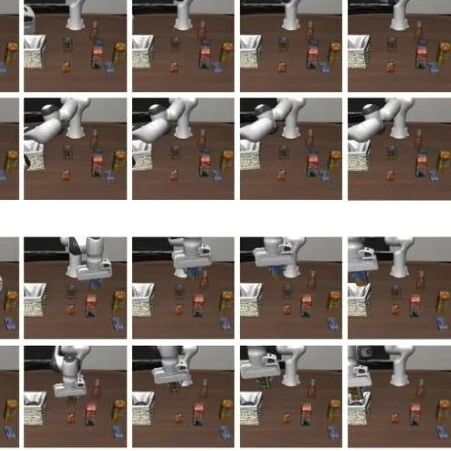
Market Overview - On June 4, 2025, the Sci-Tech AI ETF Huaxia (589010) rose by 0.2%, with leading stocks such as Optoelectronics increasing by 4.65%, Youfang Technology by 2.96%, and Kingsoft Office by 2.72% [1] - The Robotics ETF (562500) increased by 0.6%, with stocks like Yijiahe rising by 5.65%, Optoelectronics by 4.65%, and Green Harmony by 4.61% [1] - The trading volume for the day was 441 million yuan, making it the top ETF in the same category, with a turnover rate of 3.43%, indicating active market transactions [1] Key Developments - On June 5, OpenAI launched significant updates for ChatGPT, including a meeting transcription mode for macOS users and support for the MCP protocol, enabling integration with tools like GitHub and SharePoint [2] - OpenAI reported that its paid enterprise users have surpassed 3 million, a substantial increase from 2 million reported in February, and projected revenue for the year is expected to reach $12.7 billion, up from a previous estimate of $3.7 billion [2] AI Model Launch - Hugging Face introduced an open-source AI model named SmolVLA, known for its smaller scale and superior performance in both virtual and real environments compared to larger models [3] - The model features 450 million parameters and can run on consumer-grade GPUs, making it accessible for affordable hardware systems [3] Institutional Insights - GF Securities believes that the tech sector, particularly AI-related stocks, has met necessary conditions for a rebound after three months of adjustment, with TMT transaction volume reaching the lower bound of the 2023 AI narrative [4] - The firm noted that the financing balance is at a low point for the year, potentially providing incremental capital for future market movements, with key product launches from major companies in June being critical [4] Popular ETFs - The Robotics ETF (562500) is the only fund in the market with over 10 billion yuan in scale, offering the best liquidity and comprehensive coverage of the Chinese robotics industry [5] - The Sci-Tech AI ETF Huaxia (589010) is positioned as the "brain" of robotics, with a 20% fluctuation range and the ability to capture pivotal moments in the AI industry [5]
