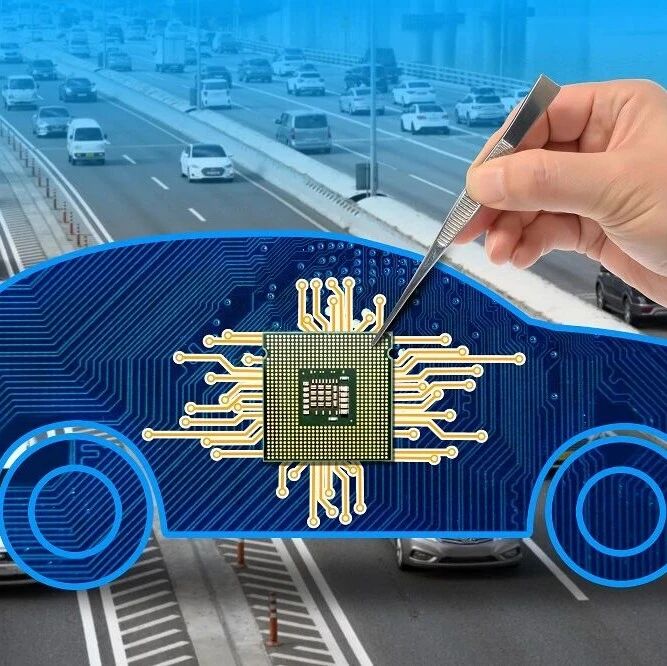
SoC)

Search documents
直击进博会|地平线与大众进入“后联姻时代” 联手造“芯”打造下一代“车脑”
Zhong Guo Jing Ying Bao· 2025-11-06 07:07
Core Insights - The collaboration between Volkswagen Group (China) and Horizon Robotics marks a significant step in the development of autonomous driving technology in China, focusing on local design and development of system-level computing solutions [1][4][5] Group 1: Joint Venture and Investment - Volkswagen's software company CARIAD and Horizon Robotics have established a joint venture named CARIZON to design and develop system-level chips in China, with an investment of approximately $200 million [1][4] - The new system-on-chip (SoC) is expected to achieve mass production within 3 to 5 years, boasting a computing power of 500-700 TOPS, which is more than double that of the current leading Nvidia Orin-X chip [1][2] Group 2: Strategic Goals and Local Adaptation - The strategic goal of the joint venture is to create a "smart brain" for the next generation of intelligent connected vehicles, enhancing real-time decision-making and safety in complex driving conditions [2][3] - Volkswagen aims to localize core technology development in China, recognizing the market's critical role in future innovations and adapting to local driving habits and traffic conditions [4][6] Group 3: Phased Development and Future Plans - The first advanced driver assistance system solution from CARIZON is set to enter mass production in 2025, marking the completion of the first phase of their collaboration [3][5] - The second phase will focus on enhancing Volkswagen's local R&D capabilities in intelligent driving, aiming for large-scale production and commercial deployment of integrated intelligent driving solutions [3][7] Group 4: Industry Context and Competitive Landscape - The partnership reflects a shift in strategy among multinational automotive companies in China, moving from reliance on overseas R&D to integrating local innovation capabilities [6][8] - The collaboration is seen as a response to the rapid innovation pace of domestic brands in the fields of new energy and intelligent driving, aiming to shorten the iteration cycle of intelligent driving technologies [6][7]
大众汽车集团布局自研芯片 为高级驾驶辅助提供强大支持
Xin Lang Cai Jing· 2025-11-05 14:56
2025年11月5日,在第八届中国国际进口博览会开幕当日,大众汽车集团(中国)正式宣布:集团旗下软件公司CARIAD与中国智驾科技公司地平线联合成 立的合资企业——酷睿程(CARIZON),将在中国自主设计与研发系统级芯片(System-on-Chip,SoC)。 这款系统级芯片专为集团的新一代智能网联汽车打造,为高级驾驶辅助和自动驾驶系统提供强大支持。它赋予车辆"思考"的能力,能够实时处理来自摄像头 和传感器的大量数据,从而在复杂路况下做出更安全、顺畅、智能的决策。这将让大众汽车集团更好地借力中国创新生态,打造真正符合本地道路交通与用 户驾驶习惯的出行体验。 2025年,酷睿程的首款高级驾驶辅助系统解决方案将正式投入量产,为集团在华智能驾驶自主研发的第一阶段画上圆满句号。随着自研系统级芯片的发 布,"第二阶段"正式开启,集团将进一步强化本土智驾全栈研发能力,加速推进规模化量产与商业落地,为中国客户提供更智能、更安全、更具价值的出行 解决方案。 4 日本 13 3 135 22 the state the first and 1133 2 2 the first the 1 the state 11 the ...

大众中国启动智驾芯片自研,加速本土化落地
半导体芯闻· 2025-11-05 10:30
Core Viewpoint - Volkswagen Group (China) announced the establishment of a joint venture, CARIZON, with Horizon Robotics to design and develop system-on-chip (SoC) for smart connected vehicles in China [2][4]. Group 1: Joint Venture and Chip Development - The newly established joint venture, CARIZON, will focus on creating SoC specifically for Volkswagen's next-generation smart connected vehicles, featuring a powerful computing capability of 500 to 700 TOPS [4]. - The SoC will enhance advanced driver assistance systems (ADAS) and autonomous driving functions, improving decision-making efficiency and safety during high-frequency usage [4]. - The first ADAS solution from CARIZON is expected to be mass-produced within this year, marking the completion of the first phase of Volkswagen's autonomous driving R&D in China [4][6]. Group 2: Strategic Goals and Future Plans - Volkswagen Group is accelerating its "In China, For China" strategy, aiming to establish a comprehensive local R&D system covering chips, software, systems, and vehicles [8]. - Starting in 2026, the first models equipped with the new regional control electronic architecture (CEA) and CARIZON's advanced driving assistance features will be delivered to Chinese consumers [10]. - By 2027, Volkswagen plans to launch over 20 electrified models, and by 2030, approximately 30 pure electric models, significantly advancing its transition to the smart connected vehicle era [10].