StarV Snap

Search documents
智能眼镜行业跟踪报告:智能眼镜产品力系列二:大模型催化,AI眼镜异军突起
GUOTAI HAITONG SECURITIES· 2026-01-28 14:00
Investment Rating - The report assigns an "Accumulate" rating for the smart glasses industry, indicating a positive outlook for investment opportunities in this sector [6][75]. Core Insights - The smart glasses industry is expected to enter a rapid growth phase, with related companies poised to benefit from an upturn in market conditions [6][75]. - The report highlights that AI glasses without display functions are likely to meet the underlying demand logic of traditional eyewear, potentially leading to quicker market penetration [2][6]. Summary by Sections Product Development and Market Penetration - Continuous improvement in product capabilities is anticipated, with sales expected to increase. Key factors affecting rapid market penetration include reliance on traditional offline channels for final delivery, the need for lightweight materials for comfort, battery capacity constraints, and the performance of SoC chips [4][24][32][33][38]. Market Trends and Projections - The report draws parallels with the smart watch market, predicting that AI glasses will have a penetration rate of only 0.1% in 2024, similar to the early stages of smart watches. It forecasts that global AI glasses shipments will reach 291 million units by 2034, with a CAGR of 55.16% from 2025 to 2034 [21][23][75]. Key Product Launches - The report discusses the launch of Ray-Ban Meta, which features significant improvements in audio and video quality, and integrates with Meta's social platforms, enhancing user experience and application scenarios [10][11][15][71]. Investment Recommendations - The report recommends investing in leading domestic lens brand Mingyue Lens and company Inpai, which are expected to benefit from the industry's growth. Mingyue Lens is actively collaborating with top brands in the industry, while Inpai is expanding into the smart sports equipment sector [6][75][76].

中国AI眼镜军团CES霸场,27家公司组团秀肌肉,2026百镜大战
Xin Lang Cai Jing· 2026-01-09 09:01
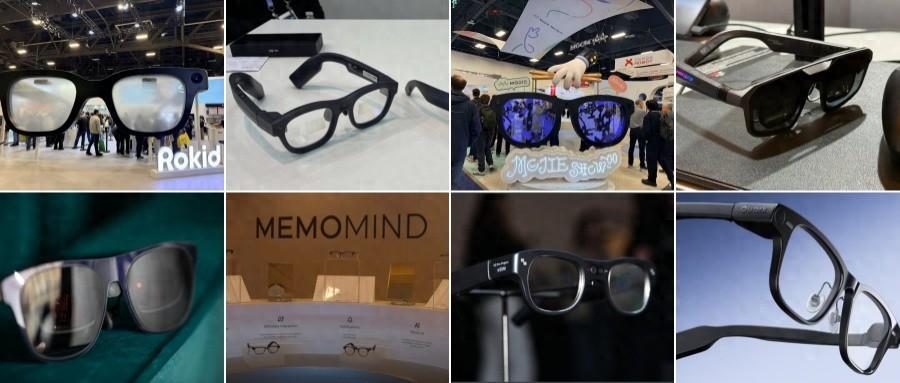
Core Insights - The CES 2023 showcased a significant presence of Chinese manufacturers in the smart glasses and VR/AR market, indicating a shift in industry dynamics with local players gaining traction [2][44] - The Chinese smart glasses market is projected to see substantial growth, with shipments expected to reach 623,000 units by Q3 2025, reflecting a year-on-year increase of 62.3% [4][46] - The event highlighted the competitive landscape, with numerous companies unveiling innovative products, suggesting a "battle of the glasses" in the coming years [42][85] Group 1: Major Players - Rokid attracted attention with its giant glasses display and launched the Rokid Style, claimed to be the lightest full-feature AI glasses at 38.5 grams, starting at $299 [7][48] - INMO introduced two key products: INMO Go3, which offers real-time translation in 261 languages, and INMO AIR3, the first mass-produced 1080P wireless AR glasses, which sold out quickly [9][53] - XREAL showcased the ROG Xreal R1, the first gaming glasses with a 240Hz refresh rate, and announced the upcoming XREAL 1S, featuring a proprietary chip for 3D content conversion [14][57] Group 2: Cross-Industry Innovations - Alibaba presented the Quark AI glasses S1, which allows interaction through voice commands and boasts a battery life of 7 hours, powered by dual flagship chips [22][66] - XGIMI launched its MemoMind AI glasses, marking its entry into the smart glasses market with two series [27][70] Group 3: Emerging Startups - Gyges Labs introduced the world's first AI note-taking ring, which gained significant media attention for its unique functionality [30][73] - MicroVision unveiled the M6 series of AR glasses, which feature hardware that can be sustainably upgraded without replacing the entire device [32][75] - Various smaller companies showcased innovative products, contributing to a diverse and competitive landscape in the smart glasses sector [40][83]

AI眼镜的痛,Meta也治不了
虎嗅APP· 2025-09-22 09:33
Core Viewpoint - The article discusses the recent Meta Connect conference, highlighting the launch of three new AI glasses by Meta, which are seen as a potential breakthrough in the struggling AI glasses market. However, despite hardware improvements, the products did not demonstrate significant technological advancements and faced issues during live demonstrations [5][6][16]. Group 1: Market Context - The AI glasses market has transitioned from niche to mainstream, but it currently faces a bottleneck characterized by high return rates and quality concerns. Many products are perceived as low-quality due to unstable supply chains and production capacity issues [6][7]. - Meta's new AI glasses are expected to address these challenges, with industry professionals hoping for breakthroughs in core technology and sales [7][8]. Group 2: Product Launch Details - Meta introduced three models: Ray-Ban Meta Gen2, Oakley Meta Vanguard, and Meta Ray-Ban Display, each targeting different consumer segments [8][12]. - The new models feature upgrades in pixel quality, stabilization, and battery life, with the Ray-Ban Meta achieving up to 30 hours of battery life when used with a charging case [10][11]. Group 3: Pricing and Comparison - The pricing of Meta's AI glasses ranges from $379 for Ray-Ban Meta Gen2 to $799 for Meta Ray-Ban Display, which is lower than some domestic competitors [11][12]. - A comparison of Meta's products with domestic offerings reveals that while Meta's glasses are competitive in terms of features, they may not offer the best value for money [22][28]. Group 4: Technical Specifications - The Meta Ray-Ban Display boasts impressive technical specifications, including a resolution of 600x600, a field of view of 20 degrees, and a refresh rate of 90Hz, indicating a strong performance in clarity and usability [12][13]. - The introduction of the Meta Neural Band for interaction is seen as innovative, although it has sparked debate regarding user experience [14][15]. Group 5: Industry Challenges - Despite high sales figures, the AI glasses market is plagued by high return rates, with estimates suggesting return rates of 30% to 50% across various platforms [31][32]. - User feedback indicates significant issues with comfort, functionality, and practicality, leading to a perception that current AI glasses are more suited for tech enthusiasts rather than mainstream consumers [34][36]. Group 6: Future Outlook - The article concludes that while the AI glasses market is currently facing challenges, it holds significant potential for growth. The industry's future remains promising, as indicated by Meta's confidence in its new products [36][37].


黄质潘“挂帅”后首次上新,“慢节奏”的星纪魅族需要一个爆款
Hua Xia Shi Bao· 2025-09-18 05:43
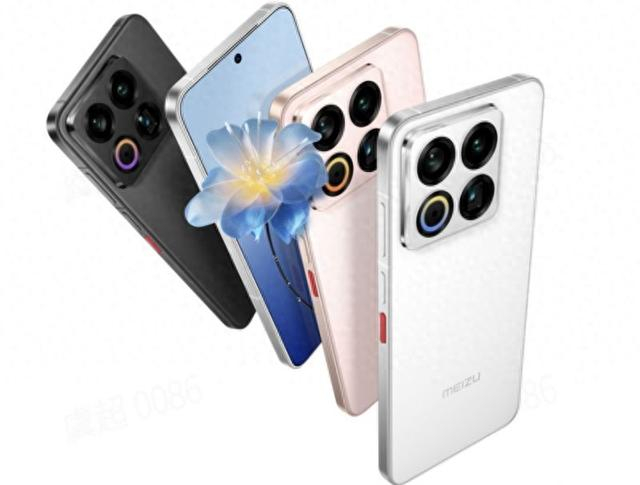
Core Insights - The new CEO Huang Zhipan emphasizes a pragmatic approach to development, focusing on product quality and customer loyalty rather than aggressive market positioning [2][6] - The company aims to establish a complete smart ecosystem centered around "mobile phones + XR + smart cars" [7][9] Product Launch and Market Strategy - The flagship product, Meizu 22, was delayed for over a year, with the company acknowledging the challenges faced during its development [3][5] - Meizu 22 features four 50MP cameras and is priced at 2999 yuan, lower than the previous model's starting price of 3399 yuan, indicating a strategy to attract price-sensitive consumers [5][6] - The company is also focusing on low-cost AI phones to capture market share in the competitive mid-to-low-end market [6] XR and Smart Car Initiatives - The company launched the StarV Snap AI glasses, priced at 1999 yuan, which integrates payment functions and aims to create new market scenarios through partnerships with Alipay [7] - The Flyme Auto system has been integrated into 28 vehicle models, with over 1.5 million users, showcasing the company's commitment to building a comprehensive application ecosystem [9] Market Position and Future Outlook - Despite ambitious goals to return to the top five in the domestic mid-to-high-end smartphone market, the company acknowledges the challenges posed by stronger competitors [6][8] - The company is taking a cautious approach to growth, focusing on product excellence and sustainable development rather than rapid expansion [9]
看完魅族的发布会,魅友们不知该高兴还是难过
Hu Xiu· 2025-09-16 02:09
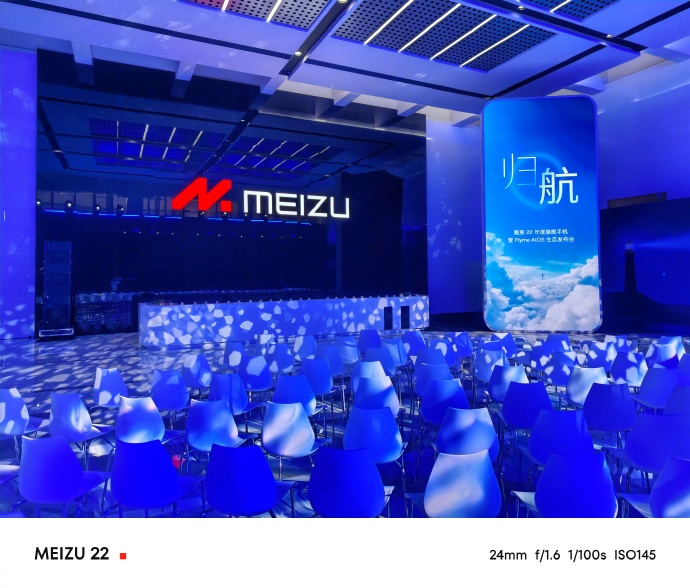
Group 1 - The core focus of the article is the launch of Meizu 22, which has faced delays and is now presented as a potential comeback for the company [1][5] - The launch event, themed "Return Home," was notably simple, lacking elaborate staging and a large audience, indicating a shift in the company's approach [2][4] - Meizu 22 features a design similar to Xiaomi 15, with a 6.3-inch body and a unique "floating four-matrix" design, showcasing the company's commitment to detail [6][12][16] Group 2 - The device is powered by the Snapdragon 8s Gen 4 processor, which is considered slightly outdated compared to competitors, reflecting the challenges faced by smaller manufacturers in the market [17][20] - Meizu 22 boasts a "5000万 flagship four main cameras" setup, including a 50MP main camera, aiming to compete with other flagship models in the market [22][25] - The pricing starts at 2999 yuan, with the top configuration reaching 4199 yuan, raising concerns about its competitiveness given the processor's performance [34][38] Group 3 - The event also introduced the StarV Snap, a smart eyewear product with a 12MP camera, emphasizing continuous shooting capabilities and various AI features [55][63] - Flyme AIOS 2 was discussed, highlighting improvements and new features, including a shopping assistant and enhanced photo editing capabilities [42][46] - Overall, the article reflects a mix of optimism and concern regarding Meizu's ability to compete in a highly competitive smartphone market, with a focus on innovation and addressing past shortcomings [69][71]