Starlink卫星星座

Search documents
全球科技(计算机)行业周报:“火箭+AI+社交平台”初步整合,关注太空算力
Huaan Securities· 2026-02-11 07:25
Investment Rating - Industry Rating: Overweight [1] Core Insights - On February 2, SpaceX announced the acquisition of Elon Musk's AI company xAI for $250 billion, based on a recent funding round of $20 billion. This acquisition aims to create "the most ambitious vertically integrated innovation engine on and off Earth" [3][13] - The acquisition reflects Musk's grand plan for building AI data centers in space, which could become a scalable development pathway for AI in the long term. SpaceX's CFO indicated that this transaction would not delay the planned IPO, which could raise up to $50 billion, valuing SpaceX at approximately $1.5 trillion [3][13] - SpaceX plans to launch a constellation of 1 million satellites to form an orbital data center, utilizing near-constant solar energy from space, which will significantly reduce operational costs. Musk estimates that launching 1 million tons of satellites, each generating 100 kW of computing power, will add 100 GW of AI computing capacity annually [4][14] - The integration of Musk's business empire, including rockets, AI, and social media platforms, is accelerating. This integration aims to create a closed-loop ecosystem, with a focus on space computing, commercial aerospace, and data centers. Relevant companies to watch include Cambricon, Zhongke Shuguang, and Yike Technology [5][15] Market Performance Review - The computer industry index fell by 3.27%, underperforming the Shanghai Composite Index by 2 percentage points and outperforming the ChiNext Index by 0.01 percentage points. Year-to-date, the computer industry index has risen by 3.44% [17][20] - Among the 31 industry indices, the computer industry ranked 27th this week, and it was second among the four TMT sectors (electronics, communications, computers, media) [17][20] Technology Software Industry News - The National Star Aerospace's Taizhou computing satellite innovation base has officially commenced operations, significantly enhancing the integration and deployment of computing satellite systems [26] - The low-altitude economy in China is entering an accelerated industrialization phase, with a goal to establish a standard system by 2027 [27] - Waymo completed a $16 billion financing round, becoming one of the largest single financings in the autonomous driving sector, with plans to expand its services globally [29][30] - A new network security framework has been developed to protect future 6G vehicle networks from quantum computing attacks, marking significant progress in quantum-safe mobile infrastructure [31][32] - The International Olympic Committee announced a partnership with Alibaba to create the first official AI model for the Olympics, showcasing the integration of AI technology in major international events [35][36]
我国三大万颗星座计划,推动商业航天进入高速发展期
Huan Qiu Wang· 2025-12-06 01:21
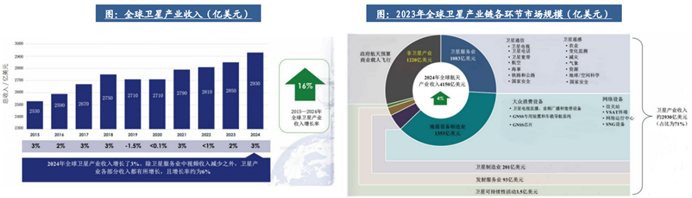
Core Insights - The global satellite internet constellation is rapidly developing, with major players including Starlink, GW constellation, G60, Honghu-3, OneWeb, and Kuiper, particularly highlighting the advancements of SpaceX's Starlink project which has launched over 10,000 satellites as part of a planned 42,000 satellites [1] - China is also making significant strides with three major satellite constellation plans, including China Star Network (GW constellation), Shanghai Yuanxin (G60 Qianfan constellation), and Blue Arrow Hongqing Technology (Honghu-3 constellation), aiming to launch a total of 116 satellites by October 2025 [1] - The commercial space industry is characterized by market-driven activities where enterprises, including private and mixed-ownership companies, invest, operate, and bear risks across the entire aerospace value chain, covering technology R&D, manufacturing, launching, and application [1] Industry Developments - The report indicates that the launch schedule for national rockets like Long March 12, Long March 8A, and Long March 6 modified is tight due to other national space missions, leading to slower than expected overall launch progress [3] - There is an urgent need for high-capacity, low-cost, and reliable reusable rockets, with new commercial rocket models such as Zhuque-3, Tianlong-3, and others expected to debut by the end of 2025, which could accelerate the deployment of domestic low-orbit satellite constellations [3] - The satellite manufacturing process is evolving towards modular design, automated testing, and mass assembly, which is expected to release production capacity, while rocket launches are transitioning to reusable, low-cost, and high-capacity models, indicating a shift from validation to engineering application and large-scale development [3]