
TAVI产品

Search documents
微创医疗:深度整合结构性心脏病与心律管理两大核心业务板块
Zhong Zheng Wang· 2025-12-19 11:22
Core Viewpoint - MicroPort Medical announced the strategic merger of its subsidiaries, MicroPort Cardiac and MicroPort Rhythm Management, to enhance the integration of its core business segments in structural heart disease and rhythm management, aiming to create a comprehensive global heart failure management platform [1][2] Group 1: Merger Details - The merger has been approved by the shareholders of MicroPort Cardiac, which will facilitate the deep integration of structural heart disease and rhythm management business segments [1] - The combined entity will address complex diagnostic and treatment needs across the entire spectrum of heart failure, from monitoring to management [1] Group 2: Product and Market Position - MicroPort Cardiac has established a leading position in the domestic market for TAVI products, with the highest implantation volume [1] - MicroPort Rhythm Management is one of the few companies globally with a complete product line for rhythm management, including pacemakers and implantable cardioverter-defibrillators (ICDs) [2] - The company has a well-established overseas channel system, contributing a significant portion of its revenue from stable markets in Europe, the Middle East, and Africa [2] Group 3: Future Plans and Innovations - The merged entity plans to develop a comprehensive management solution for heart failure, covering all stages and causes of the disease [2] - The first heart failure product, an intra-aortic balloon pump (IABP), is expected to be approved in China by 2026 [2] - The merger aims to create a three-in-one platform integrating structural heart disease, rhythm management, and heart failure management, with expectations for improved profitability through operational efficiency and continued R&D investment [2]
心通并购CRM落地后,再看微创医疗的投资价值
思宇MedTech· 2025-12-17 09:09
Core Viewpoint - The merger between Xintong Medical and CRM represents a significant strategic shift for MicroPort Medical, moving from a model of "splitting" to "integration," which aligns with the current macro environment of the Chinese innovative medical device industry [2][3] Group 1: Strategic Breakthrough - The merger signifies a transition from a strategy focused on "innovation incubation and split development" to "deep integration and platform operation," reflecting a response to the new normal of cost control in healthcare and cautious capital investment [3] - This integration aims to create a comprehensive platform with scale effects and strong cash generation capabilities, addressing the growth ceiling of single products and reshaping the long-term growth trajectory [3] Group 2: Business Synergy - The merger creates a unique solution capability covering the entire cycle of heart disease, transforming the business combination from "physical overlap" to "chemical reaction" [4] - Product and R&D synergy is evident as Xintong's expertise in passive interventional devices complements CRM's focus on active implantable devices, leading to a planned pipeline of nine new products targeting heart failure [4][5] - The global channel network of CRM facilitates the international expansion of Xintong's products, with significant growth observed in TAVI products [5] Group 3: Financial Improvement - Market concerns regarding MicroPort Medical's sustained losses, high debt, and R&D expenditures are being alleviated, creating a clear path for value re-evaluation [8] - The company has significantly reduced its net loss to approximately $36 million in the first half of 2025, a 66% year-on-year decrease, and has achieved profitability on a Non-GAAP basis [9] - A strategic debt optimization initiative has been implemented, including the replacement of high-interest convertible bonds with lower-rate loans, which will reduce future financial expenses [10] Group 4: Governance Upgrade and Value Re-evaluation - The strategic investment from a state-owned enterprise marks a new phase in the governance structure of MicroPort Medical, enhancing business expansion and creating potential for participation in major national projects [12] - The merger has streamlined asset management and clarified responsibilities across business units, boosting operational efficiency and investor confidence [12] - The market is shifting its perception of the company from a "turnaround" entity to a "quality growth" company, reflecting a transition in valuation logic [12][13]


心通医疗20251216
2025-12-17 02:27
Summary of the Conference Call for Xintong Medical Company Overview - Xintong Medical is acquiring MicroPort's cardiac rhythm management business for a total consideration of $680 million, with an implied enterprise value of $850 million, representing 3.9 times the projected 2024 revenue [3][4] - The acquisition aims to expand Xintong Medical's presence in the heart rate management sector and increase its overseas business share from 12%-15% to 80% [2][4] Key Points and Arguments Industry Position and Market Expansion - Post-merger, the combined entity will become the largest cardiac medical device company in Asia, competing globally with Medtronic, Abbott, and others in structural heart disease, heart rate management, and electrophysiology [2][5] - The merger is expected to generate nearly $300 million in revenue, leveraging Xintong's strengths in structural heart disease and MicroPort's expertise in sensors and active mechanical devices [4][5] Synergies and Collaborative Opportunities - Significant synergies are anticipated in revenue, manufacturing, R&D, and sales, particularly through the integration of TAVI procedures and pacemaker services [6][7] - The left atrial appendage occlusion market is projected to grow at a compound annual growth rate (CAGR) of 20%, indicating substantial growth potential [6] R&D and Product Development - The combined R&D resources will lead to the launch of several innovative products over the next five years, including next-generation left atrial appendage occluders and upgraded aortic stenosis treatment devices [2][10] - Xintong Medical has a strong foundation in structural heart disease and plans to enhance its capabilities in heart failure treatment through integrated solutions [12][15] Financial Outlook and Cost Management - The merger is expected to reduce overall debt significantly, with financial expenses projected to drop to approximately $4 million by 2026 [4][26] - R&D expenditure is anticipated to be controlled within 20% of revenue by 2025, with a goal of achieving operational profitability by 2027 [21][26] Competitive Landscape - The merged company will have a competitive edge with the smallest and longest-lasting pacemaker globally, enhancing its market position [5][10] - The integration of sales channels and marketing strategies will allow for targeted market penetration and improved pricing power [9][23] Future Growth and Market Strategy - The heart failure market is expanding due to aging populations, with 65 million global patients, including over 12 million in China [15][22] - Xintong Medical plans to develop comprehensive monitoring and management solutions for heart failure patients, utilizing advanced technologies and data analytics [19][22] Shareholder Structure Post-Merger - After the merger, MicroPort will remain the controlling shareholder with a 44% stake, while other significant shareholders include Yunfeng Capital and Hillhouse Capital [28] Potential for Future Collaborations - There is a possibility of future collaborations with pharmaceutical companies to enhance the effectiveness of heart failure monitoring and treatment solutions [29] Additional Important Insights - The merger will facilitate a more robust global presence and brand recognition, supported by a top-tier R&D center in Shanghai and a global advisory committee of experts [10][11] - The integration of existing technologies and new product lines will position the company to capture significant market share in the heart failure segment [12][22]
微创医疗推进业务整合 打造心衰综合方案
Zheng Quan Ri Bao· 2025-12-17 02:13
Core Viewpoint - MicroPort Medical announced the approval of a strategic merger between MicroPort Cardiac and MicroPort Rhythm Management, aiming to integrate their core business segments of structural heart disease and rhythm management, thereby enhancing comprehensive heart failure management solutions [2][3]. Group 1: Merger Details - The merger will enable the creation of a comprehensive management solution for heart failure, covering all causes, stages, and processes, including monitoring, diagnosis, treatment, and management [2][3]. - MicroPort Cardiac has established a leading position in the domestic market for transcatheter aortic valve implantation (TAVI) products, with the highest implantation volume [2]. - The company is advancing a new generation of innovative pipelines, including products for mitral and tricuspid valves, surgical support products, and interventricular septal reconstruction products, while also accelerating overseas market expansion [2]. Group 2: Product and Market Strategy - MicroPort Rhythm Management is one of the few companies globally with a complete product line for rhythm management, including pacemakers, implantable cardioverter-defibrillators (ICDs), cardiac resynchronization therapy devices (CRT-Ds), leads, and monitoring equipment [3]. - The merged entity will leverage its product layout in structural heart disease, rhythm management, and heart failure to provide a comprehensive management solution for heart failure [3]. - The first heart failure product, an intra-aortic balloon pump (IABP), is expected to be approved in China by 2026, indicating a push towards commercializing heart failure management [3]. Group 3: Operational Synergies - Post-merger, the integration of channels, registration, and logistics systems is expected to facilitate faster market entry for structural heart disease products through the rhythm management platform [4]. - The combination of structural products with rhythm management offerings will enhance sales efficiency and marketing effectiveness in the domestic market [4].
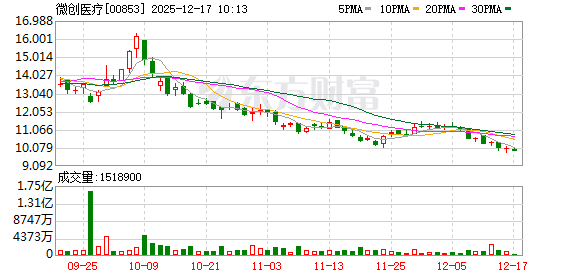
微创医疗(00853)拟策略重组CRM业务
智通财经网· 2025-07-16 14:55
Core Viewpoint - The company is considering a non-binding proposal to restructure its CRM business by merging it with the operations of MicroPort Cardiac Rhythm Management, aiming to enhance competitiveness and create long-term value for stakeholders [1][2] Group 1: Business Overview - The company, along with its subsidiaries, is a leading medical device group focused on the innovation, manufacturing, and sales of high-end medical devices globally, with business segments including cardiovascular intervention, orthopedic medical devices, CRM, and others [1] - The CRM business is dedicated to developing global leading CRM solutions, primarily involved in the research, manufacturing, and sales of products for diagnosing, treating, and managing arrhythmias and heart failure, including pacemakers, defibrillators, and cardiac resynchronization therapy devices [1] Group 2: Strategic Benefits of the Merger - The merger of the two businesses will help establish a cardiac product platform, offering a diversified product line that includes CRM products and structural heart disease solutions, enhancing the company's global market development capabilities [2] - By merging the two businesses, the company aims to create synergies that will expand the scale and growth potential of the combined operations, improving revenue, profitability, and cash flow [2] - The unified financial management resulting from the merger will enhance capital efficiency and fundraising capabilities, while promoting the diversified product platform in international markets to increase recognition of the related value and growth potential [2]
中信建投 医药每周谈
2025-07-07 00:51
Summary of Key Points from Conference Call Records Industry Overview - The conference call discusses the **domestic medical device industry**, highlighting advancements in various companies and their innovative products. Key Companies and Their Innovations 1. **Peijia Medical** - The shockwave balloon technology shows a **30%-50% efficacy** in early clinical trials for treating aortic valve calcification [1] - The transcatheter aortic valve replacement product **Mona Q** has enrolled **9 patients** in the global Fame clinical trial, with no deaths or strokes reported during long-term follow-up. It has received **IDE clinical approval** in the U.S. and is expected to advance to U.S. clinical trials within the year [2][4] 2. **Jianxi Technology** - The tricuspid valve replacement product has completed clinical registration trials in Europe with a **97% success rate** and is expected to receive CE certification by **2025** [1][3] 3. **Xenon Medical** - The self-expanding intracranial drug-eluting stent has a **restenosis rate of only 1.7%-1.87%** and a **100% surgical success rate**. Approval is anticipated this year, with a market exclusivity period of **1.5 to 2 years** [1][6][7] 4. **HeartTech Medical** - Leading market share in domestic occluder products with a series of **four generations of biodegradable occluders**. The aortic valve product has been approved for commercialization since Q1 [1][8] 5. **Qiming Medical** - Four TAVI products have been approved and marketed in over **ten countries**. New TAVI products are under development, with expectations for a tricuspid valve replacement product to be approved in Europe by **2027** [1][9] Market Trends and Future Outlook - The medical device sector is expected to see a **catalyst for growth** in the second half of the year due to potential equipment upgrades, particularly in **3.0T MRI and 64-slice CT** products [2][17] - Companies like **Huitai Medical** are projected to have strong performance due to new product launches and market expansion [11][23] Competitive Strategies - Domestic medical device companies are enhancing their international competitiveness through: - **Patent breakthroughs** and early clinical trials [4] - Focusing on less crowded market segments for differentiation [4] - Collaborations with international firms to leverage global networks for faster commercialization [5] Financial Performance Expectations - Companies such as **Huitai Medical** and **Mingrui Medical** are expected to show strong growth in the second half of the year, despite some companies facing short-term pressures due to high bases from previous years [10][11][15] - The **IVD sector** is experiencing pressure from policy changes, but improvements are anticipated in the latter half of the year as companies adjust pricing strategies [28] Regulatory and Policy Impact - The medical industry is facing challenges from **DRG cost control policies** and increased compliance requirements, impacting overall performance and cash flow [33] Conclusion - The domestic medical device industry is poised for growth with innovative products and strategic collaborations, despite facing regulatory challenges and market competition. Companies are actively seeking to enhance their international presence and capitalize on emerging market opportunities.




