
TCE药物

Search documents
时迈药业急切港股上市“续命”,股权合规等四问待答
Shen Zhen Shang Bao· 2025-12-29 07:05
Core Viewpoint - The China Securities Regulatory Commission (CSRC) has issued supplementary material requirements for 19 companies, including Shimai Pharmaceutical, which must clarify the progress of state-owned shareholder management procedures and other matters related to its overseas listing application [1]. Group 1: Company Requirements - Shimai Pharmaceutical needs to provide details on the progress of state-owned shareholders fulfilling state-owned stock identification and management procedures [2]. - The company must explain the pricing basis and reasons for price differences in past capital increases and share transfers, and confirm the legality and compliance of its establishment and share changes [3]. - It is required to clarify whether the shares held by shareholders participating in the "full circulation" are subject to pledges, freezes, or other rights defects [4]. Group 2: Financial Performance - Shimai Pharmaceutical has not generated any drug sales revenue or milestone payments, with total other income of approximately 14.65 million yuan, 6.62 million yuan, and 2.28 million yuan for 2023, 2024, and the first half of 2025, respectively [4]. - The company reported losses of 74.94 million yuan, 59.90 million yuan, and 25.42 million yuan for the years 2023, 2024, and the first half of 2025, with cumulative losses exceeding 160 million yuan [5]. - The primary reason for ongoing losses is the lack of commercialized products, with income mainly from government subsidies and investment returns, which are insufficient to cover high R&D and operational costs [5]. Group 3: R&D Expenditure - R&D expenses for the company were 76.11 million yuan, 53.38 million yuan, and 22.39 million yuan for 2023, 2024, and the first half of 2025, respectively, indicating a significant decline in R&D investment [6]. - The R&D expenditure for the core product SMET12 decreased by 73.7% in the first half of 2025 compared to the same period in 2024, raising concerns about the development of core products [6]. Group 4: Cash Flow and Financing - As of June 30, 2025, the company's cash and cash equivalents were only 85.74 million yuan, while the average annual R&D expenditure was around 60 million yuan [7]. - By September 30, 2025, cash and cash equivalents sharply declined to 5.71 million yuan, indicating a rapid depletion of funds [8]. - The company has completed three rounds of financing, with a post-Series C valuation of 2.23 billion yuan, supported by investors such as Betta Pharmaceuticals and Tigermed [9]. Group 5: Market Potential - The global TCE market is projected to reach approximately $3 billion by 2024, with a compound annual growth rate (CAGR) of 40% expected to grow to $121.1 billion by 2035 [10]. - The Chinese TCE market is anticipated to reach 700 million yuan by 2024, with a CAGR of 63.8% expected to grow to 159.6 billion yuan by 2035 [10]. Group 6: Shareholder Structure and Future Plans - The company's actual controller, Xiao Zuoxiang, holds 53.2% of the shares, making him the controlling shareholder, while Betta Pharmaceuticals holds 4.75% through its subsidiary [11]. - The company plans to use the funds raised from its Hong Kong listing primarily for clinical development of core products, optimization of technology platforms, new product development, and operational funding [11].

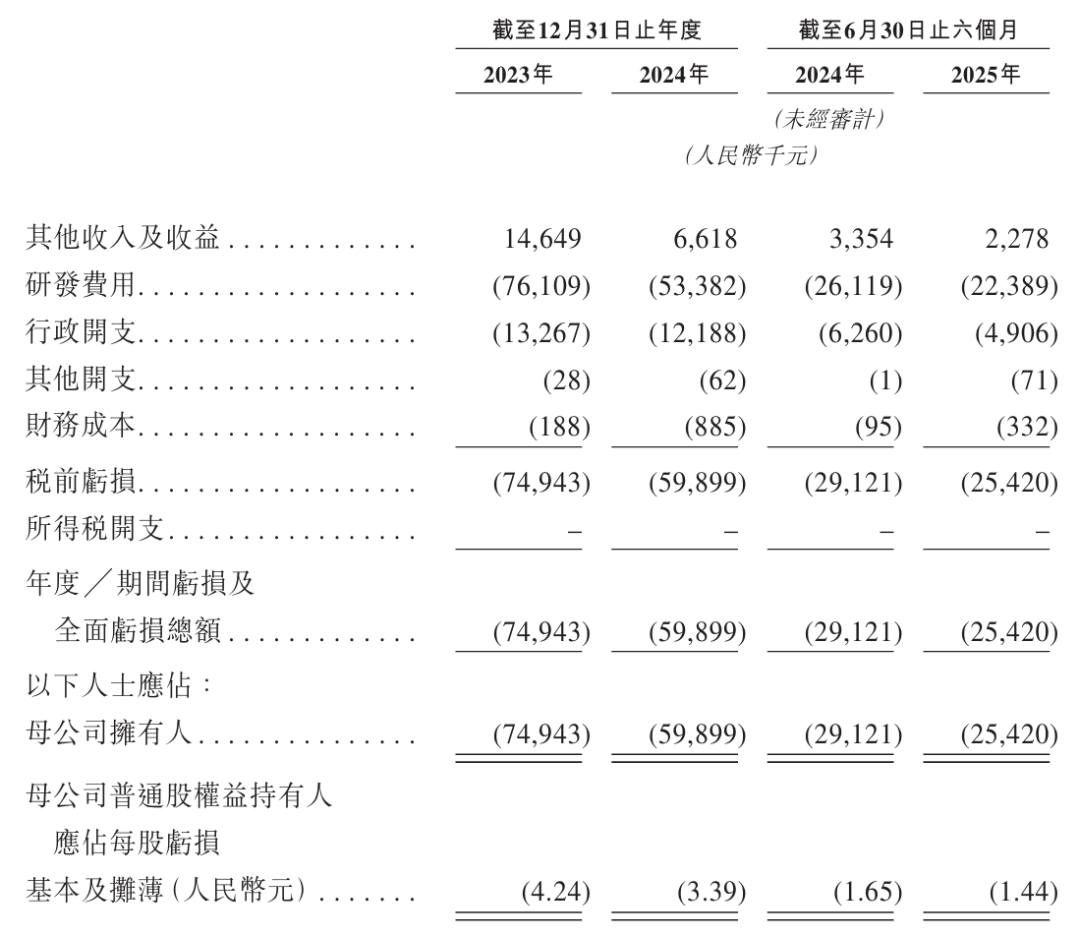
47人团队如何撑起22亿元估值?时迈药业冲刺港股IPO,核心产品研发投入腰斩
Sou Hu Cai Jing· 2025-11-16 02:13
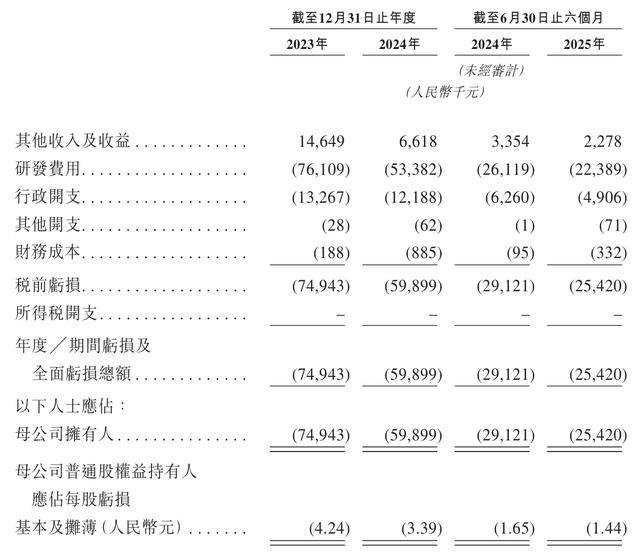
Core Viewpoint - Zhejiang Shimai Pharmaceutical Co., Ltd. has submitted its listing application to the Hong Kong Stock Exchange, focusing on the development of TCE drugs and aiming to raise funds for clinical development and operational needs [1][5]. Company Overview - Established in 2017, Shimai Pharmaceutical specializes in TCE drug development, with four clinical-stage candidates: DNV3, SMET12, CMD011, and CMDE005 [1]. - The company has a current valuation of 2.23 billion RMB following its latest Series C financing, attracting investments from notable pharmaceutical companies [1]. Financial Performance - For the reporting period from 2023 to the first half of 2025, Shimai Pharmaceutical reported other income and gains of 14.65 million RMB, 6.62 million RMB, and 2.28 million RMB, while total losses reached 74.94 million RMB, 59.90 million RMB, and 25.42 million RMB, accumulating over 160 million RMB in total losses [2][3]. - The company has not yet commercialized any products, leading to significant ongoing losses, with revenue primarily from government subsidies and investment income [2][4]. Research and Development - R&D expenses for the reporting period were 76.11 million RMB, 53.38 million RMB, and 22.39 million RMB, with a notable decrease in R&D spending raising concerns about the progress of core product development [4]. - The R&D expenditure for core product SMET12 decreased by 73.7% in the first half of 2025 compared to the same period in 2024, indicating potential challenges in sustaining development efforts [4]. Market Potential - The global TCE market is projected to reach approximately 3 billion USD by 2024, with a compound annual growth rate of 40% expected to grow to 121.1 billion USD by 2035. The Chinese TCE market is anticipated to reach 700 million RMB by 2024, with a growth rate of 63.8% projected to reach 159.6 billion RMB by 2035 [5].
红杉中国押注:创新药中式NewCo第一单
经济观察报· 2025-08-20 12:59
Core Viewpoint - The article discusses the emergence of NewCo transactions in China's innovative pharmaceutical sector, highlighting a shift where Chinese investment firms, such as Sequoia China, are becoming buyers in these deals, leveraging China's clinical efficiency and cost advantages to enhance the global market value of targeted drugs [1][3][6]. Group 1: NewCo Transactions Overview - NewCo transactions have seen a significant increase in China, with 14 similar deals occurring since the beginning of 2024, primarily involving both large and small pharmaceutical companies [2][6]. - The first NewCo transaction led by a Chinese fund involved a $10 million upfront payment to Lepu Biopharma, marking a notable shift in the buyer landscape from predominantly foreign funds to domestic investors [2][4][6]. Group 2: Investment Strategy and Market Impact - Sequoia China's investment strategy focuses on identifying differentiated assets, particularly in the T-cell engager (TCE) space, which has limited competition in solid tumors compared to blood cancers [6][7]. - The transaction structure allows Lepu Biopharma to retain a 10% stake in the new company, Excalipoint, and potentially earn up to $848 million in milestone payments and sales royalties, indicating a strategic approach to funding and asset management [7][10]. Group 3: Clinical Development and Cost Efficiency - The new company will conduct Phase I clinical trials in China, utilizing local resources to expedite development, contrasting with previous models that prioritized overseas clinical trials [12][13]. - The cost of conducting clinical trials in China is significantly lower than in the U.S., with estimates suggesting a cost difference of five to seven times, which enhances the feasibility of early-stage drug development [13]. Group 4: Management and Operational Considerations - The success of NewCo transactions relies heavily on the experience of the management team, with a focus on ensuring seamless integration of core technologies and research strategies [9][10]. - The article emphasizes the importance of strong relationships with potential buyers and understanding their pipeline needs, which is crucial for the successful exit of NewCo assets [16]. Group 5: Market Perception and Future Outlook - Despite some skepticism regarding the low upfront payments typical of NewCo deals, they remain a vital funding avenue for innovative pharmaceutical companies facing financial pressures [17]. - The article suggests that as the market for innovative drugs recovers, more NewCo transactions are likely to emerge, providing opportunities for companies to secure funding while maintaining involvement in their drug pipelines [17].

迈威生物20250729
2025-07-30 02:32
Summary of Maiwei Biotech Conference Call Company Overview - Maiwei Biotech, established in 2017, focuses on oncology and age-related diseases with a pipeline of 16 projects, including 4 already on the market [3][6] - The company utilizes three main technology platforms: efficient molecular discovery, ADC (Antibody-Drug Conjugate), and TCE (Tandem Bispecific Antibody) [2][3] Key Developments in ADC and TCE - In the ADC field, Maiwei's UC (Urothelial Carcinoma) drug is in Phase II clinical trials with an overall efficacy rate of approximately 40% [2][5] - The cervical cancer drug has entered Phase III trials, and the esophageal cancer drug targets the PD-1 plus chemotherapy market [2][5] - The MF6 toxin platform shows high activity and non-PGP substrate characteristics, advantageous for treating multi-drug resistant tumors, particularly in gastrointestinal cancers [2][11] Clinical Trials and Market Potential - Maiwei plans to complete Phase III trials for UC and cervical cancer this year and aims for rolling submissions next year, which could significantly enhance its market position [2][6] - The iron regulatory monoclonal antibody is the only one globally that supports monthly dosing, with a peak sales potential in the U.S. estimated at $2 billion [4][21] - The TCE platform's first pipeline, targeting AML (Acute Myeloid Leukemia) and MM (Multiple Myeloma), is expected to enter clinical trials in mid-2026, with market sizes of $17 billion and $27 billion respectively [4][23] Competitive Advantages - Maiwei's ADC technology employs a site-specific conjugation process that enhances drug stability and concentration within tumors, improving efficacy and reducing side effects [12][26] - The MF6 toxin is designed to overcome traditional ADC limitations due to high expression of PGP proteins, making it suitable for high PGP-expressing gastrointestinal tumors [28][40] Future Strategies - The company aims to strengthen collaborations with academia and industry to accelerate drug development and enhance recognition through high-impact publications [6][18] - Maiwei is focusing on five key pipelines this year, including TMC top, cervical cancer, and UC projects, with plans to introduce additional TCE pipelines in the future [25][31] Research and Development Insights - Maiwei has made significant progress in the field of white介11 (W11) with promising results in anti-aging and scar treatment, with clinical trials expected to yield results within 3 to 6 months [19][20][39] - The company is also exploring innovative oral therapies for osteoarthritis, which could fill a significant market gap if proven effective [22] Conclusion - Maiwei Biotech is positioned as a leader in innovative cancer therapies with a robust pipeline and strategic focus on overcoming existing treatment limitations, particularly in multi-drug resistant cancers and age-related diseases [2][6][31]
