
TCE疗法

Search documents
创新药周报20260118:强生BCMA CD3 TCE特立妥单抗单药治疗2L MM III期成功
Huachuang Securities· 2026-01-19 10:30
Investment Rating - The report indicates a positive investment outlook for the innovative drug sector, particularly focusing on the advancements in T-cell engagers (TCE) for multiple myeloma (MM) treatment [1]. Core Insights - Johnson & Johnson's teclistamab has shown significant efficacy in the treatment of relapsed or refractory multiple myeloma (r/r MM), with a 71% reduction in disease progression or death risk and a 40% reduction in mortality risk compared to standard treatments [14][15]. - The report highlights the unmet medical needs in the MM treatment landscape, emphasizing the potential of TCE therapies targeting BCMA and GPRC5D to improve patient outcomes [9][10]. - The ongoing clinical trials and approvals for various TCE therapies, including teclistamab and talquetamab, are expected to reshape the treatment paradigm for MM, particularly in patients who have undergone multiple lines of therapy [28][34]. Summary by Sections Innovative Drug Focus - The report reviews the recent developments in innovative drugs, particularly in the context of TCE therapies for blood cancers, with a focus on their expanding applications beyond hematological malignancies [5][7]. TCE Therapy Developments - TCE therapies have gained traction in the treatment of MM, with several candidates achieving FDA approval for patients who have received multiple prior therapies. The overall response rates (ORR) for these therapies range from 60% to 74% [9][10]. - The report details the clinical trial results for teclistamab, which has been shown to significantly improve progression-free survival (PFS) and overall survival (OS) in r/r MM patients [14][21]. Market Potential - The report estimates that the sales for teclistamab in China could reach approximately $5.49 billion by 2024, indicating a strong market potential for TCE therapies in the region [6]. - The ongoing research and development efforts in TCE therapies are expected to address the significant unmet needs in the MM treatment landscape, with a focus on improving patient outcomes and survival rates [9][10].


时迈药业急切港股上市“续命”,股权合规等四问待答
Shen Zhen Shang Bao· 2025-12-29 07:05
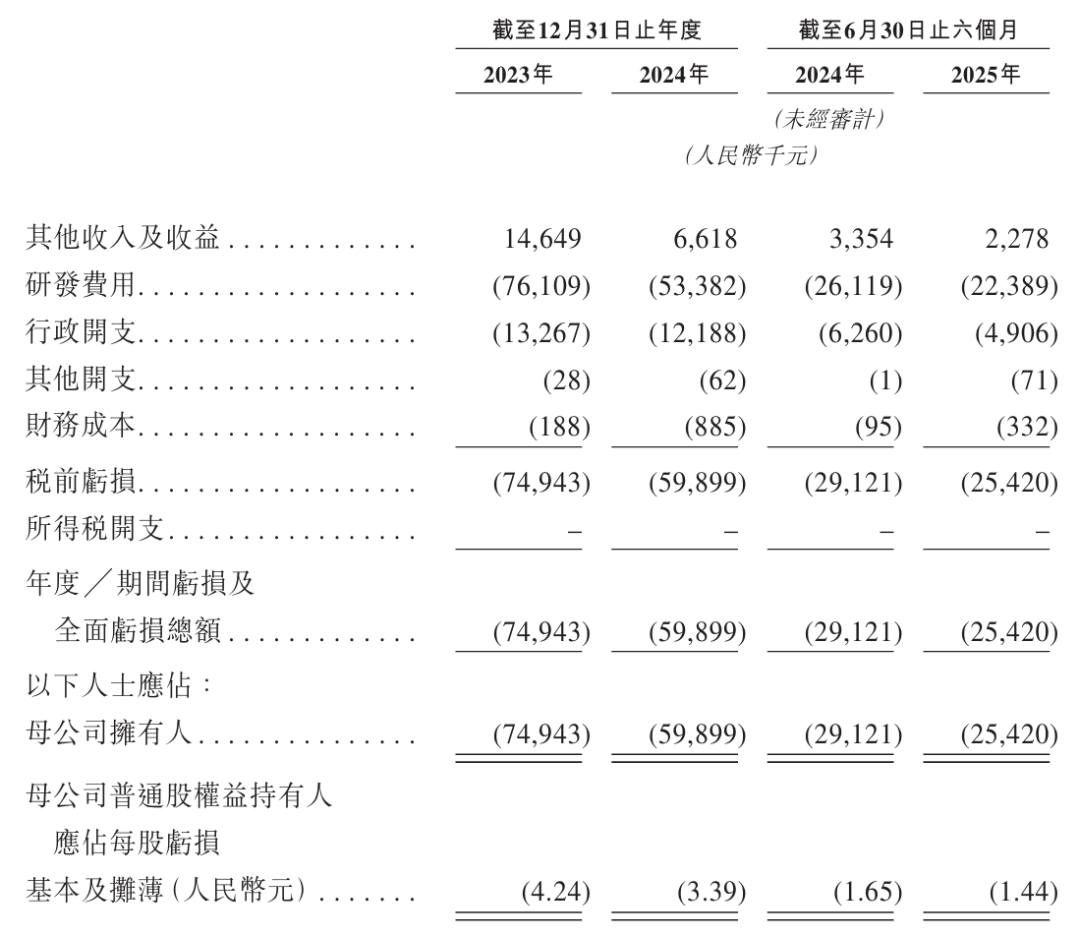
Core Viewpoint - The China Securities Regulatory Commission (CSRC) has issued supplementary material requirements for 19 companies, including Shimai Pharmaceutical, which must clarify the progress of state-owned shareholder management procedures and other matters related to its overseas listing application [1]. Group 1: Company Requirements - Shimai Pharmaceutical needs to provide details on the progress of state-owned shareholders fulfilling state-owned stock identification and management procedures [2]. - The company must explain the pricing basis and reasons for price differences in past capital increases and share transfers, and confirm the legality and compliance of its establishment and share changes [3]. - It is required to clarify whether the shares held by shareholders participating in the "full circulation" are subject to pledges, freezes, or other rights defects [4]. Group 2: Financial Performance - Shimai Pharmaceutical has not generated any drug sales revenue or milestone payments, with total other income of approximately 14.65 million yuan, 6.62 million yuan, and 2.28 million yuan for 2023, 2024, and the first half of 2025, respectively [4]. - The company reported losses of 74.94 million yuan, 59.90 million yuan, and 25.42 million yuan for the years 2023, 2024, and the first half of 2025, with cumulative losses exceeding 160 million yuan [5]. - The primary reason for ongoing losses is the lack of commercialized products, with income mainly from government subsidies and investment returns, which are insufficient to cover high R&D and operational costs [5]. Group 3: R&D Expenditure - R&D expenses for the company were 76.11 million yuan, 53.38 million yuan, and 22.39 million yuan for 2023, 2024, and the first half of 2025, respectively, indicating a significant decline in R&D investment [6]. - The R&D expenditure for the core product SMET12 decreased by 73.7% in the first half of 2025 compared to the same period in 2024, raising concerns about the development of core products [6]. Group 4: Cash Flow and Financing - As of June 30, 2025, the company's cash and cash equivalents were only 85.74 million yuan, while the average annual R&D expenditure was around 60 million yuan [7]. - By September 30, 2025, cash and cash equivalents sharply declined to 5.71 million yuan, indicating a rapid depletion of funds [8]. - The company has completed three rounds of financing, with a post-Series C valuation of 2.23 billion yuan, supported by investors such as Betta Pharmaceuticals and Tigermed [9]. Group 5: Market Potential - The global TCE market is projected to reach approximately $3 billion by 2024, with a compound annual growth rate (CAGR) of 40% expected to grow to $121.1 billion by 2035 [10]. - The Chinese TCE market is anticipated to reach 700 million yuan by 2024, with a CAGR of 63.8% expected to grow to 159.6 billion yuan by 2035 [10]. Group 6: Shareholder Structure and Future Plans - The company's actual controller, Xiao Zuoxiang, holds 53.2% of the shares, making him the controlling shareholder, while Betta Pharmaceuticals holds 4.75% through its subsidiary [11]. - The company plans to use the funds raised from its Hong Kong listing primarily for clinical development of core products, optimization of technology platforms, new product development, and operational funding [11].

22亿估值与571万资金,时迈药业急切港股上市“续命”,股权合规等四问待答
Sou Hu Cai Jing· 2025-12-29 06:02
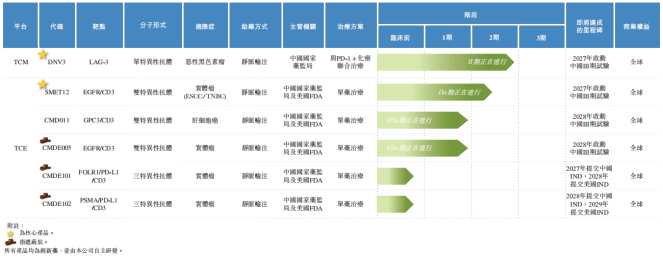
Core Viewpoint - The China Securities Regulatory Commission has issued supplementary material requirements for 19 companies, including Shimai Pharmaceutical, which must clarify the progress of state-owned shareholders in fulfilling state asset management procedures [1][2]. Group 1: Company Overview - Shimai Pharmaceutical was established in 2017 and focuses on the development of T-cell engagers (TCEs), with four clinical-stage candidates: DNV3, SMET12, CMD011, and CMDE005 [2]. - The company has received three rounds of financing, with a post-Series C valuation of 2.23 billion RMB, driven by investor optimism regarding the TCE therapy market [8]. Group 2: Financial Performance - The company reported no drug sales or milestone payments during the reporting period, with other income of approximately 14.65 million RMB in 2023, 6.62 million RMB in 2024, and 2.28 million RMB in the first half of 2025, primarily from government subsidies and investment income [3]. - Shimai Pharmaceutical's losses were 74.94 million RMB in 2023, 59.90 million RMB in 2024, and 25.42 million RMB in the first half of 2025, totaling over 160 million RMB in cumulative losses [3][4]. - The company has indicated that it may never achieve or maintain profitability, as it has not yet commercialized any products [3]. Group 3: Research and Development - Research and development expenses were 76.11 million RMB in 2023, 53.38 million RMB in 2024, and 22.39 million RMB in the first half of 2025, showing a significant decline that raises concerns about the development of core products [4][5]. - The R&D spending for the core product SMET12 decreased by 73.7% to 2.14 million RMB in the first half of 2025 compared to the same period in 2024 [5]. Group 4: Market Potential - The global TCE market is projected to reach approximately 3 billion USD by 2024, with a compound annual growth rate of 40% expected to grow to 121.1 billion USD by 2035 [8]. - The Chinese TCE market is expected to reach 700 million RMB by 2024, with a compound annual growth rate of 63.8% projected to grow to 159.6 billion RMB by 2035 [8]. Group 5: Funding and Cash Flow - The company has utilized 62.32 million RMB and 45.23 million RMB for financial investments in 2024 and the first half of 2025, respectively, despite ongoing losses [6]. - As of June 30, 2025, the company's cash and cash equivalents were only 5.71 million RMB, a significant decrease from 85.74 million RMB just three months prior [7].
布局TCE肿瘤疗法千亿蓝海,时迈药业能否博得市场青睐?
Zhi Tong Cai Jing· 2025-12-09 05:40
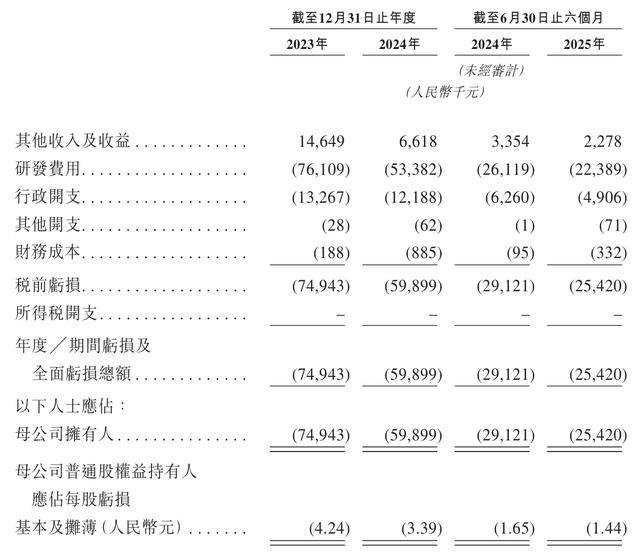
Core Viewpoint - Zhejiang Shimai Pharmaceutical Co., Ltd. has submitted an IPO application to the Hong Kong Stock Exchange, aiming to capitalize on the growing T cell engager (TCE) therapy market, which is experiencing rapid development and increasing interest from major international pharmaceutical companies [1][6]. Company Overview - Founded in 2017, Shimai Pharmaceutical is a pioneer in next-generation TCE therapies, focusing on utilizing the human immune system to combat cancer [1]. - The company has developed a next-generation TCE therapy that can be selectively activated in tumors for the treatment of solid tumors [1]. Financial Performance - Shimai Pharmaceutical is currently in the clinical research phase with no commercialized products. The company reported revenues of 14.649 million, 6.618 million, and 2.278 million RMB for 2023, 2024, and the first half of 2025, respectively [2]. - The company has incurred losses of 74.943 million, 59.899 million, and 25.42 million RMB over the same periods, showing a trend of narrowing losses [2]. - Research and development expenses were 76.109 million, 53.382 million, and 22.389 million RMB for the same periods, with employee costs being a significant component [2]. Product Pipeline - Shimai Pharmaceutical has four innovative drug candidates in clinical stages and two additional candidates in preclinical stages targeting solid tumors [2][5]. - The lead candidate, DNV3, targets LAG3 and has shown promising clinical data, including a 44.4% objective response rate in melanoma patients previously treated with PD-(L)1 inhibitors [3][4]. - SMET12, another candidate, is a potential first-in-class intravenous TCE for EGFR-positive advanced solid tumors and is currently in Phase IIa clinical trials [5]. Market Potential - The global TCE market is projected to grow from $400 million in 2020 to $3 billion by 2024, with a compound annual growth rate of 67.6%, and could reach $47.5 billion by 2030 and over $120 billion by 2035 [9][11]. - The TCE therapy offers advantages over CAR-T therapies and antibody-drug conjugates (ADCs), making it a promising direction for next-generation cancer immunotherapy [6][9]. Competitive Landscape - The TCE field is witnessing significant interest, with over $8.5 billion in transactions in 2024 alone, as major pharmaceutical companies enter the market [8]. - Currently, only two TCE drugs for solid tumors have been globally approved, indicating a substantial market opportunity for companies like Shimai Pharmaceutical that focus on this area [11][13]. Strategic Positioning - Shimai Pharmaceutical's focus on solid tumor TCE therapies positions it well in a market with limited competition, as most domestic players are still concentrated on hematological malignancies [13][14]. - The company’s innovative drug candidates are developed through specialized platforms, creating a competitive barrier in the TCE space [5].
时迈药业核心产品研发投入大幅缩减等引关注
Zhong Guo Jing Ji Wang· 2025-11-19 01:28
Core Viewpoint - Zhejiang Shimai Pharmaceutical Co., Ltd. has submitted its prospectus for an IPO on the Hong Kong Stock Exchange, with Huatai International as the sole sponsor, amid a backdrop of significant interest in TCE therapies and multiple rounds of financing from investors like Betta Pharmaceuticals [1][2]. Group 1: Company Overview - Founded in 2017, Shimai Pharmaceutical focuses on the development of TCE (T-cell engager) drugs, with no products commercialized yet and four clinical-stage candidates in its pipeline [2]. - The company reported revenues of 14.65 million yuan, 6.62 million yuan, and 2.28 million yuan for 2023, 2024, and the first half of 2025, respectively, with corresponding losses of 74.94 million yuan, 59.89 million yuan, and 25.42 million yuan, totaling over 160 million yuan in cumulative losses [2]. - The company has received three rounds of financing, with a post-Series C valuation of 2.23 billion yuan, and its major shareholders include the controlling shareholder Xiaozuoxiang and Betta Pharmaceuticals [2]. Group 2: Financial Management - The current CFO, Liu Yang, joined the company shortly before the IPO process, bringing over 12 years of experience in the international healthcare industry and capital markets [4]. - The company has seen frequent changes in its financial leadership, with four different CFOs from 2021 to 2025, indicating potential instability in financial management [5]. - Despite a peak net asset value of 236 million yuan, the company has shown a preference for structured deposits, with financial assets of 216 million yuan, 164 million yuan, and 67 million yuan for the years 2023, 2024, and the first half of 2025, respectively [6]. Group 3: Research and Development - The company has reduced R&D expenses significantly, with expenditures of 76.11 million yuan, 53.38 million yuan, and 22.39 million yuan for 2023, 2024, and the first half of 2025, respectively, alongside a decrease in administrative expenses [7]. - The R&D investment for core products DNV3 and SMET12 has also seen substantial cuts, raising concerns about the company's commitment to its pipeline [7]. - The safety profile of the core products remains a concern, with high rates of adverse events reported in clinical trials, including 81.8% for DNV3 and 93.8% for SMET12 [8].
47人团队如何撑起22亿元估值?时迈药业冲刺港股IPO,核心产品研发投入腰斩
Sou Hu Cai Jing· 2025-11-16 02:13
Core Viewpoint - Zhejiang Shimai Pharmaceutical Co., Ltd. has submitted its listing application to the Hong Kong Stock Exchange, focusing on the development of TCE drugs and aiming to raise funds for clinical development and operational needs [1][5]. Company Overview - Established in 2017, Shimai Pharmaceutical specializes in TCE drug development, with four clinical-stage candidates: DNV3, SMET12, CMD011, and CMDE005 [1]. - The company has a current valuation of 2.23 billion RMB following its latest Series C financing, attracting investments from notable pharmaceutical companies [1]. Financial Performance - For the reporting period from 2023 to the first half of 2025, Shimai Pharmaceutical reported other income and gains of 14.65 million RMB, 6.62 million RMB, and 2.28 million RMB, while total losses reached 74.94 million RMB, 59.90 million RMB, and 25.42 million RMB, accumulating over 160 million RMB in total losses [2][3]. - The company has not yet commercialized any products, leading to significant ongoing losses, with revenue primarily from government subsidies and investment income [2][4]. Research and Development - R&D expenses for the reporting period were 76.11 million RMB, 53.38 million RMB, and 22.39 million RMB, with a notable decrease in R&D spending raising concerns about the progress of core product development [4]. - The R&D expenditure for core product SMET12 decreased by 73.7% in the first half of 2025 compared to the same period in 2024, indicating potential challenges in sustaining development efforts [4]. Market Potential - The global TCE market is projected to reach approximately 3 billion USD by 2024, with a compound annual growth rate of 40% expected to grow to 121.1 billion USD by 2035. The Chinese TCE market is anticipated to reach 700 million RMB by 2024, with a growth rate of 63.8% projected to reach 159.6 billion RMB by 2035 [5].
维立志博-B(09887):深度报告:三大技术平台助力,领跑下一代肿瘤免疫
China Post Securities· 2025-10-31 11:26
Investment Rating - The report assigns an "Accumulate" rating for the company, marking its first coverage [1]. Core Insights - The company positions itself as a leader in next-generation tumor immunotherapy, leveraging three major technology platforms to establish a high-quality R&D pipeline [3][12]. - The 4-1BB co-stimulation signal market shows significant potential, with the product LBL-024 demonstrating notable competitive advantages [4][25]. - The TCE technology platform has been validated through clinical data, with LBL-034 showing superior efficacy and safety compared to competitors [5][22]. - The company is currently in the new drug development investment phase, with projected revenues of 175 million, 314 million, and 187 million yuan for 2025, 2026, and 2027 respectively, and expected net losses of 200 million, 99 million, and 262 million yuan [5]. Summary by Sections Section 1: Three Platforms Supporting Next-Generation Tumor Immunotherapy - The company aims to address diseases that current therapies, such as PD-1/PD-L1 antibodies, cannot treat, focusing on cutting-edge targets like 4-1BB and PD-L1 dual targets [3][12]. - The R&D team is robust, with extensive experience in new drug development, and has established a pipeline of 14 new drugs, including 6 in clinical stages and 4 with leading global clinical progress [13][22]. Section 2: 4-1BB Co-Stimulation Signal Market Potential - 4-1BB serves as a co-stimulation immune checkpoint molecule, providing a second signal for T-cell activation [25][31]. - LBL-024, a low-affinity 4-1BB dual antibody, has shown excellent efficacy and safety balance in clinical trials, with significant improvements in overall survival compared to existing treatments [4][35]. Section 3: TCE Technology Platform Validation - The TCE platform, particularly the CD3 TCE drug LBL-034, has demonstrated the ability to conditionally activate T-cells in tumor microenvironments, showing advantages in safety and efficacy over similar products [5][22]. - The company has plans for new generation TCE and TCE ADC platforms, with the CD3/MUC16 TCE positioned among the top globally [5][22].
MCE:B细胞自免疾病治疗新方向
Huachuang Securities· 2025-05-14 10:10
Investment Rating - The report provides a positive investment rating for the MCE therapy in the treatment of B cell autoimmune diseases, particularly systemic lupus erythematosus (SLE) [8][10]. Core Insights - The report highlights the urgent need for effective treatments for SLE, which currently lacks a root-cause therapy, and emphasizes the potential of B cell-targeted therapies like MCE to address this unmet clinical need [10][22]. - It discusses the advantages of MCE therapy over existing treatments such as CAR-T and TCE, particularly in terms of safety and efficacy in depleting pathogenic B cells [10][42]. - The report identifies key companies to watch in the clinical progress of MCE therapies, including 宜明昂科, 赛诺菲, Dren Bio, and LTZ Therapeutics [11][12]. Summary by Sections 1. B Cell Autoimmune Diseases: Diverse Types and Large Population - Autoimmune diseases involve the immune system mistakenly attacking the body's own tissues, with significant prevalence among conditions like rheumatoid arthritis (RA), systemic lupus erythematosus (SLE), multiple sclerosis (MS), and others [14][15]. 2. SLE: Large Population and Heavy Disease Burden - SLE affects approximately 7.8 million people globally, with a significant patient population in China, estimated at around 1 million [18][19]. - The disease presents severe symptoms and complications, leading to a high demand for effective treatments [19]. 3. SLE Treatment: Significant Unmet Clinical Needs, B Cell Therapy as a Mainstream Development - Current treatments for SLE are inadequate, with a low long-term remission rate and high recurrence risk [20][21]. - Innovative therapies that can achieve long-term remission or potential cures are urgently needed in the SLE treatment landscape [22]. 4. T Cell Killing: CAR-T and TCE - CAR-T and TCE therapies are explored for their potential to target and deplete pathogenic B cells, with CAR-T showing promising long-term efficacy in SLE patients [25][26]. - However, challenges such as high costs and safety concerns remain significant barriers to widespread adoption [32][33]. 5. Myeloid Cell Killing: MCE - MCE therapy utilizes myeloid cells to target and eliminate pathogenic B cells, showing potential for improved safety profiles compared to CAR-T and TCE therapies [47][50]. - The report emphasizes the innovative mechanisms of MCE and its potential to address the limitations of existing therapies [52].
