Tunee

Search documents
模力工场 029 周 AI 应用榜:AI 生图文字不再“开盲盒”,GLM-Image 凭精准登顶榜首!
AI前线· 2026-01-22 06:39
Core Insights - The article highlights the upcoming "Dreaming AI · Angel Foundation" event in Beijing, focusing on AI trends and challenges in the robotics and large model applications sectors [2] - The AI application landscape is evolving towards more practical, integrated, and interactive solutions, with a notable emphasis on hardware innovation and scenario-based services [4] AI Application Trends - This week's AI application ranking features 23 new applications, showcasing a blend of software and hardware innovations across various fields, including large models, smart hardware, lifestyle tools, and AI infrastructure [4] - The current trend indicates that AI applications are becoming more practical and integrated, with hardware innovations driving the widespread adoption of AI technologies [4] Featured Applications - GLM-Image (Zhipu AI): An open-source image generation model excelling in generating complex visual text and long text rendering, particularly suitable for legal documents and product descriptions, with a cost advantage [6] - Qianwen App: An upgraded intelligent assistant from Alibaba that integrates with core services like Taobao and Alipay, allowing users to perform tasks such as ordering food and booking flights through natural dialogue [7] Software and Hardware Evolution - Software is transitioning from merely conversational capabilities to practical functionalities, as evidenced by GLM-Image's success in specialized scenarios and Qianwen App's service integration [9] - Hardware is moving away from being seen as "geek toys" to more practical designs that seamlessly fit into daily life, focusing on user-friendly features [10] Overall AI Development - The development of AI is increasingly focused on integrating with real-world scenarios and user habits, providing timely support rather than emphasizing the technology itself [11] - The emergence of new AR glasses and health devices reflects a shift towards lightweight, user-friendly designs that enhance everyday experiences [14]



从冷门歌手到热门金曲,AI音乐成了?
Tai Mei Ti A P P· 2025-12-11 06:37
Core Insights - The rise of AI-generated music has transitioned from novelty to mainstream, with significant engagement on platforms like Bilibili and Douyin, where related content has garnered millions of views [1][2] - AI music has evolved from simple imitation to a more sophisticated creation process, utilizing deep learning models to generate original compositions across various genres [2][4] - The commercial potential of AI music is being realized, with notable success stories such as the AI song "Walk My Walk," which has generated substantial revenue through streaming platforms [7][9] Group 1: AI Music Development - AI music has undergone a "full-stack upgrade," moving from basic imitation to complex creation involving composition, arrangement, and lyrics generation [2][5] - New AI music generation models, such as Suno V3 and Mureka, allow users to create high-quality music quickly and across different genres [4][5] - The emergence of various AI tools has transformed the music production landscape, enabling a one-stop creative platform for users [5][6] Group 2: Commercialization and Market Dynamics - The direct monetization of AI music is evident, with platforms like Spotify providing revenue opportunities for artists based on streaming numbers [7][9] - AI-generated artists are gaining attention from record labels, leading to increased valuations and contracts for AI music creators [9][11] - Despite the potential, the domestic market for AI music remains conservative, with challenges in monetization and platform policies limiting revenue generation for creators [11][13] Group 3: Challenges and Future Outlook - The AI music industry faces significant challenges, including copyright issues and a supply-demand imbalance, with an overwhelming number of songs generated but limited consumer willingness to pay [25][26] - Technical limitations in AI music generation, particularly in non-Latin languages like Chinese, hinder broader acceptance and usability [28][29] - Optimism remains among industry professionals regarding the future of AI music, with expectations that it will lower creative barriers and enhance musical diversity [29]
跟这个音乐Agent聊会儿,分分钟生成抖音神曲 | 对话音乐创作Agent产品Tunee
量子位· 2025-11-01 01:35
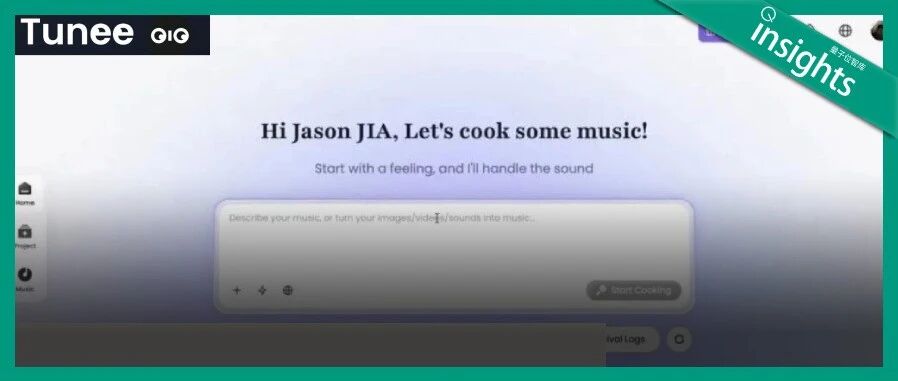
Core Insights - The article discusses the emergence of AI music generation products, particularly focusing on Tunee, which represents a shift from traditional tools to interactive AI agents in music creation [5][12]. - Tunee aims to lower the barriers to music creation through conversational interactions, allowing users to express their musical ideas more freely and receive tailored outputs [13][26]. Group 1: Product Features and User Interaction - Tunee utilizes a dialogue-based creative process that allows users to input vague or abstract musical ideas, with the system analyzing user intent and providing style recommendations and creative guidance [13][26]. - The product supports multiple output formats, including professional audio files and social media-ready music videos, catering to various user needs [13][12]. - The primary user base includes music enthusiasts and content creators who seek personalized music for their projects, indicating a diverse range of use cases beyond mere entertainment [17][19]. Group 2: Market Position and User Needs - Tunee's design focuses on understanding user needs and translating them into precise music generation instructions, which is crucial for meeting the high expectations of users [25][38]. - The product's success hinges on its ability to adapt to user feedback and continuously refine its offerings based on user interactions and satisfaction levels [57][61]. - The team emphasizes the importance of user engagement and responsiveness in building a loyal user base, highlighting the need for genuine communication with users [62][64]. Group 3: Development and Future Directions - The development of Tunee is informed by a combination of technical expertise and insights from experienced music producers, ensuring that user demands are effectively translated into the product [38][40]. - The team is focused on rapid iteration and improvement of the product, prioritizing dialogue quality and user satisfaction as key performance indicators [66][67]. - Future iterations will aim to enhance the dialogue process, ensuring that user needs are clearly understood and met through continuous feedback loops [66][70].
AI音乐的“野蛮”时代,要结束了
3 6 Ke· 2025-10-21 12:34
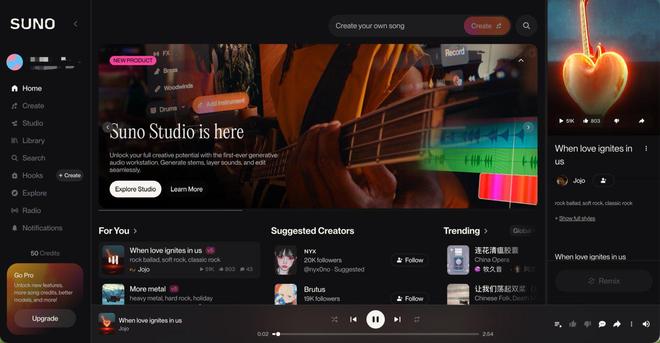
Group 1 - AI music startup Suno is negotiating to raise over $100 million in a funding round, which would increase its valuation to over $2 billion, quadrupling its previous valuation [1] - Suno currently generates over $100 million in annual recurring revenue [1] - Spotify announced plans to collaborate with major record labels and independent music organizations to develop responsible AI music products that prioritize artists [1] Group 2 - The legal landscape for AI music companies is intensifying, with major record labels and independent musicians escalating lawsuits against Suno and Udio for copyright infringement [3][17] - The recent settlement of $1.5 billion between Anthropic and several authors has emboldened record labels to adopt more aggressive legal strategies against AI companies [3][13] Group 3 - Suno and Udio are launching new tools and models, such as Suno's V5 model and Suno Studio, which are transforming music production processes [4][6] - Suno Studio allows users to create music without traditional music theory knowledge, significantly lowering the technical barrier for music creation [8][12] Group 4 - ElevenLabs has entered the AI music space with its product Eleven Music, which emphasizes simplicity and user-friendly design, while also securing strategic investments and licensing agreements [10][12] - The competition among AI music platforms is shifting from technical capabilities to compliance with copyright laws and regulations [21][23] Group 5 - The music industry is witnessing a transformation where AI is reshaping the roles of artists, managers, and collective rights organizations, leading to a reallocation of power within the industry [28][30] - The ongoing legal disputes highlight the need for clear licensing agreements and data governance as AI music becomes more integrated into the commercial landscape [27][30]
实测国内首个对话式AI音乐创作Agent:聊个天就能谱曲填词混剪生成MV
量子位· 2025-09-20 10:51
Core Viewpoint - The article discusses the launch of Tunee, a conversational AI music creation agent that simplifies music production and enhances user interaction through dialogue-based modifications [2][4][35]. Group 1: Product Features - Tunee allows users to create music and modify it through a conversational interface, making the process more intuitive and user-friendly [6][8]. - The platform offers a "quick mode" for users who prefer to generate music without extensive dialogue [6]. - Users can upload files, search for inspiration online, and receive multiple arrangement options based on their initial ideas [9][11]. Group 2: Performance Evaluation - The AI demonstrated strong music generation capabilities across various genres, including modern R&B and rap, with satisfactory melody and rhythm [19]. - Tunee's editing capabilities were tested, revealing some limitations in maintaining original elements while making changes [20][22]. - The AI's ability to process multi-modal content includes features for MV production, lyric videos, and audio processing, showcasing its comprehensive functionality [24][32]. Group 3: Development Team and Market Position - Tunee is developed by a professional team under 趣丸科技, known for creating the first multi-modal music generation model and popular singing tools [32]. - The article highlights the rapid advancement of domestic AIGC applications, emphasizing the trend towards integrated solutions that address user needs effectively [33][34]. - The focus on specialized products like Tunee indicates a shift towards refining professional tools within niche markets [35].