YU9

Search documents
小米集团-W(01810):等待基本面拐点,AI战略图景显化:小米集团-W(01810):
Shenwan Hongyuan Securities· 2026-03-26 10:30
Investment Rating - The investment rating for the company is "Buy" (maintained) [1] Core Views - The report highlights the need to wait for a fundamental turning point, with a clearer picture of the AI strategy emerging [6] - The company has adjusted its profit forecasts for 2026 and 2027, maintaining a "Buy" rating despite the downward revisions [8] Financial Data and Earnings Forecast - Revenue projections for the company are as follows: - 2024: 365.9 billion RMB - 2025: 457.3 billion RMB - 2026E: 504.8 billion RMB - 2027E: 593.0 billion RMB - 2028E: 698.0 billion RMB - Year-on-year growth rates are projected at 35% for 2024, 25% for 2025, 10% for 2026, 17% for 2027, and 18% for 2028 [7] - Adjusted net profit forecasts are: - 2024: 27.3 billion RMB - 2025: 39.2 billion RMB - 2026E: 33.4 billion RMB - 2027E: 41.4 billion RMB - 2028E: 51.4 billion RMB - The report indicates a decrease in adjusted net profit for 2026 and 2027 compared to previous estimates [8][11] Business Segments - Smartphone segment: - Revenue for 2025 is projected at 186.4 billion RMB, with a year-on-year decrease of 3% - The average selling price (ASP) is expected to increase by 5% in 2026, reaching 1,185 RMB per unit [8] - IoT segment: - Revenue for 2025 is projected at 123.2 billion RMB, with a year-on-year growth of 18% - The report notes that the slowdown in growth is due to national subsidies and increased competition [8] - Internet services: - Revenue for 2025 is projected at 37.4 billion RMB, with a year-on-year growth of 10% [8] - Electric vehicles: - The company aims to deliver 550,000 vehicles in 2026, with a target of 410,000 deliveries in 2025 [8] Valuation - Based on a sum-of-the-parts (SOTP) valuation, the target valuation for the company is 986.7 billion RMB, indicating a potential upside of 33% from the current market value [15]

未知机构:中信科技小米集团跟踪点评1月销量2026年1月小米汽车交-20260213
未知机构· 2026-02-13 03:00
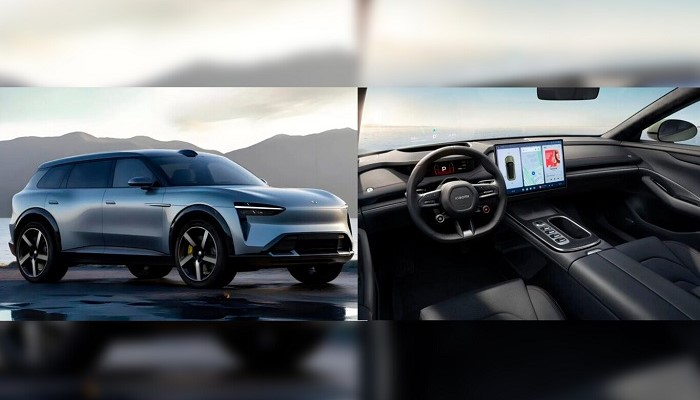
Summary of Xiaomi Group Conference Call Company Overview - **Company**: Xiaomi Group - **Industry**: Automotive and Consumer Electronics Key Points Sales Performance - In January 2026, Xiaomi delivered over 39,000 vehicles, a decrease from over 50,000 in December 2025 [1] - The decline in deliveries is attributed to: 1. The discontinuation of the first-generation SU7, with production lines being reconfigured for the new generation SU7 set to launch in April 2026 [1] 2. January had 21 working days, two fewer than December [1] - Future outlook suggests further decline in deliveries due to the impact of the Chinese New Year in February [1] Vehicle Pipeline - At least two key models are expected to launch in 2026: 1. The new generation SU7, which will officially launch in April 2026 [2] 2. The YU9 model, part of the range-extended platform, is undergoing road tests and is expected to launch in the second half of 2026 [2] - The YU7GT model has completed the necessary regulatory filings and is anticipated to be released within the year [2] - Xiaomi's target for 2026 is to deliver 550,000 vehicles, which is considered conservative compared to the previous year's performance of over 410,000 vehicles [2] - With the introduction of new models and potential capacity releases, the forecast for 2026 deliveries is adjusted to 660,000 electric vehicles [2] Cost Pressures - **Storage Costs**: The proportion of storage costs in the Bill of Materials (BOM) for Xiaomi smartphones is expected to rise from 10-15% to 20-30% by Q4 2025, impacting the gross margin to approximately 9% [3] - **Battery Costs**: The cost of lithium batteries is increasing, with a projected rise in battery costs by approximately 5,640 RMB per vehicle due to significant price increases in lithium carbonate and lithium hexafluorophosphate [4] - Overall, the smartphone industry is facing challenges from declining shipments and increased competition in the white goods market, leading to a downward revision of revenue forecasts for 2025-2027 [4] Financial Projections - Revenue expectations for 2025-2027 have been adjusted to 461.2 billion, 541.8 billion, and 600.5 billion RMB respectively, down from previous estimates [4] - Non-IFRS net profit projections have also been revised to 40 billion, 36.2 billion, and 50.2 billion RMB for the same period [4] Valuation and Target Price - The company is valued using a 30x PE ratio, resulting in a total market capitalization of approximately 1.31 trillion HKD [5] - A target price of 47 HKD is set, maintaining a "Buy" rating for the stock [5]
12款新车展望2026:中国汽车市场开启“耐力赛” | 界面预言家⑧
Xin Lang Cai Jing· 2025-12-31 09:15
Group 1 - The automotive market is transitioning from a high-intensity "sprint" to a "marathon" mode by 2026, with electric vehicle (EV) growth slowing and consumers becoming more cautious about value and reliability [1] - Consumers are increasingly embracing hybrid and plug-in hybrid vehicles as a "bridge solution" to reduce range anxiety and stabilize purchasing decisions [1] - The supply side is experiencing compressed model development cycles, with a shift towards rapid iteration similar to the Chinese model, making "annual updates" and "mid-cycle facelifts" essential [1] Group 2 - The focus for 2026 is shifting towards addressing "problems" rather than just introducing "new cars," including questions about brand coherence and the ability to maintain consumer trust [2] - The success of the SU7 indicates that a clear product positioning and ongoing conversation can mitigate the disadvantages of late market entry, but the YU9 faces a crowded high-end SUV segment [3][7] Group 3 - The YU9 is expected to target the family flagship market with a three-row layout and reduced range anxiety, but it must adapt its sporty narrative to emphasize comfort and long-distance experience [7] - The Z model from Tengshi aims to rebrand the company by packaging its technological capabilities into a more appealing product narrative, enhancing its market presence [35] Group 4 - The iX3 from BMW is positioned to address how joint venture electric vehicles can differentiate themselves in the Chinese market, focusing on comfort and local adaptations while retaining driving characteristics [47][49] - The second-generation Roadster from Tesla, delayed for nearly nine years, needs to redefine its narrative to maintain its market allure amidst increasing competition in the high-performance electric vehicle segment [51][54] Group 5 - The introduction of large GT and convertible models by Genesis is seen as a brand investment rather than a sales strategy, aiming to elevate brand perception and value in the luxury market [56][59]