candy.ai

Search documents
“十五五”规划纲要计算机行业解读:智能经济启航,AI Agent主导未来五年AI叙事
Zhong Guo Yin He Zheng Quan· 2026-03-15 03:24
Investment Rating - The report maintains a "Buy" rating for the computer industry [4] Core Insights - The "14th Five-Year Plan" emphasizes the core strategic position of artificial intelligence (AI) in national development, with the term "artificial intelligence" appearing 30 times, compared to only 6 times in the previous plan [6][8] - The next five years will see AI Agents as the driving force for economic transformation, with a focus on high-value AI Agent growth leading to significant value creation [6][10] - The demand for intelligent computing power is expected to rise significantly, with projections indicating that by 2028, intelligent computing power will account for over 95% of total computing power in China [6][12] - The report highlights the emergence of "Token inflation" due to the rapid growth in AI model usage, with a projected annual Token consumption increase from 0.0005 PetaTokens in 2025 to 152,667 PetaTokens by 2030, reflecting a CAGR of 3418% [6][24] - Investment opportunities are identified in AI-native application companies, edge AI technologies, domestic computing power chain replacements, and collaborative infrastructure for computing and electricity [6][38] Summary by Sections Section 1: The "14th Five-Year Plan" as a Key Period for Intelligent Economy - The plan introduces the concept of "intelligent native," suggesting AI may become a new production factor [11] - The intelligent economy will drive the reconstruction of AI factor value [13] Section 2: Outlook for the "14th Five-Year Plan" - The intelligent economy is set to initiate a rapid explosion in Token usage, with AI Agents transitioning from cost centers to profit centers [17][38] - The report anticipates a significant increase in the number of active AI Agents, from approximately 28.6 million in 2025 to 2.216 billion by 2030, with a compound annual growth rate (CAGR) of 139% [24] Section 3: Comprehensive Upgrade of AI Factors During the "14th Five-Year Plan" - The report emphasizes the importance of high-quality data sets as a core barrier for building irreplaceable AI Agents [16] - The demand for high-quality, proprietary data sets is expected to surge, with a focus on transforming data resources into valuable assets [16] Section 4: Investment Recommendations - The report suggests focusing on AI-native application companies capable of generating scalable revenue, as well as companies that integrate AI Agents with vertical industry know-how [6][38] - Specific companies to watch include Horizon Robotics, JingTai Holdings, Meitu, and others [6]


又一批AI社交产品悄悄「死亡」了
创业邦· 2025-10-17 07:35
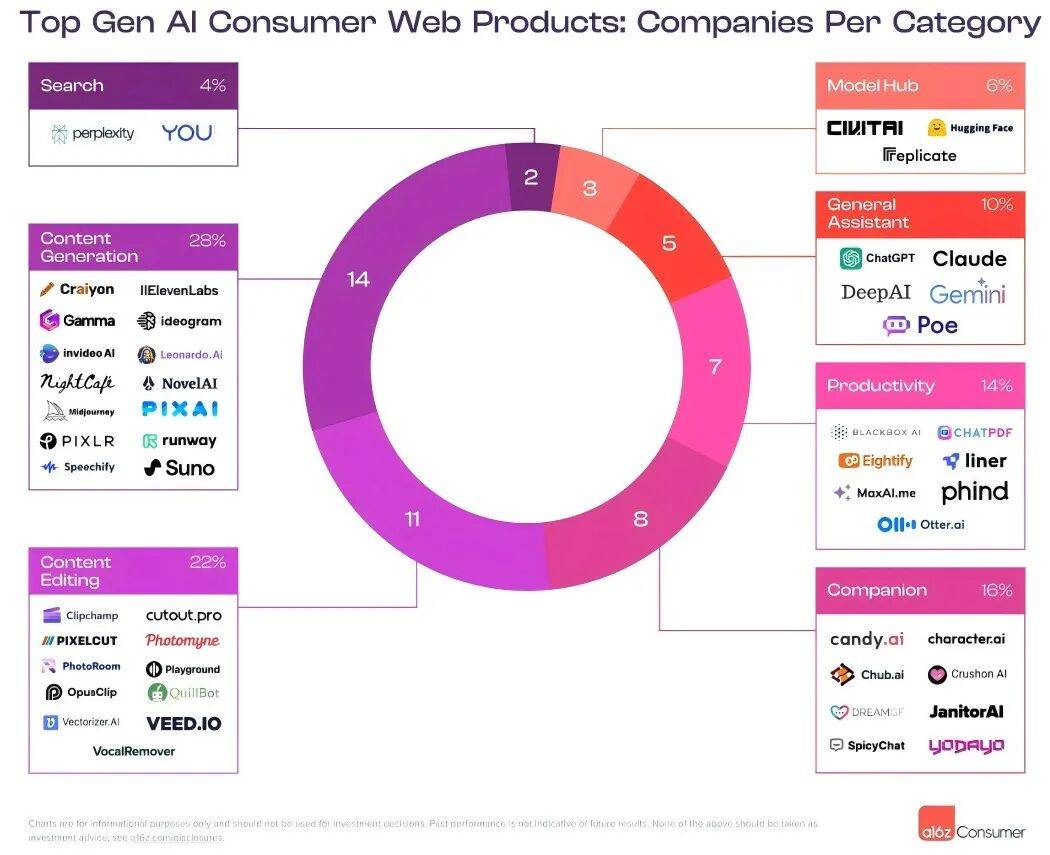
Core Insights - A wave of AI social companies and products has quietly "died," including both well-known models and niche applications, indicating a significant shift in the AI social landscape [6][10][11] - Despite the shutdowns, AI companionship remains a popular sector, with many products still thriving and being recognized in top AI application lists [7][9] Group 1: Market Trends - In 2023, Character.AI emerged as a strong competitor to ChatGPT, with AI companionship being one of the hottest application categories [7] - By 2025, AI companionship applications had reached 220 million downloads globally, generating $221 million in consumer spending [16] - A survey indicated that 52% of teenagers reported using AI companionship applications at least a few times a month [16] Group 2: User Experience and Challenges - Users express concerns over the shutdowns, fearing loss of emotional connections with AI characters they have developed over time [14][18] - The pricing models of AI companionship applications, which often include subscription fees and pay-per-use structures, have been criticized for being too high and complex [17] - Community engagement and stable operations are crucial for user retention, yet many applications struggle to balance emotional content value with commercial viability [17][19] Group 3: Competitive Landscape - The AI companionship sector is highly competitive, with many products facing a "death spiral" due to user growth stagnation and declining engagement [18][19] - Successful AI companionship products are increasingly focusing on content-driven and feature-rich social platforms, while others are targeting niche verticals like gaming and therapy [22][23] - Innovations such as hardware integration, multi-modal experiences, and blending real and AI social interactions are being explored to enhance user engagement [23][26]


又一批AI社交产品悄悄“死亡”了
Hu Xiu· 2025-10-11 07:05
Core Insights - A wave of shutdowns has hit AI social companies, including both established players and startups, indicating a challenging environment for AI companionship products [1][2][3] - Despite the shutdowns, AI companionship remains a popular sector, with significant user engagement and investment interest [4][5][6] Group 1: Market Trends - The AI companionship market has seen a surge in products since the rise of ChatGPT, but it is now experiencing a "shutdown wave" [3][4] - According to a16z, AI companionship applications have been consistently popular, with many products making it to the top rankings [6][9] - By 2025, AI companionship applications had achieved 220 million downloads globally, generating $221 million in consumer spending [19][20] Group 2: User Experience and Challenges - Users have expressed concerns over the pricing models of AI companionship applications, which often include subscription fees and pay-per-use structures [22][23] - Community engagement and stable operations are critical for user retention, as many applications struggle with technical and operational challenges [25][26] - The current landscape reveals a dichotomy where emotional value and commercial viability are difficult to balance [25][30] Group 3: Competitive Landscape - The AI companionship sector is highly competitive, with many products failing to differentiate themselves effectively [30][31] - Successful products are increasingly focusing on content-driven and feature-rich social platforms, while others are targeting niche markets [33][36] - Innovations in user interaction, such as hardware integration and multi-modal experiences, are being explored to enhance user engagement [40][42] Group 4: Future Directions - The market is undergoing a transformation, with a shift towards more personalized and emotionally resonant AI companionship experiences [39][44] - Companies are experimenting with various strategies to sustain user interest and improve retention, including integrating real-world social elements [42][45]