iShares罗素2000指数ETF

Search documents
历史高点被“踩在脚下”,所有资产都在涨
凤凰网财经· 2025-09-20 12:37
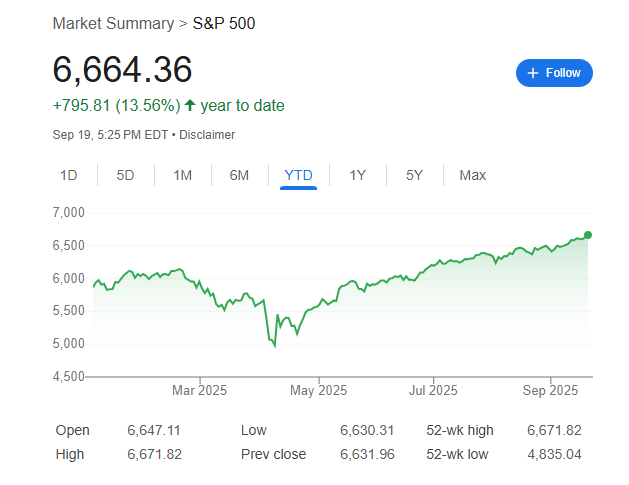
Group 1 - The global financial market is experiencing a broad cross-asset surge, driven by the Federal Reserve's interest rate cuts and the AI boom, marking the most significant rise since the speculative frenzy of 2021 [1] - In the U.S. market, major indices like the S&P 500 and Nasdaq have reached historical highs, with year-to-date gains of 14% and 17% respectively, while the Russell 2000 index has also surpassed its previous peak [2] - The MSCI All Country World Index has hit a record high, indicating a global trend, with emerging market stocks outperforming global indices, signaling a sharp increase in investor risk appetite [4] Group 2 - The credit market is witnessing a similar optimistic trend, with the credit spread for high-rated U.S. companies narrowing to below 0.8 percentage points, the lowest since 1998 [4] - The narrative around this market surge is built on the "Great Resilience Trade," emphasizing resilient consumers, the ongoing AI revolution, and easing trade tensions from the White House [8] - The enthusiasm for AI investments is seen as a core driver, with some firms warning that investors are making one-sided bets while overlooking high valuations and slowing revenue growth [9] Group 3 - The recent interest rate cuts are interpreted as the beginning of a new easing cycle, leading to significant capital inflows into global stock markets, the largest since 2025 [13] - Some investors are cautious, highlighting high geopolitical risks, a slowing U.S. labor market, and extreme market concentration, suggesting current valuations leave little room for error [14][16] - Despite the prevailing optimism, a minority of teams are adopting defensive strategies, with increased short positions in the Russell 2000 index ETF and a rise in funds flowing into safe-haven assets like gold and cash [16]


历史高点被“踩在脚下”,所有资产都在涨!
Hua Er Jie Jian Wen· 2025-09-20 02:17
Core Viewpoint - The global financial markets are experiencing a significant rise in risk asset prices, driven by the Federal Reserve's interest rate cuts and the AI boom, marking the most extensive cross-asset surge since the speculative frenzy of 2021 [1][3]. Group 1: Market Performance - The S&P 500 and Nasdaq Composite indices in the U.S. have reached new historical highs, with year-to-date increases of 14% and 17%, respectively [1]. - The MSCI All Country World Index has also hit a historical peak, with emerging market stocks outperforming global indices, indicating a sharp increase in investor risk appetite [3]. - The credit market is witnessing a bullish trend, with the credit spread for high-rated U.S. companies narrowing to below 0.8 percentage points, the lowest level since 1998 [3]. Group 2: Investor Sentiment and Trends - The current market rally is characterized by a "Great Resilience Trade" narrative, supported by resilient consumers, the AI revolution, and easing tariff stances from the White House [6][7]. - The enthusiasm for AI investments is seen as a core driver of this trend, with some analysts comparing it to a "steroid-fueled internet bubble" [7]. - Despite the optimism, there are concerns about high valuations, slowing revenue growth, and significant investment needs from AI giants [7]. Group 3: Economic Indicators and Federal Reserve Policy - The recent interest rate cuts by the Federal Reserve are interpreted as the beginning of a new easing cycle, leading to the largest weekly inflow of funds into global stock markets since 2025 [8]. - The expectation of further rate cuts next year is prevalent in the futures market, with at least four cuts anticipated [8]. Group 4: Caution Among Investors - Some investors are wary of the current market conditions, citing high geopolitical risks, a slowing U.S. labor market, and extreme market concentration as potential threats [9]. - Defensive positioning is increasing, with some investment teams expressing skepticism about the overly optimistic expectations regarding the Federal Reserve's rate cuts [9]. - The rise in short positions on the Russell 2000 index ETF and the inflow into safe-haven assets like gold and cash indicate a cautious sentiment among certain investors [9].