人工智能革命

Search documents
驾驭人工智能革命的影响
GWI· 2026-02-26 15:38
Investment Rating - The report does not explicitly provide an investment rating for the industry Core Insights - The artificial intelligence revolution is reshaping the global economy and changing the way water resources are managed, necessitating a strategic framework to address the increasing water demand associated with AI [3][6] - The report identifies three core industries driving the new economy: data centers, semiconductor manufacturing, and the power generation sector [6] - By 2025, the freshwater withdrawal for the new economy is projected to reach 23.7 cubic kilometers, a 38% increase from 2020, with a further 129% increase expected by 2050 [7][24] - The water consumption intensity of the AI sector is significantly lower than that of traditional industries, with AI's industrial water withdrawal only accounting for 3.7% of the total [7][53] Summary by Sections Water Resource Management in Economic Transformation - All economic transformations require adjustments in water resource management, and the AI revolution is no exception [14] - The report emphasizes the need for a comprehensive water resource transformation to support the AI economy while ensuring community access to affordable and safe water [4][12] Water Footprint of Artificial Intelligence - AI consumes water through three main channels: on-site cooling of data centers, off-site power generation, and semiconductor manufacturing [20] - The water footprint of using AI for 30 minutes is approximately 616 milliliters, with the majority of water consumption arising from power supply to data centers [21][20] Semiconductor Industry Water Resource Risks - The semiconductor industry faces a potential increase in water demand of over 600% by 2050, primarily due to the rising intensity of water consumption in chip manufacturing [27][28] - The production of ultra-pure water for semiconductor manufacturing is highly water-intensive, requiring up to four cubic meters of raw water to produce one cubic meter of ultra-pure water [28] Data Center Water Usage - Data centers' water usage efficiency varies based on cooling technology and geographical location, with significant differences in water consumption based on operational strategies [41][58] - The report highlights that while data centers are increasing their water efficiency, the total volume of water used for cooling is expected to grow significantly due to rising energy demands [50][48] Geographic Distribution of Data Centers - New data center construction is expected to concentrate in areas already facing water resource pressures, raising concerns about future water availability [62][64] - The selection of data center locations is increasingly driven by energy availability rather than water resource considerations, leading to potential operational risks [19][62] Water-Energy Nexus - The transition to renewable energy sources is expected to reduce the upstream water footprint of data centers, as the industry shifts from high-water coal energy to lower-water natural gas and renewable sources [65]




半导体设备龙头长川科技全年净利预增172.67%~205.39%,存储封测正迎来量价齐升
Mei Ri Jing Ji Xin Wen· 2026-01-29 06:23
Market Performance - The Shanghai Stock Exchange Sci-Tech Innovation Board semiconductor materials and equipment theme index decreased by 3.91% as of January 29, 2026 [1] - The component stocks showed mixed performance, with Olay New Materials leading with a 6.4% increase, while Jingyi Equipment fell by 8.42% [1] - The Sci-Tech Semiconductor ETF (588170) dropped by 3.86%, with a latest price of 1.82 yuan and a turnover rate of 10.8%, totaling a transaction volume of 890 million yuan [1] Company Announcements - Changchuan Technology announced an expected net profit attributable to shareholders of 1.25 billion to 1.4 billion yuan for 2025, representing a year-on-year growth of 172.67% to 205.39% [2] - The significant profit increase is driven by the sustained recovery in semiconductor industry demand and strong customer orders, leading to a substantial rise in sales revenue [2] Industry Insights - Aijian Securities noted that the storage chip packaging and testing industry is benefiting from the recovery in downstream demand, with the industry's prosperity being transmitted from the downstream demand side to the upstream packaging and testing segment [2] - The semiconductor equipment and materials industry is a crucial area for domestic substitution, characterized by low domestic substitution rates and high ceilings for domestic replacement, benefiting from the AI revolution and advancements in lithography technology [2]

2025年半导体设备制造行业利润增长128%,科创半导体ETF(588170)和半导体设备ETF华夏(562590)直线拉升
Mei Ri Jing Ji Xin Wen· 2026-01-27 03:45
Group 1 - The semiconductor materials and equipment theme index on the STAR Market has seen a strong increase of 3.22%, with notable gains from stocks such as ChipSource Microelectronics up 14.10% and Xingfu Electronics up 9.87% [1] - The semiconductor equipment ETF, Huaxia, has risen by 2.4%, with a trading volume of 2.12 billion yuan and a turnover rate of 7.08% [1] - The National Bureau of Statistics reported that profits in the high-tech manufacturing sector increased by 13.3%, significantly outpacing the overall industrial profit growth of 12.7 percentage points [2] Group 2 - The semiconductor industry has shown remarkable profit growth, with integrated circuit manufacturing profits soaring by 172.6% and semiconductor device manufacturing profits increasing by 128% [2] - The domestic fab expansion is expected to accelerate, particularly in advanced logic, driven by a significant gap in supply [2] - The semiconductor equipment ETF, Huaxia, focuses on the upstream semiconductor sector, with 63% of its index comprising semiconductor equipment [3]




2026年资产大转折,安全边际何在?
虎嗅APP· 2026-01-27 01:09
Core Viewpoint - The article suggests that 2026 may be a pivotal year for global asset allocation, influenced by the resilience shown in the markets amid the AI boom and policy changes, leading to potential macroeconomic turning points and asset price differentiation [5][6]. Group 1: Market Dynamics - The U.S. stock market is experiencing high concentration and valuation levels, with warnings of potential bubble formation due to excessive liquidity and investor enthusiasm, which could lead to a market correction within the year [6]. - Global growth dynamics and policy paths are diverging significantly, with the U.S. economy supported by fiscal stimulus and AI investments, while Europe and parts of Asia present more diversified opportunities due to reasonable valuations and structural reforms [6]. - Inflation may resurge, becoming a key variable influencing commodity prices and interest rates, thereby exerting pressure on fixed-income assets [7]. Group 2: Investment Strategies - Experts recommend that investors adopt more cautious and diversified allocation strategies, moving away from concentrated investments in single markets or asset classes. Emphasis should be placed on geographic diversification (e.g., focusing on opportunities in Europe and Asia), asset class diversification (increasing attention to physical assets, commodities, and alternative investments), and flexible tool usage (e.g., using derivatives for risk hedging) [8]. - The consensus is that 2026 will see intensified structural competition and unexpected path differentiation, requiring investors to deeply understand trend changes and adjust their allocations flexibly to navigate potential market shifts [8]. Group 3: Value Creation and Asset Pricing - Traditional value creation metrics, such as labor and debt, are being challenged by the rise of AI, which is altering the fundamental basis of asset pricing. The shift from human labor to algorithmic efficiency and data monopolies raises questions about the true nature of value creation [10][11]. - The narrative around growth is shifting from globalized expansion to regional self-sufficiency and digital internalization, with new engines like AI and energy transition needing to prove their ability to sustain economic growth [12]. - The role of debt is evolving, with rising government debt levels leading to a perception of debt as a "lifeline" rather than a growth catalyst, challenging the foundational logic of "risk-free assets" [15]. Group 4: Cognitive Challenges and Market Narratives - The market's direction is increasingly influenced by how narratives around data are constructed, making the understanding of these narratives a critical battleground for investors in 2026 [20][21]. - The current enthusiasm for AI reflects a collective belief that may overlook significant risks, such as the potential for massive financing needs and the deep societal impacts of AI on employment and stability [25][26]. - The interplay of geopolitical factors, industrial policies, and national security has become central to market dynamics, necessitating a shift in cognitive frameworks to accommodate these new realities [27]. Group 5: Strategic Approaches - Investors are advised to navigate contradictions in the market, such as the high valuations of U.S. tech stocks versus the ongoing momentum in AI, by adopting a strategy of "riding the trend while remaining vigilant" [35]. - The use of financial derivatives, such as options, is highlighted as a means to hedge against potential consensus collapses in overvalued segments of the market [37]. - A diversified approach to asset allocation is recommended, focusing on physical assets and equities in regions benefiting from structural growth, while maintaining exposure to non-U.S. currencies [40].


能源金属涨涨涨,如何筑牢新能源时代的资源安全屏障?
中国能源报· 2026-01-26 06:08
Core Viewpoint - The rising prices of key energy metals such as aluminum, copper, and lithium are linked to the global energy transition and the AI revolution, highlighting the need for supply chain security in these metals to be prioritized alongside national energy security [1][2]. Group 1: Market Dynamics - The current tightness in the aluminum market reflects a direct clash between rigid supply and surging demand, with domestic electrolytic aluminum capacity nearing 45 million tons and global supply growth expected to slow to 1.4% from 2025 to 2030 [1]. - The demand for metals is being driven by the booming green industries, including electric vehicles, photovoltaics, and energy storage, as well as the rapidly developing data centers [1]. Group 2: Supply Chain Risks - China, as the largest manufacturer and consumer of new energy equipment, faces significant "backward" risks in the supply chain of key minerals, with a long-term dependence of 68% on imported bauxite [2]. - The high dependence on foreign sources for strategic resources like copper, lithium, cobalt, and nickel makes China's extensive green industry vulnerable to geopolitical risks and price fluctuations [2]. Group 3: Strategic Recommendations - To address these challenges, a systematic and proactive strategy is needed, focusing on domestic exploration and resource utilization, particularly in regions like Shanxi and Inner Mongolia [3]. - Enhancing the recycling rate and proportion of recycled metals through policy incentives and technological upgrades is essential to reduce foreign dependency and achieve energy savings across the entire industry chain [3]. Group 4: Innovation and Market Mechanisms - Strengthening technological innovation is crucial for achieving "reduction and efficiency," such as developing thinner battery foils and higher-strength aluminum alloys to lower metal consumption per product [4]. - Establishing a multi-layered reserve system for key metals, including national strategic reserves and commercial reserves, will help mitigate extreme market fluctuations and enhance risk response capabilities [4].

Wedbush唱多科技股:Q4财报季将发出“肯定信号”,2026年成AI革命转折之年
Zhi Tong Cai Jing· 2026-01-16 13:37
Group 1 - The core viewpoint is that the upcoming earnings season for technology companies will serve as a bullish signal for artificial intelligence, led by major tech firms [1] - Analysts believe that 2026 will be a pivotal year for the AI revolution, with significant investments required from both enterprises and consumers, amounting to trillions of dollars [1][2] - The demand for AI from cloud computing giants like Microsoft, Alphabet, and Amazon is reported to be very strong in the current quarter [1] Group 2 - The analyst team emphasizes that the ongoing fourth industrial revolution is still in its early stages, led by companies such as Nvidia, Microsoft, and others [2] - There is an expectation that the upcoming earnings season will further influence investors, with over $550 billion in capital expenditures being gradually implemented [2] - The application scenarios for AI are believed to be expanding rapidly, with the enterprise consumption phase anticipated to begin by 2026 [2] Group 3 - Analysts estimate that for every dollar invested by Nvidia, there is an $8 to $10 multiplier effect across the tech ecosystem [3] - Microsoft is seen as accelerating its AI strategy, with its Azure cloud platform expected to be a key player in this initiative [3]


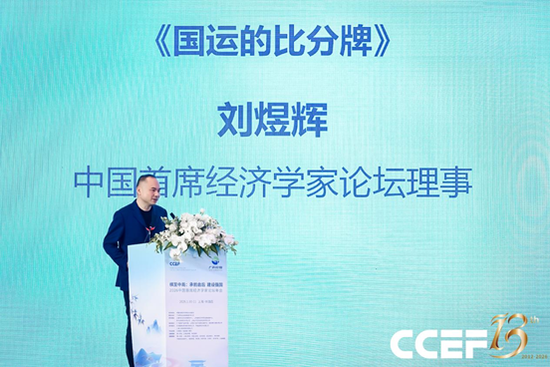
“超音速海啸”已至:刘煜辉论AI革命与国运博弈下的2026
Xin Lang Cai Jing· 2026-01-13 08:35
Core Viewpoint - The world is undergoing a "supersonic tsunami-level" transformation driven by the AI revolution and the G2 geopolitical competition, which is reshaping economic fundamentals and potentially rendering traditional macroeconomic theories obsolete [1][4]. Group 1: AI Revolution and Economic Impact - The AI revolution is fundamentally altering the traditional production function, where AI is becoming a core productive force, replacing high-skilled labor roles that were previously thought to be secure [3][12]. - By 2025, it is predicted that over half of white-collar jobs will be rapidly replaced by AI, with all such positions potentially disappearing by 2030 [3][12]. - The shift in labor dynamics indicates that macroeconomic models may no longer hold, as the relationship between labor and technology is being redefined [4][13]. Group 2: Geopolitical Dynamics and Market Trends - The geopolitical landscape has shifted significantly, with the G2 relationship evolving from "decoupling" to a more complex "deal" dynamic, as evidenced by recent statements from U.S. leadership regarding Taiwan [5][14]. - In the past year, the A-share market rose by 1,400 points, and the Hang Seng Index surged by 10,000 points, driven not by traditional profit recovery but by a broader narrative of China gaining ground in the G2 competition [5][14]. - The U.S. attempts to stabilize the dollar through various measures have not succeeded, as evidenced by the decline in cryptocurrency values and the rise in gold and stock indices in other markets [6][14]. Group 3: Market Sentiment and Future Outlook - The current market sentiment is characterized by a strong bullish trend, with A-shares experiencing a 16-day winning streak, fueled by policy support and overarching narratives in the U.S.-China competition [7][16]. - Despite the positive market momentum, predicting short-term market movements remains challenging, as the true indicators of market performance lie within the strategic variables of the G2 competition [8][16]. - The ongoing competition is expected to be a long-term engagement, with significant implications for market dynamics and investor sentiment [7][16].
美股异动|黑石股价冲高创数月新高投资者信心增强
Xin Lang Cai Jing· 2026-01-04 01:29
Company Insights - Blackstone Group's stock price increased by 3.02% on January 2, 2025, reaching its highest point since October 2025, indicating strong investor confidence and positive market sentiment towards its future potential [1][3] - As one of the largest asset management firms globally, Blackstone operates in various sectors including private equity, real estate funds, infrastructure, and hedge funds, which contributes to its robust growth and diverse investment opportunities [1][3] - The recent acquisition of Hamilton Island in Queensland, Australia for approximately AUD 1.2 billion strengthens Blackstone's position in the global leisure resort sector and enhances its investment footprint in the Australian market [1][3] Industry Trends - The artificial intelligence revolution is viewed as a significant driver of future economic growth, potentially leading to a structural bull market lasting up to ten years, with long-term investment opportunities in AI-related industries across both US and A-shares [2][4] - Despite concerns about an AI bubble, evidence suggests that the current wave is more likely to reach new highs driven by performance after adjustments, rather than being a short-term speculative phenomenon [2][4] - Investors are advised to focus on stable returns and long-term growth, emphasizing the importance of rational decision-making amidst market volatility and economic uncertainty [2][4]
高盛万字报告:2026,这四大领域的竞赛继续
吴晓波频道· 2026-01-01 00:20
Core Viewpoint - The combination of capital, talent, and policy is crucial for China's significant advancements in technology and high-end manufacturing in recent years and will be a key advantage in future technology strategies [2][46]. Group 1: Competition Overview - The competition between China and the U.S. is centered around artificial intelligence (AI), with both countries focusing on different aspects: the U.S. on AI chips and infrastructure, and China on transforming production lines and applications [5][6]. - The two countries are competing in five key AI innovation areas: artificial intelligence, robotics, energy storage, blockchain technology, and multi-omics sequencing [6]. Group 2: Investment and Infrastructure - By 2030, the cumulative investment in AI infrastructure in the U.S. is projected to reach $3-4 trillion, while China's investment is expected to exceed 10 trillion RMB, marking it as one of the largest single-industry investments since 1949 [7]. - In terms of AI computing power, the U.S. holds 74.5% of the global share, while China accounts for 14%. However, China's power generation capacity is nearly three times that of the U.S., with annual spending on the power grid at $90 billion, three times that of the U.S. [7]. Group 3: Technological Innovation - The U.S. maintains a dominant position in foundational technology innovation, particularly in semiconductors, AI frameworks, cloud computing infrastructure, and quantum computing [9]. - China has achieved breakthroughs in quantum communication, hypersonic technology, and power batteries, with a global market share of over 60% in power batteries [13]. Group 4: Application and Market Penetration - China is significantly ahead of the U.S. in the application of advanced technologies, with a deployment of industrial robots 12 times larger than that of the U.S. Adjusted for income differences, this reflects a deeper integration of technology into the economy [15][17]. - The rapid testing and adoption of AI applications, such as autonomous taxis, highlight China's practical approach to technology integration, with Wuhan being the largest city for autonomous vehicles globally [15][17]. Group 5: Digital Infrastructure - China is leading the global south in the deployment of digital infrastructure, including 5G communication and data centers, which are essential for the future digital economy [24][25]. - The cost of AI inference in China is projected to be lower than in the U.S. due to cheaper green energy and large-scale operations, providing a long-term cost advantage [25]. Group 6: Resource Independence - China dominates the rare earth industry, holding 49% of global reserves and 92% of refining capacity, which is critical for technology independence [32][33]. - The strategic focus on reducing reliance on Western technology while enhancing Western dependence on Chinese supply chains is a key aspect of China's competitive strategy [33]. Group 7: Policy and Long-term Strategy - China's technology strategy is characterized by coherence and long-term vision, with significant investments in key sectors such as new energy, advanced materials, and quantum technology [39][41]. - The establishment of over 2,000 government-guided funds, totaling 12.8 trillion RMB, reflects a commitment to supporting strategic industries and fostering innovation [41]. Group 8: Future Opportunities - The competition between China and the U.S. is reshaping global capital and industrial landscapes, creating parallel investment opportunities in semiconductor localization in China and advanced packaging/AI chip design in the U.S. [53]. - The Middle East's role in providing cheap energy will be crucial in the AI era, as energy costs become a significant factor in technology development [58][59].

"白银杀疯了"!谁是幕后黑手?机构:狂欢之下需警惕风险以防爆雷!
Sou Hu Cai Jing· 2025-12-29 09:05
Core Viewpoint - The silver market has experienced a dramatic surge, with prices increasing by 10% in a single day, reaching over $79 per ounce in London and touching $83 per ounce in New York, marking a year-to-date increase of over 175% [1] Group 1: Market Dynamics - The current silver market is characterized by a severe supply-demand imbalance, with global silver demand projected to reach 1.24 billion ounces by 2025, while supply is only expected to be 1.01 billion ounces, resulting in a supply gap of 100 to 250 million ounces [5] - Industrial demand for silver has surged, particularly from the solar energy sector, which consumes nearly 30% of annual silver supply, and other emerging industries like electric vehicles and AI data centers, pushing the industrial usage of silver to over 60% [5] - The supply side is constrained, as global pure silver deposits are nearly exhausted, and silver is primarily produced as a byproduct of mining other metals, limiting the ability to increase supply [5] Group 2: Market Reactions - The surge in silver prices has led to a nationwide shortage, with many retailers reporting that they are out of stock and unable to fulfill orders, prompting a shift from gold to silver trading among merchants [2][3] - Retailers in key markets, such as the Shui Bei market, have seen a significant increase in silver trading activity, with some businesses completely transitioning to silver due to the high demand and low supply [2] Group 3: Industry Impact - The rising cost of silver is putting pressure on downstream manufacturing sectors, particularly in solar panel production, where silver's essential role means that price fluctuations directly affect manufacturing costs [7] - In response to rising costs, companies are accelerating the development of alternative technologies to reduce silver usage, such as copper-based solutions, although these alternatives face challenges in terms of investment and production efficiency [7] Group 4: Investment Considerations - Analysts have raised concerns about the sustainability of the current silver price surge, suggesting that prices may retreat to around $42 per ounce by the end of next year, indicating a potential overextension of market enthusiasm [9] - The volatility in the silver market is heightened by limited liquidity, which can lead to rapid price corrections, making it crucial for investors to differentiate between the stable nature of gold and the more aggressive positioning of silver [9]