
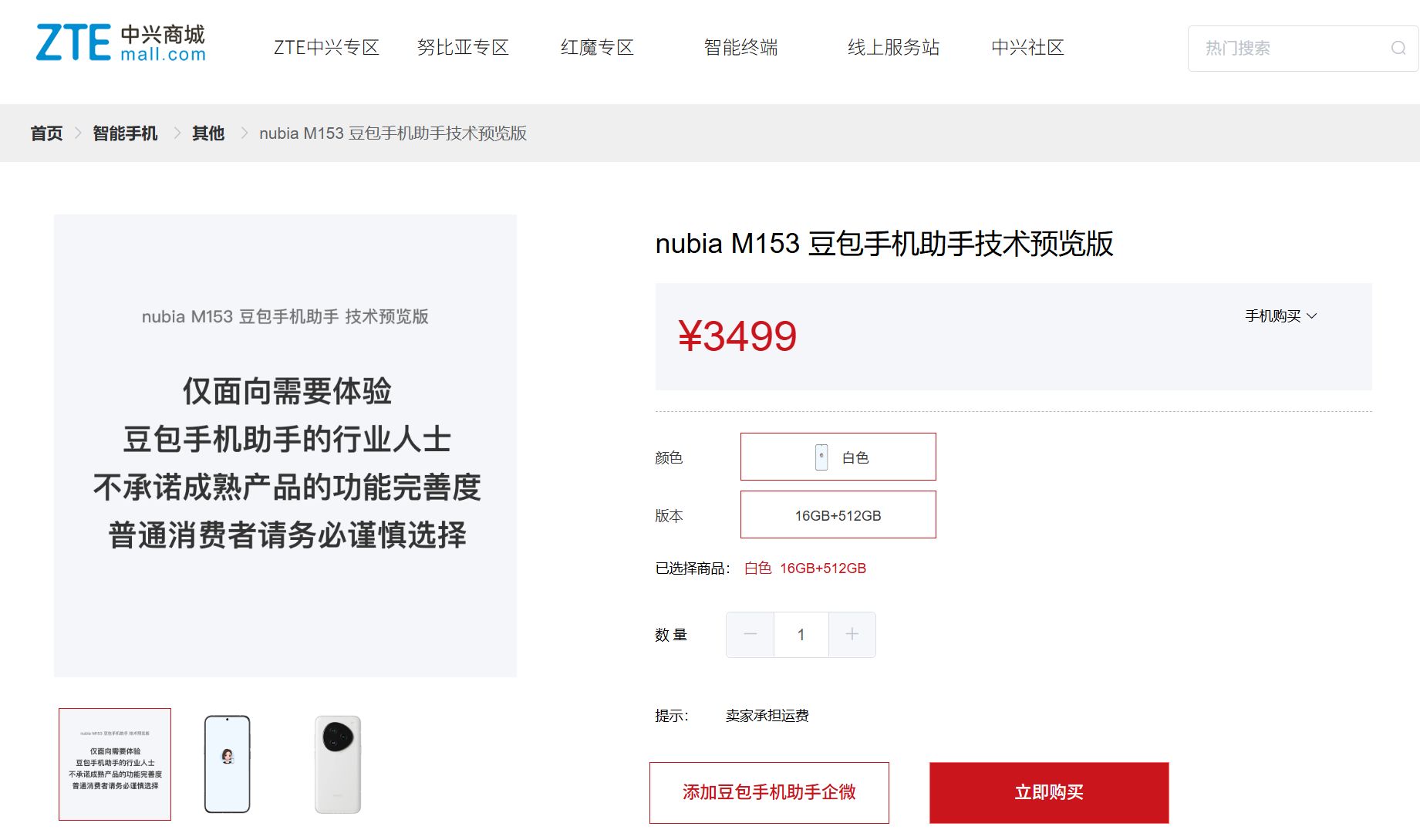
nubia M153工程机

Search documents
豆包手机助手火出圈,不妨以“包容审慎”视之
Xin Jing Bao· 2025-12-12 02:51
Core Insights - The emergence of Doubao Mobile Assistant represents a significant advancement in AI technology, aiming to deeply understand user intent and integrate various application functionalities to complete complex tasks [2][3] - The assistant simplifies user interactions by allowing voice commands to execute multi-step processes, reflecting the core characteristics of the smart era [2] - The current challenges faced by Doubao Mobile Assistant highlight the need for a balanced approach that encourages innovation while ensuring safety and regulatory compliance [3][4] Summary by Sections Product Features - Doubao Mobile Assistant can perform tasks such as price comparison across multiple shopping platforms with a simple voice command, significantly reducing the number of clicks required for users [1][2] - The assistant's ability to streamline complex functions embodies the trend of making technology more user-friendly and accessible [2] Industry Implications - The development of AI assistants like Doubao Mobile Assistant may serve as a crucial interface for the integration of general artificial intelligence (AGI) into daily life, representing a key area for companies to engage in global AI competition [2] - Encouraging innovation in AI technology is essential as major countries view AI as a strategic priority, making a case for a supportive regulatory environment [2][3] Regulatory Considerations - The concerns regarding operational safety and the limitations imposed by certain applications on Doubao Mobile Assistant underscore the necessity for more robust regulations and guidelines [3] - A collaborative approach among regulators, industry players, and the public is needed to create a dynamic governance framework that fosters innovation while managing risks effectively [3][4]
AI智能体正重写手机安全规则,该不该让“豆包助手”模拟你的手指?
Di Yi Cai Jing· 2025-12-04 03:24
Core Viewpoint - The article discusses the implications of granting the INJECT_EVENTS permission to the "Doubao Assistant" on the Nubia M153 phone, highlighting potential security risks and the necessity of collaboration between AI developers and hardware manufacturers [1][2][3]. Group 1: Technical Aspects - The Nubia M153 has enabled the INJECT_EVENTS permission, allowing applications to simulate user input events, which is a high-risk permission in the Android system [2][3]. - This permission is typically reserved for system-level applications and requires the app to be signed with the manufacturer's system private key, making it a significant security concern if misused [3][6]. - Doubao Assistant's ability to operate like a native system component is contingent upon its collaboration with hardware manufacturers, which is essential for accessing such high-level permissions [3][4]. Group 2: Security Concerns - Granting INJECT_EVENTS permission to third-party applications could lead to severe security risks, such as unauthorized access to sensitive information like banking passwords [3][4]. - The article emphasizes the need for a dual authorization mechanism to ensure user safety when AI interacts with third-party applications [7]. - Experts express that while there are inherent risks, the collaboration between AI and hardware manufacturers can justify the need for such permissions in specific scenarios [4][7]. Group 3: Market Dynamics - The competition among mobile manufacturers, AI developers, and traditional app developers is characterized as a struggle for data access and user entry points [7]. - The current target audience for the Doubao Assistant is primarily developers, not ordinary consumers, indicating a niche market focus [8].
AI智能体正在重写手机安全规则,该不该让「豆包助手」模拟你的手指?
Di Yi Cai Jing· 2025-12-03 10:21
Core Insights - The article discusses the recent issues faced by the nubia M153 engineering device in accessing WeChat, highlighting a temporary login problem and the inability to perform tasks related to WeChat [3][4] - The focus is on the INJECT_EVENTS permission granted to the nubia M153, which allows applications to simulate user input events, raising concerns about security risks associated with this high-level operating system permission [6][7] Group 1: Technical Aspects - The INJECT_EVENTS permission is classified as a high-risk permission in the Android system, typically reserved for device manufacturers or deeply authorized partners, allowing applications to operate as part of the operating system [6][8] - The ability to obtain this permission requires the application to be signed with the manufacturer's system private key, indicating a deep collaboration between the model provider and the hardware manufacturer [8][9] - The article mentions that other native assistants from manufacturers like Xiaomi and Honor also possess this permission, indicating a trend in the industry towards integrating AI capabilities at a system level [8][9] Group 2: Security Concerns - Granting INJECT_EVENTS permission to third-party applications poses significant security risks, such as potential unauthorized access to sensitive information like banking passwords [7][9] - Experts emphasize the need for a robust security mechanism to ensure that AI applications operate within safe boundaries, particularly as user interactions with AI become more frequent and complex [11][13] - The article notes that the current focus on AI integration in mobile devices is not just about functionality but also about maintaining user privacy and data security [12][14] Group 3: Market Dynamics - The competition among mobile manufacturers, model providers, and traditional app developers is described as a struggle for data access and user engagement, with each entity trying to establish its own entry point into the market [14] - The target audience for the nubia M153 engineering device is primarily developers rather than ordinary consumers, indicating a niche market focus [14]



AI智能体正在重写手机安全规则,该不该让“豆包助手”模拟你的手指?
第一财经· 2025-12-03 10:13
Core Viewpoint - The article discusses the implications of the nubia M153 engineering phone's access to the INJECT_EVENTS permission, which allows applications to simulate user input events, raising concerns about security and privacy risks associated with such high-level permissions [5][6][7]. Group 1: Technical Aspects - The INJECT_EVENTS permission is classified as a high-risk permission in the Android system, typically reserved for system-level applications or those deeply integrated with the hardware manufacturer [5][6]. - Only applications signed with the manufacturer's system private key can obtain this permission, which effectively integrates them into the operating system rather than treating them as third-party applications [9][11]. - The collaboration between AI applications like Doubao and hardware manufacturers is essential to access such permissions, which can enhance the capabilities of AI applications significantly [7][11]. Group 2: Security Concerns - Granting INJECT_EVENTS permission to third-party applications poses significant security risks, including potential unauthorized access to sensitive information such as banking details [6][7]. - The article highlights the need for a dual authorization mechanism between users and applications to mitigate risks associated with AI interactions with third-party apps [11]. - Concerns about user privacy and data security are paramount, as the integration of AI capabilities into mobile operating systems could lead to identity theft and data breaches [10][11]. Group 3: Industry Dynamics - The competition among mobile manufacturers, AI model developers, and traditional app developers is characterized as a struggle for data access and user engagement [11]. - The current focus of the Doubao assistant is primarily on developers rather than ordinary consumers, indicating a niche market for this technology [11]. - The article emphasizes the importance of maintaining user habits and minimizing disruption during the integration of AI functionalities into existing operating systems [10].

AI智能体正在重写手机安全规则,该不该让“豆包助手”模拟你的手指?
Di Yi Cai Jing· 2025-12-03 09:33
Core Points - The nubia M153 engineering device faced issues with logging into WeChat, which have since been resolved, but related tasks remain restricted [1] - The focus of industry experts is on the INJECT_EVENTS permission granted to the nubia M153, which allows applications to inject simulated user input events, a high-risk permission in the Android system [2][3] - The INJECT_EVENTS permission is typically reserved for device manufacturers and their authorized partners, indicating a significant level of access and control over the device [2][3] - Concerns have been raised about the security risks associated with granting such permissions to third-party applications, including potential unauthorized access to sensitive information [3][4] - The collaboration between AI applications like Doubao and hardware manufacturers like ZTE is essential for obtaining high-level permissions, which can enhance the functionality of AI assistants [4][8] Industry Insights - The INJECT_EVENTS permission requires applications to be signed with the manufacturer's system private key, effectively integrating them into the operating system [3][6] - The increasing complexity of interactions between AI agents and users raises concerns about security risks such as identity theft and data breaches [6][7] - The development of AI applications is seen as a competitive landscape among mobile manufacturers, AI model developers, and traditional app developers, focusing on data access and user privacy [8] - The target audience for the Doubao assistant is primarily developers, as it is an engineering device rather than a consumer product [8]
售价3499元的中兴豆包手机,被炒至9999元!有用户称微信登录出现被动下线,微信回应:未有特别动作
Mei Ri Jing Ji Xin Wen· 2025-12-03 06:21
Core Insights - The "Doubao Assistant" phone, priced at 3499 yuan, is sold out on ZTE's official website [1] - On the second-hand market (Xianyu), the resale prices for the phone exceed the original price, with new, unopened units listed between 7999 to 9999 yuan, indicating a premium of over 6500 yuan [4] Group 1: Product Performance - The "Doubao Assistant" phone has experienced high demand, leading to its sell-out status on the official platform [1] - Resale prices on Xianyu suggest strong market interest and potential for profit among resellers [4] Group 2: User Experience Issues - Users of the Nubia M153 engineering model reported issues with logging into WeChat, indicating potential compatibility problems with the app [6] - The phone's assistant feature fails to perform tasks involving WeChat, as it is currently unsupported [7] - A response from WeChat representatives suggests that the issues may be related to security measures rather than a technical fault [10]

传“豆包助手”手机微信登录出现异常,涉及功能无法正常使用
Xin Lang Cai Jing· 2025-12-03 01:54
Core Points - Users of the Nubia M153 engineering device, developed in collaboration with Doubao and ZTE, are experiencing issues logging into WeChat, with error messages indicating an abnormal login environment [1][2] - After changing WeChat accounts, users can log in but face disconnection issues when transferring chat history [1][2] - The Doubao mobile assistant is unable to perform tasks involving WeChat, with failure messages indicating that WeChat operations are not supported in the current experimental functionality [1][2] Company and Industry Summary - The collaboration between Doubao and ZTE on the Nubia M153 engineering device has led to significant user experience issues, particularly with WeChat integration [1][2] - The inability to log into WeChat and perform related tasks may impact user satisfaction and the overall perception of the Nubia M153 device [1][2] - As of the report, there has been no response from Doubao or Tencent regarding these issues, which may affect future user trust and brand reputation [1][2]