o系列推理模型

Search documents
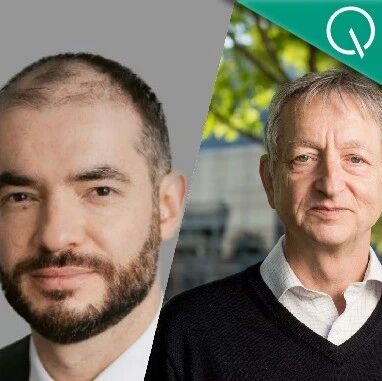
Hinton加入Scaling Law论战,他不站学生Ilya
量子位· 2026-01-01 02:13
Core Viewpoint - The article discusses the ongoing debate surrounding the "Scaling Law" in AI, highlighting contrasting perspectives from key figures in the field, particularly Ilya Sutskever and Geoffrey Hinton, regarding the future and limitations of scaling AI models [1][8][21]. Group 1: Perspectives on Scaling Law - Ilya Sutskever expresses skepticism about the continued effectiveness of Scaling Law, suggesting that merely increasing model size may not yield significant improvements in AI performance [23][40]. - Geoffrey Hinton, on the other hand, maintains that Scaling Laws are still valid but face challenges, particularly due to data scarcity, which he believes can be addressed by AI generating its own training data [10][21]. - Demis Hassabis, CEO of DeepMind, supports Hinton's view, emphasizing the importance of scaling for achieving advanced AI systems and the potential for self-evolving AI through data generation [15][19]. Group 2: The Debate on Data and Model Scaling - The article outlines the historical context of Scaling Law, which posits that increasing model parameters, training data, and computational resources leads to predictable improvements in AI performance [26][27]. - Recent discussions have shifted towards concerns about data limitations, with Ilya arguing that the era of pre-training is coming to an end due to diminishing returns from scaling [32][41]. - Yann LeCun also shares skepticism about the assumption that more data and computational power will automatically lead to smarter AI, indicating a broader questioning of the Scaling Law's applicability [46][48]. Group 3: Future Directions and Research Focus - The article suggests that while current paradigms may still yield significant economic and social impacts, achieving Artificial General Intelligence (AGI) or Artificial Superintelligence (ASI) will likely require further research breakthroughs [53]. - There is a consensus among leading researchers that while AGI is not a distant fantasy, the nature and speed of necessary breakthroughs remain uncertain [53].

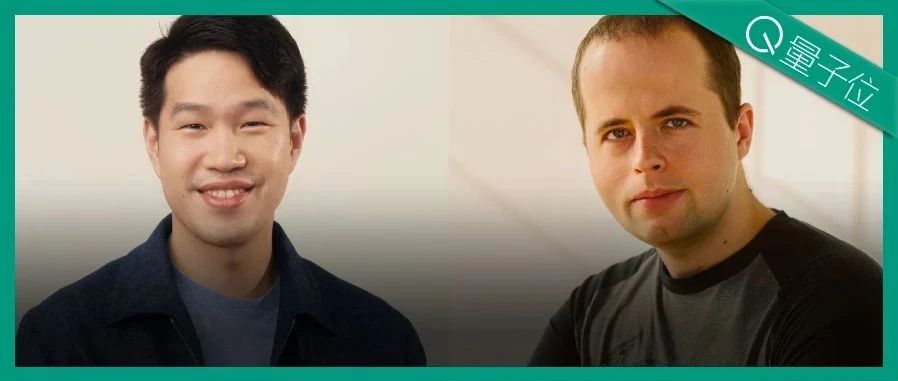
Ilya之后,两位90后撑起OpenAI核心研究
量子位· 2025-08-01 04:23
Core Viewpoint - The article discusses the key figures supporting OpenAI's research, particularly Mark Chen and Jakub Pachocki, who are pivotal in the company's core research efforts as it approaches the release of GPT-5 [1][5]. Group 1: Key Figures - Mark Chen, the Chief Research Officer, has played a significant role in developing DALL-E and contributing to GPT-3 and GPT-4, including adding image recognition capabilities to GPT-4 [12][19]. - Jakub Pachocki, the new Chief Scientist, succeeded Ilya and has been recognized as one of the most outstanding minds of his generation, overseeing projects like GPT-4 [4][22]. - Both Chen and Pachocki are in their 30s, have competitive programming backgrounds, and have been integral to OpenAI's major projects, including the GPT series [9][29]. Group 2: Research Dynamics - Chen is responsible for building and managing the research team, while Pachocki sets the research roadmap and long-term technical vision, indicating a collaborative and flexible working relationship [5][30]. - Their shared experience in competitive programming influences OpenAI's strategy to engage in international coding competitions, which they believe is crucial for advancing their models [30][34]. - OpenAI recently achieved notable success in global programming competitions, highlighting their commitment to pushing the boundaries of AI capabilities [32]. Group 3: Strategic Focus - OpenAI is transitioning from a pure research lab to a company that balances research with product development, focusing on practical applications of AGI [39][42]. - The dissolution of the Super Alignment team after Ilya's departure reflects a shift in focus towards aligning existing models with expected outcomes rather than hypothetical superintelligence [41]. - Chen and Pachocki emphasize the importance of addressing current model limitations and enhancing their practical utility, contrasting with Ilya's vision of AGI as a transformative milestone [39][41].