openEuler 24.03 LTS SP3

Search documents
openEuler超节点操作系统发布 旨在赋能千行万业智能化升级
Ren Min Ri Bao· 2025-11-19 21:58
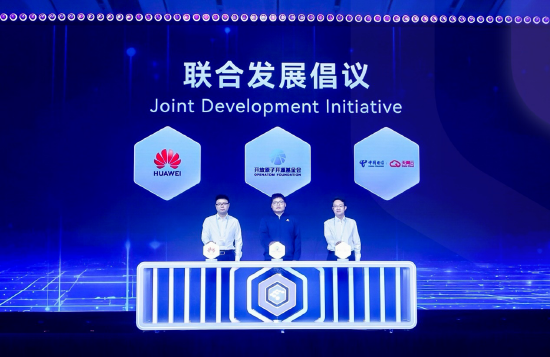
Core Insights - The openEuler Summit 2025, themed "Intelligent Leap Beyond Boundaries," was successfully held in Beijing, focusing on fostering innovation in operating systems and accelerating the development of the global open-source software ecosystem [1] Group 1: Community Growth and Development - The openEuler community has grown significantly, with over 2,100 member organizations and more than 23,000 global contributors, serving over 5.5 million users [1] - The cumulative installation of openEuler operating systems is expected to exceed 16 million by the end of 2025, maintaining a leading market share across various sectors including internet, communication, government, finance, public utilities, and energy [1] Group 2: Technological Advancements - The release of openEuler 24.03 LTS SP3 marks the beginning of a new five-year development path, emphasizing the embrace of supernodes and AI technologies [2] - Key features of the supernode-oriented operating system include global resource abstraction, unified memory addressing, and device pool management, aimed at enhancing computational efficiency [2] Group 3: Strategic Collaborations - Huawei, as a strategic donor and contributor, is collaborating with the openEuler community to develop supernode-supporting operating system plugins and deepen partnerships with global open-source organizations [3] - A joint development initiative was announced between the OpenAtom Foundation, Huawei, and China Telecom Tianyi Cloud to leverage their technological strengths and promote the openEuler ecosystem [5][6] Group 4: AI Solutions and Industrial Applications - The openEuler community introduced the Intelligence BooM full-stack open-source AI solution, which supports over 50 model fine-tunings and improves inference efficiency by 10%-30% [4] - The community is evolving embedded capabilities for new industrial automation, achieving microsecond-level response times in various commercial applications [4] Group 5: Globalization and Ecosystem Building - The openEuler community has established partnerships with global organizations like AMD, Arm, and Linaro to enhance the AI industry ecosystem and support openEuler's global expansion [6][7] - The establishment of the academic and educational committee aims to strengthen ties with academia and promote talent development in the system software field [7][8]
针对AI算力基础设施,“开源欧拉”将发布超节点操作系统
Feng Huang Wang· 2025-11-17 12:44
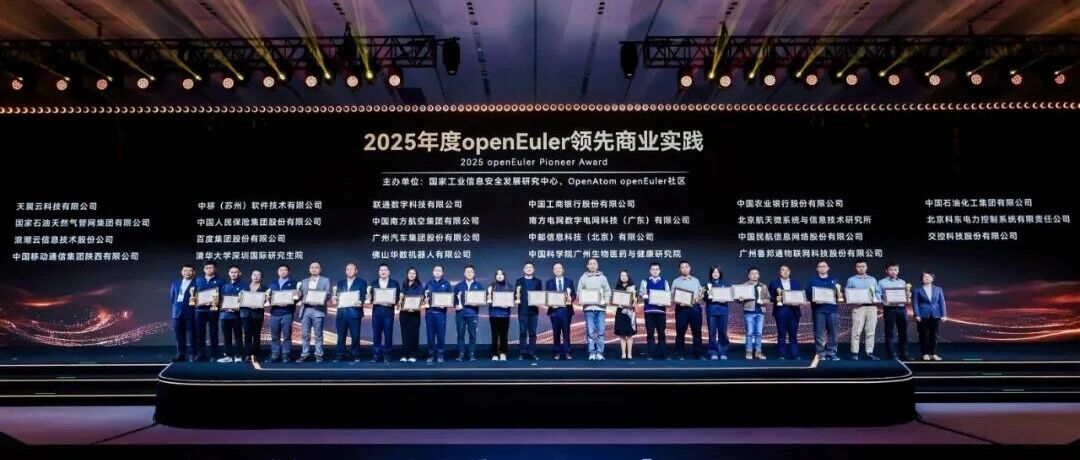
Core Insights - The openEuler community announced the upcoming release of the openEuler 24.03 LTS SP3 operating system, designed for AI computing infrastructure, featuring unified memory addressing, low-latency communication for heterogeneous computing, and global resource pooling [1] - The community currently has over 2,100 member organizations, more than 23,000 global contributors, and over 5.5 million users, with an expected cumulative installation of over 16 million systems by the end of 2025 [1] - Huawei has contributed support for the supernode operating system plugin code and has opened the Lingqu Interconnection Protocol 2.0, while also collaborating with Tianyi Cloud to deepen cooperation in AI and supernode fields [1] - Major chip companies including Intel, Arm, and AMD have joined the community, which has established partnerships with 15 global open-source organizations [1] Industry Applications - The openEuler embedded solution has been implemented in companies such as China Southern Power Grid and Phoenix, achieving microsecond-level response times [2] - The conference announced 23 leading commercial practice projects, covering both large-scale and innovative categories [2]

腾讯研究院AI速递 20251117
腾讯研究院· 2025-11-16 16:01
Group 1: openEuler and AI Operating Systems - openEuler community has launched a new 5-year development plan, with the first AI-focused supernode operating system (openEuler 24.03 LTS SP3) set to be released by the end of 2025, involving over 2,100 member organizations and more than 23,000 global contributors [1] - The operating system features global resource abstraction, heterogeneous resource integration, and a global resource view, aimed at maximizing the computational potential of supernodes and accelerating application innovation [1] - The Lingqu Interconnection Protocol 2.0 will contribute support for supernode operating system plugins, providing key capabilities such as unified memory addressing and low-latency communication for heterogeneous computing [1] Group 2: Google and AI Models - Google CEO's cryptic response with two thoughtful emojis hints at the anticipated launch of Gemini 3.0 next week, with 69% of netizens betting on the release of this next-generation AI model, which is expected to be a significant turning point for Google [2] - Early testing reveals that Gemini 3.0 can generate operating systems and build websites in seconds, showcasing impressive front-end design capabilities, leading to its label as the "end of front-end engineers" [2] - Warren Buffett has invested $4.3 billion in Google stock, with high expectations for Gemini 3.0's performance, which will determine Google's potential to challenge for AI leadership [2] Group 3: Gaming AI Developments - Google DeepMind has introduced SIMA 2, an AI agent capable of playing games like a human by using virtual input devices, overcoming the limitations of simple command following and demonstrating reasoning and learning abilities [3] - SIMA 2 can tackle new games without pre-training and understands multimodal prompts, enhancing its self-improvement through self-learning and feedback from Gemini [3] - The system employs symbolic regression methods and integrates Gemini as its core engine, aiming to serve as a foundational module for future robotic applications, though it still faces limitations in complex tasks [3] Group 4: Long-term Memory Operating Systems - The EverMemOS, developed by Chen Tianqiao's team, has achieved high scores of 92.3% and 82% on LoCoMo and LongMemEval-S benchmarks, significantly surpassing state-of-the-art levels [4] - Inspired by human memory mechanisms, the system features a four-layer architecture (agent layer, memory layer, index layer, interface layer) and employs "layered memory extraction" to address challenges in pure text similarity retrieval [4] - An open-source version is available on GitHub, with a cloud service version expected to be released later this year, aimed at providing enterprises with data persistence and scalable experiences [4] Group 5: AI Wearable Technology - Sandbar has launched the Stream smart ring, priced at $249-$299, which eliminates health monitoring features to focus on AI voice interaction capabilities [5] - The ring uses a "fist whisper" interaction method to activate recording and dynamically switch between multiple large models, but has a battery life of only 16-20 hours, which is inferior to traditional smart rings [5] - The accompanying iOS app utilizes ElevenLabs to generate voice models that mimic user voices, ensuring end-to-end encryption of data without storing original audio, although privacy and value propositions remain questionable [5] Group 6: NotebookLM and Research Tools - Google NotebookLM has introduced the Deep Research feature, which can automatically gather multiple relevant web sources and organize them into a contextual list, creating a dedicated knowledge base within minutes [7] - The system supports processing of 25 million tokens in context, ensuring that all responses are based on user-provided sources with citation, enhancing verifiability and reducing AI hallucination issues [7] - Its video overview feature can convert documents, web pages, and videos into interactive videos, with Google committing not to use personal data for model training [7] Group 7: AI in Physics - A team from Peking University has developed the AI-Newton system, which employs symbolic regression methods to rediscover fundamental physical laws without prior knowledge [8] - The system is supported by a knowledge base consisting of symbolic concepts, specific laws, and universal laws, identifying an average of about 90 physical concepts and 50 general laws in test cases [8] - AI-Newton demonstrates progressive and diverse characteristics, currently in the research phase, but offers a new paradigm for AI-driven autonomous scientific discovery, with potential applications in embodied intelligence [8] Group 8: OpenAI's Research on Explainability - OpenAI has released new research on explainability, proposing sparse models with fewer neuron connections but more neurons, making the internal mechanisms of the model easier to understand [9] - The research team identified the "minimal loop" for specific tasks, quantifying explainability through geometric averages of edge counts, finding that larger, sparser models can generate more powerful but simpler functional models [9] - The paper's communication author, Leo Gao, is a former member of Ilya's super alignment team, but the research is still in early stages, with sparse models being significantly smaller and less efficient than cutting-edge models [9] Group 9: Elon Musk's AI Vision - Elon Musk is advancing xAI on the X and Tesla platforms, with the Colossus supercomputer data center deploying 200,000 H100 GPUs in 122 days for training Grok-4 and the upcoming Grok-5 [10] - xAI follows a "truth-seeking, no taboos" approach, allowing AI to generate synthetic data to reconstruct knowledge systems, aiming to create a "Grok Encyclopedia," with Tesla's next-generation AI5 chip expected to enhance performance by 40 times [10] - Grok is set to be integrated into Tesla vehicles, with Musk predicting that by 2030, AI capabilities may surpass those of all humanity, while xAI plans to open-source the Grok-2.5 model and release Grok-3 in six months [10]


通向算力自由:openEuler发布全球首个超节点操作系统,专为AI打造
机器之心· 2025-11-15 09:23
Core Viewpoint - The conference on operating systems, themed "Intelligent Leap Without Boundaries, Open Source for a Better Future," successfully gathered industry leaders to promote the development of the openEuler operating system and accelerate the global open-source software ecosystem [2]. Group 1: Development and Growth of openEuler - The openEuler community has grown significantly over the past six years, with over 2,100 member organizations and more than 23,000 global contributors, serving over 5.5 million users [2]. - The cumulative installation of openEuler is expected to exceed 16 million sets by the end of 2025, establishing it as the preferred operating system for digital transformation in various industries [2]. - The community is set to embark on a new five-year development path, launching an operating system tailored for supernodes by the end of 2025, aiming to lead in the AI era and enhance globalization efforts [2][12]. Group 2: Strategic Importance of Basic Software - Academician Ni Guangnan emphasized the strategic nature of basic software, advocating for independent innovation, collaborative ecosystem building, and sustained long-term investment [3]. - The transition to supernodes is recognized as a mainstream trend in computing infrastructure, with operating systems playing a crucial role in connecting hardware and applications in the intelligent era [3]. Group 3: Collaboration and Ecosystem Building - The core of open-source is collaboration, and the future of the ecosystem relies on co-creation and sharing among hardware partners, software vendors, and global developers [5]. - Huawei's CEO highlighted the rapid transformation brought by AI technologies and the need for operating systems that can support supernodes, contributing to the openEuler community with key capabilities [6][10]. Group 4: Technological Innovations and Solutions - The openEuler community has introduced the Intelligence BooM full-stack open-source AI solution, enhancing inference efficiency by 10% to 30% through heterogeneous collaboration [16]. - In the new industrial automation sector, openEuler has evolved its embedded capabilities, achieving microsecond response times and successfully implemented in various well-known enterprises [16]. Group 5: Globalization Efforts - New donors to the openEuler community include major chip manufacturers like AMD, further strengthening the community's resources [18]. - The community has established deep technical cooperation with 15 global open-source organizations in areas such as AI, cloud computing, and embedded systems, enhancing its global presence [20].
openEuler发布超节点操作系统,将于2025年底正式上线
Xin Lang Ke Ji· 2025-11-15 08:13
Core Insights - The openEuler community has officially launched a new five-year development plan aimed at creating an operating system for supernodes by the end of 2025, focusing on AI and global expansion [2] - The openEuler community has grown significantly over the past six years, with over 2,100 member organizations, more than 23,000 global contributors, and a user base exceeding 5.5 million [2] - The cumulative installation of openEuler operating systems is expected to surpass 16 million units by the end of 2025, with applications in various sectors including internet, telecommunications, government, finance, public utilities, and energy [2] Collaboration and Partnerships - A joint development initiative was announced by the OpenAtom Open Source Foundation, Huawei, and China Telecom's Tianyi Cloud to promote technology co-construction, ecosystem building, and business collaboration in the fields of AI and supernodes [2] - New donors to the openEuler community include AMD, Inspur Cloud, and Digital China, joining major chip companies like Intel and Arm [3] - The openEuler community has established deep technical cooperation with global open-source organizations such as the Zephyr Embedded Technology Foundation and the Linux Foundation AI & Data Foundation, collaborating with 15 global open-source organizations in areas like AI, cloud, big data, HPC, and embedded systems [3]