
AI算力基础设施

Search documents
比亚迪电子(00285):2025年业绩点评报告:25年净利润同比下降,关注AI液冷、电源量产交付进展
EBSCN· 2026-03-30 14:39
Investment Rating - The report maintains a "Buy" rating for BYD Electronics, indicating a positive outlook for the company's future performance [3]. Core Insights - In 2025, BYD Electronics achieved revenue of 179.48 billion RMB, a slight increase of 1.22% year-on-year. However, gross profit decreased by 12.56% to 10.76 billion RMB, resulting in a gross margin of 6.0%, down 0.9 percentage points due to reduced capacity utilization from changes in product structure and shipment volume for North American clients [1]. - Net profit for 2025 was 3.52 billion RMB, reflecting a year-on-year decline of 17.61% [1]. - The smart terminal component business saw a revenue decline to 29.33 billion RMB, influenced by changes in product structure and demand from North American clients, while assembly business revenue increased slightly to 122.18 billion RMB [2]. - The new energy vehicle (NEV) business experienced significant growth, with revenue reaching 27.03 billion RMB, a year-on-year increase of 27.69%, driven by rising shipments of smart driving systems and other products [2]. - The AI computing infrastructure business reported a robust growth of 31.7%, with revenue of 943 million RMB, as the company focuses on liquid cooling and power supply products [3]. Financial Forecasts and Valuation - The report projects a net profit of 3.84 billion RMB for 2026, down 27% from previous estimates, and 4.66 billion RMB for 2027, down 25% [3]. - The estimated net profit for 2028 is projected at 5.76 billion RMB [3]. - The company's market capitalization corresponds to a price-to-earnings (P/E) ratio of 15x for 2026, 12x for 2027, and 10x for 2028 [3]. - Revenue forecasts for the upcoming years are as follows: 2026E at 185.57 billion RMB, 2027E at 197.54 billion RMB, and 2028E at 206.63 billion RMB, with growth rates of 3.4%, 6.5%, and 4.6% respectively [4].
比亚迪电子发布年度业绩,股东应占溢利35.15亿元 同比减少17.61%
Zhi Tong Cai Jing· 2026-03-28 07:43
Group 1: Company Performance - BYD reported a revenue of RMB 179.48 billion for the fiscal year ending December 31, 2025, representing a year-on-year increase of 1.22% [2] - The net profit attributable to shareholders decreased by 17.61% to RMB 3.515 billion, with earnings per share at RMB 1.56 and a proposed final dividend of RMB 0.156 per share [2] - The company continues to strengthen its leadership in the high-end product supply chain while expanding cooperation with domestic and international clients [2] Group 2: Market Trends and Growth Areas - The Chinese foldable smartphone market is expected to see a year-on-year shipment growth of 9.2%, reaching 10.01 million units by 2025 [3] - The company is enhancing its technological capabilities and expanding product categories in the smart terminal sector, despite a decrease in component revenue due to changes in demand from major clients [3] - The smart driving system and smart suspension system have seen significant growth in shipments, contributing to the overall expansion of the company's revenue in the electric vehicle sector [4] Group 3: Electric Vehicle Sector - The revenue from the electric vehicle segment reached approximately RMB 27.03 billion, accounting for 15.06% of the company's total revenue, with a year-on-year increase of about 27.69% [4] - The company has established a strong technological advantage in various systems such as smart cockpit, smart driving, and thermal management, benefiting from the growth of the electric vehicle market [4]

比亚迪电子(00285.HK)2025年度纯利下降约17.61%至35.15亿元
Ge Long Hui· 2026-03-27 11:56
Core Viewpoint - BYD Electronics (00285.HK) reported a revenue of approximately RMB 179.48 billion for the fiscal year 2025, reflecting a year-on-year increase of about 1.22%. However, the profit attributable to shareholders decreased by approximately 17.61% to around RMB 3.515 billion, with earnings per share at RMB 1.56 and a proposed final dividend of RMB 0.156 per share [1] Business Summary - The smart terminal components business experienced a decline due to changes in customer demand, while the assembly business saw year-on-year growth [1] - The new energy vehicle product categories and shipment volumes increased, maintaining a high growth rate in this segment [1] - The server business showed steady growth, focusing on core products such as liquid cooling and power supplies, which are expected to drive new growth in AI computing infrastructure [1] - Despite macroeconomic challenges affecting consumer confidence, the company is actively consolidating its leadership position in the high-end product supply chain and expanding collaborations with domestic and international clients to ensure stable development in the smart terminal business [1] - The AI server business, which has been proactively cultivated, is experiencing rapid growth and is becoming a new driving force for the company's overall business growth [1] - Multiple automotive products have achieved high shipment growth, with the new energy vehicle segment continuing to show strong growth momentum [1]
敏实集团(00425.HK):电池盒量利齐升 新兴业务营收有望放量
Ge Long Hui· 2026-03-26 05:03
Core Viewpoint - The company's 2025 performance aligns with expectations, showing growth in both revenue and net profit, with a notable increase in domestic revenue growth and a decrease in reliance on joint venture clients [1][2]. Performance Summary - In 2H25, the company's revenue reached 13.45 billion RMB, representing a year-on-year increase of 11.6% and a quarter-on-quarter increase of 9.5%. The net profit attributable to shareholders was 1.49 billion RMB, up 14.2% year-on-year and 17.0% quarter-on-quarter [1]. - Domestic revenue growth turned positive in 2H25, with international and domestic market revenues at 8.35 billion RMB and 5.01 billion RMB respectively, showing year-on-year growth of 15.0% and 6.3% [1]. - Revenue from various business segments in 2H25 included battery boxes (3.95 billion RMB, +34.0% YoY), aluminum parts (2.43 billion RMB, -4.7% YoY), plastic parts (3.27 billion RMB, +8.1% YoY), and metal trims (2.87 billion RMB, -2.6% YoY) [1]. Profitability and Expenses - The overall gross margin for 2H25 was 27.8%, a decrease of 1.6 percentage points year-on-year and 0.5 percentage points quarter-on-quarter. The gross margin for the battery box business reached a record high of 24.7% [2]. - The company’s sales, management, and R&D expenses totaled 17.5%, a decrease of 0.3 percentage points year-on-year [2]. Capital Expenditure and Dividends - The company plans capital expenditures of approximately 2.21 billion RMB in 2025, a year-on-year increase of 15.6%, focusing on key international production base construction and emerging businesses [2]. - A dividend of 0.764 HKD per share is planned, totaling 810 million RMB, with a dividend payout ratio of 30% [2]. Growth Drivers - The company is expected to benefit from the acceleration of the European energy transition, with new business revenue growing rapidly. In 2025, new orders amounted to 75.7 billion RMB, with significant breakthroughs in battery boxes and chassis components for leading domestic new energy clients [2]. - Collaborations in humanoid robotics and AI computing infrastructure are anticipated to contribute several hundred million RMB to revenue in 2026 [2]. Profit Forecast and Valuation - Due to rising raw material costs, the company's 2026 net profit forecast has been reduced by 6.4% to 3.13 billion RMB, with a new 2027 profit forecast introduced at 3.85 billion RMB [2]. - The current stock price corresponds to a 10x P/E ratio for 2027 estimates, with a target price increase of 17% to 45 HKD, reflecting a 12x P/E ratio for 2027 estimates and a 25% upside potential from the current price [2].
英伟达正在封装世界
虎嗅APP· 2026-03-23 10:24
Core Insights - Nvidia is transitioning from a chip provider to an AI infrastructure system provider, emphasizing the encapsulation of AI computing power [2] - The encapsulation process allows customers to avoid complex procurement and testing of foundational components, enabling a modular approach to building systems [2] - Nvidia's CUDA was the first layer of encapsulation, creating a significant ecosystem that abstracts hardware complexities for developers [3] Token Pricing Structure - Nvidia's introduction of a five-tier token pricing system at GTC 2026 reflects a shift towards treating tokens as a new commodity, with layers corresponding to different token volumes [6][4] - This pricing strategy aims to meet the increasingly refined demands of various AI applications, where different scenarios require distinct performance metrics [6][7] - The evolution from a uniform supply of AI resources to a more nuanced demand reflects a fundamental change in how AI is integrated into commercial applications [8] Expansion of Nvidia's Empire - Nvidia is building a larger empire beyond CUDA, integrating specialized CPUs and acquiring companies like Groq to enhance its capabilities in AI inference [14][13] - The company is positioning itself as a comprehensive solution provider, akin to Apple in the computing space, controlling hardware, software, and applications [14][10] - The focus on inference hardware is becoming critical as the demand for real-time processing and low-latency responses grows in various AI applications [13] Opportunities for Startups - Despite Nvidia's dominance, there are still opportunities for startups, particularly in edge computing and customized solutions that require specific adaptations [16][15] - The rise of reconfigurable computing presents a chance for companies to address the inefficiencies of general-purpose chips while maintaining flexibility for diverse tasks [16][17] - Startups must quickly adapt to the shifting focus towards inference capabilities rather than solely pursuing training chip development to remain competitive [18]



国联民生证券:英伟达(NVDA.US)业绩印证行业景气 国产液冷迎黄金窗口
智通财经网· 2026-03-20 07:15
Core Viewpoint - Nvidia's performance in Q4 and the entire fiscal year 2026 significantly exceeded market expectations, solidifying the high demand in the liquid cooling industry [1] Group 1: Nvidia's Performance and Market Impact - Nvidia's data center revenue accounted for 91.5% of its total revenue, indicating strong market demand [1] - The introduction of the GB300 liquid cooling system and the next-generation Rubin platform, which features 100% forced liquid cooling, has elevated the power density of single cabinets, making liquid cooling a standard for AI computing infrastructure [1] - Nvidia's CEO Jensen Huang emphasized the exponential growth in computing demand, marking a pivotal moment for AI [1] Group 2: Technological Advancements - The Rubin platform's upgrade to a fully liquid-cooled architecture, along with microchannel cold plate enhancements, reduces maintenance difficulty and leakage risks while increasing the value of liquid cooling components [2] - The microchannel technology barrier is expected to provide domestic manufacturers with opportunities for both volume and price increases [2] Group 3: Supply Chain Developments - Nvidia has decentralized procurement rights for core components like cold plates and CDU, transitioning from exclusive supply to a whitelist and ODM self-procurement model [3] - The next-generation Vera Rubin platform's design supports 100% liquid cooling and higher temperature water cooling, raising the technical requirements for microchannel cold plates and high-density CDUs [3] Group 4: Market Growth Drivers - The rise of ASICs, which complement GPUs, is becoming a second growth driver for the liquid cooling market, with major cloud companies rapidly deploying self-developed ASICs [4] - The power consumption of chips like TPUv7 and Trainium3 is pushing the limits of air cooling, with market share expected to reach 27.8% by 2026, leading to increased demand for liquid cooling solutions [4] Group 5: Policy and Regulatory Environment - Domestic energy efficiency policies are tightening, with cities like Beijing and Shanghai implementing significant regulations that favor liquid cooling as a key technology for compliance and green transformation [5] - Liquid cooling is recognized as the most effective method to reduce PUE, making it a critical option for data centers to avoid penalties [5] Group 6: Investment Recommendations - The continuous demand for computing power, Nvidia's strong performance, tightening energy efficiency policies, and the rise of ASICs are driving sustained growth in the liquid cooling industry [6] - Key investment focuses include domestic manufacturers with leading technology reserves, companies adapting liquid cooling solutions for high-power ASICs, and industry leaders with comprehensive delivery capabilities [6] - Recommended companies include: - Liquid cooling plates: Yingwei Ke (002837.SZ), Siquan New Materials (301489.SZ), Feirongda (300602.SZ), AVIC Optoelectronics (002179.SZ) [6] - CDU: Yingwei Ke, Shenling Environment (301018.SZ), Shuguang Digital Innovation (920808.BJ) [6] - Liquid cooling pumps and valves: Deyuan Pump Industry (603757.SH), Southern Pump Industry (300145.SZ), Feilong Co. (002536.SZ), and valve manufacturers like Weilon Co. (002871.SZ) [6]

英伟达(NVDA.US),急了!
智通财经网· 2026-03-15 03:30
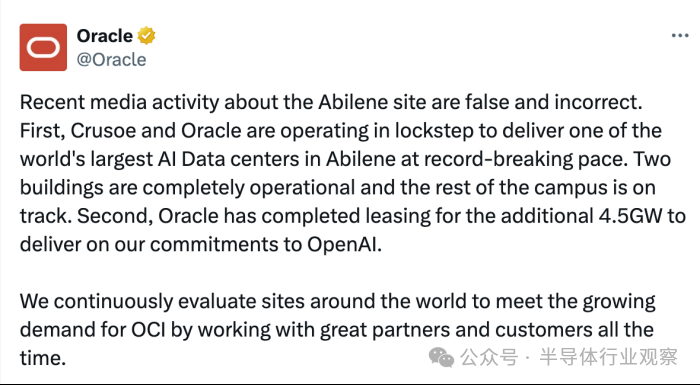
Core Insights - The AI computing industry is experiencing unusual signals ahead of NVIDIA's annual GTC conference, with changes in demand and geopolitical risks affecting infrastructure development [1][2] - The structure of the AI supply chain is shifting as the expansion of computing demand intersects with uncertainties in infrastructure [2] Group 1: NVIDIA and AI Infrastructure - NVIDIA has been a dominant player in the AI supply chain, benefiting from explosive demand for GPUs, with clients like OpenAI and major cloud providers queuing for orders [1] - Recently, OpenAI's Stargate project has faced delays, as it seeks to deploy NVIDIA's next-generation chips elsewhere, impacting the planned expansion of its data center [3][5] - The rapid upgrade cycle of AI chips is outpacing the construction of data centers, leading to potential bottlenecks in infrastructure rather than just chip supply [6][13] Group 2: Stargate Project and Market Dynamics - The Stargate project, initially planned to invest $500 billion and build 10GW of AI computing infrastructure, has been complicated by OpenAI's decision to halt its expansion with Oracle [3][6] - Despite Oracle's claims of ongoing project progress, the reality indicates significant challenges in scaling up the data center due to power supply issues [5][6] - The shift in focus from chip supply to infrastructure highlights the critical need for energy, cooling, and land in AI data centers, with delays in any of these areas potentially slowing down AI infrastructure development [6][13] Group 3: Middle East as a New AI Battlefield - The Middle East is emerging as a significant new battleground for AI infrastructure, with approximately 170 existing data centers and plans for an additional 111 projects [7][8] - Countries like Saudi Arabia and the UAE are investing heavily in cloud infrastructure, with Saudi Arabia expected to account for nearly 60% of new data center power capacity in the region [8][9] - Major tech companies, including Oracle, AWS, and Microsoft, are making substantial investments in the region, indicating a strategic shift towards Middle Eastern markets for AI infrastructure [9][10][11] Group 4: Geopolitical Risks and Investment Challenges - Geopolitical risks in the Middle East have escalated, with incidents such as drone attacks on AWS data centers highlighting the vulnerabilities of AI infrastructure in the region [14][15] - The ongoing conflicts may lead to increased investment and financing costs, affecting the feasibility of long-term projects in the region [15][16] - The potential for delays in major AI infrastructure projects could lead to a reassessment of demand expectations for NVIDIA's GPUs, impacting market sentiment [16][17] Group 5: Future of AI Infrastructure Competition - The competition in the AI landscape is shifting from a GPU-centric battle to one focused on computing infrastructure, including data centers, power, and geopolitical considerations [18] - NVIDIA's role is evolving from merely supplying GPUs to ensuring that the necessary infrastructure is in place for their chips to be utilized effectively [18]
未知机构:美银证券中天科技600522SH江苏中天科技A股全面发力光通信-20260306
未知机构· 2026-03-06 02:25
Summary of Conference Call on Zhongtian Technology (600522.SH) Company Overview - **Company**: Zhongtian Technology (江苏中天科技) - **Stock Code**: 600522.SH - **Current Stock Price**: 28.83 RMB - **Target Price**: 35.00 RMB - **Rating**: Buy Key Industry Insights - **Industry Focus**: Optical Communication, Submarine Cables, Power Grid - **Growth Drivers**: The combination of optical communication, submarine cables, and power grid is expected to drive approximately 50% compound annual growth rate (CAGR) in profits [1][2] Core Points and Arguments - **Optical Fiber Price Increase**: Continuous rise in optical fiber prices is anticipated to elevate market expectations, with Bank of America predicting a 30% increase over market consensus, supporting a projected 50% CAGR in profits for 2026-2027 [3] - **Valuation Appeal**: Current valuation remains attractive with a forecasted P/E ratio below 20x for 2026 [3] - **Operational Performance**: Management indicated that actual performance in January-February exceeded expectations, with more price increase effects expected to be reflected in upcoming financial reports [4] - **Revenue Growth Projections**: - Optical communication revenue expected to grow by 30% in 2026 [4] - Submarine cable revenue projected to increase by 40% in 2026, driven by recovery in offshore engineering and higher-margin products [4] - Power grid business revenue growth estimated at 15-20% due to increased investment [5] Additional Important Insights - **Market Dynamics**: The demand for optical fibers is surging, with traditional G.652D fiber prices rising from 25 RMB per fiber-km in Q4 2025 to over 40 RMB in February 2026, with spot prices reaching 60 RMB [4][6] - **Specialty Fiber Demand**: High-value specialty fibers are in short supply, with prices for G.657.A2 and other specialty fibers soaring to approximately 130 RMB per fiber-km due to tight supply conditions [7][8] - **Supply Constraints**: The optical fiber supply is structurally tight due to long production cycles for preform rods and high technical barriers, limiting the ability to significantly increase supply in the short term [8][9] Financial Projections - **Profit Forecasts**: Net profit estimates for 2026-2027 have been raised by approximately 30%, reflecting significant contributions from the optical communication business [5] - **Margin Expectations**: Anticipated gross margins for optical communication and submarine cable businesses are 28% and 32%, respectively, which are more conservative than company guidance [5] Conclusion - The conference call highlighted Zhongtian Technology's strong growth potential driven by rising optical fiber prices and robust demand across its core business segments. The company is well-positioned for significant revenue and profit growth, supported by favorable market dynamics and operational performance.

港股异动 中集集团(02039)涨超8%再创新高 模块化数据中心方案加速全球算力基建部署
Jin Rong Jie· 2026-02-26 07:06
Core Viewpoint - CIMC Group (02039) has seen its stock price rise over 8%, reaching a new high, driven by the increasing global demand for AI computing infrastructure and its innovative modular data center solutions [1] Group 1: Company Performance - As of the latest report, CIMC Group's stock is trading at HKD 12.41, with a trading volume of HKD 93.66 million [1] - The company has been focusing on modular data centers since 2013 and has successfully delivered the world's first ultra-large modular data center in 2024 [1] Group 2: Industry Context - The demand for AI computing infrastructure is surging, and CIMC Group's subsidiary, CIMC Shuneng, is leading the industry in rapidly deploying new paradigms through its integrated capabilities [1] - CIMC Shuneng has delivered over 1,000 megawatts and more than 17,000 modules globally, providing prefabricated data center technology and manufacturing services for clients in AI and cloud computing, with over 300 megawatts of capacity [1]

港股异动 | 中集集团(02039)涨超8%再创新高 模块化数据中心方案加速全球算力基建部署
智通财经网· 2026-02-26 06:17
Core Viewpoint - CIMC Group (02039) has seen its stock price rise over 8%, reaching a new high, driven by the increasing global demand for AI computing power infrastructure [1] Group 1: Company Performance - As of the latest report, CIMC Group's stock is up 7.63%, trading at HKD 12.41, with a transaction volume of HKD 93.66 million [1] - CIMC's subsidiary, CIMC Digital Energy, is leading the industry in rapidly deploying new paradigms through prefabricated modular data center solutions [1] Group 2: Industry Context - The demand for AI computing power infrastructure is surging globally, creating opportunities for companies like CIMC to address supply bottlenecks [1] - Since 2013, CIMC has been focusing on modular data centers, and in 2024, it successfully delivered the world's first ultra-large modular data center [1] Group 3: Operational Achievements - CIMC Digital Energy has delivered over 1,000 megawatts and more than 17,000 modules globally [1] - The company is providing technical and manufacturing delivery services for prefabricated data centers to clients in AI and cloud computing, with a capacity exceeding 300 megawatts [1]