Yang Guang Wang

Search documents
2025京东11.11首份成绩单:近2000服饰、美妆、运动品牌增长超2倍
Yang Guang Wang· 2025-10-15 07:21
Core Insights - JD's 11.11 event has seen a significant increase in consumer engagement, with active users on the JD app rising by 47.6% year-on-year from October 9 to 10, leading the industry in growth [1] - Nearly 2000 fashion, beauty, and sports brands have experienced over 200% year-on-year growth in transaction volume since the event began [1] - Customized and exclusive products co-created with brands have seen a tenfold increase in transaction volume, indicating strong demand for tailored offerings [1] Apparel and Beauty Sales - The demand for warm clothing has surged due to seasonal changes, with sales of mid-length down jackets for men and women increasing by 180%, cashmere sweaters by 160%, and wool coats by 121% [2] - Children's warm clothing has also seen a significant rise, with sales of children's down jackets and outdoor jackets tripling [2] - Beauty products are popular among consumers, with categories like anti-aging toners and moisturizing masks seeing transaction volume double [2] Quality and Fast Delivery Trends - The JD FASHION channel has gained traction by focusing on quality, with sales of warm clothing items tagged with JD FASHION increasing by 100% compared to September, and cashmere products seeing a threefold increase [3] - Consumer expectations for delivery speed have risen, with the same-day delivery service for apparel and beauty products experiencing substantial growth, including a 5.7-fold increase in sports goods sales [3] - The ongoing 11.11 event offers significant discounts and promotions across various categories, enhancing consumer purchasing incentives [3]

国家统计局:9月份PPI同比下降2.3% 降幅继续收窄
Yang Guang Wang· 2025-10-15 03:09
Core Insights - The National Bureau of Statistics reported a year-on-year decline of 2.3% in the Producer Price Index (PPI) for industrial producers in September 2025, with the decline narrowing by 0.6 percentage points compared to the previous month [1] - The average PPI for January to September 2025 decreased by 2.8% compared to the same period last year [1] Group 1: Producer Prices - In September, the prices of production materials fell by 2.4%, contributing approximately 1.81 percentage points to the overall decline in the PPI [1] - The mining industry experienced a significant price drop of 9.0%, while raw materials and processing industries saw declines of 2.9% and 1.7%, respectively [1] Group 2: Purchasing Prices - The purchasing prices for industrial producers decreased by 3.1% year-on-year in September, with the decline narrowing by 0.9 percentage points from the previous month [1] - The average purchasing price for January to September 2025 fell by 3.2% compared to the same period last year [1] Group 3: Consumer Prices - In September, consumer goods prices decreased by 1.7%, impacting the overall PPI by approximately 0.45 percentage points [1] - Food prices dropped by 1.7%, while clothing prices decreased by 0.3%. Conversely, general daily necessities saw a price increase of 0.7%, and durable consumer goods prices fell by 3.9% [1]
央广时评·青春华章|青春力量奔涌 绘就江河安澜“中国范”
Yang Guang Wang· 2025-10-15 01:46
Core Viewpoint - The recent "Writing Youth Chapters on the Land of the Motherland" online theme event at Hohai University highlights the significant role of young researchers in China's water resources and engineering sectors, showcasing their commitment to national needs and scientific innovation [1][2]. Group 1: Youth Engagement in Research - Young researchers, particularly those born in the 1990s and 2000s, are actively contributing to various aspects of water resource management, including disaster prevention and resource optimization, demonstrating a strong sense of responsibility towards national interests [1]. - The event emphasizes the integration of academic pursuits with national demands, as these young talents focus on addressing issues like uneven water resource distribution and extreme weather challenges [1]. Group 2: Teamwork and Collaboration - The collaborative spirit among young researchers is evident as they work in diverse roles, from laboratory equipment development to field data collection, embodying the principle of "working in the same direction while showcasing individual strengths" [2]. - The synergy within teams, characterized by mutual support and shared goals, enhances the effectiveness of their research efforts in safeguarding water resources [2]. Group 3: Continuous Learning and Growth - Many young professionals in the water resources field pursue advanced degrees, reflecting a commitment to lifelong learning and personal development, which in turn fosters confidence and a sense of achievement [2]. - The narrative of past achievements, such as the recognition of the Three Gorges Project, serves as inspiration for these young researchers, reinforcing the idea that dedication to national needs can lead to significant accomplishments [2]. Group 4: National Pride and Innovation - The combination of scientific knowledge and patriotism among Chinese scientists is pivotal in driving innovation and overcoming technological challenges, reinforcing the belief that a strong youth contributes to a strong nation [3]. - The determination of young talents to address critical technological barriers is seen as a vital force in the nation's journey towards greatness [3].

数说“十四五”丨“十四五”时期我国年均粮食收购量在4亿吨以上 粮食应急保障能力不断提升
Yang Guang Wang· 2025-10-15 01:41
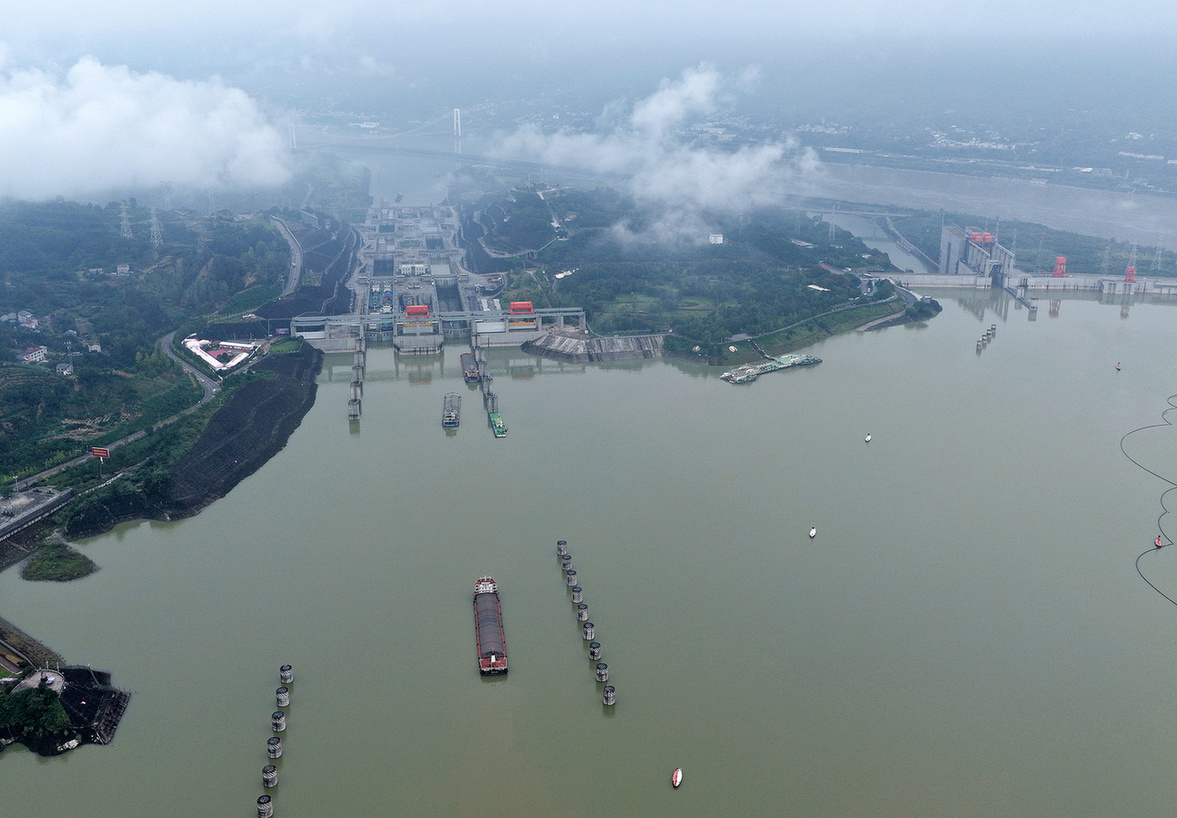
国家发展改革委党组成员、国家粮食和物资储备局局长刘焕鑫:粮食购销和储备管理制度进一步健 全,管理措施不断完善,长效机制逐步形成。 刘焕鑫介绍,"十四五"时期我国粮食应急保障能力不断提升。各级粮食应急加工企业由5448家增加 到6872家,增长了26%;粮油应急日加工能力由120万吨增加到178万吨,增长48%。粮食应急供应网点 由4.3万家增加到5.9万家,增长37%;依托这些网点,成品粮油应急日供应能力由106万吨增加到167万 吨,增长57%。 央广网北京10月15日消息(记者周尧)据中央广播电视总台中国之声《新闻和报纸摘要》报道,国 新办14日举行"高质量完成'十四五'规划"系列主题新闻发布会,相关负责人介绍,我国粮食市场供应充 足,运行总体平稳。5年来,我国粮食产量稳定在1.3万亿斤以上。 "十四五"时期,我国年均粮食收购量在4亿吨以上,我国人均粮食占有量达到500公斤,高于国际公 认的人均400公斤粮食安全线,做到了谷物基本自给、口粮绝对安全。 刘焕鑫:36个大中城市,成品粮油储备持续保障15天以上市场供应量。目前,我国已经建成国家、 省、市、县四级粮食应急预案体系。组织建设京津冀、长三角、粤港澳、 ...
晶采观察|逆势向上!中国外贸“有底气、有朝气、有锐气”
Yang Guang Wang· 2025-10-14 14:05
Core Viewpoint - China's foreign trade demonstrates resilience and growth despite global economic challenges, with significant exports of cultural and innovative products contributing to this success [2][5]. Group 1: Trade Performance - In the first three quarters, China's exports of holiday goods, dolls, and animal-shaped toys exceeded 50 billion yuan, reaching over 200 countries and regions [2]. - Total goods trade in the first three quarters amounted to 33.61 trillion yuan, reflecting a year-on-year growth of 4%, which is an acceleration of 0.5 percentage points compared to the first eight months [2][5]. Group 2: Key Strengths - The first keyword "confidence" highlights the stability of China's foreign trade, supported by a large industrial scale and strong supply chain capabilities [3]. - The second keyword "vitality" emphasizes the new growth momentum driven by the continuous development of new productive forces and the optimization of export product structures [3][4]. - The third keyword "sharpness" points to the rise of "national trend products," which represent a blend of Chinese culture, creativity, and manufacturing strength, gaining popularity both domestically and internationally [4]. Group 3: Notable Exports - Significant exports include a liquefied natural gas production platform valued at nearly 15 billion yuan, capable of meeting the gas needs of a city with a population of ten million [4]. - Exports of industrial robots increased by 54.9% in the first three quarters, showcasing the expanding application scenarios for Chinese manufacturing [4]. Group 4: Future Outlook - The upcoming China International Import Expo in Shanghai will feature a range of innovative products, including family companion robots, indicating ongoing advancements in technology and product offerings [4]. - Overall, China's foreign trade is characterized by resilience, structural optimization, and a dual focus on quantity and quality, contributing significantly to global economic stability [5].
青春华章|以奋斗姿态激扬青春、实现梦想
Yang Guang Wang· 2025-10-14 00:55
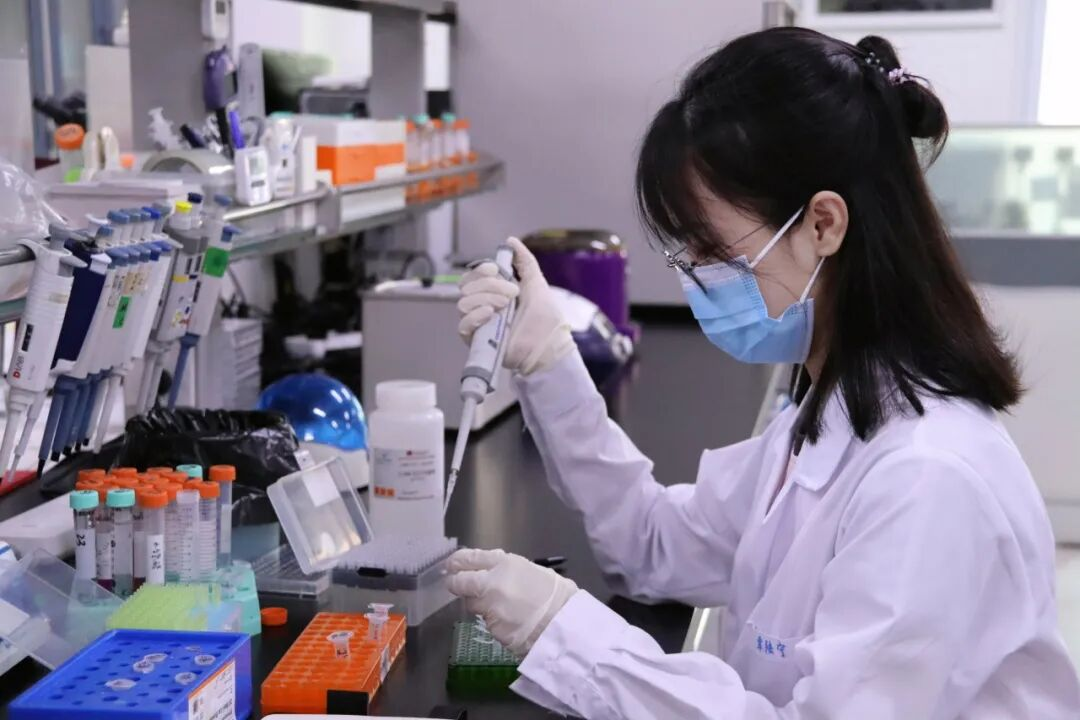
Core Viewpoint - The article highlights the innovative spirit and social responsibility of young individuals in China, showcasing their contributions to various fields such as biomedical research, agriculture, and sports technology, emphasizing their role in national development and societal progress [1][2][4][7]. Group 1: Biomedical Research - Qin Luning, a doctoral student at Nankai University, is dedicated to cancer pharmacology research, aiming to understand tumor evolution to develop effective treatments [2][3]. - She has published four papers in high-level journals and developed a new drug sensitivity testing technology with a nearly 95% accuracy rate, which has won awards and helped patients find suitable medications [3][4]. - Qin's commitment to social service is evident as she donated her competition prize to her alma mater, reinforcing her belief in using research to benefit society [3]. Group 2: Agricultural Research - Wei Jiachun, a graduate student at Tianjin Agricultural University, focuses on the preservation of important agricultural cultural heritage, conducting ecological monitoring and research in traditional rice planting systems [4][6]. - His work has been recognized in academic publications and he actively engages in public education, making complex scientific knowledge accessible to the general public [6][8]. - Wei's long-term field investigations aim to rejuvenate traditional agricultural practices and contribute to rural revitalization [6]. Group 3: Sports Technology - Huo Runchun, an undergraduate at Tianjin Sports University, combines her skills in high mountain skiing with technological innovation, applying for multiple patents to enhance training equipment [7][10]. - She has achieved significant success in competitions, setting records for Chinese university students in skiing, and emphasizes the importance of innovation in sports [10][11]. - Huo extends her impact beyond sports by promoting ice and snow culture and supporting disabled sports initiatives, demonstrating a commitment to social responsibility [11].
数说“十四五”丨新发现文物数量超13万处 “十四五”文物事业高质量发展成果显著
Yang Guang Wang· 2025-10-14 00:43
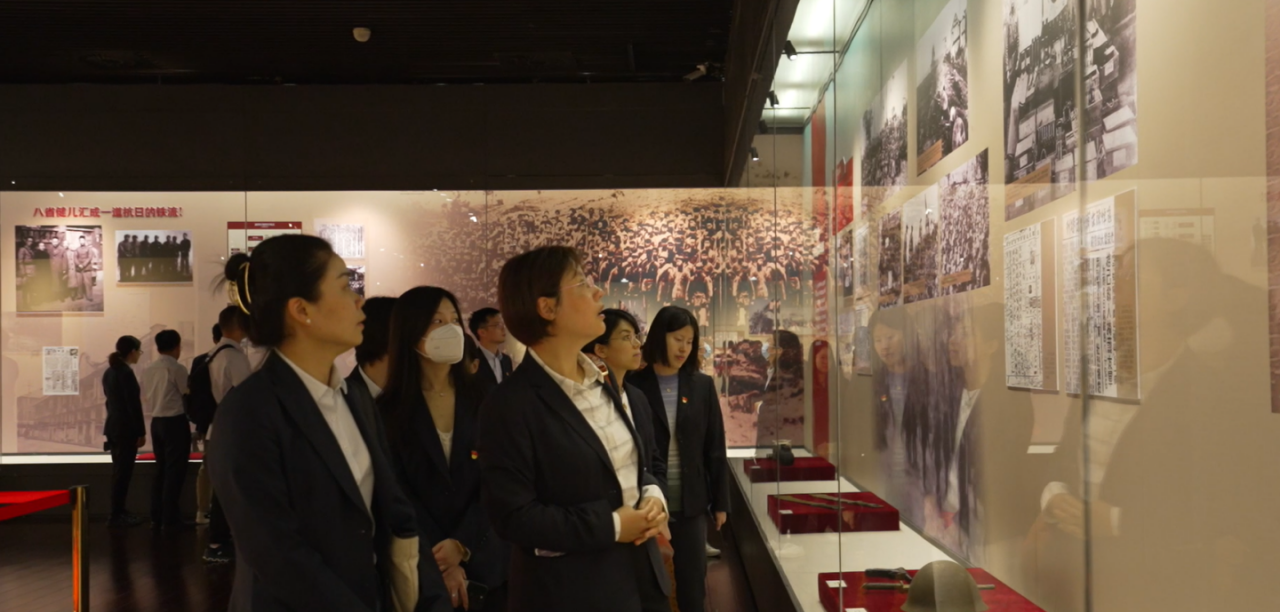
Group 1 - Qinghai Province has designated the Gari Tang Qin Kesh stone as a provincial cultural heritage protection unit [1] - The fourth national cultural relics census, starting in November 2023, has achieved significant results, with 767,000 registered cultural relics completed for review [1] - The Ministry of Culture and Tourism reported that 130,000 newly discovered cultural relics have achieved full coverage in both type and region [1] Group 2 - The number of registered museums in China has reached 7,046, with an average of one museum for every 200,000 people [1] - China now has a total of 60 World Heritage sites, with recent additions including the Beijing Central Axis and the Xixia Tombs [1] - The newly revised Cultural Relics Protection Law has been in effect since March 1, emphasizing the importance of cultural relics protection as a national policy [1] Group 3 - Looking ahead to the 15th Five-Year Plan, there will be a focus on building a more scientific, systematic, and refined cultural relics protection framework [2] - The aim is to enhance the research and excavation of cultural relics' value and to promote the establishment of a Chinese civilization identification system [2] - These efforts are intended to contribute to cultural prosperity and the construction of a culturally strong nation [2]
长沙子弹库战国帛书《五行令》《攻守占》入藏湖南省博物馆
Yang Guang Wang· 2025-10-14 00:43
Core Viewpoint - The return of the "Wuxing Ling" and "Gongshou Zhan" texts from the Changsha bullet depot marks a significant achievement in the protection of Chinese cultural heritage and demonstrates the country's commitment to safeguarding its civilizational roots [1] Group 1: Cultural Heritage - The "Wuxing Ling" and "Gongshou Zhan" texts are part of the earliest known silk manuscripts in China, discovered in 1942 in a Chu tomb in Changsha [1] - Their successful return is highlighted as a model case of international cooperation in the pursuit of repatriating lost cultural artifacts [1] Group 2: Preservation Efforts - The texts have undergone an environmental adaptation observation period and are now stored in a controlled environment with constant temperature and humidity for proper preservation [1] - The Hunan Provincial Museum plans to initiate non-destructive testing and utilize technological methods for scientific restoration and comprehensive digital archiving of the manuscripts [1]
以色列与哈马斯交换被扣押人员 《加沙停火协议全面文件》在埃及签署
Yang Guang Wang· 2025-10-14 00:43
多个国家和国际组织领导人13日晚在埃及沙姆沙伊赫就加沙地带停火举行峰会。以总理内塔尼亚胡 在会前最后一刻取消行程,哈马斯未派代表。峰会上,埃及、美国、卡塔尔和土耳其四个斡旋方国家领 导人签署了《加沙停火协议全面文件》。 美国总统特朗普当天在以色列议会发表演讲,两名以色列议员举起标语牌抗议,导致演讲一度中 断。特朗普表示,加沙地带停火协议第二阶段谈判"已经开始"。他对媒体称,"加沙战争已经结束。" 央广网北京10月14日消息 据中央广播电视总台中国之声《新闻和报纸摘要》报道,根据加沙停火 第一阶段协议,以色列与巴勒斯坦伊斯兰抵抗运动(哈马斯)13日交换被扣押人员。以色列方面当天宣 布完成释放1986名巴勒斯坦被扣押人员,哈马斯当天分两批释放了共20名以方被扣押人员,其中10人被 陆续送到以色列谢巴医疗中心。 记者陈慧慧:这里是以色列最大的医疗机构谢巴医疗中心,载有获释以色列被扣押人员的直升机正 在降落。直升机降落后,医务人员已经进入机舱内,将根据被扣押人员各自的身体状况,分送到不同的 医疗部门。 ...
三链融合锻造金融文化新范式 历史文脉激活国联民生金融向善动能
Yang Guang Wang· 2025-10-13 14:34
Core Viewpoint - Guolian Minsheng Securities is integrating traditional Chinese culture into its corporate culture to enhance its financial services and social responsibility, creating a financial cultural ecosystem that combines "red culture," "business culture," and "cultural innovation" [1][9]. Group 1: Integration of Red Culture - The company leverages the "red culture" resources from Wuxi, a historical site of revolutionary significance, to enhance its management and operational strategies [2][3]. - It emphasizes the role of the party committee in major strategic decisions, ensuring alignment with national strategies and market trends [3]. - The company promotes a culture of integrity and compliance through educational initiatives, fostering a trustworthy corporate image [3][5]. Group 2: Business Culture and Development - Guolian Minsheng Securities combines the entrepreneurial spirit of Wuxi with modern financial concepts, creating a resilient development model [4][5]. - The company has successfully completed significant mergers and acquisitions, achieving over 160 billion yuan in total assets and ranking among the top 20 in the industry [5]. - It has pioneered various financial products, including the first aviation technology innovation bonds and special bonds for integrated circuits in the Yangtze River Delta [5][9]. Group 3: Cultural Innovation and Financial Empowerment - The company transforms cultural elements into financial expressions, developing educational games and activities to promote financial literacy among children [8]. - It has financed over 80 billion yuan for the real economy through various financial instruments, demonstrating its commitment to regional development [8][9]. - Guolian Minsheng Securities has received recognition for its contributions to local economic development, being awarded for its outstanding service in high-quality development [9].