Zhong Yang Ji Wei Guo Jia Jian Wei Wang Zhan

Search documents
江西乐平:整合力量 提升精准监督实效
Zhong Yang Ji Wei Guo Jia Jian Wei Wang Zhan· 2025-11-24 03:47
Group 1 - The "Room-Group" linkage mechanism has improved the efficiency and professionalism of supervision and disciplinary work in Jiangxi Province, particularly in the agricultural sector [1] - The mechanism integrates supervisory forces, enhances the authority of stationed teams, and addresses long-standing issues in key areas such as rural revitalization, education, and healthcare [1] - A "red-yellow-blue" warning mechanism has been established for the comprehensive sorting of unresolved issues, promoting resource sharing and collaborative supervision [1] Group 2 - The collaborative approach involving "Room-Group-Local" personnel has led to effective case handling, particularly in the realm of public welfare [2] - A total of 13 supervision lists have been issued, shifting the supervision model from broad oversight to targeted interventions [2] - The establishment of a "巡察监督+派驻监督" linkage mechanism aims to enhance communication and collaboration between supervisory bodies and local party organizations, improving the overall effectiveness of disciplinary work [2]
南方电网:构建立体监督网 护航藏粤直流工程建设
Zhong Yang Ji Wei Guo Jia Jian Wei Wang Zhan· 2025-11-24 03:19
Core Viewpoint - The construction of the "Tibet Southeast to Guangdong-Hong Kong-Macao Greater Bay Area ±800 kV UHVDC Project" (referred to as "Tibet-Guangdong DC Project") has commenced, with a focus on establishing a "clean project" through strict supervision and risk control measures [1]. Group 1: Project Overview - The Tibet-Guangdong DC Project is a key cross-regional power transmission initiative aimed at supporting China's modernization efforts and optimizing energy resource allocation [1]. - The project is backed by a comprehensive integrity risk prevention system tailored to the characteristics of the Southern Power Grid [1]. Group 2: Integrity and Supervision Measures - A special work plan has been issued to promote the establishment of a "clean project," which includes 25 specific measures and a task list to regulate interactions with suppliers [2]. - A multi-layered supervision network is being established, focusing on 8 construction phases and 57 business nodes, with 65 identified risk points for integrity assessment [2]. Group 3: Education and Awareness - The project emphasizes the importance of integrity education, with resources including 229 case studies and 62 videos to foster a culture of cleanliness among employees [3]. - Guidelines for proper interactions with suppliers have been developed, alongside mechanisms for employees to report and refuse gifts [3].
贯彻落实中央纪委四次全会精神监督推动养老服务升级
Zhong Yang Ji Wei Guo Jia Jian Wei Wang Zhan· 2025-11-24 03:19
Core Insights - The Chinese government emphasizes the importance of improving elderly care services to address the needs of a large aging population and ensure social stability [1] - The Central Commission for Discipline Inspection (CCDI) is focusing on systemic issues in the elderly care sector, aiming to enhance the quality and safety of services through rigorous oversight and problem-solving [1] Group 1: Policy and Oversight - The CCDI has mandated a comprehensive approach to address prominent issues in elderly care, including fire safety in care facilities, by collaborating with relevant departments for joint inspections and rectifications [1] - Local disciplinary inspection agencies are actively involved in monitoring and improving elderly care services, ensuring that issues raised by the public are addressed promptly [1][2] Group 2: Service Quality and Transparency - The elderly meal service is highlighted as a critical area of demand, with initiatives being taken to ensure sustainable development and transparency in service delivery [2] - In Shaqi County, a monitoring system has been implemented that allows family members of residents to view real-time footage of kitchen operations in elderly care facilities, enhancing trust and accountability [3] Group 3: Systemic Improvements - Various regions, including Wuxi City, are undertaking thorough reviews of policies and financial management in elderly care, leading to disciplinary actions against 56 individuals for violations [4] - The integration of big data analytics is being utilized in Qitaihe District to monitor elderly care funding, identifying issues such as fraudulent claims and ensuring proper fund distribution [5]
四川省原副省长、公安厅原厅长叶寒冰严重违纪违法被开除党籍和公职
Zhong Yang Ji Wei Guo Jia Jian Wei Wang Zhan· 2025-11-24 03:04
叶寒冰严重违反党的政治纪律、组织纪律、廉洁纪律、工作纪律和生活纪律,构成严重职务违法并涉嫌 受贿犯罪,且在党的十八大后不收敛、不收手,性质严重,影响恶劣,应予严肃处理。依据《中国共产 党纪律处分条例》《中华人民共和国监察法》《中华人民共和国公职人员政务处分法》等有关规定,经 中央纪委常委会会议研究并报中共中央批准,决定给予叶寒冰开除党籍处分;由国家监委给予其开除公 职处分;终止其四川省第十二次党代会代表资格;收缴其违纪违法所得;将其涉嫌犯罪问题移送检察机 关依法审查起诉,所涉财物一并移送。 经查,叶寒冰丧失理想信念,背弃初心使命,搞团团伙伙,搞迷信活动,对抗组织审查;违反中央八项 规定精神,接受可能影响公正执行公务的宴请、旅游活动安排,违规出入私人会所,违规配备、使用公 务用车,违规由下属单位或他人支付应由本人支付的费用;违反组织原则,在干部选拔任用工作中为他 人谋利并收受财物;廉洁底线失守,违规收受礼品、礼金,利用职权或职务影响为亲属谋利;违规干 预、插手执法活动;家风不正;利用职务便利为他人在工程承揽、企业经营等方面谋利,并非法收受巨 额财物。 中央纪委国家监委网站讯 经中共中央批准,中央纪委国家监委对四 ...
中国证监会原党委委员、中央纪委国家监委驻中国证监会纪检监察组原组长王会民严重违纪违法被开除党籍
Zhong Yang Ji Wei Guo Jia Jian Wei Wang Zhan· 2025-11-24 03:04
王会民严重违反党的政治纪律、组织纪律、廉洁纪律和生活纪律,构成严重职务违法并涉嫌受贿犯罪, 且在党的十八大后不收敛、不收手,性质严重,影响恶劣,应予严肃处理。依据《中国共产党纪律处分 条例》《中华人民共和国监察法》《中华人民共和国公职人员政务处分法》等有关规定,经中央纪委常 委会会议研究并报中共中央批准,决定给予王会民开除党籍处分;按规定取消其享受的待遇;收缴其违 纪违法所得;将其涉嫌犯罪问题移送检察机关依法审查起诉,所涉财物一并移送。 中央纪委国家监委网站讯 经中共中央批准,中央纪委国家监委对中国证券监督管理委员会原党委委 员、中央纪委国家监委驻中国证监会纪检监察组原组长王会民严重违纪违法问题进行了立案审查调查。 经查,王会民丧失理想信念,背弃初心使命,背离党中央关于精准扶贫精准脱贫的基本方略,擅权妄 为、盲目决策,造成严重后果;违反中央八项规定精神,违规接受宴请;组织原则缺失,不按规定报告 个人有关事项,在职工录用等工作中为他人谋取利益并收受财物;廉洁底线失守,纵容默许亲属、特定 关系人利用其职权或者职务影响谋取私利;家风不正,对家人失管失教;执纪违纪,执法犯法,大搞利 益交换,大肆收钱敛财,利用职务便利 ...
来自监督一线的报道丨清风吹满园
Zhong Yang Ji Wei Guo Jia Jian Wei Wang Zhan· 2025-11-24 01:23
Core Viewpoint - The article highlights the efforts of Chengdu's government and its disciplinary inspection and supervision agencies to enhance the business environment and support the development of industrial parks through effective supervision and collaboration [2][3][5]. Group 1: Government Initiatives - Chengdu has prioritized the construction of industrial parks as part of its strategy to develop characteristic and strategic emerging industries, aiming to integrate the digital economy with the real economy [2]. - The city has launched the "Optimize Quality, Characteristic Park, Empower Efficiency, Full Park" initiative to promote innovation and efficiency in park reforms [3]. Group 2: Supervision Mechanisms - The Chengdu Discipline Inspection and Supervision Commission has incorporated the "Full Park" initiative into its political supervision, utilizing various collaborative models to ensure effective implementation [3]. - A comprehensive supervision plan has been established, focusing on key areas such as planning, investment attraction, and park operations to identify and address risks [3]. Group 3: Specific Measures - The establishment of a dedicated feedback mechanism for enterprise requests from business forums ensures timely responses and accountability from relevant departments [2]. - The city has created a specialized ledger for complaints related to park operations, implementing a priority handling system to address issues swiftly [5]. - Measures have been introduced to clarify the boundaries of government-business interactions, preventing corruption and promoting responsible governance among officials [5].
深入推进新时代廉洁文化建设 营造崇廉拒腐良好风尚
Zhong Yang Ji Wei Guo Jia Jian Wei Wang Zhan· 2025-11-24 00:17
Group 1 - The core viewpoint emphasizes the importance of building a clean and honest culture in governance to foster a positive political environment [2][3][6] - The 20th Central Commission for Discipline Inspection's fourth plenary session highlighted the need for a three-year action plan (2025-2027) to promote clean culture across various sectors and households [2] - Various local governments, such as in Heilongjiang and Guizhou, are implementing specific measures to integrate clean culture into their overall governance frameworks, ensuring a coordinated approach across departments [2][3] Group 2 - Guizhou province is advancing its "Clean Guizhou" initiative by deploying annual action plans that focus on promoting clean culture in multiple sectors, including government, education, and community [3][4] - Local governments are creating unique cultural education platforms that incorporate traditional and revolutionary cultural elements to instill clean values among officials and the public [3][4] - The integration of clean culture into local customs and practices, such as through performances and community events, is being utilized to enhance public engagement and awareness [5][6] Group 3 - The use of modern technology, such as the "Clean Yunnan Map" app, is being employed to disseminate information about clean culture landmarks and educational resources across the province [5] - Efforts are being made to produce various media content, including micro-videos and educational materials, to promote clean culture and its principles among the populace [6][7] - The establishment of collaborative platforms among different sectors, including media and education, is crucial for the effective promotion and sustainability of clean culture initiatives [6][7]
走近大国重器 | 高原云端“大白鲸”探访“极目一号”系列浮空艇
Zhong Yang Ji Wei Guo Jia Jian Wei Wang Zhan· 2025-11-24 00:17
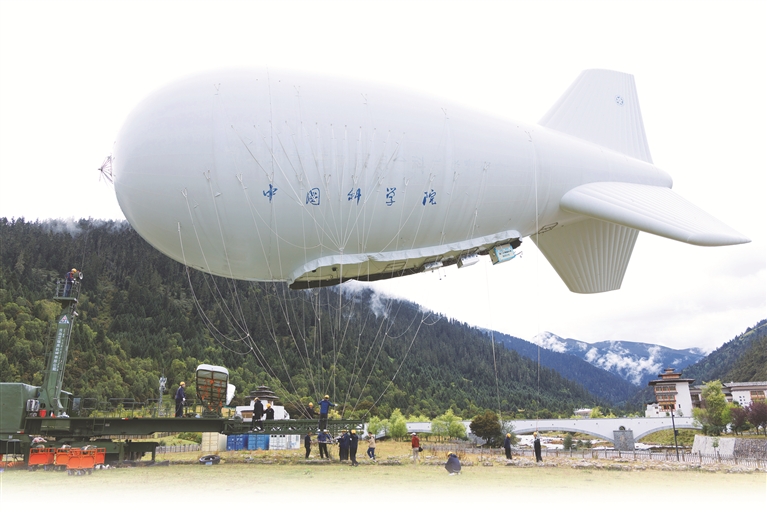
Core Insights - The second comprehensive scientific investigation of the Qinghai-Tibet Plateau, emphasized by General Secretary Xi Jinping, aims to reveal environmental changes and optimize ecological security systems, significantly impacting sustainable development and global ecological protection [1][9]. Group 1: "极目一号" Airship Development - The "极目一号" series airships, led by the Aerospace Information Innovation Research Institute, have played a crucial role in the second scientific investigation since 2017, achieving multiple records and continuous upgrades over eight years of high-altitude testing [2][10]. - The "极目一号" airship has a length of 39 meters and a volume of 3000 cubic meters, with the smallest model used in recent atmospheric observation tests [9]. Group 2: Atmospheric Observation Tests - During the atmospheric observation tests in Lulang, the "极目一号" airship carried 16 types of observation payloads weighing approximately 200 kilograms, reaching an altitude of 5500 meters and completing 40 flight validations [5][10]. - The tests provided critical data for understanding climate change in the plateau region, supporting dynamic monitoring and sustainable development in sensitive areas [5][6]. Group 3: Technological Innovations - The airship team has developed a fully controllable technology system through iterative improvements, addressing challenges such as extreme cold, strong winds, and low pressure [11][12]. - Over the past five years, the team has applied for more than 60 patents related to airship technology, enhancing innovation and providing a solid foundation for advancements in the field [14]. Group 4: Applications and Future Prospects - The "极目一号" airship is positioned as a versatile platform for various applications, including scientific observation, emergency communication, and ecological monitoring, demonstrating significant advantages over traditional aircraft [15][16]. - The airship technology is expected to drive upgrades in related industries, with successful applications in diverse scenarios such as grassland monitoring and maritime communication [17][20].

战火记忆 | 扛枪打鬼子 筹粮保后勤
Zhong Yang Ji Wei Guo Jia Jian Wei Wang Zhan· 2025-11-24 00:17
Group 1 - The article highlights the life and contributions of Meng Chaoqun, a veteran who joined the anti-Japanese guerrilla forces in 1939 and later became a member of the Communist Party in 1940, emphasizing his commitment to fighting for national dignity and independence [1][2][4] - Meng served as a squad leader in the Su Dong Independent Regiment, participating in numerous battles, including a significant encounter at Mashantou, where he played a crucial role in signaling for troop withdrawal [2][3] - After the war, Meng transitioned to a role in tax collection and financial management, believing that supporting the front lines through logistics and finance was equally important as direct combat [4][6] Group 2 - The narrative details Meng's experiences during the war, including the dangers faced while transporting supplies and the establishment of a tax police unit to protect resources from enemy forces [5][6] - Meng's post-war career involved various roles in tax and financial management, where he maintained a strong sense of responsibility, reflecting on the importance of public resources and their connection to the sacrifices made during the war [6][7] - The article concludes with Meng expressing pride in the current generation's well-being, attributing it to the sacrifices made by his generation, and emphasizing the importance of remembering history [7]
湖南岳阳多措并举深化以案促改促治得意之笔 | 着力从源头防止腐败滋生蔓延
Zhong Yang Ji Wei Guo Jia Jian Wei Wang Zhan· 2025-11-24 00:17
Core Viewpoint - The article emphasizes the importance of promoting reform and governance through case analysis, aiming to eliminate corruption and improve the effectiveness of governance in Hunan Province, particularly in Yueyang City [2][11]. Group 1: Case Analysis and Reform - Yueyang's disciplinary inspection and supervision authorities are implementing a strategy of "deep reform through individual cases and similar cases," focusing on systemic governance and comprehensive management [2][5]. - The city has established a mechanism called "one case, three documents, and one report" to enhance governance efficiency, collecting over 80 effective suggestions and addressing 63 institutional loopholes [5][10]. Group 2: Specific Cases and Lessons Learned - The case of Huang Yonghong, a former vice-chairman of the local political consultative conference, serves as a warning, leading to the introduction of third-party evaluations in agricultural project funding [4][6]. - The investigation into Liang Yizhong, former head of the agricultural bureau, resulted in the creation of a negative list of prohibited behaviors, enhancing supervision and accountability [6][7]. Group 3: Collaborative Governance - The article highlights the importance of collaboration between disciplinary bodies and case units, with a focus on joint meetings to clarify responsibilities and develop targeted corrective measures [8][9]. - A total of 15 special meetings have been held this year to promote accountability and enhance the effectiveness of governance, with numerous recommendations issued to improve oversight [10][12]. Group 4: Systematic Approach to Governance - The article advocates for a systematic approach to governance, emphasizing the need for long-term institutional reforms alongside immediate corrective actions [11][12]. - It stresses the importance of establishing a comprehensive mechanism for power regulation and supervision, focusing on critical areas such as decision-making, fund management, and resource allocation [12].