Business Insider

Search documents
Netflix has a history of successful self-disruption. Its Warner Bros.
Business Insider· 2025-12-06 10:10
Core Insights - Netflix's recent acquisition of Warner Bros Discovery's studio and streaming services marks a significant shift in its business strategy, reversing its previous stance against large mergers and acquisitions [1][2][4] Group 1: Strategic Shifts - Netflix has historically preferred organic growth over acquisitions, but the new deal is framed as a strategic move based on understanding the business being acquired [2][4] - The company has a track record of successfully pivoting its strategies in response to market changes, such as cracking down on password sharing and embracing advertising [3][5] Group 2: Historical Context of Pivots - The transition from DVD rentals to streaming in 2007 was a pivotal moment that fundamentally changed Netflix's business model [5] - The decision to charge for password sharing in 2023 resulted in a surge in subscriptions, indicating the effectiveness of its strategic pivots [6] - Netflix's entry into advertising in 2022, despite previous resistance, was a response to slowing subscription growth and is expected to be a significant growth driver [8] Group 3: Acquisition Rationale - The acquisition of WBD's content is seen as a solution to Netflix's franchise scarcity problem, providing access to valuable intellectual properties like DC Comics and Harry Potter [11][12] - The deal aims to enhance Netflix's hours of consumption, which have stagnated despite an increase in subscribers [11][13] Group 4: Challenges Ahead - Integrating WBD's assets poses challenges, including cultural differences between Netflix's corporate culture and that of traditional media companies [15][16] - Concerns have been raised regarding the regulatory scrutiny the acquisition may face, particularly given the political landscape [17][18] Group 5: Market Reception - Wall Street reacted skeptically to the acquisition news, with Netflix shares declining by approximately 3% [16] - Analysts express mixed feelings about the price of the deal, while acknowledging the potential for Netflix to enhance its content portfolio and market position [17][19]



Meta delays release of new mixed reality glasses code-named 'Phoenix' in order to 'get the details right'
Business Insider· 2025-12-06 02:54
Core Insights - Meta is delaying the release of its new mixed reality glasses, code-named "Phoenix," from the second half of 2026 to the first half of 2027 [1] - The delay is intended to allow more time for refinement and to ensure a high-quality user experience [2][5] - The "Phoenix" glasses will have a goggle-like design and will be powered by a separate puck to enhance comfort and prevent overheating [3][4] Product Development - The "Phoenix" glasses are designed to be similar to Apple's Vision Pro, with a focus on lightweight and comfortable use [4] - Meta is also planning to release a new "limited edition" wearable device, code-named "Malibu 2," in 2026 [5] - The company is starting work on its next-generation Quest device, which aims to significantly upgrade capabilities and improve unit economics [6] Organizational Changes - Meta has reorganized its metaverse unit, appointing Gabriel Aul and Ryan Cairns to co-lead efforts in immersive gaming and virtual reality hardware [6] - The company is considering budget cuts of up to 30% within its Reality Labs division, which may affect employees working on the Horizon Worlds platform [6] AI Initiatives - Meta has expanded its AI hardware efforts by acquiring Limitless, a startup that produces AI-powered pendant devices [7]

Judge orders Google to rebid for default search deals every year in a major antitrust blow
Business Insider· 2025-12-06 01:18
Core Points - A federal judge has mandated that Google must limit all default search and AI app contracts to one year, challenging the company's long-standing dominance in the search market [1][2] - The ruling requires Google to renegotiate every default-placement agreement annually, impacting lucrative contracts with major players like Apple and Samsung [2] - This decision is part of a broader antitrust effort following a 2024 ruling that found Google illegally monopolized online search and advertising [2] - The new rule is intended to create opportunities for competitors, particularly in the generative AI space, to vie for default search placements that have traditionally been secured for extended periods [3] - Although Google can still pay device manufacturers for default placements, the annual renegotiation significantly limits its ability to maintain long-term control over the search market [3]

Netflix Probably Wants to Sell You Netflix and HBO As a Bundle
Business Insider· 2025-12-05 20:44
Last month, HBO boss Casey Bloys stood in front of an auditorium full of reporters and told them what everyone already knew: Netflix had won the streaming wars. "To Netflix's credit, as the first mover, they have become a utility. For consumers, it is the basic cable of today," he said.But Bloys wasn't surrendering — he was pitching: HBO was still valuable, just like it was in the old cable days, when the only way you could get HBO was to get basic cable as well. "In today's world, consumers still want to ...
Here's what Warner Bros. Discovery CEO David Zaslav said about the Netflix deal at a company town hall
Business Insider· 2025-12-05 19:10
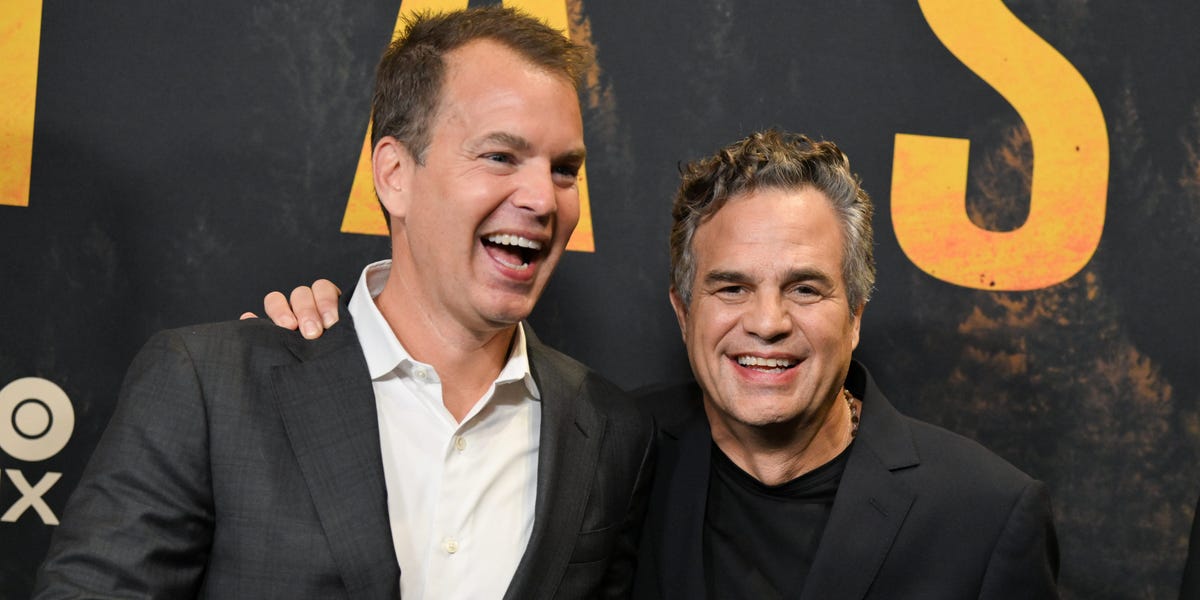
Warner Bros. Discovery CEO David Zaslav is telling his employees not to worry about the company's new mega-merger with Netflix. "This is a big day for Warner Bros.," Zaslav said at a company global town hall, a recording of which was obtained by Business Insider.Netflix plans to buy the Warner Bros. studio and streaming assets in an industry-shaking $72 billion deal, the companies announced on Friday. WBD's TV networks like CNN and TNT will be part of a spinoff in mid-2026, as the media conglomerate had or ...
Netflix wants to buy Warner Bros. Discovery.
Business Insider· 2025-12-05 15:39
Core Viewpoint - Netflix has announced a deal to acquire Warner Bros. Discovery (WBD) for $72 billion, which includes HBO and the Warner Bros. studio, but the deal faces potential regulatory hurdles under the current U.S. administration [1]. Group 1: Deal Overview - The acquisition marks a significant shift in the media landscape, as Netflix aims to strengthen its position against competitors like HBO [1]. - The deal requires regulatory approval, specifically from the U.S. president, which raises questions about its feasibility given the current political climate [1]. Group 2: Competitive Landscape - Paramount CEO David Ellison is actively opposing the Netflix-WBD deal, arguing it should be blocked on antitrust grounds [2]. - Ellison's efforts include lobbying at the White House, indicating a strategic move to influence regulatory decisions [2]. Group 3: Legal and Strategic Maneuvers - If Ellison is successful, the Department of Justice may pursue legal action to block the acquisition, reminiscent of past antitrust cases during Trump's presidency [3]. - The Ellison family has alternative strategies, including a potential hostile takeover or legal action against WBD for not considering their offer seriously [4][5]. Group 4: Implications for WBD - WBD's decision to accept Netflix's offer, which involves a $5.8 billion breakup fee if the deal fails, suggests a preference for Netflix's proposal over Paramount's bid for the entire company [5]. - The competitive tension between Netflix and Paramount highlights the evolving dynamics in the media industry, particularly regarding relationships with political figures [6].
Netflix breaks down how its approach to movie theaters will (and will not) change when it buys Warner Bros.
Business Insider· 2025-12-05 15:29
Core Viewpoint - Netflix is acquiring Warner Bros. as part of a significant deal for Warner Bros. Discovery's streaming and studios business, but it will not shift to long, exclusive theatrical runs for its movies [1][2]. Group 1: Theatrical Release Strategy - Netflix plans to continue releasing Warner Bros. movies in theaters upon deal closure, but will maintain its practice of short theatrical runs [2][3]. - The company believes that long, exclusive theatrical windows are not consumer-friendly and anticipates that these windows will continue to shorten over time, allowing faster access via streaming [3]. Group 2: Business Model and Licensing - Netflix will not adopt Warner Bros. Discovery's model of licensing movies and shows to competing media companies, intending to keep its own production model unchanged [4]. - While Warner Bros. will continue to produce for third parties, Netflix aims to maintain its successful operational model without alterations [4].

Why Netflix says its Warner Bros. deal won't be a failure like other media mega-mergers before it
Business Insider· 2025-12-05 13:51
Core Viewpoint - Netflix is confident that its acquisition of Warner Bros. Discovery's studio and streaming business will succeed, unlike previous media mega-mergers that have failed due to a lack of understanding of the entertainment industry [1][2] Group 1: Acquisition Details - Netflix announced its largest acquisition in history, acquiring Warner Bros. for an equity value of $72 billion [2] - The deal is considered one of the largest ever in the entertainment sector [2] Group 2: Company Positioning - Netflix co-CEO Greg Peters emphasized that the company is not pursuing this acquisition as a lifeline, indicating a healthy business status [2] - Peters noted that previous merger failures, such as AT&T's acquisition of Time Warner and the AOL-Time Warner merger, were due to a misunderstanding of the entertainment industry [2]

Read the memo Warner Bros. Discovery sent employees after Netflix won the bidding war for its key assets
Business Insider· 2025-12-05 13:28
Core Viewpoint - Netflix is acquiring Warner Bros. Discovery's studio and streaming businesses for $72 billion, marking a significant shift in the entertainment industry [1] Group 1: Deal Overview - The acquisition includes HBO Max and the Warner Bros. studio, but excludes WBD's TV networks such as CNN, TNT, and TBS [1] - This deal is the largest in the industry since Disney's acquisition of 21st Century Fox for $71 billion in 2019 [1] - Netflix outbid Paramount Skydance and Comcast in a competitive bidding process [2] Group 2: Regulatory and Structural Changes - The deal requires regulatory approval from both US and foreign governments, which may pose challenges [2] - The transaction is expected to close within 12 to 18 months if all regulatory conditions are met [2] - Warner Bros. Discovery will separate its less valuable TV assets, forming a new standalone company called Discovery Global, expected to be completed by Q3 2026 [5][6] Group 3: Strategic Implications - The merger is seen as a response to the evolving landscape of the entertainment industry, focusing on how stories are financed, produced, and distributed [6] - The combination aims to enhance consumer choice and value, strengthen the entertainment industry, and create long-term shareholder value [7] - The integration of Warner Bros. into Netflix is expected to provide a clearer path for both entities in a rapidly changing market [10]
Netflix to acquire Warner Bros. for $82.7 billion in a deal that could reshape Hollywood
Business Insider· 2025-12-05 12:27
Core Insights - Netflix is making its largest acquisition ever, acquiring Warner Bros. from Warner Bros. Discovery for an enterprise value of $82.7 billion [1] Group 1: Acquisition Details - The deal is a cash-and-stock transaction that combines Netflix's leading streaming platform with Warner Bros.' historic studio and its assets, including HBO, HBO Max, and major franchises like "Harry Potter" and "Game of Thrones" [2] - The acquisition is anticipated to finalize after Warner Bros. Discovery separates its Global Networks division into a publicly traded company, Discovery Global, expected to occur in the third quarter of 2026 [3]