Investopedia

Search documents
Where to Put $10K—or More—Right Now for a Solid, Low-Risk Return
Investopedia· 2026-01-10 01:00
Core Insights - Current cash management options are providing competitive yields, with rates ranging from low-3% to around 5%, allowing savers to earn returns without market risk [3][9] - A comprehensive chart has been created to compare the best-paying options across various cash categories, including high-yield savings accounts, CDs, brokerage cash options, and U.S. Treasuries [4][12] - The right account choice can significantly impact earnings on liquid savings, with potential earnings on a $10,000 deposit reaching approximately $200 in six months at a 4% interest rate [7][8] Cash Management Options - High-yield savings accounts, CDs, brokerage options, and U.S. Treasuries are highlighted as the top choices for earning solid returns without market exposure [9][10] - The best savings accounts and CDs allow for locking in high yields for a specified period, while brokerage cash options and Treasuries offer flexibility and stability [4][11] Earnings Potential - A breakdown of potential earnings on different balances over six months shows that at a 5% APY, a $10,000 deposit could yield $247, while a $25,000 deposit could yield $617 [8] - The analysis indicates that even cautious savers can achieve meaningful earnings by selecting the right accounts [6][9] Rate Variability - The rates for savings accounts and money market accounts are variable and can change over time, while CDs and Treasuries provide fixed yields for a set duration [10][14] - The report emphasizes the importance of being aware of current rates across different cash management products to maximize earnings [12][13]


Stocks Could Keep Rising Even if AI Spending Slows Down. Here's Why.
Investopedia· 2026-01-09 21:20
Core Insights - Big tech companies are projected to invest over $500 billion in infrastructure, primarily related to artificial intelligence, in 2026, which could lead to a significant increase in tech capital expenditures as a percentage of GDP, reaching levels seen during previous tech investment cycles [2][3] - The current investment cycle in AI may resemble the Zoom boom rather than the Dotcom Bubble, as the Federal Reserve's accommodative monetary policy could sustain stock market growth even if AI capital expenditures decline [3][6][10] - Concerns about the sustainability of the AI-driven stock market rally have emerged, particularly as tech stocks experienced volatility in late 2025, raising questions about their future performance [4][8] Investment Trends - Historical patterns indicate that tech stocks typically lag the market about a year before the peak of capital expenditure cycles, suggesting potential risks for AI-related stocks [3] - The Federal Reserve's current stance indicates a likelihood of rate cuts, which could support stock valuations by lowering real yields, thereby benefiting tech stocks [6][10] - The tech sector's performance in 2021 was influenced by declining real bond yields, which are crucial for stock valuations, and the sector did not experience a downturn until the Fed's rate hikes began in 2022 [5] Market Dynamics - The tech sector's significant share of the S&P 500 makes the index more susceptible to declines in tech stocks, raising concerns among Wall Street analysts about the sustainability of the AI rally [8] - Lower interest rates and tax cuts from recent legislation could enhance stock market liquidity and economic growth, potentially mitigating the impact of sluggish tech stock performance [9]





The ACA Subsidy Cliff Is Back. Here's What You Can Do To Avoid It
Investopedia· 2026-01-09 21:00
Core Insights - The expiration of enhanced premium tax credits for the Affordable Care Act (ACA) has led to increased health insurance premiums for many individuals, particularly those earning just above the federal poverty level threshold [1][8] - Individuals with a modified adjusted gross income (MAGI) exceeding 400% of the federal poverty level face a "subsidy cliff," where even a slight increase in income can result in the complete loss of tax credits [3][8] Premium Tax Credits - Enhanced premium tax credits, which were introduced in 2021, provided subsidies to individuals earning above 400% of the federal poverty level, approximately $62,600 for individuals in 2025 [2] - For example, an individual earning $64,000 would incur total premiums of $14,931, while someone earning $62,000 would only pay $6,175 due to eligibility for the premium tax credit [4] Financial Planning Strategies - Financial experts recommend monitoring income levels closely, especially in 2026, to avoid surpassing the 400% threshold and losing tax credits [7] - Strategies such as contributing to health savings accounts or traditional 401(k)s can help reduce taxable income, thereby maintaining eligibility for premium tax credits [10] - Tax-loss harvesting is another strategy suggested, allowing individuals to deduct investment losses from their income, which can help in managing MAGI [11]

Here's What President Trump Said About Intel's CEO That's Boosting the Stock Friday
Investopedia· 2026-01-09 19:10
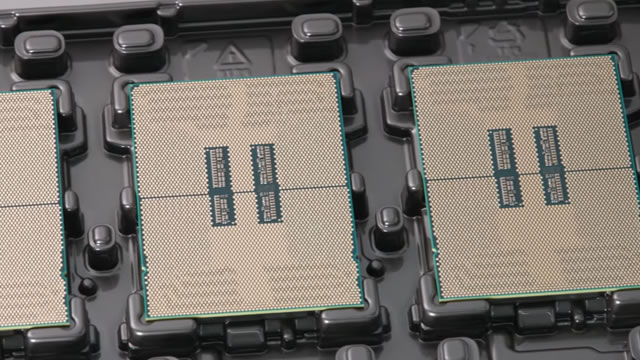
Core Insights - Intel's stock reached its highest level in nearly two years, increasing nearly 10% after President Trump praised CEO Lip-Bu Tan on social media [1][5] - Trump's previous push for Tan's resignation due to concerns over his ties to Chinese companies shifted after a meeting in August, leading to the U.S. government acquiring a 10% stake in Intel [2] Company Performance - The stock's recent surge is attributed to Trump's endorsement, although it remains below historical highs as Intel seeks to demonstrate a sustainable business turnaround [3] - A partnership with Nvidia and rumors of new customers contributed to Intel's stock performance, which nearly doubled in value last year, particularly between August and December [4] - Intel's stock has been one of the top performers in the S&P 500 at the start of the year, gaining close to 25% in January [4] Market Impact - Other semiconductor stocks, including Broadcom, Micron Technology, and Advanced Micro Devices, also saw gains, contributing to a broader market rally that lifted the S&P 500 to new highs [5]

Think Small-Caps Are Set to Take Off? Here Are Some Expert Stock Tips
Investopedia· 2026-01-09 18:11
Group 1 - Small-cap stocks, defined as companies with market capitalizations between approximately $250 million and $2 billion, are expected to outperform larger companies in 2026, with the S&P 600 and Russell 2000 indexes rising over 4% year-to-date [1][6] - Analysts believe that factors such as earnings rebound, accommodative monetary policy, and potential tariff reductions are aligning to support small-cap growth [2][3] - Bank of America forecasts that small-cap earnings outperformance will drive this sector's leadership, with a list of 30 "smid-cap" stocks showing an average upside of nearly 30% over the next 12 months [3][4] Group 2 - Approximately 90% of the stocks on the Bank of America list have seen positive consensus earnings-per-share revisions in the last three months, with median growth projections of 23% for the next year [4] - Economists at Bank of America anticipate three interest rate cuts by the end of the year, which would benefit small-cap companies that typically carry more debt [5] - Notable small-cap stocks identified include Alaska Air Group (ALK), Birkenstock (BIRK), Duolingo (DUOL), e.l.f. Beauty (ELF), Vita Coco (COCO), and Wayfair (W) [6]


Jobs Report Shows US Labor Market Continues to Weaken
Investopedia· 2026-01-09 17:00
Job Market Overview - U.S. employers added 50,000 jobs in December, which is below the revised 56,000 jobs added in November and less than the expected 73,000 jobs [2][11] - The unemployment rate decreased to 4.4% from a revised 4.5% in November, which was lower than the forecasted 4.5% [2][11] Economic Implications - The decline in the unemployment rate may alleviate concerns among Federal Reserve officials regarding a potential collapse of the job market, possibly influencing them to maintain interest rates in January [4][8] - The slow job growth reflects the impact of President Trump's economic policies, particularly tariffs and immigration restrictions, which have hindered hiring and reduced the available workforce [5][9] Job Growth Trends - Job growth has significantly slowed, averaging only 147,000 jobs per month until April of the previous year, coinciding with the introduction of extensive tariffs [5] - The manufacturing sector experienced a loss of 8,000 jobs in December, marking the eighth consecutive month of job losses in this sector, which was intended to benefit from the tariffs [9] Yearly Job Growth Analysis - The year 2025 was noted as one of the worst for job growth in decades, with only 584,000 jobs added throughout the year, the lowest since 2003, excluding the Great Recession and the COVID-19 recession [10] - Economists anticipate that the job growth figures for 2025 may be revised downwards or even turn negative as more current data is incorporated [10] Federal Reserve Actions - The Federal Reserve has reduced interest rates by three-quarters of a point since September to stimulate hiring and prevent a labor market slowdown from escalating into mass layoffs [7] - The likelihood of a rate cut in January has decreased from 11% to 5% following the latest job report [8]

How to Trade the Next Earnings Season? Goldman Says Try Options
Investopedia· 2026-01-09 16:20
Core Insights - Earnings season is approaching, with Goldman Sachs analysts suggesting that traders expect the average S&P 500 stock to move 4.5% post-earnings, indicating low implied volatility compared to historical levels [2][3] - Despite the low expectations, Goldman believes that fundamental drivers of earnings volatility remain intact [3] Sector Analysis - Goldman identifies utilities, healthcare, materials, and industrials as sectors with the most potential for post-earnings volatility, with utilities showing abnormal volatility in recent quarters [5] - In contrast, volatility has decreased in most other sectors, including technology, over the past year [5] Earnings Estimates and Stock Performance - Goldman has raised its S&P 500 earnings estimates by 5% and its price target for the index by 8% over the past three months, while the index itself only rose 3%, suggesting that improvements in fundamentals are outpacing stock price increases [6] - Individual investors have been aggressive buyers of single stocks and ETFs, which is viewed positively for future equity performance [6] Investment Opportunities - Goldman has identified 25 stocks with "out-of-consensus" earnings views, indicating potential for traders to profit from options strategies [6] - Notable companies expected to surprise positively include Meta Platforms, UnitedHealth Group, Arista Networks, and Robinhood, where buying out-of-the-money call options could be beneficial [8] - Conversely, Texas Instruments and Southwest Airlines are expected to face margin pressure, suggesting that buying slightly out-of-the-money put options could be profitable if their earnings disappoint [9]

These Nuclear Energy Stocks Are Soaring Thanks to Deals With Meta
Investopedia· 2026-01-09 15:30
Core Insights - Several nuclear energy stocks experienced significant gains due to new agreements with Meta Platforms [1][3] Group 1: Agreements and Partnerships - Meta Platforms has reached agreements with nuclear energy provider Vistra Corp, startup Oklo, and TerraPower, backed by Bill Gates [2] - The Vistra deal will supply power from its currently operating reactors, while Oklo and TerraPower will assist in building smaller nuclear reactors expected to be operational between 2030 and 2035 [2] Group 2: Power Capacity and Financial Impact - Meta anticipates adding 6.6 gigawatts of power capacity to its data center network by 2035, although financial terms of the agreements were not disclosed [3] - Shares of Vistra and Oklo surged nearly 14% following the announcement, with other nuclear stocks like NuScale Power, Constellation Energy, and Nano Nuclear Energy also seeing gains [3] Group 3: Industry Implications - The agreements reflect a trend among Big Tech companies to secure clean energy sources to meet the high power demands of AI data centers, which can increase local electricity costs [4] - Analysts from Wedbush noted that this development is incrementally positive for the nuclear energy industry, emphasizing the commitment from major tech firms to leverage new energy sources [5]


The Bachelor’s Degrees Most Likely to Get You a Job After Graduation
Investopedia· 2026-01-09 13:01
Many Americans are wondering if a bachelor's degree is still worth it, as tuition costs soar and newly minted graduates struggle to find jobs in their field. While the data shows that a college degree is still largely a good investment, that can be cold comfort to graduates sending out hundreds of applications without a single callback. KEY TAKEAWAYS This year, the Bureau of Labor Statistics identified the top 10 jobs with the most projected openings from 2024 to 2034 for workers with a bachelor's degree—an ...
Workers Are Doing More, But Not Getting Paid For It
Investopedia· 2026-01-09 13:01
Core Insights - Labor productivity surged at an annualized rate of 4.9% in the third quarter, the fastest pace since 2023, while hourly compensation decreased by 0.2% after adjusting for inflation, resulting in reduced buying power for workers [1][7]. Economic Implications - Economists view the increase in productivity as beneficial for the long-term economic outlook, suggesting that higher productivity can lead to improved living standards and wage growth without triggering inflation [2][4]. - Increased productivity allows firms to enhance profitability, which can enable them to absorb higher costs, reinvest, or lower prices, potentially alleviating inflation concerns [3][4]. Technology and Productivity - The rise in productivity indicates that companies' goals of leveraging artificial intelligence to achieve more output with fewer workers may be within reach, although the full impact has yet to be realized [5][7]. - Experts caution that while productivity growth is promising, it remains uncertain how much it will benefit workers, with concerns about a "jobless expansion" where economic growth does not translate into improved labor market conditions [6][7].