New York Post

Search documents
PepsiCo to slash prices up to 15% on Doritos, Cheetos and Lay's chips
New York Post· 2026-02-03 18:38
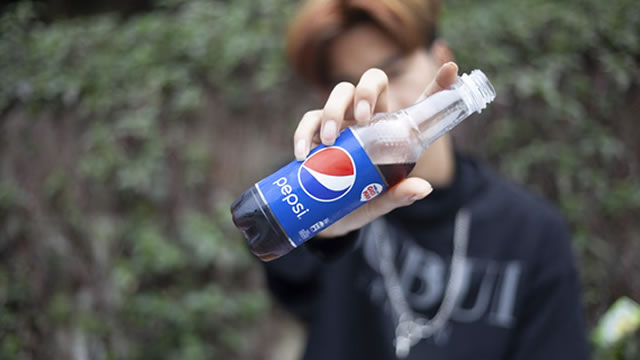
Core Insights - PepsiCo plans to reduce prices on snacks by up to 15% to alleviate consumer pressure from inflation [1][4] - The company has received significant feedback from consumers struggling with high prices, prompting this decision [2][7] Pricing Strategy - Suggested retail prices for snacks like Lay's and Doritos will begin rolling out this week, with specific examples including an 8-ounce bag of Lay's dropping from $4.99 to $4.29 and a 9.25-ounce bag of Doritos decreasing by about $0.80 to $5.49 [1][7] - The price reductions are part of a broader strategy to regain consumer loyalty amid rising costs and competition from cheaper alternatives [3][8] Market Context - Retail prices for salty snacks increased by approximately 38% year-over-year as of June 2024, contributing to consumer dissatisfaction [3] - The overall food prices rose by 3.1% compared to the previous year, indicating a challenging economic environment for consumers [3] Company Actions - PepsiCo executives acknowledge that while snack prices have risen in line with inflation, sales growth has stagnated, leading to the decision to lower prices [4][13] - The company is also focusing on marketing initiatives that highlight simpler ingredients and healthier options, including new packaging for classic snacks [11][14] Financial Performance - In the most recent quarter, PepsiCo showed signs of improvement, particularly in savory and salty retail sales, alongside strong revenue growth in its beverage segment [15]


Disney reveals enormous $38M pay package for new CEO Josh D'Amaro
New York Post· 2026-02-03 15:32
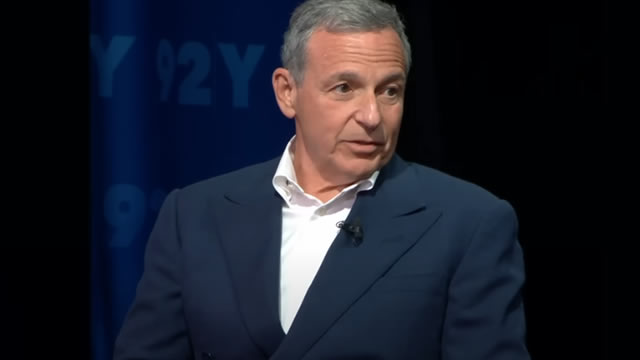
Compensation Overview - Disney's new CEO Josh D'Amaro is set to earn a total pay package of $38 million, which includes an annual base salary of $2.5 million and a one-time bonus of $9.75 million upon taking over [1][5] - Each year, D'Amaro will receive a long-term stock incentive valued at $26.2 million and an annual bonus of 250% of his base salary, contingent on meeting specific performance goals [2] Leadership Transition - D'Amaro is scheduled to officially take over as CEO next month, succeeding Bob Iger, who will transition to a senior adviser role [3][4] - Dana Walden, previously co-chair of Disney Entertainment, will assume a newly created position as president and chief creative officer with a pay package of $24 million, which includes an annual base salary of $3.75 million, a one-time award of $5.26 million, and annual stock grants worth $15.75 million [3][4] Performance Incentives - Walden's contract includes eligibility for a bonus of up to 200% of her base salary, along with a performance-based "hit series bonus" linked to the success of Disney originals [4]

Disney names theme parks boss Josh D'Amaro as its new CEO
New York Post· 2026-02-03 13:51
Core Viewpoint - Josh D'Amaro has been appointed as the new CEO of The Walt Disney Company, succeeding Bob Iger, marking the end of a significant succession process within the company [1][2]. Group 1: Leadership Changes - The Disney board has unanimously voted to elevate Josh D'Amaro, currently the chairman of Disney Experiences, to CEO effective March 18, 2026 [2]. - Dana Walden, co-chair of Disney Entertainment, will assume a newly created role as president and chief creative officer, reporting directly to D'Amaro [3]. - Bob Iger will remain on Disney's board and serve as a senior adviser until his retirement on December 31, 2026 [3].

Air India grounds a Boeing Dreamliner due to possible fuel control switch defect
New York Post· 2026-02-02 20:12
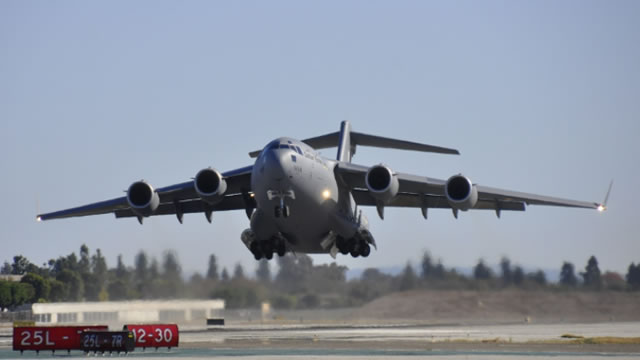
Core Viewpoint - Air India has grounded a Boeing Dreamliner following a pilot's report of a potential defect in the aircraft's fuel control switch, which is linked to an ongoing investigation into a previous deadly crash [1][2]. Group 1: Incident Details - The grounded aircraft was reported to have landed in Bengaluru after a flight from London, with the nature of the defect not specified by the airline [1]. - Air India has 33 Dreamliners in its fleet, and the airline is in communication with Boeing regarding the issue [2]. - The fuel control switches are critical for regulating fuel flow to the engines and are used for starting or shutting down engines [3]. Group 2: Background Context - A preliminary report from last year's crash indicated that the engine fuel cutoff switches had flipped almost simultaneously, leading to a fuel starvation of the engines, resulting in 260 fatalities [6]. - Following the crash, Air India conducted checks on the fuel control switches of all Boeing 787 aircraft in its fleet and reported no issues [7].

JPMorgan forecasts gold to hit $6,300 in 2026 despite sharpest fall since 1980s
New York Post· 2026-02-02 18:18
JPMorgan expects gold prices to hit $6,300 per ounce by the end of 2026 – despite bullion suffering its sharpest one-day drop since 1983 on Friday.Gold futures fell 0.9% Monday, continuing its descent following news that President Trump plans to nominate former Fed governor Kevin Warsh to lead the Federal Reserve – an expected pick that calmed investor nerves.But JPMorgan expects gold prices to hit $6,300 per ounce by the end of 2026 as investors and central banks continue to buy up the safe-haven asset. JP ...


Trump says US, India have trade deal after Modi phone call
New York Post· 2026-02-02 17:38
WASHINGTON — President Trump announced a new US-India trade deal Monday after a phone call with Prime Minister Narendra Modi — saying the agreement could help choke off Russia’s war machine in Ukraine.“He agreed to stop buying Russian Oil, and to buy much more from the United States and, potentially, Venezuela,” Trump said of Modi on Truth Social, announcing US tariffs on New Delhi would be slashed to 18%.“This will help END THE WAR in Ukraine, which is taking place right now, with thousands of people dying ...

Elon Musk mulls merging SpaceX with artificial intelligence firm xAI: report
New York Post· 2026-02-02 17:14
Elon Musk is reportedly in “advanced talks” to merge his rocket company SpaceX with his artificial intelligence firm xAI.The two entities, each of which are privately held, have told some of their investors about the plans, Bloomberg reported Monday, citing people familiar with the matter.An announcement about the merger could come as soon as this week, according to the outlet, though sources said the negotiations could take longer or even fall apart entirely. 3 Elon Musk waves to the crowd during the 56t ...

Disney expected to name parks chief Josh D'Amaro as next CEO, replacing longtime boss Bob Iger: sources
New York Post· 2026-02-02 15:41
Core Viewpoint - Disney's board is expected to appoint Josh D'Amaro, the chairman of the theme-park division, as the new CEO, replacing Bob Iger, who is set to step down at the end of the year [1][2][4]. Group 1: CEO Succession - D'Amaro has been leading the theme park unit, which has been the primary profit driver for Disney since 2020, making him a strong candidate for the CEO position [2][4]. - The board is scheduled to meet on Tuesday and Wednesday to finalize the decision, although there is still a possibility of changing their minds [3][4]. - Dana Walden, co-chair of entertainment, was considered D'Amaro's main competitor for the CEO role, but recent controversies have put her in a less favorable position [7][10]. Group 2: Financial Performance - Disney reported adjusted earnings of $1.63 per share on revenue of $25.98 billion, surpassing Wall Street's expectations of $1.57 EPS on $25.74 billion revenue [3]. - The theme park division achieved over $10 billion in quarterly revenue for the first time, although a slowdown in growth is anticipated due to fewer international tourists [4]. Group 3: Leadership Background - D'Amaro joined Disney in 1998 and has worked his way up through various leadership roles in the theme park sector, including positions in California, Hong Kong, and Florida [13]. - Bob Iger has had a long tenure at Disney, serving as CEO from 2005 to 2020 and returning to the role in 2022 after the ousting of his successor, Bob Chapek [7][9].

OPEC+ to keep oil output unchanged as Iran tensions boost prices
New York Post· 2026-02-01 19:40
Group 1 - OPEC+ decided to maintain its oil output unchanged for March despite crude prices reaching six-month highs due to concerns over potential US military action against Iran [1][4] - Brent crude closed near $70 a barrel, approaching the six-month high of $71.89, even with speculation of a supply glut in 2026 that could lower prices [1][10] - The eight OPEC+ members increased production quotas by approximately 2.9 million barrels per day from April through December, representing about 3% of global demand [2] Group 2 - The decision to freeze further planned increases for January through March was reaffirmed during the recent meeting, with no specific guidance provided for months beyond March [3] - Rising uncertainty regarding Iran and US tensions has led OPEC+ to keep all options open, with indications of a lower call on OPEC+ crude in the second quarter [4] - The Joint Ministerial Monitoring Committee (JMMC) met but does not have decision-making authority on production policy, emphasizing the importance of full compliance with OPEC+ output agreements [5][8]
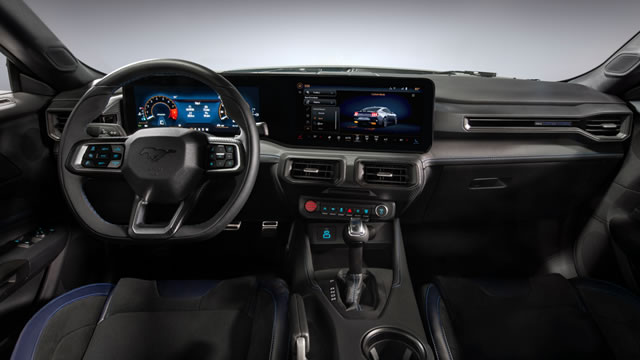
Ford held talks with China's EV maker Xiaomi over partnership: report
New York Post· 2026-02-01 19:21
Group 1 - Ford is reportedly in talks with Xiaomi to form a joint venture for EV manufacturing in the US, but both companies have denied this claim [1][4] - Concerns have been raised by US automakers and lawmakers regarding the entry of Chinese government-backed automakers and battery manufacturers into the US market, which they believe poses risks to the industry [2] - Michigan Representative John Moolenaar highlighted vulnerabilities in the auto supply chain and expressed concerns over Ford's potential partnership with BYD and plans for a $3 billion battery data center using technology from CATL [3] Group 2 - US automakers, including Ford, have scaled back their electric vehicle initiatives due to challenges in competing with Chinese rivals, leading to a shift towards cheaper models and hybrids [5]