New York Post

Search documents
Toyota CEO Sato to step down, to be replaced by CFO Kon
New York Post· 2026-02-06 06:43
Toyota Chief Executive Koji Sato will step down after just three years at the helm of the world’s largest automaker, the company said on Friday, and will be replaced by chief financial officer Kenta Kon.The reshuffle, which will see Sato take on the role of vice chairman and chief industry officer, comes as the automaker has faced increasing scrutiny over its planned buyout of subsidiary Toyota Industries, a deal that minority investors have criticized as lacking transparency and heavily underpriced.The man ...



Amazon shares tumble as $200B AI spending spree rattles investors
New York Post· 2026-02-06 00:43
Core Viewpoint - Amazon is significantly increasing its capital expenditures by over 50% this year to enhance its artificial intelligence infrastructure, reflecting a broader trend among major tech companies to invest heavily in AI, which has led to a decline in its stock price by 9% in after-hours trading [1]. Group 1: Capital Expenditures and Financial Performance - Amazon is projected to invest approximately $200 billion in capital expenditures by 2026, up from about $131 billion in 2025 [5][14]. - The company’s forecast for first-quarter operating income is between $16.5 billion and $21.5 billion, which is below analysts' expectations of $22.04 billion [5]. - Amazon's capital expenditures are expected to exceed its operating cash flow, raising concerns among investors about potential overspending on AI infrastructure [11]. Group 2: Competitive Landscape and Market Response - The top four hyperscalers, including Amazon, Microsoft, Alphabet's Google, and Meta, are anticipated to collectively spend over $630 billion this year on AI infrastructure [2]. - Amazon's AWS reported a sales growth of 24%, the highest in 13 quarters, but this was overshadowed by the surge in capital expenditures [12][11]. - Competitors like Google and Meta received positive investor responses for their capital expenditure forecasts due to strong revenue growth, while Microsoft faced stock punishment despite meeting estimates [8]. Group 3: Strategic Initiatives and Changes - Amazon is making significant changes in its retail division, including closing all Fresh and Go stores and converting some into Whole Foods locations [16][20]. - The company is expanding its Whole Foods footprint and developing a large mega-store to compete with Walmart and Costco [18]. - Amazon's advertising business saw a 22% increase in sales in the fourth quarter, reaching $21.3 billion, with new AI options added to Prime Video for ad creation [18].


News Corp revenue rises to $2.4B, powered by growth at Dow Jones, real estate divisions
New York Post· 2026-02-05 23:24
Core Insights - News Corp reported a revenue increase of 5.5% to $2.36 billion in the second quarter of its fiscal year, driven by growth in its Dow Jones and digital real estate divisions [1][4] - EBITDA for the quarter rose by 9% to $521 million, slightly exceeding analysts' expectations [1][2] Revenue Breakdown - Revenue from Dow Jones, which includes The Wall Street Journal and MarketWatch, increased by 8% year-over-year to $648 million [4] - Revenue from News Corp's digital real estate services division also rose by 8% to $511 million [4] CEO Statements - CEO Robert Thomson expressed satisfaction with the second quarter results, highlighting accelerating revenue and profitability growth compared to the previous quarter, and optimistic signs for the second half of the fiscal year [2] - Thomson emphasized the importance of AI firms compensating for the content they utilize, reiterating this message in light of ongoing discussions about AI's impact on the industry [5][6] Industry Context - The results come amid challenges faced by news organizations and publishers regarding the integration of artificial intelligence [5] - Thomson noted that companies are beginning to recognize the value of premium content, suggesting that there will be a willingness to pay a premium for quality content [7]


January layoffs hit highest level since 2009 as monthly job cuts surge
New York Post· 2026-02-05 22:07
Job Cuts Overview - U.S. employers announced 108,435 job cuts in January, marking a 205% increase from December and a significant rise from 49,795 cuts in January of the previous year [1][2] - This figure represents the highest number of layoffs for January since 2009, when 241,749 cuts were recorded [2][10] Sector-Specific Job Cuts - The transportation sector led with 31,243 job cuts, primarily due to UPS announcing 30,000 layoffs as it reduces its shipment handling for Amazon [4] - Technology firms reported 22,291 job cuts, with Amazon alone accounting for 16,000 of these as it reorganizes its management structure [5][7] - Healthcare companies announced 17,107 job cuts, the highest for the sector since April 2020, driven by inflation and high labor costs [6][8] Reasons for Layoffs - The primary reasons for layoffs included contract loss (30,784 cuts) and adverse market conditions (28,392 cuts) [9] - Other contributing factors were restructuring (20,044 cuts), business closings (12,738 cuts), and the impact of artificial intelligence (7,624 cuts) [11] Hiring Plans - Employers announced only 5,306 hiring plans in January, the lowest for the month since tracking began in 2009, down from 6,089 in January of the previous year and 10,496 in December [13]

Winklevoss twins' Gemini crypto exchange cuts 25% of workforce as bitcoin slumps
New York Post· 2026-02-05 21:35
Core Viewpoint - Gemini, a cryptocurrency firm led by the Winklevoss twins, is reducing its workforce by up to 25% and ceasing operations in the UK, EU, and Australia due to challenges in these markets and a significant decline in Bitcoin prices [1][2]. Group 1: Workforce and Operational Changes - The layoffs will affect approximately 200 employees across Gemini's operations in the US, Europe, and Singapore [1]. - The company aims to focus on the US market, stating that foreign markets have proven difficult to penetrate and have led to increased operational complexity and costs [2]. Group 2: Market Performance and Financials - Bitcoin's price has recently dropped below $70,000 for the first time since November 2024, marking a 25% decline since the beginning of the year, with current prices around $65,000 [4]. - Gemini's stock has decreased by about 85% from its all-time high of $45.89 shortly after its public trading debut, with a notable 9% drop in trading on the day of the announcement [5]. Group 3: Strategic Initiatives - In December, Gemini launched a prediction market to diversify its offerings, with the belief that such markets could rival or surpass current capital markets [6]. - The company plans to complete the layoffs and end operations in overseas markets by the first half of the year [10]. Group 4: Regulatory and Legal Challenges - Gemini has faced regulatory scrutiny, including a lawsuit from the New York Attorney General, which was settled in June 2024, and another case from the SEC that was dropped in January [12].

Stocks plunge on AI spending fears as tech rout on Wall Street deepens
New York Post· 2026-02-05 17:15
Market Overview - The S&P 500 dropped to an over two-week low, while the Nasdaq sank to its lowest level in more than two months, driven by renewed pressure on the AI theme following Alphabet's spending plans and Qualcomm's downbeat forecast [1][3] - The Dow Jones Industrial Average fell nearly 400 points, or 0.8%, to 49,113, with the S&P 500 losing 0.9% and the Nasdaq dropping 230 points, or 1% [1][3] Company-Specific Developments - Alphabet's shares fell over 3% after announcing it would double its capital expenditure this year, indicating an aggressive push in the AI sector [3][8] - Qualcomm's stock slid 8.2% after forecasting second-quarter revenue and profit below estimates, contributing to the overall market decline [3] - Microsoft and Tesla also experienced declines of 3.4% and 3.7%, respectively, as the pressure spread across tech mega-caps [3] Investment Trends - Big Tech is expected to invest more than $500 billion into infrastructure this year, raising concerns about high valuations and the timing of returns [4] - The CBOE volatility index rose 3.8 points to 20.49, reaching an over two-month high, reflecting increased market anxiety [4] Sector Performance - The S&P 500 software and services index fell 3.2%, marking a seventh consecutive session in the red and erasing approximately $830 billion in market value since January 28 [10] - Software and data services stocks, such as ServiceNow and Salesforce, saw declines of 5% and 4%, respectively, as investors reacted to disappointing earnings [6] Market Sentiment - There is a growing sentiment that rapidly improving AI tools may negatively impact demand for traditional software, leading to reduced growth expectations across the sector [7] - Amid risk-off sentiment, silver and gold resumed a decline, with silver plunging almost 13% [10][11] - The market is witnessing a rotation into cheaper, overlooked sectors, with consumer staples being the only sector trading in the green [13]





Chrysler recalls over 450K vehicles citing brake light failure
New York Post· 2026-02-05 03:45
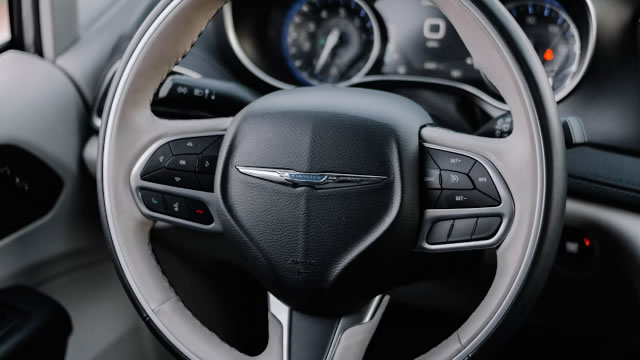
Core Viewpoint - Chrysler is recalling over 450,000 vehicles and more than 2,000 tow-trailer modules due to a brake light failure that increases crash risk [1][2]. Group 1: Recall Details - The recall affects a total of 456,287 vehicles and 2,871 tow-trailer modules, as reported by the National Highway Traffic Safety Administration (NHTSA) [1]. - The faulty modules may cause brake lights on attached trailers to fail to illuminate or lead to complete trailer brake failure, which compromises visibility and heightens crash risk [2]. Group 2: Affected Models - The recall includes specific models such as the 2026 Jeep Cherokee, 2024-2026 Jeep Wagoneer S, and various 2025-2026 Ram models (1500, 2500, 3500, 4500, 5500) along with certain Mopar tow-trailer modules [2]. Group 3: Replacement Process - Owners of the recalled tow-trailer modules can receive a free replacement at a Fiat Chrysler dealer [3][8]. - For modules not installed, dealers will repurchase the item [5].

Nike under fed scrutiny for DEI initiatives that allegedly discriminated against white workers
New York Post· 2026-02-05 00:53
Core Viewpoint - The Equal Employment Opportunity Commission (EEOC) is investigating Nike for alleged unlawful discrimination against white employees and job applicants in its diversity initiatives [1][3]. Investigation Details - The EEOC has issued subpoenas to Nike for information regarding the racial and ethnic composition of its workforce and details about employees selected for mentoring and development programs [2]. - The investigation focuses on claims that Nike has unfairly treated white employees, including allegations of disproportionate layoffs targeting this group [3]. Nike's Response - Nike disputes the EEOC's claims, asserting that it has cooperated extensively and in good faith with the inquiry, providing thousands of pages of information [4][5]. - The company emphasizes its commitment to lawful employment practices and states that its programs align with anti-discrimination laws [8]. Recent Developments - The investigation follows Nike's announcement of plans to cut 775 jobs, primarily in distribution centers, as part of a strategy to automate its supply chain [10]. - This job reduction is part of a broader effort to streamline operations and improve efficiency, which has included previous layoffs affecting less than 1% of its corporate workforce [11][13].



Google parent Alphabet latest tech giant to announce plans to spend billions on AI
New York Post· 2026-02-05 00:37
Core Viewpoint - Alphabet is significantly increasing its capital expenditure to between $175 billion and $185 billion this year, a substantial rise from analyst expectations of approximately $115.26 billion, as it aims to enhance its AI capabilities and meet customer demand [2][4]. Group 1: Capital Expenditure - The company plans to double its capital expenditure this year, reflecting an aggressive investment strategy in AI infrastructure [1][4]. - In 2025, Alphabet spent $91.45 billion primarily on AI infrastructure, which includes servers, data centers, and networking equipment [4][10]. - The increase in capital expenditure is intended to capitalize on growing opportunities and customer demand [4][9]. Group 2: Revenue and Profit Performance - Alphabet reported total revenue of $113.83 billion for the quarter, surpassing analyst estimates of $111.43 billion [6]. - The adjusted profit per share was $2.82, exceeding expectations of $2.63 [6]. - The cloud division's revenue grew by 48% to $17.7 billion in the fourth quarter, outperforming the average analyst estimate of a 35.2% increase [5][6]. Group 3: AI Investments and Market Position - Google Cloud's growth has outpaced expectations and surpassed Microsoft Azure's growth for the first time in several years, justifying the increased capital expenditure [6]. - The launch of the Gemini 3 model has been well-received, contributing to Google's competitive position in the AI market [11]. - Google's Gemini AI assistant app has exceeded 750 million users per month, marking a significant increase of 100 million users since November [11]. Group 4: Industry Context - Major cloud computing companies, including Google, are expected to collectively invest over $500 billion in AI this year, reflecting the industry's commitment to expanding AI infrastructure [9]. - Google has formed a partnership with Apple to power Siri with its Gemini models, tapping into a vast market with over 2.5 billion Apple devices [12].

Target's new CEO admits retailer has lost trust with shoppers, staff: report
New York Post· 2026-02-04 21:17
Core Viewpoint - Target Corp. has acknowledged a loss of trust with both shoppers and employees, with new CEO Michael Fiddelke committing to rebuilding these connections [1][3]. Group 1: Leadership Changes - Michael Fiddelke has been appointed as the new CEO of Target, effective February, succeeding Brian Cornell, who was expected to retire [3]. - Fiddelke previously announced a significant reduction in workforce, cutting around 1,800 corporate roles, marking the company's first major layoffs in nearly a decade [3]. Group 2: Company Challenges - Target is facing multiple challenges, including a prolonged sales slump and a retreat from its diversity initiatives following the election of President Trump [4]. - The retailer has encountered boycotts and lawsuits related to its diversity, equity, and inclusion practices, and is also affected by tariffs on imports from certain countries [4]. Group 3: Customer and Employee Relations - The unclear positioning of Target has negatively impacted its reputation among consumers, particularly among Black shoppers, as well as its employees [5]. - Fiddelke emphasized the need for the company to reconnect with customers who have been lost, acknowledging the difficulties faced in the previous year [5].