TechXplore

Search documents
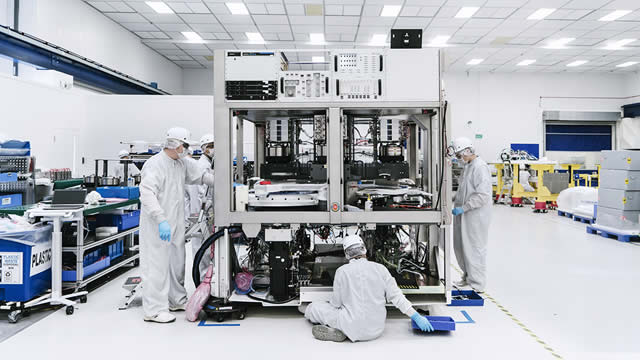
ASML CEO sees growing economic 'uncertainty' from tariffs
TechXplore· 2025-04-16 08:50
Core Viewpoint - ASML has expressed concerns about increasing economic uncertainty due to US tariffs but maintains its sales forecast for 2025 unchanged [1][4]. Group 1: Financial Performance - ASML's net profit for the first quarter was reported at 2.4 billion euros, a significant increase from 1.2 billion euros in the same quarter last year [6]. - The company's sales for the first quarter reached 7.7 billion euros, aligning with expectations, while the forecast for second-quarter net sales is between 7.2 billion and 7.7 billion euros [5]. - Net bookings for the first quarter were 3.9 billion euros, a decline from 7.1 billion euros in the previous quarter, which fell short of market expectations and led to a share price drop of around 7% [2][4]. Group 2: Market Outlook - Despite current challenges, ASML's CEO anticipates growth in 2025 and 2026, supported by ongoing customer conversations [2]. - The company projects sales to rise to between 44 and 60 billion euros by 2030, driven by the expanding AI market [8]. - The impact of US tariffs on ASML remains uncertain, with the CEO indicating that quantifying this effect is challenging [9]. Group 3: Industry Context - The US has initiated tariffs on semiconductors and related equipment, with a 10% global tariff imposed on all imports [3]. - ASML is navigating the complexities of US-led export restrictions on high-tech goods to China, which are perceived as a threat to national security [9][10]. - The Dutch government has also tightened export controls on advanced semiconductor production equipment, although ASML stated that this would have no significant impact on its business [10].


Facebook added 'value' to Instagram, Zuckerberg says in antitrust trial
TechXplore· 2025-04-15 20:05
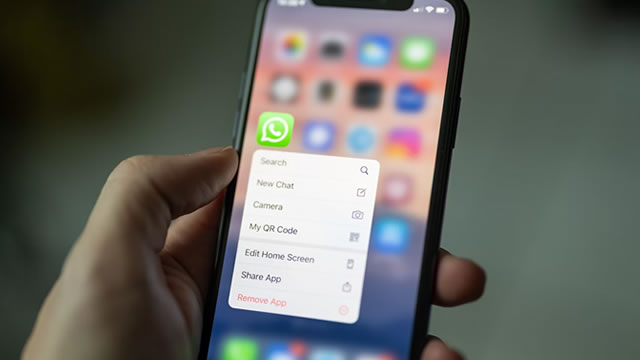
Core Viewpoint - Mark Zuckerberg is defending Meta against antitrust accusations regarding its acquisitions of Instagram and WhatsApp, arguing that these purchases were aimed at enhancing user experience and growth rather than eliminating competition [3][4][10]. Group 1: Antitrust Trial Context - The trial is a significant event in the ongoing scrutiny of Big Tech, particularly under the Biden administration, which has continued the enforcement of antitrust laws initiated during the Trump administration [4][7]. - The Federal Trade Commission (FTC) is presenting evidence that suggests Facebook's acquisitions were motivated by a desire to neutralize competition, as indicated by emails from Zuckerberg and former CFO [4][9]. Group 2: Acquisitions and Growth - Zuckerberg testified that the integration of Instagram into Facebook was successful, leading to increased value and user growth, and expressed confidence in acquiring other social apps to accelerate their growth [5][10]. - The FTC argues that Meta's acquisition of WhatsApp followed a similar pattern of preemptively buying potential competitors, with Zuckerberg fearing that WhatsApp could evolve into a social network [10]. Group 3: Market Definition and Competition - The U.S. government claims that Facebook and Instagram dominate the social media market, while Meta contends that they face competition from platforms like TikTok and YouTube, which the government does not include in its market definition [12]. - The trial will hinge on how the FTC defines Meta's market and whether the acquisitions were lawful under U.S. law, with Meta's defense emphasizing that acquisitions aimed at improving and growing acquired firms are permissible [11][12].


Facebook chief Zuckerberg testifying again in US antitrust trial
TechXplore· 2025-04-15 14:26
This article has been reviewed according to Science X's editorial process and policies . Editors have highlighted the following attributes while ensuring the content's credibility: Facebook chief Mark Zuckerberg arrives at the E. Barrett Prettyman US Court House on April 15, 2025 in Washington, DC. Social media titan Mark Zuckerberg took the stand for a second day Tuesday in a landmark US antitrust trial where his conglomerate Meta is accused of taking over Instagram and WhatsApp before they could become c ...
Meta news ban intensifying Canadians' legacy media break
TechXplore· 2025-04-15 08:42
Core Viewpoint - Meta's ongoing news ban in Canada is significantly impacting the consumption of traditional media, particularly as the country approaches an election, leading to a reliance on alternative sources for news [3][5][12]. Group 1: Impact on Traditional Media - Meta has restricted access to news websites on its platforms in response to the Online News Act, which requires compensation for journalism outlets [3][12]. - Users are increasingly exposed to news content through non-traditional means such as memes and videos, which may lack the context provided by established journalism [3][4]. - The engagement with content from news media has declined, resulting in a narrower understanding of political issues among the public [5][10]. Group 2: Shift in Information Sources - Candidates and citizen journalists are now using social media to communicate directly with voters, bypassing traditional media channels [6][11]. - Content creators are gaining popularity for their political commentary, often presenting viewpoints that diverge from mainstream media [8][9]. - The reliance on secondary sources for news increases the risk of misinformation and creates echo chambers, where users receive filtered information [10][11]. Group 3: Alternative Media and User Engagement - Some independent journalists are adapting by repackaging their reporting into short-form videos to engage audiences on platforms like TikTok and YouTube [11][13]. - There is a growing demand for local coverage, as evidenced by the engagement levels of independent outlets despite the challenges posed by Meta's news ban [13][14]. - The current media landscape is characterized by a mix of high-quality and questionable news sources, making it difficult for users to discern reliable information [11].

Japan orders Google to cease alleged antitrust violation
TechXplore· 2025-04-15 08:40
Japanese authorities said Tuesday they had issued a cease-and-desist order to US tech titan Google over an alleged violation of national antitrust laws. It is the first time the country has issued such an order to a global technology giant, Japanese media reported, and follows similar moves in Europe and the United States. This article has been reviewed according to Science X's editorial process and policies . Editors have highlighted the following attributes while ensuring the content's credibility: "This ...


Meta chief Zuckerberg testifies at landmark US antitrust trial
TechXplore· 2025-04-14 20:20
This article has been reviewed according to Science X's editorial process and policies . Editors have highlighted the following attributes while ensuring the content's credibility: Facebook CEO Mark Zuckerberg attends the inauguration of Donald Trump. Meta chief and co-founder Mark Zuckerberg took the stand Monday in a landmark US antitrust trial in which his social media juggernaut stands accused of abusing its market power to acquire Instagram and WhatsApp before they could become competitors. The star ...
Meta says it will resume AI training with public content from European users
TechXplore· 2025-04-14 17:30
Core Insights - Meta will resume using publicly available content from European users to train its AI models, a process that was previously halted due to data privacy concerns raised by activists [2][3][4] - The AI training will utilize public posts and comments from adult users in the European Union, as well as interactions with Meta AI [3][5] - Meta's AI training efforts faced challenges due to strict EU data privacy laws, but a panel of EU privacy regulators confirmed that Meta's approach complies with legal obligations [4][5] Company Actions - Meta has launched its Meta AI assistant for European users, following its earlier rollout in the United States and other major markets [3] - The company will notify EU users about the AI training and provide a form for users to object to their data being used [5][6] - Meta emphasized that it will not use private messages for AI training and is following practices established by competitors like Google and OpenAI [5]

Nvidia plans to manufacture AI chips in the US for the first time
TechXplore· 2025-04-14 17:23
Core Points - Nvidia will produce its artificial intelligence supercomputers in the United States for the first time, marking a significant shift in its manufacturing strategy [3][5] - The company has secured over one million square feet of manufacturing space in Arizona and Texas, with plans to invest up to $500 billion in AI infrastructure over the next four years [4][10] - Nvidia's AI supercomputers are intended to serve as the engines for new AI factories, which are specialized data centers designed for AI processing [8] Manufacturing and Economic Impact - The production of Blackwell chips has commenced at Taiwan Semiconductor Manufacturing Company facilities in Phoenix, Arizona, with additional supercomputer manufacturing plants being established in Texas [7][9] - Nvidia's U.S. manufacturing initiative is expected to create hundreds of thousands of jobs and contribute trillions of dollars to economic security in the coming decades [8] - Mass production at the new plants is anticipated to ramp up within the next 12-15 months [9] Government and Industry Context - The announcement aligns with the Trump administration's focus on boosting U.S.-based semiconductor manufacturing, which is seen as a priority for economic growth [5][9] - The White House has referred to Nvidia's move as "the Trump Effect in action," highlighting the administration's efforts to secure significant investments in the tech sector [9]


Apple was on brink of crisis before Trump tariff concession
TechXplore· 2025-04-14 13:50
Core Insights - Apple Inc. has successfully navigated a significant crisis related to tariffs on its products, particularly those manufactured in China, thanks to recent exemptions granted by the U.S. government [2][4][10] Tariff Exemptions - Donald Trump's administration exempted many of Apple's popular consumer electronics, including iPhones, iPads, Macs, Apple Watches, and AirTags, from the previously proposed 125% tariffs on goods produced in China [2][4] - The 10% tariff on goods imported from other countries has also been dropped for these products, marking a significant relief for Apple and the consumer electronics industry [2][4] Supply Chain Adjustments - Prior to the exemptions, Apple was planning to shift more iPhone production to India to avoid high tariffs, as the Indian facilities were projected to produce over 30 million iPhones annually [5][6] - Approximately 220 million to 230 million iPhones are sold annually, with about one-third of that demand coming from the U.S. [6] Production Challenges - The transition to increased production in India would have been challenging, especially with the upcoming iPhone 17 launch primarily based in China [7][9] - Apple would have faced potential price increases and difficulties in negotiating better margins with suppliers during this transition [9] Future Uncertainties - Despite the current relief, uncertainties remain regarding future U.S. trade policies and potential retaliatory actions from China if Apple accelerates its production shift away from the country [10][13] - Apple generates about 17% of its revenue from China, and a complete separation from Chinese manufacturing is deemed unlikely due to the scale and efficiency of existing facilities [15][16][17] Market Dynamics - Apple's iPhone production is heavily reliant on China, with estimates indicating that about 87% of iPhones and 80% of iPads are manufactured there, contributing to approximately 75% of Apple's annual revenue [15][16] - The company has been advocating for a focus on higher-value jobs and semiconductor production in the U.S. rather than merely relocating final assembly [19]


Meta faces landmark US antitrust trial
TechXplore· 2025-04-14 08:27
The Meta case is being made by the Federal Trade Commission (FTC), the powerful US consumer protection agency, and could see the owner of Facebook forced to divest Instagram and WhatsApp, which have grown into global powerhouses since their buyout. The trial will be run and decided by Judge James Boasberg, who is also presiding over a high-profile case involving White House orders to deport Venezuelans using wartime law. The case against Meta was originally filed in December 2020, during the first Trump adm ...