
中关村储能产业技术联盟

Search documents
远景/中核/大唐/运达/华润/中国绿发/国家电投等入选!8.8GWh独立储能项目投资主体优选结果公示
中关村储能产业技术联盟· 2026-01-12 08:14
1月12日,乌兰察布市独立新型储能电站项目投资主体优选结果公示。 据项目清单, 共16个项目,合计2 .2GW/ 8.8GWh,均为4h储能项目 ,其中10个主体选择建设100MW/ 400MWh规模项目, 6个主体选择建设200MW/ 800MWh规模项目。 从投资主体来看, 核心关联主体包括 远景能源、海泰新能、中核南京、大唐、运达能源、中国建筑股份、华润新能源、中 国绿发、中国铁道建筑、国家电投、海博思创智储投资、青岛金湖电力、陕西煤业化工 等。 | 序号 | 投资主体名称 | 核心关联主体 | 装机容量 | 装机容量 | | --- | --- | --- | --- | --- | | | | | (MW) | (MW) | | 1 | 远景能源有限公司 | 远景能源 | 100 | 400 | | 2 | 唐山海泰新能科技股份有限公司 | 海泰新能 | 100 | 400 | | 3 | 乌兰察布核祥新能源有限公司 | 中核(南京)能源发展有限公司 | 100 | 400 | | 4 | 大唐(四子王旗) 新能源有限公司 | 中国大唐集团 | 100 | 400 | | 5 | 运达能源科技集团股 ...






10年寿命,可提前24分钟发出热失控预警!西清能源超声气体探测器通过天消所测试
中关村储能产业技术联盟· 2026-01-12 03:32
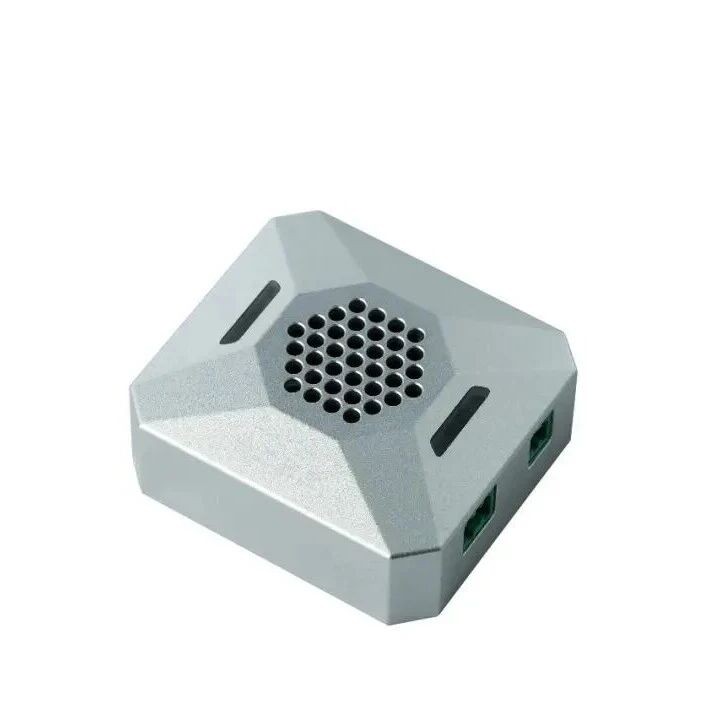
文 | 西清能源 储能电站建设 快速增长的背后,安全成为影响行业发展的关键问题 。 热失控是导致储能电池安 全事故的关键因素之一 。 在热失控 前, 电芯会释放出多种特征气体,通过气体 探测器 实时监测 这些特征气体的浓度变化,提前预警热失控 的 潜在危险,对于保障储能 电站的 安全运行至关重 要。传统气体 探测 器受制于寿命和可靠性缺点,难以满足 储能电站 气体监测的需求,这凸显了 研发高性能储能电池气体 探测器 的紧迫性。 基于以上背景,北京西清 能源 科技有限公司 (子公司:西清蔚芯) 正式推出 MEMS工艺超声气 体探测器 ,并于2025年12月29日通过天消所应用场景测试并取得报告 。 该 气体探测器 依托500 余项核心专利构建坚实技术壁垒,带来三大颠覆性优势: (1) 长寿命 该探测器性能比肩价格高昂的日本高端分析仪器,但体积仅为其百分之一, 价格 仅为其十分之 一。该技术的研发及产品化,将显著提升我国新型储能系统的电池安全监测能力,有效预防电池 热失控等安全事故,保障能源基础设施,并具备向动力电池以及氢能产业领域拓展的极高潜力。 图:超声气体探测器外观图 采用纯物理的检测原理,彻底解决了传统化 ...
储能大电芯迎来规模化量产元年—CNESA年终盘点
中关村储能产业技术联盟· 2026-01-12 03:32
Core Viewpoint - The energy storage industry is transitioning from a focus on "paper parameters" to practical applications, with large capacity battery cells achieving mass production and delivery, indicating a significant shift towards commercial viability and cost efficiency in energy storage systems [2]. Group 1: Mass Production of Large Capacity Battery Cells - Since 2025, several battery companies have reported significant progress in the mass production of 500Ah+ battery cells, with production capacity and delivery rates accelerating [4]. - CATL has initiated mass production of its 587Ah energy storage battery in June, with a production capacity exceeding 22,000 units per day, aiming for 3GWh of shipments by the end of the year [4]. - EVE Energy plans to start mass production of its 628Ah battery by the end of 2024, with a target of 750,000 units in 2025, and has successfully applied it in a 200MW/400MWh independent energy storage project [4]. - Envision AESC has achieved mass production of its 500+Ah battery cells, with plans for next-generation 700Ah+ products [4]. - Hicharge Energy has launched the world's first 1175Ah battery cell and has completed deliveries of its 587Ah battery [4]. - A number of other companies, including Chuang Neng New Energy and Penghui Energy, are also announcing timelines for the mass production of 500Ah+ and 600Ah+ products, indicating a competitive landscape by 2026 [5]. Group 2: Strategic Collaborations and Supply Chain Dynamics - The relationship between system integrators and battery manufacturers is evolving towards long-term, large-scale, and deeply integrated collaborations [7]. - By the end of 2025, significant orders of over 100GWh highlight the importance of supply chain stability and cost control in market competition [7]. - CATL has signed a procurement agreement for no less than 200GWh with a partner, with its 587Ah battery already applied in a 400MW/2400MWh energy storage project [7]. - EVE Energy has established a three-year collaboration for 20GWh with a partner, including 10GWh of large battery cells [7]. - These long-term agreements not only secure production capacity but also indicate a trend towards early collaborative development between systems and battery cells, enhancing overall product performance and safety [7]. Group 3: Global Market Expansion - The competitiveness of China's energy storage industry is being tested globally, with significant progress in the export of 500Ah+ battery cells [9]. - CATL delivered its 587Ah battery for a project in Abu Dhabi, while EVE Energy secured orders in Australia and signed a project agreement for 1GWh [9]. - Hicharge Energy has partnered with a Saudi power company for a 1GW/4GWh energy storage project, utilizing its 1175Ah battery cell [9]. - The export of large battery cells represents not only product output but also the extension of system solutions and standards, opening new opportunities for Chinese energy storage companies in the global long-duration energy storage market [9]. Group 4: Industry Trends and Future Directions - The 500Ah+ battery cells are still in a rapid development phase characterized by diverse sizes and specifications, but there is a consensus that 6MWh+ energy storage systems will accelerate the replacement of previous 5MWh+ solutions, driving down energy storage costs [10]. - The year 2025 is positioned as a pivotal year for large battery cells transitioning from laboratory settings to practical applications in energy storage systems [10].


0.42-0.459元/Wh!比亚迪/融和元储/远景能源入围内蒙古200MW/800MWh储能系统采购
中关村储能产业技术联盟· 2026-01-12 03:32
Core Viewpoint - The article discusses the procurement results for a 200MW/800MWh energy storage project in Alxa, Inner Mongolia, highlighting the competitive bidding process and the selected candidates for the project [2]. Group 1: Project Overview - The project involves the construction of a 200MW/800MWh independent energy storage station using liquid-cooled lithium iron phosphate batteries [2]. - The energy storage system consists of 40 units, each rated at 5MW/20MWh, which includes a 5MW integrated boost converter and four 5MWh battery modules [2]. Group 2: Bidding Results - The first candidate, BYD Auto Industry Co., Ltd., submitted a bid of 33,600,000 yuan, translating to a unit price of 0.42 yuan/Wh [2]. - The second candidate, Shanghai Ronghe Yuan Storage Energy Co., Ltd., bid 36,560,000 yuan, with a unit price of 0.457 yuan/Wh [2]. - The third candidate, Envision Energy Co., Ltd., offered a bid of 36,720,000 yuan, resulting in a unit price of 0.459 yuan/Wh [2]. Group 3: Bidding Scope - The bidding scope includes lithium iron phosphate batteries, battery management systems (BMS), bidirectional converters (PCS), energy management systems (EMS), and various electrical and safety equipment necessary for the complete energy storage system [3][4].


电池出口退税政策调整:2026年4月起出口退税率降至6%,2027年取消
中关村储能产业技术联盟· 2026-01-09 13:15
Core Viewpoint - The adjustment of export tax rebate policies for photovoltaic and battery products is expected to increase export costs for battery companies, potentially leading to a short-term "rush to export" and promoting long-term industrial upgrades towards high-quality development [4][5]. Summary by Sections Export Tax Rebate Policy Changes - From April 1, 2026, the export VAT rebate for photovoltaic products will be canceled. For battery products, the export VAT rebate rate will be reduced from 9% to 6% from April 1, 2026, to December 31, 2026, and will be completely canceled starting January 1, 2027 [5][6]. Affected Products - The battery product list includes lithium primary batteries and battery packs, lithium-ion batteries, and all-vanadium flow batteries [3]. Implications for Battery Companies - The changes in export tax rebate policies may increase export costs for battery companies, which could lead to a surge in exports in the short term. In the long term, this may drive the industry towards upgrades and high-quality development [4].

100MW/400MWh!明阳龙源首个高压级联独立储能项目全容量并网成功!
中关村储能产业技术联盟· 2026-01-08 23:43
Core Viewpoint - The successful commissioning of the 100MW/400MWh high-pressure cascade independent energy storage project at the Yashitu Power Station marks a significant milestone for the company, demonstrating its technological strength and product quality in the energy storage sector [2][6]. Group 1: Project Overview - The Yashitu Power Station has achieved full-capacity grid connection and passed the assessment of the Inner Mongolia West Electric Grid, officially entering the commercial operation phase [2]. - The high-pressure cascade energy storage system is characterized by large single-unit capacity, high energy conversion efficiency, strong safety performance, low cost, simple system coordination control, and long battery lifespan [4]. Group 2: Performance and Challenges - The energy storage station has achieved over 90% long-cycle efficiency, representing a significant breakthrough in core performance indicators [6]. - The project team overcame extreme weather conditions in Ordos, demonstrating resilience and dedication, which contributed to the timely production of the project and accumulated valuable operational experience under harsh environments [6]. Group 3: Future Outlook - The successful operation of the Ordos Valley energy storage station is a testament to the company's commitment to technological innovation and its role in advancing the energy storage industry [6]. - The company aims to continue driving industry upgrades and contribute to building a clean, low-carbon, safe, and efficient energy system [6].
首批新型电力系统建设能力提升试点名单:构网型储能、虚拟电厂、智能微电网领衔!
中关村储能产业技术联盟· 2026-01-08 23:43
Core Viewpoint - The National Energy Administration has announced the first batch of pilot projects for enhancing the construction capacity of a new power system, supporting 43 projects across 10 cities to explore new technologies and models in the energy sector [2][11]. Group 1: Pilot Project Directions - The 43 pilot projects cover seven directions: - 4 system-friendly new energy power station projects - 8 grid-structured technology application projects - 7 smart microgrid projects - 2 computing power and electricity collaboration projects - 13 virtual power plant projects - 1 large-scale high-proportion renewable energy delivery project - 8 new-generation coal power projects [2][11]. Group 2: Pilot Project Details - **Grid-Structured Technology Application Projects**: - Includes 8 projects such as the grid-structured energy storage project in Baotou, Inner Mongolia, and the flexible DC transmission project in Zhoushan, Zhejiang [3][13]. - **Smart Microgrid Projects**: - Comprises 7 projects including the smart microgrid project in Jilin Oilfield, Jilin, and the integrated charging and swapping smart microgrid project in Yichang, Hubei [4][14]. - **Computing Power and Electricity Collaboration Projects**: - Features 2 projects, namely the computing power center project in Haidian District, Beijing, and the data center project in Wuhu, Anhui [5][6]. - **Virtual Power Plant Projects**: - Encompasses 13 projects such as the controllable resource adjustment project in Hebei and the virtual power plant project in Suzhou, Jiangsu [7][15]. - **System-Friendly New Energy Power Station Projects**: - Includes 4 projects like the wind-solar-thermal storage integrated system-friendly new energy power station in Huainan, Anhui [8][12]. - **Large-Scale High-Proportion Renewable Energy Delivery Project**: - Involves the ±800 kV UHV DC transmission project from southeastern Tibet to the Guangdong-Hong Kong-Macao Greater Bay Area [9][16]. - **New-Generation Coal Power Projects**: - Comprises 8 projects including the coal power unit projects in Shanxi, Jiangsu, and Hubei [9][15].





12.8GWh储能集群并网,AI储能重塑新型电力系统未来
中关村储能产业技术联盟· 2026-01-08 23:43
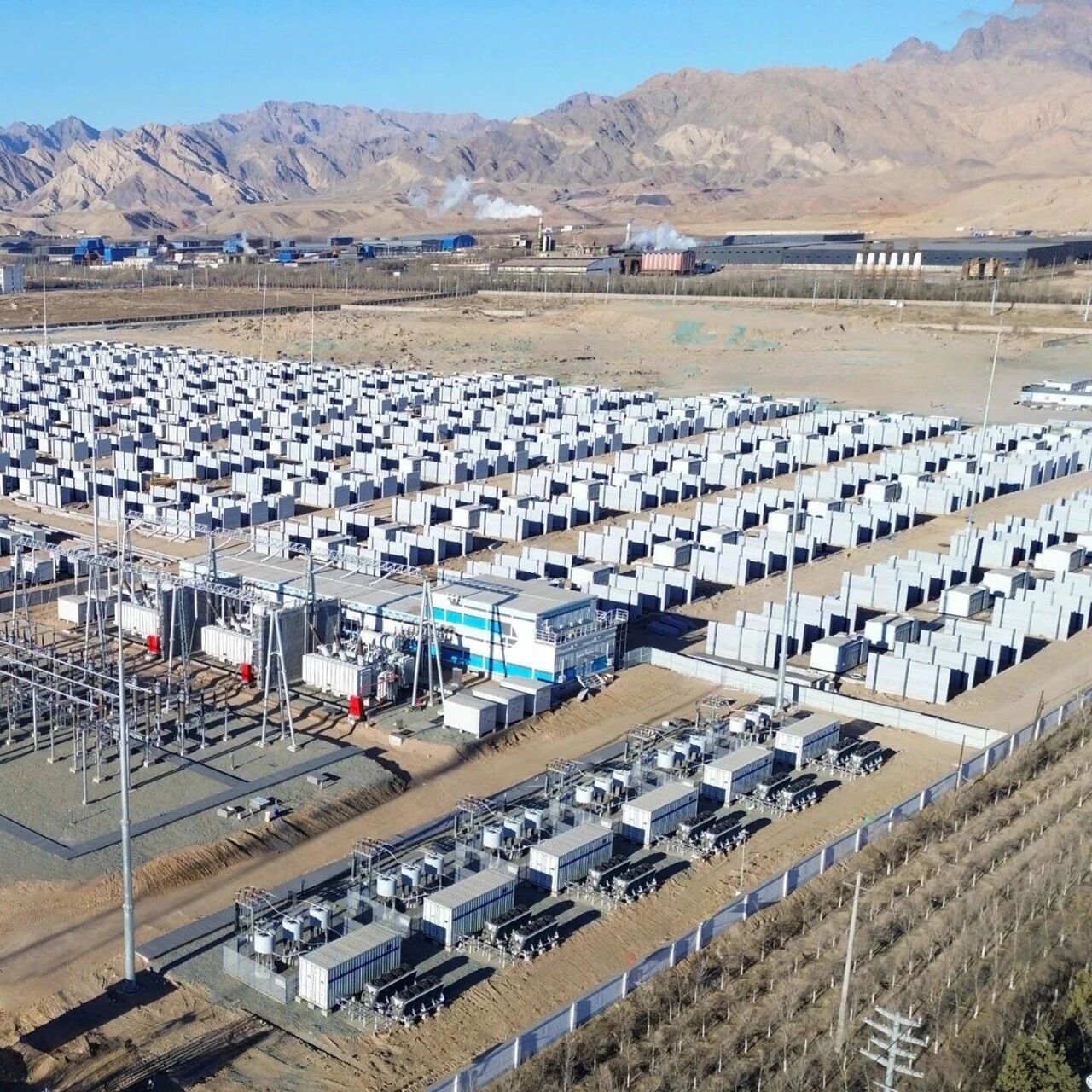
Core Viewpoint - The successful grid connection of the world's largest electrochemical energy storage station, the Yuanjing Jingyi Chagan Hada Energy Storage Station, with a capacity of 4GWh, marks a significant milestone in the development of energy storage technology and its integration into the new power system [2][4]. Technical Aspects - The project has passed the grid's "three charges and three discharges" and 72-hour continuous operation verification, becoming the largest energy storage project in China to achieve this [4]. - The Yuanjing AI energy storage system integrates advanced technologies from "grid connection" to "grid construction," addressing industry pain points such as slow debugging and weak support capabilities [6]. Market Aspects - The project will fully connect to the electricity spot market, leveraging the Yuanjing AI energy storage system's "trading intelligence" and "grid construction intelligence" for a closed-loop operation that enhances trading efficiency and supports large-scale participation in electricity trading [9]. - The new market mechanisms outlined in the policy will allow AI storage to participate in the electricity spot market and provide ancillary services, creating a clear and predictable profit model [7]. Application Scenarios - The policy elevates "smart microgrids" as a crucial component of the new power grid, opening vast opportunities for AI storage applications in industrial parks, zero-carbon parks, and remote areas [10]. - The successful grid connection of the Inner Mongolia project demonstrates Yuanjing's leading advantages in physical artificial intelligence and AI-driven renewable energy solutions, establishing a comprehensive industrial chain from energy storage cells to system integration and intelligent operation [10]. Future Outlook - The milestone delivery marks a successful conclusion for Yuanjing's energy storage business expansion in 2025, with significant international market breakthroughs in Australia, Chile, Italy, and Poland [11]. - Yuanjing aims to strengthen its role in supporting the new power system and driving global zero-carbon transformation through innovative products and excellent delivery capabilities [11].
国际见证!上能电气构网型储能技术荣获DNV报告
中关村储能产业技术联盟· 2026-01-08 07:55
Core Viewpoint - The second-generation enhanced hybrid networking technology of the company has received authoritative certification from DNV, marking a significant step towards global large-scale application [2][4]. Group 1 - The station-level networking test was conducted at a 100MW/200MWh energy storage power station in Changsha, with the company collaborating closely with the project owner and Hunan Xiangdian Testing Research Institute to complete hundreds of functional tests in just one week [4]. - DNV's witness testing report fills a crucial gap in the company's "true networking" verification chain, which includes R&D testing, grid simulation, complete machine certification, and international witnessing [4]. - The certification enhances the international recognition of the company's networking energy storage technology, providing a "passport" for entering global markets [6]. Group 2 - The company will participate in the 14th International Energy Storage Summit and Exhibition (ESIE 2026) in Beijing from March 31 to April 3, 2026, inviting industry peers to explore the future of energy storage together [6][7]. - Recent achievements include supplying the largest energy storage power station in India (576MW) and successfully connecting a 200MW/400MWh energy storage power station in Yunnan to the grid [9].

四部门召开座谈会 进一步规范动力和储能电池产业竞争秩序
中关村储能产业技术联盟· 2026-01-08 07:55
Core Viewpoint - The meeting emphasized the rapid development of China's power and energy storage battery industry, which has achieved a competitive advantage globally, but also highlighted issues such as irrational competition and blind construction that disrupt market order and sustainability [2]. Group 1: Industry Development and Challenges - The power and energy storage battery industry in China is developing rapidly and has gained a competitive edge on a global scale [2]. - There are issues of blind construction and irrational price competition within the industry, which disrupt normal market order and weaken sustainable development capabilities [2]. Group 2: Regulatory Measures - The meeting called for strengthened market regulation, including enhanced price enforcement checks and increased supervision of production consistency and product quality [2]. - There is a need to optimize capacity management by establishing capacity monitoring and early warning mechanisms to prevent overcapacity risks [2]. Group 3: Industry Self-Regulation and Collaboration - The meeting stressed the importance of industry self-regulation and the role of industry associations in guiding enterprises to scientifically layout capacity and promote a fair competitive market order [2]. - Strengthening regional collaboration and central-local coordination is essential to control redundant construction and promote healthy industry development [2].
