构网型储能

Search documents
科华数能构网型储能的吉瓦级跨越
中国能源报· 2026-03-30 07:05
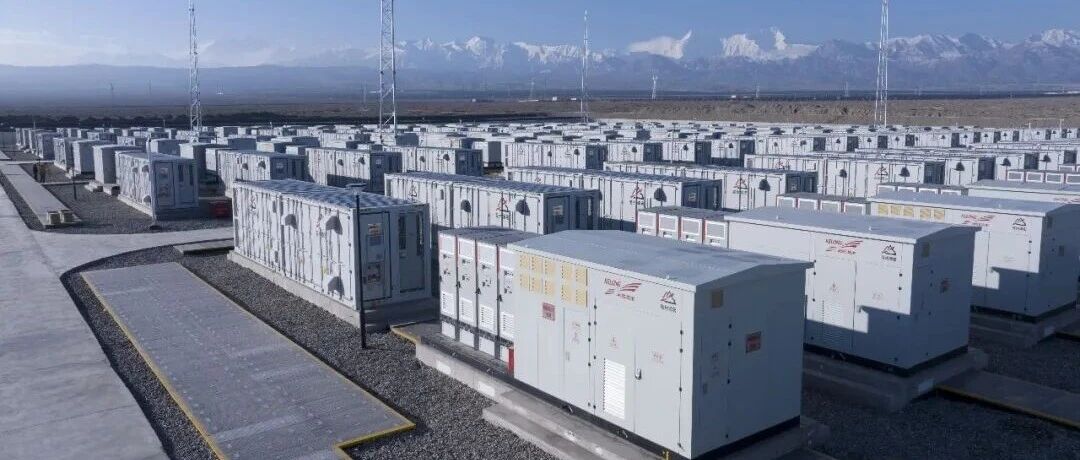
Core Viewpoint - The article emphasizes the importance of grid-forming energy storage as a key pillar in the future energy system, highlighting its expected growth and the role of leading companies like Kehua Data in advancing this technology [1][3]. Industry Overview - By 2025, the capacity of domestic grid-forming energy storage projects is projected to grow nearly threefold compared to 2024, with a penetration rate reaching 12.8% [1]. - The rise of grid-forming technology is seen as a solution to the structural challenges posed by high proportions of renewable energy in the power system, which has led to issues like low inertia and weak damping [3]. Company Profile - Kehua Data has been a pioneer in grid-forming energy storage, leveraging 38 years of experience in power electronics to develop core algorithms and technologies for virtual synchronous generators [4]. - The company has achieved significant milestones, including becoming the first in China to pass comprehensive grid-forming verification tests and delivering GWh-level projects [6]. Technological Advancements - Kehua Data's grid-forming systems are equipped with critical functionalities such as voltage and frequency support, rapid frequency modulation, and black start capabilities, enhancing the integration of renewable energy into the grid [8][9]. - The company has optimized its technology through software algorithm upgrades and hardware performance enhancements, allowing for robust performance in various complex grid scenarios [8][9]. Project Implementation - Kehua Data has successfully implemented grid-forming technology across multiple projects in diverse environments, including extreme conditions in regions like Tibet and Inner Mongolia [14][16]. - The company has established benchmarks for grid-forming applications, such as the 1GW/4GWh project in Inner Mongolia, which is the largest of its kind in China [14]. Future Outlook - The global market for grid-forming energy storage is expected to grow significantly, with projections indicating a rise to 72.5GW by 2030, and China's installed capacity anticipated to reach 30GW [16]. - Kehua Data plans to continue advancing grid-forming technology, enhancing collaboration with research institutions and adapting to international market demands [17].

详细日程发布 | ESIE 2026主题论坛:构网型储能
中关村储能产业技术联盟· 2026-03-25 10:36
Core Viewpoint - The 14th International Energy Storage Summit and Exhibition (ESIE 2026) will take place from March 31 to April 3, 2026, in Beijing, focusing on key topics such as policy interpretation, market analysis, energy storage applications, technology discussions, and international markets [2][18]. Group 1: Event Overview - ESIE 2026 will gather over 800 energy storage exhibitors and more than 5,000 upstream and downstream industry participants, featuring over 30 thematic forums [2]. - The event will include the 9th Energy Storage Frontier Technology Conference, which will address the core challenges of high-proportion renewable energy power systems on grid stability [2][4]. Group 2: Technical Focus - The conference will delve into "grid-forming energy storage" as a key technology supporting new power systems, discussing innovations such as Virtual Synchronous Generator (VSG) control and grid-forming PCS (Power Conversion System) devices [2][4]. - Topics will cover solutions for active grid support, black start capabilities, and large-scale engineering applications, showcasing the development trajectory and industrialization path of these technologies [2][4]. Group 3: Expert Participation - The event will be hosted by Zheng Yaodong, a prominent expert in the field, and will feature leading companies such as China Energy Construction, Sungrow Power Supply, and others, representing the pinnacle of China's grid-forming energy storage technology research and engineering practice [3][4]. Group 4: Detailed Agenda - The agenda includes various forums focusing on advanced energy storage materials, safety and standards, and independent energy storage project development and operation [10][11]. - Specific sessions will address topics like the application of energy storage in zero-carbon parks and the integration of energy storage with new business models [11][13].
全球储能部署强劲 中国主导地位巩固
Zhong Guo Chan Ye Jing Ji Xin Xi Wang· 2026-02-27 00:15
Core Insights - The global energy storage market is expected to see a significant expansion, with new installed capacity surpassing 100 GW for the first time in 2025, representing a year-on-year growth of 43% [1] - Despite a slowdown in growth anticipated for 2026 due to policy adjustments in major economies, long-term prospects remain strong driven by government tenders and support for distributed energy storage [1] Global Market Overview - By 2025, China will maintain its leading position in global energy storage deployment, accounting for 54% of total installed capacity, supported by renewable energy development goals and strong domestic manufacturing capabilities [2] - The U.S. is projected to see a 53% year-on-year increase in energy storage capacity by 2025, although policy challenges persist, particularly regarding supply chain restrictions [2] - Emerging markets in Europe, the Middle East, and Asia-Pacific are also expanding their energy storage deployments, with Europe expected to see a 160% increase in new installations in 2025 [3] Regional Developments - Germany leads Europe in distributed energy storage, while the UK is at the forefront of large-scale utility projects [3] - In the Middle East, Saudi Arabia is establishing itself as a key emerging market with multiple large-scale projects, despite some delays [3] - Australia is experiencing a 55% growth in its energy storage market, with over 6.5 GW of projects currently under construction [3] Market Segmentation - By 2025, grid-scale energy storage projects will account for 82% of installed capacity, driven by demand for renewable energy integration and government procurement plans [4] - The average storage duration for grid-scale systems is expected to be around 2.5 hours, with continued strong growth anticipated in this sector [4] Technological Advancements - Non-lithium storage technologies such as sodium-ion, flow batteries, and iron-air batteries are beginning to see large-scale applications, with increasing investment and technology initiatives in major markets [5] - These technologies are gaining attention for their unique advantages in fixed storage scenarios, despite currently having higher unit costs compared to lithium-ion batteries [5] Demand Drivers - The year 2026 is identified as a critical year for energy storage as a foundational technology for grids dominated by variable renewable energy sources [6] - Data centers are emerging as a key area for energy storage deployment, helping to increase the share of green electricity and stabilize grid performance [6] - The integration of energy storage with renewable sources like wind and solar is becoming a core driver for scaling up energy storage solutions globally [6]
全球储能部署强劲 中国主导地位巩固
中国能源报· 2026-02-10 00:06
Core Viewpoint - The energy storage market is expected to experience a slowdown in growth by 2026 due to policy adjustments in major economies, but government tenders and support measures will continue to drive large-scale and distributed energy storage projects, ensuring long-term market growth remains strong [1][3]. Group 1: Global Energy Storage Market Overview - In 2025, global energy storage installations are projected to exceed 100 GW for the first time, representing a 43% year-on-year increase, indicating rapid industry expansion and growing investment attractiveness [3]. - As of now, the total global energy storage capacity is approximately 270 GW, with expectations to reach 1545 GW by 2034, highlighting energy storage as a key element in global energy transition [3]. Group 2: China's Dominance in Energy Storage - By 2025, China will maintain its leading position in global energy storage deployment, accounting for 54% of the total global capacity, driven by renewable energy development goals and strong domestic manufacturing capabilities [5]. - From 2025 to 2034, China is expected to contribute around 50% of the global new energy storage capacity, maintaining its dominance across the entire supply chain [5]. Group 3: U.S. Energy Storage Market Dynamics - The U.S. energy storage capacity is projected to grow by 53% in 2025, although policy challenges remain significant, particularly due to supply chain restrictions imposed by the "Inflation Reduction Act" [5]. - Approximately 12% of existing energy storage systems in the U.S. will require expansion, creating a new market segment expected to grow significantly in the coming years [5]. Group 4: Emerging Markets and Regional Developments - In 2025, Europe is expected to see a 160% year-on-year increase in new installations, with Germany leading in distributed storage and the UK in large-scale utility projects [7]. - The Middle East and Asia-Pacific regions are also accelerating energy storage deployment, with Saudi Arabia establishing itself as a key emerging market through multiple large-scale projects [8]. Group 5: Grid-Scale Energy Storage Trends - By 2025, grid-scale energy storage projects will account for 82% of total installations, driven by demand for large-scale applications and renewable energy integration [10]. - The average storage duration for grid-scale systems is expected to be around 2.5 hours, with continued strong growth anticipated in this sector through 2034 [10]. Group 6: Non-Lithium Battery Technologies - Non-lithium storage technologies such as sodium-ion, flow batteries, and iron-air batteries are beginning to see large-scale applications, with unique advantages in fixed storage scenarios [11][12]. - Investment growth and specialized bidding activities for non-lithium storage are emerging in major markets including China, Australia, Ireland, Spain, Germany, and Italy [12]. Group 7: Data Center Demand for Energy Storage - Energy storage is becoming crucial for data centers, helping to increase the share of green electricity and stabilize load fluctuations, with over 230 GW of data center projects announced in the U.S. alone [13]. - The integration of energy storage with renewable sources like wind and solar is becoming a core power supply method for data centers, driving significant growth in energy storage deployment [14].
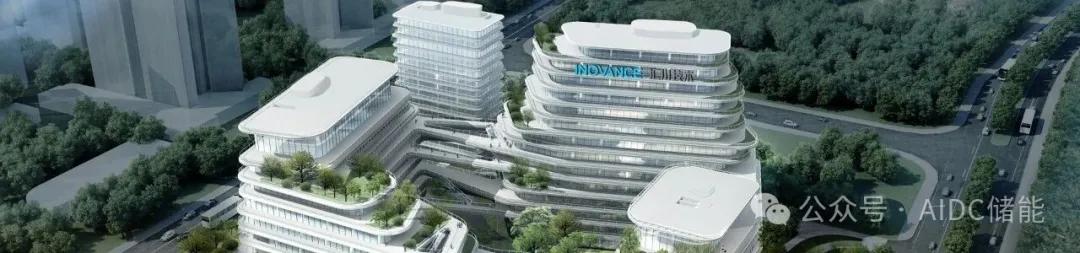
2000亿巨头赴港!汇川技术即将上市
Xin Lang Cai Jing· 2026-02-02 10:49
Core Viewpoint - In recent announcements, Inovance Technology plans to list in Hong Kong, aiming for a dual-platform "A+H" listing to advance its international strategy and enhance global brand and competitiveness [1][3][7] Group 1: International Strategy and Market Position - The move to list in Hong Kong is part of Inovance's strategy to deepen its international presence, aligning with its focus on overseas energy business breakthroughs as stated in its Q3 2025 financial report [3][7] - Inovance's strategy includes expanding its core supply chain in energy storage PCS while accelerating its global energy and digital energy initiatives [3][7] Group 2: Energy Storage Business Development - Inovance entered the energy storage sector later than other leading companies, making significant investments starting in 2021, focusing on both generation-side and grid-side PCS, as well as commercial and residential energy storage [8] - The company has set a "three-step" goal for its energy storage business: - By 2025-2026, focus on high-value scenarios (grid frequency regulation, commercial microgrids) with a market share exceeding 5% - By 2027-2028, build a "storage + digital energy" ecosystem to become a global top 3 player - Post-2030, lead the next generation of energy storage technology standards, such as hydrogen-electric hybrid storage [8] Group 3: Technological Advancements and Projects - Inovance has rapidly become a major supplier in the energy storage inverter (PCS) market, leveraging its expertise in power electronics and intelligent control [4][8] - The company launched a new generation of 3.5MW high-power centralized PCS inverters and a 7MW integrated boosting solution, along with a 430kW string inverter compatible with larger capacity cells [4][8] - Inovance has implemented its next-generation core technology, network-type energy storage, in various projects, including the 100MW/200MWh shared energy storage project in Yunnan, which integrates lithium-ion and flow battery technologies [9]

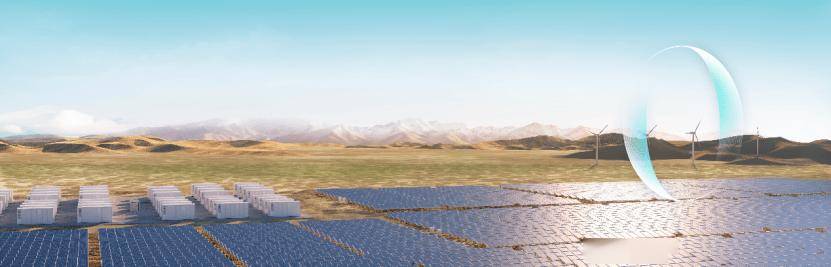
华为发布智能光伏十大趋势:光风储协同、智能体融入新能源电站等
Sou Hu Cai Jing· 2026-01-14 10:52
Core Insights - Huawei Digital Energy held a conference on January 12, 2023, to unveil the "Top Ten Trends in Smart Photovoltaics for 2026," highlighting the transition of the renewable energy industry into a "value cultivation period" as it faces stability challenges in power generation, grid, and consumption due to increased penetration of renewable energy [1][14]. Group 1: Trends Overview - Trend 1: The synergy of solar, wind, and storage will make renewable energy a predictable and controllable stable power source, requiring five core features for future large-scale renewable energy bases [2]. - Trend 2: Network-based energy storage will become a key support for grid stability and balance, enabling participation in energy market transactions and providing auxiliary services [4]. - Trend 3: The collaborative model of source, grid, load, and storage will evolve towards "regional autonomy + global collaboration" through AI-driven scheduling technology [5]. Group 2: Technological Innovations - Trend 4: Home solar storage scenarios will transition from AI empowerment to AI-native, enhancing user experience through comprehensive AI integration [6]. - Trend 5: High frequency and density will drive continuous improvements in the power density of solar storage devices, with expectations of over 40% enhancement in the coming years [7]. - Trend 6: High voltage and reliability will lead to a reduction in the cost per kilowatt-hour, supported by upgrades in key components and proactive safety measures [8]. Group 3: System Management and Safety - Trend 7: Battery management at the system level is essential for the safe and stable operation of energy storage systems, utilizing digital technologies for precise monitoring [9]. - Trend 8: The technology system for renewable energy networking is maturing, accelerating the construction of new power systems through integrated high-performance hardware and algorithms [10]. - Trend 9: Intelligent systems will deeply empower renewable energy stations, moving towards "autonomous driving" capabilities [11]. Group 4: Safety and Standards - Trend 10: The energy storage industry is advancing towards a new phase of quantifiable safety, establishing clear safety standards to address industry pain points and enhance safety capabilities [12][37].
华为数字能源发布10大趋势!80%与储能强相关
行家说储能· 2026-01-13 11:40
Core Viewpoint - Huawei Digital Energy has identified ten key trends in the smart photovoltaic industry for 2026, with eight of these trends closely related to energy storage, highlighting the future direction of the industry under the integration of solar and storage technologies [3][5]. Group 1: Key Trends in Energy Storage - Energy storage has become a crucial component in the integration of renewable energy and multi-energy complementarity, emphasizing the collaboration between solar, wind, and storage systems [3]. - Grid-forming energy storage will be a focal point, serving as a key infrastructure for grid regulation and stability, as highlighted in Huawei's trends [4]. - Intelligent operation and maintenance have become essential capabilities for enterprises, driven by the application of AI and big data analytics to enhance lifecycle management and maximize returns [4]. - A systematic approach to safety will be foundational for enterprise development, with a shift in industry safety standards from focusing solely on battery cells to encompassing the entire battery system [4]. Group 2: Huawei's Strategic Positioning - Huawei's entry into the energy storage sector dates back to around 2010, with a strategic focus on digital energy established in 2021, elevating energy storage to a core strategic component [6]. - The global expansion of Huawei's energy storage solutions mirrors its successful strategies in the telecommunications market, leveraging brand trust and service networks to penetrate key markets [8]. - Huawei's differentiation in the energy storage sector lies in its focus on core control layers such as PCS, EMS, and BMS, rather than vertical integration in battery cell manufacturing [10]. Group 3: Future Development Directions - The smart photovoltaic industry is expected to evolve towards a predictable and controllable stable power supply, with five core characteristics identified for future solar and wind bases [17]. - Grid-forming energy storage will play a vital role in stabilizing the grid and balancing supply and demand, actively participating in energy market transactions [18]. - The integration of AI in household solar storage scenarios is anticipated to enhance user experience by transitioning from AI empowerment to AI-native solutions [21]. - The power density of solar storage devices is projected to increase by over 40% in the coming years due to technological innovations [22]. - The trend towards high voltage and high reliability will contribute to a significant reduction in the cost of electricity generated from solar systems [23]. - System-level battery management is essential for the safe and stable operation of energy storage systems, emphasizing the importance of precise monitoring and management [24]. - The maturity of new energy grid technology systems will accelerate the construction of new power systems, transitioning grid-forming storage from a passive to an active role [25]. - Intelligent systems will increasingly empower renewable energy plants, moving towards an "autonomous driving" model [26]. - The energy storage industry is advancing towards a quantifiable safety phase, establishing clear safety standards and enhancing safety capabilities [27].

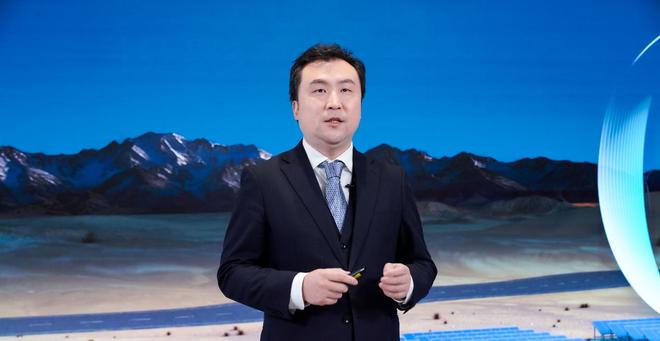
华为发布智能光伏十大趋势:电站迈向“自动驾驶”
Guan Cha Zhe Wang· 2026-01-13 07:08
Core Insights - Huawei's Vice President of Digital Energy Smart Photovoltaic Business, Zhong Mingming, released the "Top Ten Trends in Smart Photovoltaics" and a white paper, providing insights and practical paths for accelerating the integration of wind, solar, and storage into the new power system, aiming for high-quality industry development [1] Group 1: Trends Overview - Trend 1: The synergy of wind, solar, and storage will make renewable energy a predictable and controllable stable power source, requiring five core features for future large-scale wind-solar-storage bases [2] - Trend 2: Network-based energy storage will become a key support for grid stability and balance, enabling participation in energy market transactions and providing auxiliary services [3] - Trend 3: The collaborative model of source, grid, load, and storage will evolve towards "regional autonomy + global collaboration" through AI intelligent scheduling technology [3] Group 2: Technological Innovations - Trend 4: Home solar storage scenarios will transition from AI empowerment to AI-native, enhancing user experience through comprehensive AI integration [5] - Trend 5: High frequency and high density will drive continuous improvements in power density of solar storage devices, with expectations of over 40% enhancement in the coming years [6] - Trend 6: High voltage and high reliability will lead to a continuous reduction in the cost per kilowatt-hour, with upgrades in key components ensuring safety and reliability [8] Group 3: System Management and Safety - Trend 7: Battery management at the system level is essential for the safe and stable operation of energy storage systems, utilizing digital technologies for precise monitoring [9] - Trend 8: The technology system for renewable energy networks is maturing, transitioning from passive to active roles in grid stability, focusing on high-performance hardware and intelligent algorithms [10] - Trend 9: Intelligent systems will deeply empower renewable energy stations, moving towards "autonomous driving" capabilities [11] - Trend 10: The energy storage industry is entering a new phase of quantifiable safety, with systematic assessments covering the entire lifecycle of systems [12]

华为发布2026智能光伏十大趋势 助力光风储成为主力电源
Huan Qiu Wang Zi Xun· 2026-01-13 04:33
Core Viewpoint - Huawei Digital Energy held a conference to discuss the "Top Ten Trends in Intelligent Photovoltaics for 2026," emphasizing the acceleration of wind-solar-storage systems becoming the main power source for new energy systems, aiming for high-quality development in the industry [1][17]. Group 1: Trends in Intelligent Photovoltaics - The past decade has seen significant growth in the wind-solar-storage industry, but increasing penetration of renewable energy has led to balance and stability issues in power systems, marking a transition into a "value cultivation period" [3]. - The top ten trends include four application trends and six technology trends, with the first trend focusing on the collaboration of wind-solar-storage systems to create a predictable and controllable stable power source [3][5]. - The second trend highlights the omnipresence of grid-forming energy storage as a key support for grid stability and balance, enabling participation in energy market transactions and providing auxiliary services [6]. - The third trend discusses the collaborative supply model of source, grid, load, and storage, moving towards "regional autonomy + global collaboration" [7]. - The fourth trend emphasizes the transition of home energy storage scenarios from AI empowerment to AI-native, enhancing user experience through optimal electricity usage strategies [9]. - The fifth trend indicates a push for higher frequency and density in energy storage devices, with expectations of over 40% improvement in power density for photovoltaic inverters and storage systems in the coming years [11]. - The sixth trend focuses on high voltage and reliability, which will lead to a significant reduction in the cost per kilowatt-hour of photovoltaic systems [12]. - The seventh trend stresses the importance of system-level battery management for the safe and stable operation of energy storage systems [13]. - The eighth trend notes the maturation of new energy grid-forming technology, transitioning from passive to active roles in grid stability [14]. - The ninth trend involves the integration of intelligent systems into renewable energy plants, moving towards "autonomous operation" [15]. - The tenth trend addresses the shift towards quantifiable safety standards in the energy storage industry, enhancing safety capabilities through systematic evaluations [16].
华为发布2026智能光伏十大趋势:构网型储能无处不在
中关村储能产业技术联盟· 2026-01-13 03:49
Core Viewpoint - Huawei Digital Energy emphasizes the acceleration of solar, wind, and storage (光风储) to become the main power source in the new energy system, highlighting the importance of AI and innovative technologies in achieving high-quality development [2][21]. Group 1: Industry Trends - The solar, wind, and storage industry has experienced significant growth over the past decade, but faces stability issues as renewable energy penetration increases, marking a transition into a "value cultivation period" [3]. - The future of large-scale solar, wind, and storage bases must focus on two pillars: stability and cost control, along with three key elements: 100% renewable independent operation, intelligent collaboration across the entire chain, and high-quality safety throughout the lifecycle [6]. - The ten trends in smart photovoltaics include four application trends and six technology trends, which provide insights and practical paths for the industry [3][4]. Group 2: Application Trends - Trend 1: Networked storage will become a key support for grid stability and balance, enabling participation in energy market transactions and providing auxiliary services [7]. - Trend 2: Collaborative supply models will evolve towards "regional autonomy + global collaboration" [8]. - Trend 3: Home energy storage will transition from AI empowerment to AI-native, enhancing user experience [11]. Group 3: Technology Trends - Trend 4: High frequency and density will drive continuous improvement in power density of solar storage devices, with expectations of over 40% enhancement in the coming years [12][14]. - Trend 5: High voltage and reliability will lead to a reduction in the cost per kilowatt-hour, with advancements in key components and proactive safety measures [15]. - Trend 6: System-level battery management is essential for the safe and stable operation of storage systems, utilizing digital technologies for precise monitoring [16]. Group 4: Safety and Maturity - Trend 7: The technology system for renewable energy networking is maturing, transitioning from passive to active roles in grid stability [17]. - Trend 8: Intelligent systems will empower renewable energy plants, moving towards "autonomous driving" capabilities [18]. - Trend 9: The storage industry is entering a new phase of quantifiable safety, addressing industry pain points through systematic safety evaluations [19][20].