WitsView睿智显示

Search documents
维信诺公布2025年第三季度业绩
WitsView睿智显示· 2025-10-31 09:41
Core Viewpoint - The company reported stable performance in Q3 2025, with a slight increase in revenue and a reduction in losses compared to the previous year [1][2]. Financial Performance - Q3 revenue reached approximately 1.93 billion yuan, a year-on-year increase of 0.85% [2]. - Cumulative revenue for the first three quarters was 6.05 billion yuan, reflecting a year-on-year growth of 3.50% [2]. - The net profit attributable to shareholders showed a reduced loss of approximately 561 million yuan, a decrease of 9.55% compared to the previous year [2]. - The net profit after deducting non-recurring gains and losses was a loss of about 579 million yuan, down 11.61% year-on-year [2]. - The net cash flow from operating activities improved significantly, increasing by 311.06% to 2.41 billion yuan, attributed to higher sales receipts and reduced cash payments for goods and services [2]. Industry Trends - The demand for OLED panels is improving, driven by the recovery in the consumer electronics sector, particularly in smartphones and smart wearables [3]. - The construction of the world's first high-generation AMOLED production line utilizing the FMM-free technology (ViP) has been completed [3]. - The company's affiliated enterprise, Chenxian Optoelectronics, achieved multiple results in Micro LED business and launched several new Micro LED products [3].


LG Display:明年大尺寸OLED出货目标为700万片
WitsView睿智显示· 2025-10-31 09:41
Core Viewpoint - LG Display aims to increase its large-size W-OLED shipment target to approximately 7 million units by 2026, a 10% increase from the expected 6 million units in 2023, driven by growing market acceptance and competitive pricing [1][3]. Group 1: Shipment and Market Demand - The company anticipates that the proportion of large-size OLED products in its overall shipments will reach 10% to 15% this year, reflecting a growing demand in the gaming monitor market [1]. - LG Display's W-OLED specifications have reached 8.5 generation levels, with a monthly production capacity of 180,000 units, of which approximately 135,000 units are used for actual mass production [3]. Group 2: Financial Performance - In Q3, LG Display reported revenue of 6.957 trillion KRW (approximately 34.653 billion RMB), a year-on-year increase of 2%, and an operating profit of 431 billion KRW (approximately 2.145 billion RMB), marking a return to profitability [4]. - For the first three quarters of the year, the cumulative revenue was 18.6092 trillion KRW (approximately 92.577 billion RMB), with an operating profit of 348.5 billion KRW (approximately 1.738 billion RMB) [4].
京东方、沃格光电、冠捷科技最新人事变动
WitsView睿智显示· 2025-10-31 09:41
Group 1: BOE Technology Group - On October 10, BOE Technology Group received a resignation letter from Vice Chairman Gao Wenbao, who will no longer hold any positions in the company or its subsidiaries after his resignation [2] - On October 30, BOE's board elected Wang Xiping as the new Vice Chairman for the 11th board, with a term starting from the date of election until the current board's term ends. Wang has extensive experience in various leadership roles within the company [4] Group 2: Wogue Optoelectronics - Wogue Optoelectronics is undergoing a board re-election as the term of the 4th board is about to expire. The new 5th board will consist of 7 directors, including 3 non-independent directors, 3 independent directors, and 1 employee representative director [5] - The board has nominated candidates for the 5th board, including Yi Weihua, Zhang Chunjao, and Wang Mingxin as non-independent directors, and Li Hanguo, Yu Yihua, and Wang Ning as independent directors. The candidates will be voted on at the 2025 4th extraordinary shareholders' meeting [8] Group 3: AOC Technology - On October 30, AOC Technology's board received a resignation letter from Vice President and CFO Zhang Qiang, who resigned due to personal reasons and will no longer hold any positions in the company [9] - Following Zhang's resignation, President Xuan Jiansheng will temporarily assume the role of CFO while the company expedites the hiring process for a new CFO [11] - Xuan Jiansheng has a strong background, including a PhD from New York University and experience in various companies before joining AOC Technology in 1989, where he has held multiple leadership roles [12]




京东方、TCL科技、深天马、彩虹股份等6家面板厂公布最新业绩
WitsView睿智显示· 2025-10-30 12:39
Core Viewpoint - The article discusses the third-quarter financial performance of six major companies in the display panel industry, highlighting their revenue growth, profit changes, and strategic developments. Company Summaries 京东方 (BOE Technology Group) - In Q3, BOE achieved revenue of 53.27 billion yuan, a year-on-year increase of 5.81%, and a net profit of 1.35 billion yuan, up 32.07% [2][3] - For the first three quarters, cumulative revenue reached 154.55 billion yuan, growing by 7.53%, with a net profit of 4.60 billion yuan, an increase of 39.03% [2][3] - The growth was attributed to expanded sales, increased government subsidies, and significant investment income from the disposal of long-term equity investments [2][4] TCL科技 (TCL Technology) - TCL reported Q3 revenue of 50.38 billion yuan, a 17.71% increase, and a net profit of 1.16 billion yuan, up 119.44% [5][6] - Cumulative revenue for the first three quarters was 135.94 billion yuan, a 10.50% increase, with a net profit of 3.05 billion yuan, growing by 99.75% [5][6] - The company noted improvements in the global panel market, with demand recovery and price stabilization, leading to increased production efficiency and profitability [7][8] 深天马 (Shenzhen Tianma) - In Q3, Shenzhen Tianma reported revenue of 9.19 billion yuan, a 13.19% increase, and a net profit of 107 million yuan [9][10] - Cumulative revenue for the first three quarters was 26.66 billion yuan, up 11.03%, with a net profit of 313 million yuan [9][10] - The company is investing in new equipment for its 6th generation OLED panel production line, which is expected to enhance production capacity and efficiency [11][12] 彩虹股份 (Rainbow Optoelectronics) - In Q3, Rainbow Optoelectronics achieved revenue of 2.98 billion yuan, a 1.51% increase, but reported a net loss of 72.29 million yuan [13][14] - For the first three quarters, revenue was 8.64 billion yuan, down 4.04%, with a net profit of 379 million yuan, a decrease of 62.49% [13][14] - The company is focusing on its glass substrate business and has divested 30% of its subsidiary, Rainbow Optoelectronics, to BOE to optimize its business structure [14] 友达光电 (AU Optronics) - AU Optronics reported Q3 revenue of 69.91 billion NTD (approximately 16.2 billion yuan), a 1% increase from Q2 but a 10.1% decrease from Q3 2024, with a net loss of 1.28 billion NTD (approximately 297 million yuan) [15][17] - The company noted that its overall revenue was affected by currency fluctuations and declining panel prices, but cumulative net profit for the first three quarters improved significantly compared to the previous year [17] 和辉光电 (HannStar Display) - In Q3, HannStar achieved revenue of 1.33 billion yuan, a 2.25% increase, but reported a net loss of 530 million yuan [18][20] - Cumulative revenue for the first three quarters was 4 billion yuan, up 8.25%, with a net loss of 1.37 billion yuan [18][20] - The company is focusing on improving production efficiency and has submitted an application for an H-share listing to enhance its international strategy and financing capabilities [20]



龙腾光电、三星显示、LG Display公布Q3财报
WitsView睿智显示· 2025-10-30 10:20
Group 1: Longteng Optoelectronics - In Q3 2025, Longteng Optoelectronics reported revenue of 614 million yuan, a year-on-year decrease of 27.72% [2][3] - The net profit attributable to shareholders was -58.69 million yuan, with a cumulative net profit of -225.96 million yuan for the first three quarters [2][3] - The company announced that some electronic paper products have achieved mass production and delivery, with a production base in Vietnam entering trial production [2][3] Group 2: Samsung Display - Samsung Display reported Q3 revenue of 8.1 trillion won (approximately 403.1 billion yuan), with an operating profit of 1.2 trillion won (approximately 59.7 billion yuan) [5][6] - The growth in revenue was driven by strong demand for flagship smartphones and increased shipments in the gaming monitor market [5][6] - The company expects continued demand for new smartphones and plans to launch new QD-OLED products to expand its large-size display sales [6] Group 3: LG Display - LG Display achieved Q3 revenue of 6.96 trillion won (approximately 346.53 billion yuan), with a year-on-year growth of 2% and a quarter-on-quarter growth of 25% [7][9] - The company reported an operating profit of 431 billion won, marking a return to profitability [7][9] - Despite a slight decline in cumulative revenue due to the exit from the LCD TV business, LG Display's operating profit increased significantly, showcasing progress in transitioning to an OLED-centric business model [7][9]


掩膜版企业禾臣新材完成过亿元B轮融资
WitsView睿智显示· 2025-10-30 10:20
Core Insights - Anhui Hechen New Materials Co., Ltd. has completed over 100 million RMB in B-round financing, led by Guotai Junan Innovation Investment and CRRC Guochuang Fund, with participation from other institutions [1][2] - The raised funds will primarily be used for expanding production capacity of 8.6 generation blank mask plates and advanced semiconductor polishing pads, as well as increasing collaborative R&D efforts with strategic customers [1] Company Overview - Established in 2016, Hechen New Materials focuses on the R&D and production of new display and semiconductor precision polishing materials, including blank mask plates and polishing pads [1] - The company has completed the construction of a cleanroom production line with a ten-level cleanliness standard for G6 and G8.6 generation blank mask plates, with some products already in mass production [1][2] Market Position - Blank mask plates and CMP (Chemical Mechanical Polishing) pads are core materials in semiconductor manufacturing and display panel processes, traditionally dominated by Japanese and Korean companies, resulting in a low domestic production rate [1] - Since 2021, Hechen New Materials has been focusing on the localization of semiconductor display blank masks and advanced polishing pads, with some products already in mass production and key customers including QY Optoelectronics and Luy Optoelectronics [1] Project Development - The G8.6 generation blank mask plate project, which started in January this year, completed the installation of coating equipment in August and has begun debugging, expected to enhance the company's capacity and delivery capabilities in high-generation blank mask plates [2] Financing History - Hechen New Materials has completed multiple rounds of financing since its establishment, including 70 million RMB in A-round financing in December 2020, an undisclosed A+ round in July 2021, an undisclosed Pre-B round in April 2022, and the recent B-round financing of 100 million RMB in January 2023 [2]

干货满满!2025自发光显示产业研讨会亮点一览
WitsView睿智显示· 2025-10-30 10:20
Core Viewpoint - The self-emissive display industry is experiencing rapid advancements, particularly in Micro LED and Mini LED technologies, which are expected to drive significant growth and innovation in various applications, including automotive displays, wearables, and cinema technology [2][4][62]. Group 1: Micro LED Developments - Micro LED technology is accelerating commercialization in wearable devices, large displays, and automotive applications, despite challenges such as high costs and power consumption [4][6]. - Major manufacturers like Samsung, LG, and BOE are prioritizing the mass production of Micro LED displays larger than 100 inches, focusing on cost reduction through chip size miniaturization [4][6]. - Micro LED is also showing potential in non-display applications, such as adaptive headlights and AI server interconnects, with major companies like Apple and Microsoft evaluating these technologies [6][8]. Group 2: MIP Technology - MIP technology is enabling the display industry to innovate by achieving "packaging as a module," which addresses cost advantages and modularity, facilitating broader market applications [8][11]. - The MIP technology is evolving faster than expected, moving from niche products to commercial viability, with applications expanding into automotive displays and home theater systems [8][11]. Group 3: Industry Challenges and Compliance - The LED display industry faces challenges such as irrational competition, lack of standards, and safety compliance issues, with a call for a shift towards high-quality development and compliance with regulations [14][16]. - The prevalence of non-compliant products poses risks to public safety, necessitating stricter enforcement of regulations and industry standards [14][16]. Group 4: Cinema Technology Innovations - The cinema industry is leveraging LED technology to enhance viewing experiences, with solutions like the HeyLED movie screen that surpass traditional DLP technology in brightness and contrast [22][25]. - The integration of immersive live streaming and AIGC technology is expected to redefine cinema experiences and expand operational capabilities [25][22]. Group 5: Market Outlook - The global LED display market is projected to grow slightly to $7.5 billion by 2025, with significant contributions from the LED integrated machine and movie screen segments [62][64]. - The competition is intensifying as major LCD manufacturers enter the LED display market, leading to a more defined industry structure and increased pressure on smaller companies [62][64]. Group 6: Emerging Technologies - Innovations in Micro LED technology, particularly in AR/MR applications, are being driven by advancements in silicon substrate GaN technology, which is expected to facilitate larger substrate sizes and lower costs [32][34]. - The introduction of new driving technologies, such as the Infinity MLED solution, is enhancing display performance through improved brightness, color accuracy, and energy efficiency [37][39]. Group 7: Smart Glasses and AI Integration - The smart glasses market is rapidly evolving, with AI applications poised to address existing challenges and enhance user experiences, particularly in the consumer market [56][58]. - The development of AI-powered glasses is seen as a stepping stone towards broader AR integration, with a focus on lightweight designs and practical applications [56][58].

OLED材料龙头UDC全球总部与研发中心落子新加坡
WitsView睿智显示· 2025-10-29 08:43
Core Insights - UDC's subsidiary UVJC has officially opened its global headquarters and R&D center in Singapore, aiming to enhance the innovation and commercialization of its Universal Vapor Jet Printing (UVJP) technology [2] - UDC plans to invest SGD 50 million (approximately RMB 274 million) over the next five years to accelerate the development and commercialization of UVJP technology [2] - The UVJP technology, derived from Organic Vapor Jet Printing (OVJP), offers a solvent-free and mask-free deposition platform, addressing the limitations of traditional deposition methods while providing cleaner, more efficient, and precise solutions [2] Financial Performance - In the first half of 2025, UDC reported total revenue of USD 338.1 million, a 4% increase from USD 323.8 million in the same period last year [3] - The net profit for the same period was USD 131.7 million, reflecting a 20% growth compared to USD 109.2 million in the previous year [3]

9379万!国产设备中标厦门天马G6代OLED面板产线
WitsView睿智显示· 2025-10-29 08:43
Core Viewpoint - Aolaide's subsidiary, Shanghai Shengxi Optoelectronics Technology Co., Ltd., has successfully won a bid for a 6th generation flexible AMOLED production line project from Xiamen Tianma Display Technology Co., Ltd., with a contract value of 93.79 million yuan [2][4]. Group 1: Company Developments - The successful bid will strengthen Aolaide's leading position in the 6th generation evaporation source market, enhancing its technological, customer, and market share advantages, which is expected to positively impact the company's performance in 2026 and 2027 [4]. - Xiamen Tianma Display is responsible for operating a 6th generation flexible AMOLED production line (TM18), with a total investment of approximately 48 billion yuan, targeting products for smartphones, smart wearables, and automotive displays [4]. Group 2: Industry Trends - Xiamen Tianma Display has been continuously procuring new equipment for its production line this year, including point/line evaporation sources and optical inspection equipment, indicating a focus on enhancing existing production capacity rather than establishing new lines [5]. - TCL Huaxing has initiated the construction of an 8.6 generation printed OLED production line, with a planned capacity of 22,500 sheets per month, to meet the growing market demand [5]. - TCL Technology's newly established printing equipment company, Guochuangke, has made progress with its G6 full-size display inkjet printing equipment, which is compatible with various substrate sizes and meets high-generation production needs [7].

TCL电子:前三季MiniLED电视全球出货量同比增长153%
WitsView睿智显示· 2025-10-29 08:43
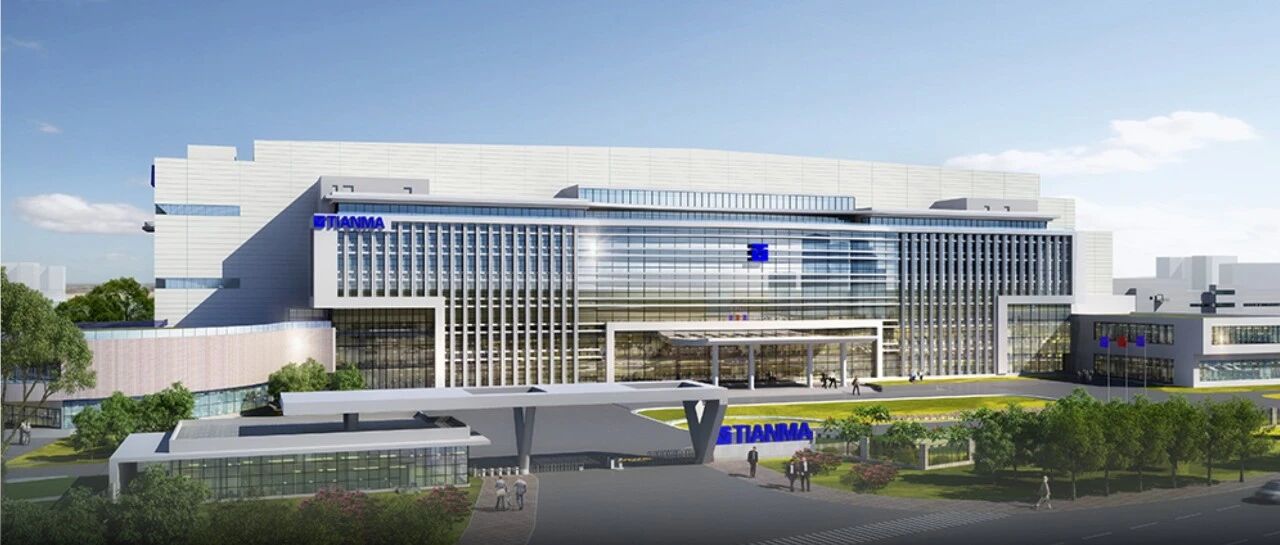
Core Viewpoint - TCL Electronics reported a 5.3% year-on-year increase in global TV shipments for the first three quarters of 2025, reaching 21.08 million units, with significant growth in Mini LED TV shipments and overall sales revenue [2][3]. Group 1: Global TV Shipment Data - In Q3 2025, TCL's global TV shipments reached 7.61 million units, contributing to a total of 21.08 million units for the first three quarters [2]. - Mini LED TV shipments increased by 153.3% year-on-year to 2.24 million units, accounting for 11.4% of total shipments [4][6]. - The average screen size of TCL TVs increased by 1.6 inches to 53.6 inches, with a sales price increase of 3.2% year-on-year [3]. Group 2: Market Segmentation - The share of 65-inch and larger TVs in global shipments rose to 29.0%, up from 24.3% year-on-year, with a 25.8% increase in shipments [3]. - In the international market, shipments of 65-inch and larger TVs grew by 44.6%, while 75-inch and larger TVs saw a 61.8% increase [4][5]. - In the Chinese market, despite a 4.1% decline in overall TV shipments, Mini LED TV shipments grew by 80.6%, with a market share increase to 20.6% [6]. Group 3: Revenue and Pricing Trends - Overall TV sales revenue increased by 8.7% year-on-year for the first three quarters, with a notable 14.2% increase in Q3 [2][5]. - The average selling price in the international market rose by 4.5%, with a significant increase of over 15.0% in North America due to improved product mix [5]. - In Europe, TCL TV shipments grew by 20.0% year-on-year, with Q3 growth exceeding 30% [5].