腾讯研究院

Search documents
腾讯研究院AI速递 20250606
腾讯研究院· 2025-06-05 15:26
Group 1: ChatGPT Updates - ChatGPT has introduced a new connector feature for deep research, allowing access to enterprise and personal data sources such as Outlook, Teams, and Google Drive [1] - A new recording mode has been launched, supporting automatic transcription, key point extraction, and timestamped queries, initially available for macOS Team users [1] - OpenAI has adjusted its pricing strategy, adding credit points for Enterprise and Team workspaces, enabling existing users to fully access the latest model features [1] Group 2: Cursor 1.0 Release - Cursor 1.0 has officially launched, introducing the BugBot automatic code review tool that can identify potential bugs and provide repair suggestions [2] - The background agent feature is now available to all users, supporting deep integration with Jupyter Notebook, significantly enhancing efficiency in research and data science tasks [2] - A new memory function remembers key information from conversations, allows one-click installation of the MCP server, and optimizes chat experience with direct rendering of Mermaid charts and Markdown tables [2] Group 3: Luma AI's Modify Video Feature - Luma AI has launched the "Modify Video" feature, which can completely change scenes, characters, and environments while preserving the original video's actions and camera movements [3] - This feature supports video motion capture, style transfer, and single-element editing, allowing precise control over the elements to be edited without altering the original actions [3] - Official evaluations show that Luma surpasses competitors like Runway V2V in viewer enjoyment, structural similarity, and motion trajectory tracking across multiple dimensions [3] Group 4: Bland TTS Voice Cloning Technology - Bland TTS has introduced groundbreaking voice cloning technology that can perfectly replicate a speaking style with just 3-6 voice samples and automatically adjust emotional expression based on text content [4][5] - This technology disrupts traditional TTS pipeline models by using large language models to directly predict "audio tokens," achieving four core functions: voice style control, sound effect generation, voice mixing, and emotional understanding [5] - Bland TTS is widely applied in creator voiceovers, developer API integration, and enterprise customer service, with future potential for hyper-personalized voice assistants and a revolution in language learning [5] Group 5: Firecrawl Search API Launch - Firecrawl has released version 1.10.0, introducing the Search MCP, which enables one-click web search and content scraping capabilities [6] - The new version supports various output formats and customizable search parameters, with comprehensive support for these new features in Python/Node.js SDK [6] - Enhanced functionalities include automatic proxy scraping, Redis separation, concurrent logging interfaces, improved metadata extraction, and fixes for subdomain handling to enhance stability [6] Group 6: Visual Embodied Brain Framework - Shanghai AI Lab has proposed the VeBrain framework, integrating visual perception, spatial reasoning, and robotic control capabilities [7] - This framework innovatively transforms robotic control into conventional 2D spatial text tasks and achieves precise mapping from text decisions to real actions through a "robot adapter" [7] - VeBrain outperforms GPT-4o and Qwen2.5-VL in 13 multimodal benchmark tests, improving success rates in robotic control tasks by 50%, and has constructed a high-quality dataset of 600,000 instructions [7] Group 7: DeepMind's Insights on Agents and World Models - DeepMind scientist Jon Richens' ICML 2025 paper reveals that any agent capable of generalizing to multi-step goal tasks must have learned an environmental prediction model, asserting that "agents are world models" [8] - The research demonstrates that agent strategies contain all information necessary to accurately simulate the environment, and algorithms can extract world models from these strategies, aligning with Ilya's 2023 predictions [8] - The study indicates that there is no shortcut to achieving AGI without a model, emphasizing that enhancing performance and generality requires learning more precise world models, while "short-sighted agents" focus only on immediate rewards without learning world models [8] Group 8: Karpathy's Views on Software Complexity - Karpathy argues that software products with complex UIs, lack of script support, and opaque binary formats face the risk of obsolescence, as LLMs struggle to understand and operate their underlying data [9] - He categorizes software by risk levels: Adobe products and DAWs are in the high-risk zone, Blender and Unity are in the mid-high risk zone, Excel is in the mid-low risk zone, while text-based tools like VS Code and Figma are in the low-risk zone [9] - Even with advancements in AI's understanding of UI/UX, products that do not proactively adapt to current technological standards will remain at a disadvantage [9] Group 9: Fei-Fei Li's Perspective on LLMs and World Models - Fei-Fei Li believes that LLMs represent a "lossy compression" of cognition, asserting that world models are the true important direction for AI development, with spatial intelligence being more ancient and fundamental [10] - She founded World Labs to develop AI systems with "spatial intelligence," claiming that technological breakthroughs like NeRF have made world model construction feasible [10] - The applications of world models extend beyond robotics, enabling AI to not only "understand" the three-dimensional world but also to "generate" and "manipulate" virtual spaces, opening new dimensions for design, creation, and simulation experiments [10]


重视你人生的复利效应
腾讯研究院· 2025-06-05 08:37
达伦·哈迪 《复利效应》作者 本文摘自中信出版社《复利效应》 你听过"稳扎稳打方能制胜"这句话吗?或者至少听过龟兔赛跑的故事吧?女士们,先生们,我就是那只 乌龟。给我足够的时间,我几乎可以在任何时候、任何比赛中击败任何人。为什么?不是因为我最优 秀、最聪明或速度最快。我之所以会赢,是因为我已经养成了积极的习惯,而且在将这些习惯付诸实施 时做到了始终如一。 我是世界上最相信持之以恒的人。它是成功的终极因素, 我自己就是一个活生生 的例子,但对于那些努力奋斗的人来说,这也是最大的陷阱之一。大多数人不知道如何坚持下去,维持 良好习惯。但我知道,这要感谢我的父亲。从本质上讲,他是为我点燃"复利效应"力量的第一位教练。 在我 18 个月大的时候,我的父母就离异了,父亲以单亲爸爸的身份把我抚养长大。他并不是那种温柔 体贴的养育型父亲。他曾是一名大学橄榄球教练,总是鼓励我追求成功。 多亏了父亲,我每天早上 6 点钟都会被叫醒。不是被温柔地拍拍肩膀唤醒,甚至也不是因为闹铃声。我 每天早上都是被铁器重复敲击车库水泥地面的声音吵醒的,车库就在我卧室旁边。我每天就像睡在与施 工工地仅一墙之隔的地方。父亲在车库的墙上贴了一张巨大的标 ...

腾讯研究院AI速递 20250605
腾讯研究院· 2025-06-04 14:24
Group 1 - OpenAI is introducing a lightweight memory feature for free ChatGPT users, allowing personalized responses based on user conversation habits [1] - The lightweight memory feature supports short-term conversation continuity, enabling users to experience basic memory functions [1] - This feature is particularly beneficial in fields such as writing, financial analysis, and medical tracking, with users having the option to enable or disable it at any time [1] Group 2 - ChatGPT's CodeX programming tool is now available to Plus members, featuring internet access, PR updates, and voice input capabilities [2] - The internet access feature for CodeX is turned off by default and must be manually enabled, providing access to approximately 70 safe whitelisted websites [2] - OpenAI has been actively updating CodeX, with three updates in two weeks and more features expected to be released soon [2] Group 3 - AI programming platform Windsurf is set to be acquired by OpenAI for $3 billion, but has faced a near-total cut in access to Claude models from Anthropic [2] - Windsurf is implementing emergency measures, including lowering Gemini model prices and halting free user access to Claude models, citing Anthropic's unwillingness to continue supply [2] - The industry views the supply cut as a result of competitive dynamics following OpenAI's acquisition, with Anthropic shifting focus to IDE and plugins that directly compete with Windsurf [2] Group 4 - Manus has launched a video generation feature that allows for the combination of multiple 5-second clips into a complete story, overcoming video length limitations [3] - The video generation process involves three steps: task planning, phased reference image searching, and segment stitching to complete the editing [3] - Currently, this feature is only available to members, with mixed feedback on its effectiveness, costing approximately 166 points for a 5-second video [4] Group 5 - MoonCast is an open-source conversational voice synthesis model that generates natural bilingual AI podcasts in Chinese and English from a few seconds of voice samples [5] - The model utilizes LLM to extract information and create engaging podcast scripts, incorporating natural speech elements [5] - It employs a 2.5 billion parameter model and extensive training data to achieve over 10 minutes of audio generation through a three-stage training process [5] Group 6 - Turing Award winner Yoshua Bengio has announced the establishment of a non-profit organization, LawZero, which has raised $30 million to develop "design for safety" AI systems [6] - LawZero is working on "Scientist AI," a non-autonomous system aimed at understanding the world rather than taking actions, to counteract current AI risks [6] - This initiative marks the involvement of all three deep learning pioneers in addressing AI risks, with Bengio founding LawZero, Hinton resigning from Google, and LeCun criticizing mainstream AI approaches [6] Group 7 - AlphaEvolve has made significant breakthroughs in combinatorial mathematics, solving a long-standing problem in additive combinatorics, raising the sum-difference set index from 1.14465 to 1.173077 [7] - These breakthroughs highlight the power of AI-human collaboration, with AlphaEvolve discovering initial constructs and mathematicians refining them [7] - This development is seen as a new paradigm in scientific discovery, showcasing the complementary nature of different research methods [7] Group 8 - Jun Chen, a Chinese scientist, has developed an AI diagnostic pen that analyzes handwriting features to assist in the early detection of Parkinson's disease, achieving over 95% accuracy [9] - The pen consists of a magnetoelastic tip and ferromagnetic fluid ink, capable of sensing writing pressure changes and generating recordable voltage signals [9] - This technology offers a lower-cost, portable, and user-friendly alternative to traditional diagnostic methods, particularly beneficial in resource-limited settings [9] Group 9 - Sam Altman predicts that the era of AI executors will emerge within 18 months, with AI evolving from a tool to a problem-solving executor by 2026 [10] - OpenAI's internal use of Codex illustrates the current state of AI agents, which can autonomously receive tasks, query information, and execute multi-step processes [10] - Companies that invest early in AI will gain a competitive advantage through data loops and practical experience, mastering the art of inquiry and problem-solving [10]

腾讯研究院AI速递 20250604
腾讯研究院· 2025-06-03 14:49
Group 1 - Microsoft launched Bing Video Creator, supported by OpenAI's Sora technology, allowing users to generate various types of videos through natural language [1] - The service is free and offers two generation modes: quick and standard, with an initial allowance of 10 quick generation opportunities, producing videos of 5 seconds in length [1] - Built-in safety measures are included to prevent misuse, and each generated video is tagged with content credentials and traceability information; currently, it is not available in the national region [1] Group 2 - Manus introduced a new slide feature that can generate 8 professional PPT slides in 10 minutes, receiving positive feedback [2] - The testing process showed that Manus can automatically search for information, plan structure, and generate content, supporting instant modifications and various export formats, although there are issues with incomplete page displays [2] - Compared to Genspark, Manus is faster (10 minutes vs. 20 minutes) and more powerful, being rated as the best PPT creation tool currently [2] Group 3 - Character.ai launched AvatarFX, enabling static images to speak, sing, and interact with users [3] - AvatarFX is based on the DiT architecture, featuring high fidelity and strong temporal consistency, maintaining stability even in complex scenarios with multiple characters and long sequences [3] - Character.ai also introduced several AI creation features, including immersive narrative experiences and animated chat, while facing an antitrust investigation regarding Google's acquisition of the platform [3] Group 4 - Fellou 2.0 was officially released, functioning as an intelligent agent similar to "Jarvis," enabling 24/7 batch production of AI tasks [4][5] - The new version boasts improved speed (1.2-1.5 times faster), enhanced capabilities (supporting diverse delivery), and increased reliability (success rate improved from 31% to 80%) [5] - Built on the new Eko 2.0 architecture, it supports parallel processing of multiple tasks and plans to release a Windows version while continuously optimizing user experience and model intelligence [5] Group 5 - YouWare is an "ambient programming" platform designed for creators in the AI era, allowing non-programmers to convert ideas into web pages and share them online [6] - The platform's core advantage lies in its "what you see is what you think" experience, where users describe their ideas, and AI generates code for immediate visualization and sharing [6] - YouWare is supported by self-developed AI Agent and Sandbox technology, creating a community similar to "Instagram" and implementing a "Knot" reward mechanism to encourage quality content creation [6] Group 6 - Zhiyuan Research Institute open-sourced the lightweight long video understanding model Video-XL-2, capable of efficiently processing video inputs of up to ten thousand frames on a single card [7] - The model consists of a visual encoder, dynamic token synthesis module, and a large language model, employing a four-stage progressive training method and introducing a segmented pre-filling strategy [7] - Video-XL-2 outperforms all lightweight open-source models on mainstream evaluation benchmarks, encoding 2048 frames of video in just 12 seconds, applicable in film content analysis and anomaly behavior monitoring [7] Group 7 - Salesforce, the leading global CRM platform, acquired the AI Agent platform Moonhub, with the entire team joining Salesforce to develop the Agentforce platform [8] - Salesforce CEO Marc Benioff is optimistic about the development of intelligent agents, aiming to create one billion agents through Agentforce by the end of 2025, with 3,000 paying customers already onboard [8] - Moonhub specializes in recruiting intelligent agents, autonomously searching and screening candidates, complementing Salesforce's existing HR intelligent agent functions and enhancing its influence in the intelligent agent sector [8] Group 8 - Li Feifei's World Labs open-sourced the Forge renderer, enabling real-time rendering of AI-generated 3D worlds on ordinary devices [10] - Forge is a web-based 3D Gaussian splat (3DGS) renderer, seamlessly integrating with three.js, supporting multiple splat objects, cameras, and real-time animation/editing [10] - The technology's key lies in an efficient painter's algorithm for sorting issues and a programmable data pipeline, allowing developers to handle AI-generated 3D worlds as easily as processing triangular meshes [10] Group 9 - The report discusses the model selection guide by Kapasi, recommending GPT-4o for simple daily questions and switching to o3 for complex tasks [11] - Specific usage scenarios include 40% for simple daily questions with 4o, 40% for complex important issues with o3, and using GPT-4.1 for code refinement [11] - The core principle for model selection is "either-or": first determine if the task is important and if one is willing to wait (choose o3) or if it is unimportant and needs quick understanding (choose 4o) [11] Group 10 - ChatGPT's memory system consists of two main components: saving memories and chat history, which is further divided into current session history, dialogue history, and user insights [12] - The technical implementation of memory saving is achieved through bio tools, while dialogue history utilizes vector space to establish multi-layer indexing [12] - The user experience is significantly enhanced by the memory mechanism, particularly the user insight system, which may contribute over 80% to ChatGPT's improved understanding, transforming it from "you tell me" to "I can see" [12]

探元计划郑州站|AI助力太极焕活,解锁非遗传承新范式
腾讯研究院· 2025-06-03 08:15
2025年5月29日,"探元计划2024"太极拳场景共创项目开放日活动在河南举办。本次开放日聚焦数字科技深 度融入太极拳场景落地,旨在推动太极拳场景共创项目优化技术效能、深挖文化价值、探索可持续运营路 径,来自文化、技术、运营方面的众多专家携手参与开放日活动,共议数字赋能太极焕活,通过AI解锁非 遗传承新路径。 参与共创日活动的专家在中国太极拳博物馆前合影 探元计划在国家文物局科技教育司的指导下,由中国文物信息咨询中心(国家文物局数据中心)、腾讯SSV 数字文化实验室、腾讯研究院、社会价值投资联盟(深圳)联合发起,旨在深化文化与科技融合,推动文 化遗产数字化保护。 在"探元计划2024"的创新资助与支持下, 中国非遗保护协会太极拳专委会 联动河南非遗美学馆与太极拳发 源地温县陈家沟,与华邮数字文化技术研究院展开场景创新探索实践合作,采用深度学习姿态识别方法实 现3D姿态重建,通过智能分析连续动作完成多维评估,助力太极拳传承年轻化与数字化。 太极圣地溯源之行 活动伊始,专家们实地调研了太极拳发源地陈家沟太极拳祖祠、中国太极拳博物馆, 并与当地太极拳代表 性传承人进行了现场交流,为后续深入研讨太极拳的保护、传承与 ...
全球AI原生企业:基本格局、生态特点与核心策略
腾讯研究院· 2025-06-03 08:15
Core Insights - The article discusses the emergence of AI-native companies that prioritize artificial intelligence as their core product or service, differentiating them from companies that merely integrate AI into existing operations [1] - It identifies three major ecosystems in the generative AI landscape led by OpenAI, Anthropic, and Google, each with distinct characteristics and strategies [3][4][5] Group 1: Overview of Global AI Native Companies - The global generative AI sector has formed three primary ecosystems centered around OpenAI, Anthropic, and Google, each providing unique innovation environments for AI-native companies [3] - OpenAI's ecosystem is the largest, with 81 startups valued at approximately $63.46 billion, showcasing a wide range of applications from AI search to legal services [4] - Anthropic's ecosystem includes 32 companies valued at about $50.11 billion, focusing on enterprise-level applications with high safety and reliability requirements [5] - Google's ecosystem, while the smallest with 18 companies valued at around $12.75 billion, is rapidly growing and emphasizes technical empowerment and vertical innovation [5] Group 2: Multi-Model Access Strategy - Many AI-native companies are adopting multi-model access strategies to enhance competitiveness and reduce reliance on a single ecosystem [6] - Companies like Anysphere and Jasper support multiple model integrations, allowing them to leverage various strengths while facing challenges in technical integration and cost control [6][7] - These companies often utilize a B2B2B model, providing AI capabilities to service-oriented businesses that then serve end-users, focusing on sectors like data and marketing [7] Group 3: Focus on Self-Developed Models - A growing number of companies are focusing on developing their own models, categorized into unicorns targeting general models and those specializing in vertical markets [8] - Companies like xAI and Cohere aim for breakthroughs in general models, while others like Midjourney focus on specific applications such as content generation [8] Group 4: Ecosystem Strategies of Major Players - The competition among OpenAI, Anthropic, and Google has evolved from model capabilities to ecosystem building, with each adopting different core strategies [11] - OpenAI emphasizes platform attractiveness and aims to be a "super entry point" for generative AI, leveraging plugins and APIs [12] - Anthropic positions itself as a safety-oriented enterprise AI service provider, focusing on high-compliance industries [12] - Google integrates AI deeply into its product matrix, creating a closed-loop ecosystem that enhances user engagement and data collaboration [13] Group 5: Developer Strategies Comparison - OpenAI provides a general development platform with a plugin ecosystem, incentivizing developers to innovate around its models [14] - Anthropic focuses on a B2B integration strategy, emphasizing safety and industry-specific applications [15] - Google offers a full-stack AI development environment, promoting collaboration among multiple agents and integrating with existing developer tools [16] Group 6: Channel Strategy Comparison - OpenAI utilizes a dual-channel strategy, partnering with Microsoft Azure for enterprise distribution while also reaching consumers directly through ChatGPT [17][18] - Anthropic relies on major cloud platforms for distribution, embedding its models into third-party applications to enhance penetration [19] - Google’s strategy involves embedding AI capabilities into its native ecosystem, ensuring seamless access for users across various products [20] Group 7: Vertical Industry Penetration Comparison - OpenAI's models are widely applied across various industries, relying on partners to implement solutions [21] - Anthropic focuses on high-compliance sectors like finance and law, gradually establishing a reputation for reliability [22] - Google leverages existing industry solutions to promote its models, aiming for comprehensive coverage across sectors [23] Group 8: Pricing Strategy Comparison - OpenAI employs an API-based pricing model, gradually reducing prices to expand its user base while maintaining premium pricing for high-end models [24] - Anthropic adopts a flexible pricing strategy, emphasizing value and reliability to attract enterprise clients [25][26] - Google combines low pricing with cross-subsidization strategies to rapidly increase market share, leveraging its existing product ecosystem [27] Conclusion - The competitive landscape of generative AI is still evolving, with significant opportunities for innovation and collaboration among leading players [28]

腾讯研究院AI速递 20250603
腾讯研究院· 2025-06-02 15:08
Group 1: AI Mechanisms and Tools - Mamba's core authors introduced two attention mechanisms, GTA and GLA, designed for inference, which can double decoding speed and throughput [1] - Flowith launched Agent Neo, the world's first AI agent capable of infinite execution and output, with a million-token context capability [2] - FLUX.1 Kontext is a unified framework for various image tasks, excelling in character consistency and rapid generation speed [3] Group 2: General AI Agents - Fairies, a general AI agent developed by Peking University alumni, can perform 1,000 operations without an invitation code [4][5] - ElevenLabs released Conversational AI 2.0, enhancing voice assistants' ability to understand user intent and manage multi-modal interactions [6] Group 3: AI Applications and Market Trends - Google launched the experimental Google AI Edge Gallery, allowing local execution of AI models on mobile devices [7] - Hugging Face introduced two open-source humanoid robots, with prices starting at $250, aimed at AI application development [8] - Mary Meeker's AI trends report highlighted a 99.7% drop in AI inference costs over two years, with Chinese models emerging at significantly lower costs [9] Group 4: Future of AI - OpenAI's COO Lightcap discussed the transition from conversational models to general AI agents, with over 3 million paid seats for ChatGPT Enterprise [10] - LeCun's research indicated that large language models struggle with nuanced semantic tasks, questioning their path to artificial general intelligence [11]

腾讯研究院AI每周关键词Top50
腾讯研究院· 2025-05-30 18:51
Group 1: Key Trends in AI - The article highlights the emergence of various AI models and applications, indicating a rapid evolution in the AI landscape, with significant contributions from companies like Google, OpenAI, and Tencent [2][3]. - Notable advancements include the release of new models such as QwenLong-L1-32B by Alibaba and the introduction of the RLVR paradigm by Claude, showcasing the competitive nature of AI development [2][3]. - The article also emphasizes the importance of AI applications across different sectors, including updates to existing products and the launch of innovative tools like AI Scientist and real-time camera features [2][3]. Group 2: Corporate Activities and Acquisitions - The acquisition of Informatica by Salesforce is mentioned, reflecting ongoing consolidation in the tech industry as companies seek to enhance their AI capabilities [3]. - The article notes the merger of Haiguang Information with Zhongke Shuguang, indicating strategic moves to bolster computational power and resources in the AI sector [2]. Group 3: Industry Perspectives - Insights from industry leaders suggest a transformative shift in AI platforms, with Google and Anthropic providing perspectives on automation in white-collar jobs and the growth logic of AI products [3]. - The article discusses the implications of AI on employment, with NVIDIA offering recommendations for adapting to the changing job landscape due to AI advancements [3].


腾讯司晓:大模型时代,内容产业智变新浪潮
腾讯研究院· 2025-05-30 06:36
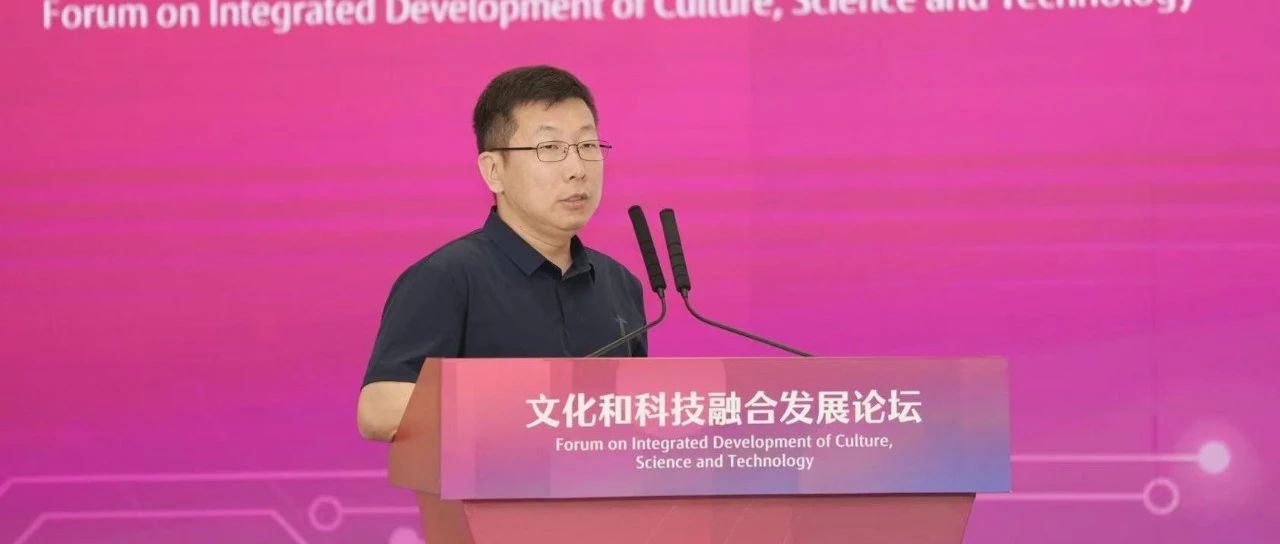
以下是司晓的演讲内容整理。 人工智能的加速演进为文化内容领域带来新的发展机遇。这一波生成式人工智能的发展浪潮可谓"日新 月异"。以2022年底ChatGPT面世作为大模型进入公众视野的首个重要节点,后续Midjourney、Gemini 间隔数月陆续推出;而2025年未过半时Deepseek R1、Grok3等主流大模型就密集发布。 毫不夸张地 说,人类历史上首次进入了技术以"天"为单位进化的时代, 从技术发展到应用落地的间隔也被压缩至无 限短。 文化内容行业已成为智能实践的先锋领域。腾讯研究院曾调研了百余位各行业专家,凭借业态丰富、场 景明确的优势,文化产业中的传媒、游戏等板块对大模型的应用程度,在十多个不同行业中处于中上游 位置。广告、软件、教育这些以智力和创意为核心的产业,成为大模型渗透速度最快的领域。 司晓 腾讯集团副总裁、腾讯研究院院长 在5月27日闭幕的第15届中国(深圳)国际文化产业博览交易会上,腾讯集团副总裁、腾讯研究院院长 司晓以《大模型时代文化内容生产的范式革命》为题发表主旨演讲,系统阐述了大模型技术对文化内容 生产、传播及产业生态的颠覆性变革。他指出,大模型已从"工具赋能"跃升为"生态重 ...
腾讯研究院AI速递 20250530
腾讯研究院· 2025-05-29 15:55
Group 1: DeepSeek-R1 and AI Developments - The new version of DeepSeek-R1 has been officially open-sourced, surpassing Claude 4 Sonnet in programming capabilities and performing comparably to o4-mini (Medium) [1] - DeepSeek-R1's core advantages include deep reasoning capabilities, natural text generation, and support for long-duration thinking of 30-60 minutes, allowing for the execution of complex code in a single run [1] - Tencent has integrated multiple products with the latest DeepSeek R1 model within a day, offering users free and unlimited access to the model [3] Group 2: Keling 2.1 Launch - Keling 2.1 has been launched with a price reduction of 65%, featuring improved performance and speed, categorized into standard, high-quality, and master versions [2] - The high-quality version (35 inspiration points) matches the old master version in quality, supporting 1080P video but only for image-to-video generation [2] - The new version significantly enhances cost-effectiveness, making AI video creation more accessible for ordinary users [2] Group 3: Opera Neon Browser - Opera has introduced Opera Neon, the first "AI Agent" browser, aiming to redefine the role of browsers in the network [4] - Opera Neon consists of three main features: Neon Chat (chatting), Neon Do (executing web tasks), and Neon Make (complex creation), which can understand user intent and convert it into actions [4] - The Neon Make feature utilizes cloud technology to execute complex tasks, such as generating reports and designing game prototypes, even while the user is offline [4] Group 4: VAST's Tripo Studio Upgrade - VAST has upgraded Tripo Studio with four core functionalities: intelligent component segmentation, texture magic brush, intelligent low-poly generation, and automatic rigging for all objects [5] - Intelligent component segmentation allows for one-click disassembly, accurately identifying different parts of a model [5] - The automatic rigging feature can recognize various biomechanical characteristics and quickly allocate skeletal weights, enabling non-professionals to complete the entire 3D creation process with over a tenfold efficiency increase [5] Group 5: Odyssey's World Model - Odyssey, founded by autonomous driving experts, has launched a world model capable of real-time video generation at 40 milliseconds per frame, supporting real-time interaction [6] - This technology differs from traditional video models by learning pixel and motion data from real-life videos, using a narrow distribution model architecture to address autoregressive modeling challenges [6] - Odyssey has secured $27 million in funding, with the current preview version supported by H100 GPU clusters, outputting 30 FPS for 5-minute coherent interactive videos [6] Group 6: AI Scientist Zochi - The AI scientist Zochi's paper has been accepted by the top-tier conference ACL, marking it as the first AI system to independently pass peer review at an A* level conference [7] - Zochi's paper demonstrates a multi-round attack method with a success rate of 100% on GPT-3.5 and 97% on GPT-4 [7] - Zochi can autonomously complete the scientific research process from literature analysis to peer review, although its company has faced criticism regarding the misuse of the scientific peer review process [7] Group 7: Wanda 2.0 Robot - Youliqi has launched the Wanda 2.0 wheeled dual-arm robot, priced from 88,000 yuan, capable of autonomously completing complex long-sequence tasks [8] - Wanda 2.0 is equipped with a pre-trained multimodal large model UniTouch and a long-sequence task planning model UniCortex, learning new actions with only 5-10 demonstrations [8] - Youliqi has reduced costs by 70% through full-stack self-research, targeting the C-end and small B customer market, and has completed several hundred million yuan in financing [8] Group 8: Boston Dynamics Atlas Robot - Boston Dynamics has upgraded the Atlas robot, which now features 3D spatial perception and real-time object tracking capabilities, allowing it to perform complex industrial tasks in automotive factories [9] - The core technology includes a 2D object detection system, 3D spatial positioning based on key points, and a SuperTracker object pose tracking system, capable of handling object occlusion and positional changes [9] - The system integrates kinematic data, visual data, and force feedback to estimate poses accurately, with the team working on building a unified foundational model to enhance perception and action integration [9] Group 9: Google CEO's Perspective on AI - Google CEO Pichai believes AI represents a platform-level transformation larger than the internet, entering a phase where research is becoming reality [10] - AI is transitioning into the second stage of building usable products, with search evolving into an agent that can execute tasks on behalf of users, potentially creating Web 2.0-level killer applications [10] - The key transformation brought by AI lies in the change of interaction methods and the lowering of creative barriers, with the third stage involving the integration of AI with the physical world to form universal robotic systems [10]