腾讯研究院

Search documents
重新理解Agent的边界与潜力|AI转型访谈录
腾讯研究院· 2025-05-29 09:28
Core Insights - The year 2025 is referred to as the "Agent Year," with various AI agents emerging in both enterprise and personal planning tools, yet a unified definition remains elusive [1] - AI Native companies are redefining the boundaries of agents, moving beyond efficiency tools to explore deeper values in business insights, creative generation, and organizational transformation [1] - Atypica.ai, developed by the company, simulates real user behavior using large language models, allowing AI to not only answer questions but also proactively build user profiles and drive decision-making processes [3][4] Product Innovation - Atypica.ai innovates by simulating real users and conducting large-scale user interviews at low costs through multiple AI assistants [3] - The model prioritizes divergent thinking, suitable for addressing non-consensus and artistic aspects of business problems, contrasting with traditional convergent research methods [3] - The concept of "hallucination" is leveraged to allow AI to generate non-consensus viewpoints, broadening the scope of thinking [3] Organizational Transformation - AI is shifting work dynamics from specialized roles to more versatile positions, leading to organizational structures with fewer roles but more composite skills [3] - The potential of each employee is emphasized, suggesting that AI will not replace humans but enable them to unleash their full potential [3] - The relationship between virtual agents and humans is evolving, with AI serving as a mirror to human society, potentially reshaping work and life [3] Workflow and Use Cases - The workflow of Atypica.ai involves identifying business problems, clarifying user needs through targeted questions, and simulating user personas for analysis [18][19] - The system can address four main business issues: market insights, product co-creation, product testing, and content planning [20] - Atypica.ai has been used to analyze user feedback for products, co-create with target user groups, and assist in content direction for social media influencers [21] Future Perspectives - The article discusses the potential for AI to redefine personal planning and decision-making processes, emphasizing the dual nature of commercial research as both science and art [25][26] - The integration of authoritative data sources is seen as crucial for ensuring the authenticity of analyses, especially for high-stakes inquiries [25] - The future of work is envisioned as a shift towards more holistic roles, where employees take on broader responsibilities rather than being confined to narrow job descriptions [45][46]

腾讯研究院AI速递 20250529
腾讯研究院· 2025-05-28 15:06
Group 1 - Salesforce acquired Informatica for $8 billion, marking its largest deal since the acquisition of Slack in 2021 [1] - The acquisition aims to integrate both companies' AI engines to create a trusted data infrastructure that supports enterprise-level deployment of agent-based AI systems [1] - Data management capabilities are becoming a key differentiator for enterprise AI products, and Salesforce is enhancing its data management strategy through this acquisition [1] Group 2 - DeepSeek's R1 model has completed a minor version upgrade, now available for experience on its official website, app, and mini-program [2] - The upgraded R1 model shows significant improvement in programming capabilities, quickly generating high-quality dynamic weather cards with detailed design and interactive animations [2] - The update may have utilized the DeepSeek-V3-0324 model, while the anticipated R2 version has yet to be released [2] Group 3 - Anthropic launched a voice mode for Claude, allowing users to discuss documents and images via voice, with five unique voice tones available [3] - Users can switch freely between text and voice, and after conversations, they can view text records and summaries [3] - The voice feature has usage limitations, with voice conversations counting towards regular usage limits, and the Google Workspace connector is only available to paid users [3] Group 4 - AKOOL released the world's first real-time camera, AKOOL Live Camera, capable of low-latency virtual digital humans, multilingual translation, face replacement, and AI video generation [4] - This technology breaks traditional video generation limitations through 4D facial mapping and neural voice engines, achieving environment perception and emotional response, with 94% of blind tests unable to distinguish between real and fake [4][5] - The product signifies a shift in AI video from "pre-fabrication" to "intelligent response," heralding a second revolution in AI video following Sora [5] Group 5 - Tencent Hunyuan released an open-source voice digital human model, HunyuanVideo-Avatar, which can generate videos of characters speaking or singing naturally from just one image and one audio clip [6] - The model supports various framing options and can understand image environments and audio emotions, automatically generating natural expressions, lip-syncing, and full-body movements [6] - This technology has been applied in Tencent's music products and is suitable for short video creation, e-commerce advertising, and supports multiple styles and interactive scenarios [6] Group 6 - ByteDance's Kouzi Space launched a one-click text-to-podcast feature, capable of generating "human-level" multi-character dialogue audio in minutes, a task that previously took hours [7] - This feature has broad applications, converting hot news into podcasts, turning course notes into audio lessons, and creating audio summaries of meeting minutes, as well as providing emotional counseling and shopping guides [7] - Kouzi Space can also integrate podcast production with website creation, opening up multi-functional applications and marking the era of AI working for the general public [7] Group 7 - SpAItial raised $13 million in seed funding, founded by former Synthesia co-founder Matthias Neisner, focusing on text-to-realistic 3D environment technology [8] - The company has assembled a luxury tech team from Meta and Google, aiming to create not only realistic but also interactive 3D worlds, competing with Odyssey and World Labs [8] - The team targets applications in game development, entertainment, and architectural visualization, with long-term goals including enabling ordinary users to quickly create games and potentially replace CAD software [8] Group 8 - Tencent Yuanbao has integrated with WeChat Reading and Qidian Reading, allowing users to click on underlined book titles to jump directly to reading [9] - Users can obtain book recommendations with one click, with each book featuring a jump link, facilitating a seamless transition from "book hoarding" to "reading" [10] - This integration allows users to chat with Yuanbao while reading, interpret concepts, generate mind maps, and even simulate conversations in the author's tone [10] Group 9 - SpaceX's Starship "Ninth Flight" experienced an explosion during recovery landing, despite successfully using a reused B14.2 booster [11] - The test focused on validating booster reuse technology, spacecraft payload deployment capabilities, and optimizing design to shorten launch intervals and reduce costs [11] - SpaceX is expanding its manufacturing and launch capabilities through new facilities in Florida and innovative designs to enhance system efficiency [11] Group 10 - Anthropic's Claude 4 core team emphasizes the model's independent working capabilities and long-term task handling abilities [12] - The team predicts that by 2025, reinforcement learning will significantly enhance large language model training, improving the model's ability to handle long-term tasks [12] - Researchers believe that the focus should be on raising the model's baseline rather than pursuing extremes, with user interactions evolving from minute-level to hour-level engagements [12]





胡泳:超级能动性——如何将人类潜能提升到新高度
腾讯研究院· 2025-05-28 08:34
Core Insights - The article emphasizes that AI, like the internet decades ago, is at the beginning of a transformative phase that could redefine human productivity and creativity, leading to a state of "super agency" where humans and machines collaborate effectively [1][4][5]. Group 1: AI's Transformative Potential - AI is seen as a powerful tool that can enhance human capabilities, acting as a "force multiplier" rather than just a tool [4][5]. - The concept of "super agency" describes how individuals can leverage AI to significantly boost their creativity, productivity, and influence [5]. - AI is expected to democratize knowledge acquisition and automate numerous tasks, provided it is developed and deployed safely and equitably [5][7]. Group 2: Historical Context and Public Perception - Historical technological advancements often faced initial skepticism, with concerns about their negative impacts overshadowing their potential benefits [3]. - The narrative around AI is influenced by dystopian themes, yet there is a call to reframe this perspective to envision positive outcomes [3][4]. Group 3: AI's Advancements and Capabilities - AI is evolving to automate cognitive functions, enabling it to adapt, plan, and make decisions autonomously, which could drive unprecedented economic growth and social change [7][8]. - Significant advancements in AI, such as large language models (LLMs), have shown remarkable performance in standardized tests, indicating a leap in reasoning capabilities [8][9]. Group 4: Autonomous AI and Its Implications - Agentic AI is emerging, capable of independent action and complex task execution, marking a shift from passive tools to proactive digital partners [11][12]. - Companies are integrating agentic AI into their core products, enhancing collaboration between humans and automated systems [13]. Group 5: Multi-modal AI Development - Current AI models are advancing towards multi-modal capabilities, processing various data types (text, audio, video) simultaneously, which enhances understanding and interaction [14][15]. - Self-supervised learning techniques are being utilized to improve multi-modal models, allowing them to learn from unlabelled data and perform better across tasks [16][17]. Group 6: Hardware Innovations and AI Performance - Innovations in hardware, such as specialized chips, are driving improvements in AI performance, enabling faster and more efficient model training and execution [18][19]. - The rise of edge computing is enhancing AI's responsiveness and efficiency, particularly in real-time applications [20][21]. Group 7: Transparency and Safety in AI - There is a growing emphasis on improving AI transparency and interpretability, which are crucial for safe deployment and reducing biases [22][23]. - Progress is being made in enhancing the transparency of AI models, with notable improvements in scores reflecting their interpretability [23]. Group 8: Challenges in AI Adoption - Companies face significant challenges in AI transformation, including leadership alignment, cost uncertainty, workforce planning, supply chain management, and the need for greater interpretability [26][27][28]. - Successful AI deployment requires strategic transformation beyond mere technology implementation, focusing on organizational structure and mindset [28][29]. Group 9: Future Directions and Leadership - The article advocates for an iterative deployment approach to AI, encouraging collaboration and gradual adaptation rather than excessive regulation [29]. - Leaders are urged to prioritize human agency in AI development, ensuring that technology serves to enhance human capabilities [30][31].

腾讯研究院AI速递 20250528
腾讯研究院· 2025-05-27 15:44
Group 1 - UAE becomes the first country to offer free access to ChatGPT Plus for all citizens, part of a collaboration with OpenAI [1] - Abu Dhabi will establish the Stargate UAE high-performance AI data center, supporting a 1 GW computing cluster with an initial target of 200 MW capacity [1] - The collaboration is part of OpenAI's "nation-focused" initiative, with UAE committing to match US funding, potentially totaling up to $20 billion [1] Group 2 - OpenAI has enabled singing capabilities for GPT-4o, seen as a response to Google's Gemini 2.5 Pro and Veo3 releases [2] - Google's Gemini 2.5 Pro has outperformed OpenAI and Claude models in several benchmark tests [2] - Analysts believe that the singing feature of GPT-4o is insufficient to regain market leadership, emphasizing the need for OpenAI to launch GPT-5 soon [2] Group 3 - Claude Opus successfully solved a stubborn bug that had troubled a veteran C++ engineer for four years, taking only a few hours [3] - The AI identified the root cause of the issue through analysis of code libraries and architecture comparisons, which had previously stumped other models [3] - Despite its debugging prowess, AI is still considered to be at a beginner level in writing new code [3] Group 4 - French non-profit AI research organization Kyutai launched Unmute, a modular voice AI system that can quickly add voice interaction capabilities to any text LLM [4] - Unmute features low latency (200-350 ms), streaming speech-to-text and text-to-speech, full-duplex interaction, and 10-second voice cloning, supporting over 70 emotional styles [5] - Kyutai plans to fully open-source Unmute in the coming weeks, including STT (1B parameters) and TTS (2B parameters) models and code [5] Group 5 - Alibaba Tongyi launched QwenLong-L1-32B, a large model addressing long-context reasoning issues, with a maximum context length of 130,000 tokens [6] - The team identified two core challenges: low training efficiency and instability, proposing progressive context expansion techniques and a mixed reward mechanism [6] - QwenLong-L1-32B outperforms models like OpenAI-o3-mini and Qwen3-235B-A22B, showing significant advantages in long document analysis [6] Group 6 - Mita AI Search introduced a new "Ultra" model, achieving a response speed of 400 tokens per second, with most queries answered within 2 seconds [7] - The new model utilizes kernel fusion on GPUs and dynamic compilation optimization on CPUs, achieving performance breakthroughs on a single H800 GPU [7] - Mita offers both "Ultra" and "Ultra·Thinking" modes optimized for different types of questions, along with a temporary speed test site for user experience [7] Group 7 - Thunderbird officially released the AI glasses X3 Pro, featuring a custom large model and full-color display, priced at 8,999 yuan [8] - The X3 Pro utilizes a 4nm Qualcomm Snapdragon AR1 platform and proprietary Firefly light engine with RayNeo waveguide technology, achieving a brightness of 3,500 nits (peak 6,000 nits) and weighing only 76g [8] - The product is available for pre-order and will ship on June 15, supporting AI Agent store and real-world navigation features [8] Group 8 - The core team of Meta's Llama faces significant talent loss, with 11 out of 14 core authors having left, leaving only 3 remaining [10] - Among the departed, 5 joined the French AI open-source startup Mistral, including two main architects of Llama [10] - Meta is under pressure from open-source models like DeepSeek and Qwen, despite investing billions, lacking a dedicated "inference" model [10] Group 9 - The Beihang University team proposed the "Flying-on-a-Word" (Flow) task, enabling drone control through language commands, filling a gap in low-level language interaction control research [11] - The team constructed the UAV-Flow benchmark dataset, containing 30,000 real-world flight trajectories across eight major movement types [11] - The research addressed drone computational limitations by performing model inference at the ground station and providing real-time feedback for control commands [11] Group 10 - NVIDIA experts recommend that students integrate multiple skills and enhance adaptability, not limited to computer science backgrounds, to stand out in the job market [12] - Job seekers should clarify their interests in the AI field, responsibly use AI tools, and build industry connections for career development opportunities [12] - Candidates can showcase their technical abilities, professional knowledge, and innovative thinking through project examples to excel in interviews [12]

联合调研|2025空间设计行业 AI 应用趋势调研
腾讯研究院· 2025-05-27 08:06
Core Insights - The article discusses the opportunities and challenges in the design industry brought by AI, particularly in the context of the AIGC era, highlighting a report titled "2024 Design Industry AI Application Outlook" [1] - Looking ahead to 2025, the development of AI products is expected to diversify and mature, integrating more into various design processes [1] Group 1: Research and Collaboration - D5, in collaboration with Tencent Research Institute and other academic and media partners, is initiating a survey on "AI + Space Design Industry Applications" [1] - The survey aims to gather insights from space design professionals regarding the expansion of AI design tools and their application scenarios over the past year [2] - The report will also explore successful AI application practices across different subfields and the potential benefits of AI for designers amidst interdisciplinary trends [2]
AI的落地难题、应用案例和生产率悖论
腾讯研究院· 2025-05-27 08:06
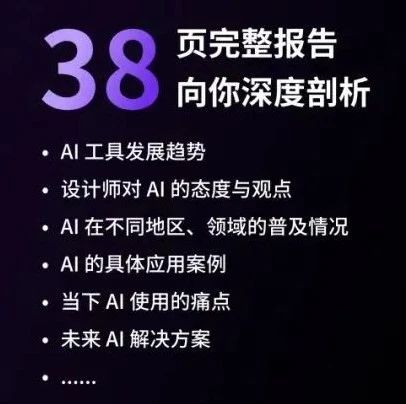
Group 1 - The core viewpoint of the article is that the application of AI in enterprises is still in its early stages, with a significant gap between consumer and enterprise adoption rates [1][2] - In 2024, the penetration rate of generative AI among U.S. residents reached 39.6%, while the adoption rate among U.S. enterprises was only 5.4% [2] - The number of A-share listed companies mentioning AI in their financial reports increased from 172 in 2020 to over 1200 in 2023, yet the overall proportion remains below 20% [2] Group 2 - AI application varies significantly across industries, with higher information density leading to deeper AI integration [4][5] - In 2023, over 250 A-share listed companies in the computer industry mentioned AI, accounting for over 70% of mentions, while industries like food and beverage, agriculture, and coal had minimal mentions [5][8] - The highest AI adoption rate in the U.S. was in the information sector at 18.1%, while agriculture had the lowest at 1.4% [8] Group 3 - High-density information sectors such as programming, advertising, and customer service are leading in AI application [10][14] - Programming has seen significant AI influence, with companies like Google and Microsoft reporting that a substantial percentage of new code is generated by AI [10][12] - The advertising industry is also leveraging AI, with AI-enhanced ads achieving click-through rates as high as 3.0% [14][15] Group 4 - Traditional industries face challenges in digital transformation, including poor data infrastructure, low accuracy, and organizational issues [18][20] - The average hallucination rate of large language models is 6.7%, which poses challenges for industries requiring high accuracy [20] - Successful digital transformation requires collaboration across departments and a focus on both software and hardware integration [21][22] Group 5 - AI is considered a general-purpose technology (GPT) that has a delayed effect on productivity, following a "J-shaped" curve in its impact [23][24] - Historical examples show that significant productivity gains from GPTs often occur long after their initial introduction [26][30] - Despite advancements in AI, there is currently no clear indication of increased labor productivity in developed countries, raising questions about the timing of potential benefits [30]




腾讯研究院AI速递 20250527
腾讯研究院· 2025-05-26 15:53
Group 1: Mergers and Acquisitions - Haiguang Information will absorb Zhongke Shuguang through a stock swap, with a combined market value exceeding 400 billion yuan [1] - Haiguang is a leader in domestic CPU and GPU, while Zhongke Shuguang leads in servers and computing infrastructure, indicating frequent related transactions between the two [1] - The restructuring aims to seize opportunities in the information technology industry, achieving complementary industrial chains and integrating diverse computing businesses [1] Group 2: AI Product Developments - Lilian Weng revealed her new company Thinking Machines' product, a manual tuning dashboard for AI training, with a valuation of 9 billion USD despite no published papers [2] - Google launched three variants of the Gemma model: MedGemma for healthcare, SignGemma for sign language, and DolphinGemma for dolphin communication, showcasing advancements in AI applications across different fields [3][4] Group 3: AI in Education - VideoTutor is an AI tool for K12 education that generates short video courses in 1-3 minutes based on user input, featuring structured scripts and dynamic visuals [5][6] - The tool supports over 100 AI voices and 40 languages, covering subjects like math, science, and language, with options for personalized customization [6] Group 4: Corporate AI Solutions - WeChat Work's "Smart Robot" has been upgraded, utilizing internal data and advanced models to answer employee queries effectively [7] - The new features allow for flexible knowledge maintenance and integration with business systems via API, suitable for various corporate scenarios [7] Group 5: Robotics and AI Competitions - The world's first humanoid robot fighting competition was held in Hangzhou, showcasing robots performing various combat moves [8] - The competition involved three rounds, with the robot "Little Black" winning against "Little Green," demonstrating the challenges in robot design and control [8] Group 6: Future of AI in Workforce - A core member of Anthropic predicts that by 2027-2028, AI will be capable of automating nearly all white-collar jobs, with significant advancements in task intelligence and contextual capabilities [9] - Claude 4 has shown exceptional performance in software engineering, enhancing the efficiency of senior engineers by 1.5 to 5 times [9] Group 7: AI Evaluation Metrics - Sequoia China introduced the "xbench" evaluation system to track AI models' theoretical limits and real-world application value [10] - The dual-track assessment includes AGI Tracking for key capability boundaries and Profession Aligned for practical applications in fields like recruitment and marketing [10]



“AI的真正价值不在于有多酷,而在于多有用、多可靠”
腾讯研究院· 2025-05-26 09:02
郭凯天认为,AI应当尊重人类作为价值源头的独特性, AI的真正价值不在于"看起来多酷",而在于"用 起来多好用、多可靠", 为此,腾讯高度重视开源透明的技术生态,倡导开放、参与、监督并行的治理 模式,推动建立AI时代的信任基础。他也表示,AI文明的篇章才刚刚开启,腾讯愿与各方携手,共同塑 造一个技术与人文并重、开放包容的未来。 生成式AI加速发展,治理需同步演进 5月22日下午,由腾讯研究院和新加坡管理大学数字法研究中心(SMU Centre for Digital Law)联合主 办的AI与社会研讨会——" 生成式 AI 进展:应用、治理与社会影响 ",在新加坡管理大学顺利召开。 近百名来自中国和新加坡的业界、学界专家参加了会议,围绕生成式AI的技术趋势、产业应用、监管治 理、社会伦理等议题展开分享与讨论,为构建开放共享、健康可持续的AI发展生态和AI社会探寻对策思 路。 腾讯集团高级副总裁郭凯天代表主办方作欢迎致辞,他提出, AI不仅是一次技术革命,更是一场关于 人类、社会与智能之间关系的深刻变革。 我们正站在一个技术飞跃的关键节点,大模型技术的快速演进 正推动人工智能从"会认知"迈向"会行动",成为人类 ...

腾讯研究院AI速递 20250526
腾讯研究院· 2025-05-25 15:57
Group 1: Nvidia's Blackwell GPU - Nvidia's market share in China's AI chip market has plummeted from 95% to 50% due to U.S. export controls, allowing domestic chips to capture market share [1] - To address this issue, Nvidia has launched a new "stripped-down" version of the Blackwell GPU, priced between $6,500 and $8,000, significantly lower than the H20's price range of $10,000 to $12,000 [1] - The new chip utilizes GDDR7 memory technology with a memory bandwidth of approximately 1.7TB/s to comply with export control restrictions [1] Group 2: AI Developments and Innovations - Claude 4 employs a verifiable reward reinforcement learning (RLVR) paradigm, achieving breakthroughs in programming and mathematics where clear feedback signals exist [2] - The development of AI agents is currently limited by insufficient reliability, but it is expected that by next year, software engineering agents capable of independent work will emerge [2] - By the end of 2026, AI is predicted to possess sufficient "self-awareness" to execute complex tasks and assess its own capabilities [2] Group 3: Veo3 Video Generation Model - Google I/O introduced the Veo3 video generation model, which achieves smooth and realistic animation effects with synchronized audio, addressing physical logic issues [3] - Veo3 can accurately present complex scene details, including fluid dynamics, texture representation, and character movements, supporting various camera styles and effects [3] - As a creative tool, Veo3 has reached near-cinematic quality, supporting non-verbal sound effects and multilingual narration, raising discussions about the difficulty of distinguishing real from fake videos [3] Group 4: OpenAI o3 Model - The OpenAI o3 model discovered a remote 0-day vulnerability (CVE-2025-37899) in the Linux kernel's SMB implementation, outperforming Claude Sonnet 3.7 in benchmark tests [4] - In tests with 3,300 lines of code, o3 successfully identified known vulnerabilities 8 out of 100 times, with a false positive rate of approximately 1:4.5, demonstrating a reasonable signal-to-noise ratio [4] - o3 independently discovered a new UAF vulnerability and surpassed human experts in insight, indicating that large language models (LLMs) have reached practical levels in vulnerability research [5] Group 5: Byte's BAGEL Model - Byte has open-sourced the multimodal model BAGEL, which possesses GPT-4o-level image generation capabilities, integrating image understanding, generation, editing, and 3D generation into a single 7B parameter model [6] - BAGEL employs a MoT architecture, featuring two expert models and an independent visual encoder, showcasing a clear emergence of capabilities: multimodal understanding appears first, followed by complex editing abilities [6] - In various benchmark tests, BAGEL outperformed most open-source and closed-source models, supporting image reasoning, complex image editing, and perspective synthesis, and has been released under the Apache 2.0 license on Hugging Face [6] Group 6: Tencent's "Wild Friends Plan" - Tencent's SSV "Wild Friends Plan" mini-program has upgraded to include AI species recognition and intelligent Q&A interaction, capable of identifying biological species from user-uploaded photos and providing expert knowledge [7] - The new feature not only provides species names but also answers in-depth information about biological habits and migration patterns through natural language dialogue, translating technical terms into everyday language [7] - The "Shenzhen Biodiversity Puzzle" public participation activity has been launched, where user-uploaded images and interactive content will be used for model training, contributing to population surveys and habitat protection [7] Group 7: OpenAI's AI Hardware - OpenAI's first AI hardware, developed in collaboration with Jony Ive, is reported to be a neck-worn device resembling an iPod Shuffle, featuring no screen but equipped with a camera and microphone [8] - The new device aims to transcend screen limitations and provide more natural interactions, capable of connecting to smartphones and PCs, with mass production expected in 2027 [8] - Similar AI wearable devices are already on the market, but there are concerns among users regarding privacy and practicality, with some suggesting that AI glasses would be a better option [8] Group 8: AI Scientist Team's Breakthrough - The world's first AI scientist team discovered a new drug, Ripasudil, for treating dry age-related macular degeneration (dAMD) within 2.5 months, marking a significant scientific achievement [10] - The team developed the Robin multi-agent system, which automated the entire scientific discovery process, combining Crow, Falcon, and Finch agents for literature review, experimental design, and data analysis [10] - AI identified treatment pathways previously unconsidered by humans, fully dominating the research framework while humans only executed experiments, showcasing a new paradigm of AI-driven scientific discovery [10] Group 9: AI Product Development Insights - The best AI products often grow "bottom-up" rather than being planned, discovering potential through foundational experiments, reshaping product development paths [11] - As AI-generated content becomes mainstream, future core issues will shift from "whether AI generated" to content provenance, credibility, and verifiability [11] - AI has profoundly changed work methods, with 70% of Anthropic's internal code generated by Claude, leading to new challenges in efficiency bottlenecks in "non-engineering" areas [11] Group 10: Future of AI Applications - The best AI applications have yet to be invented, with the current state of the AI field likened to alchemy, where no one knows exactly what will work [12] - Generality and usability should develop in parallel rather than in opposition, with Character.AI focusing on building products that are both usable and highly general [12] - AI technology is expected to advance rapidly within 1-3 years, with the value of large language models lying in their ability to translate limited training into broad applications, with computational capacity being the key challenge rather than data scale [12]


腾讯研究院AI每周关键词Top50
腾讯研究院· 2025-05-23 09:10
Group 1: Core Insights - The article highlights the top 50 keywords related to AI developments from May 19 to May 23, showcasing significant advancements in computing power and model applications [1] - Major companies such as OpenAI, NVIDIA, Google, and Tencent are leading the charge in AI technology, with various new models and applications being introduced [2][3] Group 2: Computing Power - OpenAI's Abu Dhabi data center is a key development in enhancing computational capabilities [2] - NVIDIA's GB300 and other technologies are also pivotal in the computing power landscape [2] - Huawei's CloudMatrix 384 and Google's TPU applications are notable contributions to the sector [2] Group 3: Models - Windsurf's SWE-1 model and Zhiyuan Research Institute's BGE vector model represent significant advancements in AI modeling [2] - Tencent's model matrix updates and Google's Gemini Diffusion are also critical developments in the modeling space [2] Group 4: Applications - OpenAI's Codex and Tencent's Mixed Yuan Image 2.0 are among the innovative applications being developed [2] - Other notable applications include Google's LightLab, Supermemory's memory plug-in, and Bilibili's AniSora animation model [2][3] - Microsoft's Coding Agent and Google's Jules programming assistant are also highlighted as key tools for developers [2][3] Group 5: Technology and Events - The article mentions various technological advancements, including the AI discovery of new materials by Microsoft and low-cost robots developed by UC Berkeley [3] - Events such as the prompt event involving xAI and Grok are also noted, indicating ongoing developments in the AI field [3]