机器之心

Search documents
刚刚,Figure 03人形机器人登场,能感知一枚回形针重量
机器之心· 2025-10-10 03:47
Core Insights - The article discusses the introduction of Figure 03, a humanoid robot developed by Figure, designed for household tasks and scalable production [14][22]. Group 1: Robot Features - Figure 03 is capable of performing various household chores autonomously, such as serving tea, cleaning dishes, and folding laundry [3][14]. - The robot features an AI-driven design, with hardware optimized for artificial intelligence, enabling it to reason and operate in real-world environments [16][17]. - It incorporates a next-generation visual system that enhances perception with double the frame rate and reduced latency, crucial for navigating complex spaces [19][20]. - The hand system includes embedded cameras for close-range visual feedback, improving its ability to handle delicate tasks [21][23]. Group 2: Safety and Usability - The design prioritizes safety with soft materials to reduce injury risks and a lightweight structure that is 9% lighter than its predecessor [26]. - The battery system includes multiple safety mechanisms and has been certified for transport safety, ensuring reliability during operation [27]. - Maintenance is simplified with tool-free disassembly and washable materials, enhancing user experience [27]. Group 3: Production and Scalability - Figure 03 is designed from the ground up for high-volume manufacturing, with a focus on cost control and manufacturability [29][30]. - The BotQ factory aims for an initial production capacity of 12,000 units per year, with a long-term goal of 100,000 units [30]. - The company employs a vertical integration strategy for key components, ensuring quality and efficiency in production [29]. Group 4: Commercial Applications - The advancements in Figure 03's capabilities make it suitable for commercial applications, with features that can be customized for specific business needs [32][35]. - The robot's improved efficiency and operational capabilities allow for near-continuous operation through features like inductive charging and wireless data transfer [35].


700万参数击败DeepSeek R1等,三星一人独作爆火,用递归颠覆大模型推理
机器之心· 2025-10-09 04:43
Core Viewpoint - The article discusses the emergence of new models in AI reasoning, particularly the Hierarchical Reasoning Model (HRM) and the Tiny Recursive Model (TRM), highlighting their efficiency and performance in complex reasoning tasks despite having significantly fewer parameters compared to traditional large models [1][4][29]. Group 1: Hierarchical Reasoning Model (HRM) - HRM, proposed by researchers from Sapient Intelligence, utilizes a hierarchical reasoning structure and has 27 million parameters, achieving remarkable performance with only 1,000 training samples [1]. - The model's architecture is based on a two-network design, which increases the parameter count compared to conventional single-network supervised learning [12]. - HRM's performance is benchmarked against various tasks, showing its accuracy in Sudoku-Extreme and Maze-Hard [25][29]. Group 2: Tiny Recursive Model (TRM) - TRM, introduced by researchers from Samsung Advanced Technology Institute, contains only 7 million parameters and outperforms larger models like o3-mini and Gemini 2.5 Pro in challenging reasoning tasks [4][29]. - The model operates through a recursive reasoning process, iterating up to 16 times to refine its answers, demonstrating the principle of "less is more" [6][9]. - TRM's experimental results indicate superior accuracy in Sudoku-Extreme (87.4%) and competitive performance in other benchmarks compared to HRM [27][29]. Group 3: Experimental Results and Comparisons - The article presents a comparison of accuracy rates between HRM and TRM across various datasets, showing TRM's efficiency in achieving higher accuracy with fewer parameters [23][29]. - In the ARC-AGI benchmarks, TRM-Att and TRM-MLP models demonstrate better performance than HRM, emphasizing the advantages of parameter efficiency and generalization capabilities [26][29]. - The findings suggest that reducing model complexity while increasing recursive iterations can lead to improved performance, challenging traditional assumptions about model depth and parameter size [15][17].

NeurIPS 2025 Spotlight | 只需一条演示,DexFlyWheel框架让机器人学会「自我造数据」
机器之心· 2025-10-09 04:43
Core Insights - The article discusses the introduction of DexFlyWheel, a self-enhancing data generation framework aimed at addressing the data scarcity issue in dexterous manipulation, which has been a significant challenge in the field of robotics [3][12]. Research Background - Dexterous manipulation data generation is difficult due to several reasons: 1. Traditional methods fail to generalize from simpler gripper designs to dexterous hands, and heuristic planning struggles with high-dimensional action optimization [7]. 2. High costs associated with manual teaching limit scalability and diversity of datasets [8]. 3. Pure reinforcement learning is inefficient, often resulting in unnatural movements and low exploration efficiency [9]. 4. Existing datasets are primarily focused on grasping tasks, limiting their applicability to other fine manipulation scenarios [8]. 5. Trajectory replay methods have limited data diversity, as they can only perform spatial transformations in predefined scenarios [8]. DexFlyWheel Framework - DexFlyWheel proposes a new approach to data generation by leveraging a single demonstration to create diverse dexterous manipulation data, thus reducing reliance on large datasets [12][14]. - The framework consists of two core ideas: 1. Combining imitation learning with residual reinforcement learning to redefine the role of demonstrations, allowing for efficient transfer of learned trajectories to new scenarios [14]. 2. Establishing a self-improvement loop between data and models, enabling continuous enhancement of both data and strategy performance [17]. Experimental Results - The framework demonstrated significant improvements in data generation and strategy performance: 1. Data diversity increased dramatically, expanding from 1 demonstration to 500 generated trajectories, with scene variety increasing by 214 times and object types averaging 20 [27]. 2. Strategy generalization improved, with success rates rising from 16.5% to 81.9% on challenging test sets [28]. 3. DexFlyWheel outperformed baseline methods, achieving a data generation success rate of 89.8% and generating 500 diverse trajectories in just 2.4 hours, significantly faster than human demonstrations and trajectory replay methods [31]. Conclusion - DexFlyWheel addresses the long-standing data scarcity issue in dexterous manipulation by creating a self-improving data generation paradigm, which significantly reduces data collection costs and enhances generation efficiency and diversity [39]. - The framework is positioned as a crucial step towards making dexterous manipulation more applicable in real-world scenarios and advancing the development of general-purpose robots [39].
Qwen要做机器人了:林俊旸官宣成立具身智能团队
机器之心· 2025-10-09 04:43
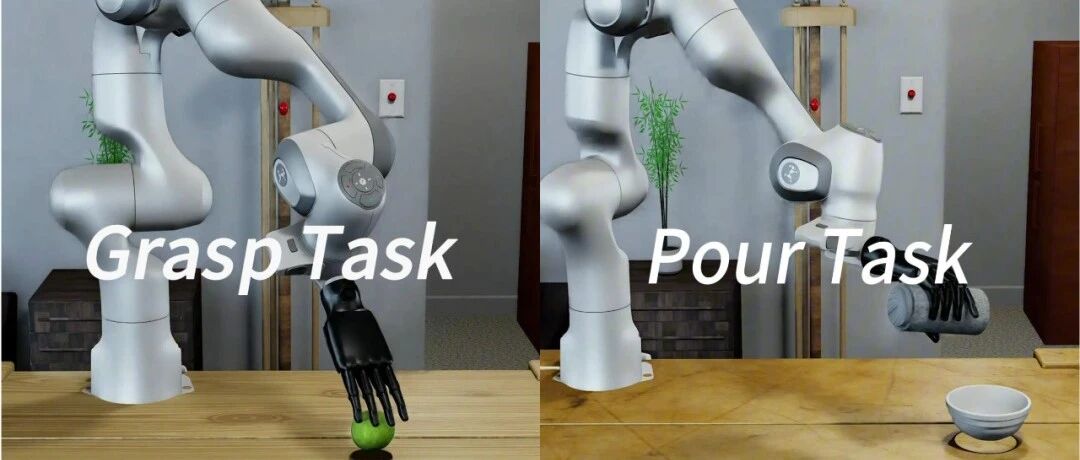
Core Insights - Qwen, a leader in open-source models, is transitioning into robotics by forming a dedicated team for embodied AI, indicating a shift from virtual to physical applications of their models [1][8] - The establishment of this robotics team aligns with Alibaba Cloud's broader strategy to support the embodied intelligence sector, leveraging their existing AI capabilities [8][12] Group 1: Company Developments - Alibaba's Qwen has initiated a robotics team to enhance its models' capabilities in real-world applications, focusing on long-horizon reasoning and tool utilization through reinforcement learning [1][8] - The recent funding of nearly 1 billion yuan for a robotics company, with Alibaba Cloud as a lead investor, marks a significant investment in the embodied intelligence space [5][8] - Qwen's models, particularly Qwen-VL, are being widely adopted by companies in the embodied intelligence sector for their strengths in spatial understanding and long-context memory [6][8] Group 2: Market Trends - The global robotics market is projected to reach $7 trillion by 2050, attracting significant investment from various sectors, including government funds [12] - Major tech companies, including NVIDIA and SoftBank, are heavily investing in robotics, indicating a competitive landscape where the integration of generative AI and robotics is expected to transform human-machine interactions [9][10][11]
听说,大家都在梭后训练?最佳指南来了
机器之心· 2025-10-09 02:24
Core Insights - The article emphasizes the shift in focus from pre-training to post-training in large language models (LLMs), highlighting the diminishing returns of scaling laws as model sizes reach hundreds of billions of parameters [2][3][11]. Group 1: Importance of Post-Training - Post-training is recognized as a crucial phase for enhancing the reasoning capabilities of models like OpenAI's series, DeepSeek R1, and Google Gemini, marking it as a necessary step towards advanced intelligence [3][11]. - The article introduces various innovative post-training methods such as Reinforcement Learning from Human Feedback (RLHF), Reinforcement Learning from AI Feedback (RLAIF), and Reinforcement Learning with Verifiable Rewards (RLVR) [2][3][12]. Group 2: Transition from Pre-Training to Post-Training - The evolution from pre-training to instruction fine-tuning is discussed, where foundational models are trained on large datasets to predict the next token, but often lack practical utility in real-world applications [7][8]. - Post-training aims to align model behavior with user expectations, focusing on quality over quantity in the datasets used, which are typically smaller but more refined compared to pre-training datasets [11][24]. Group 3: Supervised Fine-Tuning (SFT) - Supervised Fine-Tuning (SFT) is described as a process that transforms a pre-trained model into one that can follow user instructions effectively, relying on high-quality instruction-answer pairs [21][24]. - The quality of the SFT dataset is critical, as even a small number of low-quality samples can negatively impact the model's performance [25][26]. Group 4: Reinforcement Learning Techniques - Reinforcement Learning (RL) is highlighted as a complex yet effective method for model fine-tuning, with various reward mechanisms such as RLHF, RLAIF, and RLVR being employed to enhance model performance [39][41]. - The article outlines the importance of reward models in RLHF, which are trained using human preference data to guide model outputs [44][46]. Group 5: Evaluation of Post-Training Models - The evaluation of post-training models is multifaceted, requiring a combination of automated and human assessments to capture various quality aspects [57][58]. - Automated evaluations are cost-effective and quick, while human evaluations provide a more subjective quality measure, especially for nuanced tasks [59][60].



机器人「看片」自学新技能:NovaFlow从生成视频中提取动作流,实现零样本操控
机器之心· 2025-10-09 02:24
Core Insights - The article discusses the development of NovaFlow, a novel framework for enabling robots to perform complex manipulation tasks without requiring extensive training data or demonstrations, leveraging large video generation models to extract common-sense knowledge from vast amounts of internet video content [2][4][23] Group 1: NovaFlow Framework Overview - NovaFlow aims to decouple task understanding from low-level control, allowing robots to learn from generated videos rather than requiring human demonstrations or trial-and-error learning [4][23] - The framework consists of two main components: the Actionable Flow Generator and the Flow Executor, which work together to translate natural language instructions into executable 3D object flows [8][9] Group 2: Actionable Flow Generation - The Actionable Flow Generator translates user input (natural language and RGB-D images) into a 3D action flow through a four-step process, including video generation, 2D to 3D enhancement, 3D point tracking, and object segmentation [9][12][14] - The generator utilizes state-of-the-art video generation models to create instructional videos, which are then processed to extract actionable 3D object flows [12][14] Group 3: Action Flow Execution - The Flow Executor converts the abstract 3D object flows into specific robot action sequences, employing different strategies based on the type of object being manipulated [15][20] - The framework has been tested on various robotic platforms, demonstrating its effectiveness in manipulating rigid, articulated, and deformable objects [16][18] Group 4: Experimental Results - NovaFlow outperformed other zero-shot methods and even surpassed traditional imitation learning approaches that required multiple demonstration data points, showcasing the potential of extracting common-sense knowledge from generated videos [19][20] - The framework achieved high success rates in tasks involving rigid and articulated objects, as well as more complex tasks with deformable objects, indicating its robustness and versatility [19][20] Group 5: Challenges and Future Directions - Despite its successes, the research highlights limitations in the current open-loop planning system, particularly in the physical execution phase, suggesting a need for closed-loop feedback systems to enhance robustness against real-world uncertainties [23] - Future research will focus on developing systems that can dynamically adjust or replan actions based on real-time environmental feedback, further advancing the capabilities of autonomous robots [23]

Being-VL的视觉BPE路线:把「看」和「说」真正统一起来
机器之心· 2025-10-09 02:24
Core Insights - The article discusses the limitations of traditional multimodal models, particularly how CLIP-style encoders prematurely align visual representations with text space, leading to potential hallucinations when detailed, non-language-dependent queries are made [2][6] - A new method called Being-VL is proposed, which emphasizes a post-alignment approach, allowing for the discrete representation of images before aligning them with text, thereby preserving visual structure and reducing the risk of information loss [2][3] Being-VL Implementation - Being-VL consists of three main steps: quantifying images into discrete VQ tokens using VQ-GAN, training a visual BPE that measures both co-occurrence frequency and spatial consistency, and finally unifying visual and text tokens into a single sequence for modeling [3][10] - The visual BPE tokenizer prioritizes both frequency and spatial consistency to create a more semantically and structurally meaningful token set, which is independent of text [8][9] Training Strategy - The training process is divided into three stages: 1. **Embedding Alignment**: Only the new visual token embeddings are trained while freezing other parameters to maintain existing language capabilities [12] 2. **Selective Fine-tuning**: A portion of the LLM layers is unfrozen to facilitate cross-modal interaction at lower representation levels [12] 3. **Full Fine-tuning**: All layers are unfrozen for comprehensive training on complex reasoning and instruction data [12][10] Experimental Results - Experiments indicate that the discrete representation of images followed by visual BPE and unified modeling with text leads to improved reliability in detail-sensitive queries and reduces hallucinations compared to traditional methods [14][16] - The study highlights the importance of a gradual training approach, showing that a combination of progressive unfreezing and curriculum learning significantly outperforms single-stage training methods [14][10] Visual BPE Token Activation - Visualization of embedding weights shows that using visual BPE leads to a more balanced distribution of weights between text and visual tokens, indicating reduced modality gaps and improved cross-modal attention [16][19] Token Size and Training Efficiency - The research explores the impact of BPE token size on training efficiency, finding an optimal balance in resource-limited scenarios, while larger token sizes may lead to diminishing returns due to sparsity [19][20] Development and Summary - The evolution from Being-VL-0 to Being-VL-0.5 reflects enhancements in the unified modeling framework, incorporating priority-guided encoding and a structured training approach [20][24]
更大,还能更快,更准!蚂蚁开源万亿参数语言模型Ling-1T,刷新多项SOTA
机器之心· 2025-10-09 02:24
Core Insights - The article discusses the launch of Ling-1T, a trillion-parameter open-source language model by Ant Group, highlighting its efficiency and performance in various benchmarks [2][5][52]. Group 1: Model Performance - Ling-1T has achieved impressive results in multiple benchmark tests, outperforming several leading models in key areas such as knowledge understanding and reasoning [6][9][10]. - In coding and math reasoning tasks, Ling-1T consistently ranks among the top performers, demonstrating strong logical consistency and cross-domain reasoning capabilities [8][11]. - The model's performance in specific benchmarks includes a score of 92.19 in C-Eval and 87.45 in FinanceReasoning, indicating its high knowledge density and reasoning ability [9][10]. Group 2: Efficiency and Architecture - Ling-1T utilizes a Mixture of Experts (MoE) architecture, allowing it to maintain high reasoning capabilities while significantly reducing computational costs [5][52]. - The model operates on a paradigm of "large parameter reserves + small parameter activation," enabling it to handle complex problems efficiently with a lower energy footprint [53][54]. - It supports a context length of 128K, enhancing its ability to process long documents without losing context, which is crucial for industries like finance and law [62]. Group 3: Open Source Philosophy - The article emphasizes the importance of open-source models in the AI landscape, suggesting that they enable faster iteration and lower costs for technology development [72][73]. - Ant Group's approach to open-sourcing Ling-1T allows for broader accessibility and collaboration, fostering an ecosystem where developers and small businesses can participate [74][75]. - The open-source model not only democratizes access to advanced AI capabilities but also enhances transparency and trust in AI applications across various sectors [72][74].

重磅|清华物理系传奇姚顺宇离职,不认同Anthropic,加入DeepMind
机器之心· 2025-10-08 04:13
机器之心报道 机器之心编辑部 最新消息,清华物理系传奇特奖得主 Yao Shunyu(姚顺宇)离开 Anthropic,加入 Google DeepMind。 根据姚顺宇在博客上发表的文章得知,他于 9 月 19 日从 Anthropic 正式离职,9 月 29 日加入 Google DeepMind。 是的,不是姚顺雨,而是姚顺宇,前者是学计算机出身,也是著名的 《AI 下半场》 作者,而后者是学物理出身,且在本科期间就名声大噪。 资料显示,姚顺宇于 2015 年进入清华大学物理系,大二开始选修研究生理论课程,在周期驱动系统拓扑场论领域,提出非厄米系统中拓扑能带理论的新方法,并 准确预测相关现象,相关研究成果发表在世界物理顶级期刊 Phys. Rev. Lett. 上。 其在物理学研究上的卓越成就让一位 211 大学副教授也不禁感叹:「我们这边即使是教授,也没有能超过姚顺宇同学目前本科期间的物理水平的。」 图源:知乎 @ 林晨 2019 年,姚顺宇清华大学本科毕业后远赴斯坦福攻读博士,毕业后先是到加州伯克利大学做了一段时间的博士后,之后于 2024 年 10 月 1 日加入 Anthropic 的 Clau ...

谷歌大神出手,免费发布《智能体设计模式》,AI Agent开发的终极秘籍
机器之心· 2025-10-08 04:13
Core Insights - The article discusses the rising trend of AI Agents, emphasizing the need for systematic design patterns to address challenges in developing reliable and stable intelligent systems [2][6][20]. Summary by Sections Introduction - The introduction highlights the evolution of AI from simple reactive programs to complex autonomous entities capable of understanding context and making decisions [14][15]. Book Overview - Antonio Gulli's book "Agentic Design Patterns" aims to provide a structured approach to developing AI agents, offering reusable solutions to common design challenges [4][6][22]. Structure of the Book - The book is organized into four parts, starting with fundamental operations and advancing to complex topics like multi-agent collaboration and safety measures [11][12][21]. Importance of Design Patterns - Design patterns are crucial in AI development as they offer proven templates to tackle common challenges, enhancing the structure, maintainability, and reliability of intelligent systems [20][21]. Key Features of Intelligent Agent Systems - Intelligent agent systems are characterized by autonomy, proactivity, and reactivity, allowing them to make decisions and act without continuous human supervision [19][17]. Practical Application - The book emphasizes practical application, providing code examples and encouraging readers to experiment with the concepts presented [22][23]. Conclusion - The book serves as a foundational resource for understanding and applying core design patterns in AI development, aiming to stabilize the rapidly evolving field [24][26].