机器之心

Search documents
CAIR开源发布超声基座大模型EchoCare“聆音”,10余项医学任务性能登顶
机器之心· 2025-09-30 08:45
Core Insights - The article discusses the launch of EchoCare's "Lingyin" ultrasound foundation model, which has been trained on over 4.5 million ultrasound images covering more than 50 human organs, achieving superior performance in various ultrasound medical tasks [2][28] - The model addresses significant challenges in ultrasound AI, including reliance on large labeled datasets and the ability to handle diverse clinical scenarios, marking a milestone in the integration of AI and clinical medicine [2][24] Group 1: Model Development and Performance - "Lingyin" has undergone clinical validation with over 3,000 cases across multiple hospitals, showing an average performance improvement of 3% to 5% compared to current state-of-the-art models [2][28] - The model's innovative structured contrast self-supervised learning framework effectively resolves traditional ultrasound AI challenges, such as data dependency and model generalization issues [2][24] - The model's architecture includes a hierarchical dual-branch design that aligns with clinical diagnostic logic, enhancing its ability to interpret ultrasound images and structures [12][13] Group 2: Data and Training Innovations - The EchoAtlas dataset, which is the largest ultrasound image dataset globally, was created by integrating 138 high-quality datasets from various sources, ensuring diversity in demographics and anatomical structures [10][24] - The model employs a two-stage training strategy that maximizes the value of unlabeled data, allowing for efficient adaptation to new tasks with only 40%-60% of the original training data required [14][21] Group 3: Clinical Applications and Advantages - "Lingyin" demonstrates high accuracy in key clinical tasks, such as thyroid nodule segmentation and disease diagnosis, with metrics like AUC reaching 86.48% for thyroid malignancy discrimination [17][18] - The model significantly reduces the time for fetal heart-to-chest ratio measurement from 5 minutes to 2 seconds, enhancing efficiency in congenital heart disease screening [19][21] - It achieves a high level of clinical adaptability, processing single images in under 0.5 seconds and generating visual results that assist physicians in drafting reports [22][28] Group 4: Future Directions and Industry Impact - The article outlines the potential for "Lingyin" to evolve into a comprehensive clinical decision-making partner, moving from image analysis to proactive decision support in healthcare [26][29] - Future improvements are suggested, including the integration of multimodal data and enhanced capabilities for processing dynamic sequences, which could further advance ultrasound AI applications [25][26] - The open access to the EchoAtlas dataset and model code is expected to break down barriers in the ultrasound AI field, encouraging broader participation in innovation and research [29][30]


NeurIPS 2025 Spotlight | FSDrive统一VLA和世界模型,推动自动驾驶迈向视觉推理
机器之心· 2025-09-30 08:45
Core Insights - The article introduces FSDrive, a novel approach that utilizes "Spatio-Temporal Chain-of-Thought" (CoT) to enhance visual reasoning in autonomous driving, moving away from traditional symbolic logic to a more intuitive visual simulation and imagination process [7][28]. Group 1: Methodology and Innovations - FSDrive proposes a unified "visual intermediary" that replaces text or tabular mediators, effectively eliminating cross-modal semantic gaps [8]. - The method activates image generation capabilities on existing Multi-Modal Large Language Models (MLLM) with minimal cost by expanding the vocabulary to include visual tokens, avoiding major architectural changes or extensive retraining [8][19]. - A progressive visual CoT is employed, starting with coarse-grained perception maps (lane lines and 3D boxes) and gradually generating detailed future frames, explicitly injecting physical realism [8][19]. Group 2: Performance and Metrics - FSDrive demonstrates competitive performance in trajectory planning and scene understanding, achieving an average L2 error of 0.53 and a collision rate of 0.19, outperforming existing methods like UniAD [29][22]. - The quality of future frame generation is indicated by a FID score of 10.1 at a resolution of 128×192, surpassing many diffusion-based world models [22]. - In scene understanding tasks, FSDrive achieves a final score of 0.57, exceeding other recent methods, showcasing the effectiveness of its unified pre-training approach [25]. Group 3: Practical Applications and Future Directions - FSDrive maintains an end-to-end simple link and interpretable visual reasoning while leveraging large amounts of unannotated video data to learn world evolution patterns [9]. - The framework is adaptable to mainstream MLLMs, indicating its potential for broad application in the autonomous driving industry [20]. - Future developments may include expanding the model to predict a unified panoramic view while addressing safety, privacy, and regulatory compliance issues as the technology matures [30].

节前重磅:开源旗舰模型新SOTA,智谱GLM-4.6问世
机器之心· 2025-09-30 08:45
Core Insights - The article discusses the release of the new flagship model GLM-4.6 by Zhiyuan AI, which showcases significant advancements in performance and capabilities compared to its predecessor and competitors [4][16][59] Model Performance Enhancements - GLM-4.6 has achieved comprehensive improvements in various aspects, including advanced coding capabilities, increased context length from 128K to 200K, and enhanced reasoning abilities [15][16] - The model outperformed Claude Sonnet 4 and other domestic models in 74 real-world programming tasks, demonstrating its superior coding performance [23] - It has shown a reduction of over 30% in average token consumption compared to GLM-4.5, making it the most efficient model in its category [27] Technical Innovations - GLM-4.6 is compatible with domestic AI hardware, having implemented FP8+Int4 mixed-precision quantization on Cambricon chips, which significantly lowers inference costs while maintaining accuracy [30] - The model can also run on the new generation of GPUs from Moore Threads using the vLLM inference framework [31] Practical Applications - The model has been tested in various scenarios, including generating a playable game and creating a dynamic visualization of the solar system, showcasing its coding and analytical capabilities [35][40] - It can be integrated into programming environments like Claude Code, allowing for iterative optimization of code [46] Research and Content Creation - GLM-4.6 has demonstrated its ability to conduct in-depth research, generating comprehensive reports on topics such as former OpenAI employees and their ventures, indicating its potential as a research assistant [50][52] - The model's capabilities extend to full-stack development, where it can plan and execute projects autonomously, reflecting a human-like thought process [54] Overall Assessment - The advancements in GLM-4.6 position it as a leading model in the global open-source AI landscape, setting new benchmarks in technical architecture, performance, and cost-effectiveness [59]

LLM工业级自进化:北邮与腾讯AI Lab提出MoE-CL架构,解决大模型持续学习核心痛点
机器之心· 2025-09-30 00:27
Core Insights - The article discusses the urgent need for "self-evolution" in industrial-grade large language models (LLMs) to adapt dynamically to new tasks while retaining existing capabilities [2][6] - The proposed solution is the MoE-CL framework, which combines task-specific and shared LoRA experts with a GAN-based approach to ensure efficient knowledge transfer and retention [2][6][28] Group 1: Introduction and Background - The rapid growth of digital economy and diverse text data presents challenges in processing across different domains, necessitating a solution that efficiently handles new tasks while preserving knowledge from old tasks [5][6] - Traditional methods either require extensive resources for training separate models for each text type or struggle with performance imbalances when using a single model [5][6] Group 2: Methodology - MoE-CL focuses on knowledge accumulation and task adaptation in multi-task learning, utilizing LoRA technology to enhance Transformer blocks and reduce parameter updates [8][10] - The framework includes task-specific and shared LoRA experts, with a GAN module to separate and optimize task-specific and shared knowledge [8][12][14] Group 3: Experimental Results - In A/B testing within Tencent's real business scenarios, MoE-CL reduced manual intervention costs by 15.3% and achieved a high removal rate of 28.8% in task A, demonstrating significant operational efficiency [3][26] - MoE-CL outperformed existing methods in accuracy and stability across various tasks, showcasing its robust performance in dynamic environments [21][22] Group 4: Conclusion - The MoE-CL framework effectively addresses the challenges of catastrophic forgetting and knowledge transfer through its unique architecture, enabling continuous learning and adaptation in LLMs [28]


Claude Sonnet 4.5来了!能连续编程30多小时、1.1万行代码
机器之心· 2025-09-30 00:27
Core Insights - The article discusses the recent advancements in AI models, particularly the release of Claude Sonnet 4.5 by Anthropic, which is positioned as a leading model in various benchmarks and applications [1][4][5]. Model Performance - Claude Sonnet 4.5 achieved significant performance improvements in various benchmarks, including: - 77.2% in Agentic coding [2] - 82.0% in SWE-bench Verified [2] - 61.4% in OSWorld for computer use, up from 42.2% in the previous version [11] - The model shows enhanced capabilities in reasoning and mathematics, with a perfect score of 100% in high school math competitions [12][13]. Developer Tools and Features - Anthropic introduced the Claude Agent SDK, allowing developers to create their own intelligent agents [4][35]. - New features include checkpoint functionality for saving progress, a revamped terminal interface, and native VS Code extensions [8][4]. Safety and Alignment - Claude Sonnet 4.5 is noted for being the most aligned model to human values, with improvements in reducing undesirable behaviors such as flattery and deception [27][5]. - The model is released under AI safety level 3 (ASL-3), incorporating classifiers to detect potentially dangerous inputs and outputs [32]. User Experience and Applications - Early user experiences indicate that Claude Sonnet 4.5 performs exceptionally well in specialized fields such as finance, law, and STEM [13][21]. - The "Imagine with Claude" feature allows real-time software generation without pre-defined functions, showcasing the model's adaptability [36][38].

强强联手!深度求索、寒武纪同步发布DeepSeek-V3.2模型架构和基于vLLM的模型适配源代码
机器之心· 2025-09-29 11:05
Core Viewpoint - The release of DeepSeek-V3.2 by DeepSeek Company and its adaptation by Cambricon signifies a strong collaboration among leading tech firms in China's AI industry, aiming to enhance efficiency in long-text training and inference [2][3][4]. Group 1: Model Release and Features - DeepSeek Company launched the experimental version DeepSeek-V3.2-Exp, which introduces a sparse attention mechanism for optimizing long text training and inference [2]. - The new model has a substantial size of 671GB, requiring approximately 8-10 hours for download under ideal bandwidth conditions [3]. Group 2: Collaboration and Industry Impact - Cambricon's quick adaptation to DeepSeek-V3.2-Exp indicates prior collaboration and communication between the two companies, reflecting a trend of low-profile yet effective partnerships in the tech industry [3]. - The collaboration between leading companies in the AI model and chip sectors is expected to significantly reduce training and inference costs for users, facilitating the emergence of AI applications [4].


刚刚,DeepSeek开源V3.2-Exp,公开新稀疏注意力机制DSA
机器之心· 2025-09-29 10:29
Core Viewpoint - DeepSeek has released the experimental version DeepSeek-V3.2-Exp, which introduces a new sparse attention mechanism aimed at optimizing training and inference efficiency in long-context scenarios [3][5][10]. Summary by Sections Model Release - DeepSeek-V3.2-Exp has been open-sourced with a parameter count of 685 billion [3]. - The release includes a paper detailing the new sparse attention mechanism [5]. Sparse Attention Mechanism - The DeepSeek Sparse Attention (DSA) is the only architectural improvement in version 3.2, focusing on enhancing computational efficiency when processing extended text sequences [5][6][10]. - DSA achieves fine-grained sparse attention while maintaining nearly the same output quality as its predecessor, DeepSeek-V3.1-Terminus [9]. Performance Comparison - A comparison of benchmark results between DeepSeek-V3.1-Terminus and DeepSeek-V3.2-Exp shows that the new version performs comparably across various tasks [11]. - Specific benchmark results include: - MMLU-Pro: 85.0 (V3.1) vs. 85.0 (V3.2) - AIME 2025: 88.4 (V3.1) vs. 89.3 (V3.2) - Codeforces: 2046 (V3.1) vs. 2121 (V3.2) [11]. Future Developments - The upcoming release of Z.ai's GLM-4.6 model is noted, with GLM-4.5 being the previous flagship model [12].

SALMONN 系列音视频理解大模型霸榜回归!推理增强、高帧率、无文本泄漏全线突破
机器之心· 2025-09-29 08:28
Core Insights - The SALMONN family has expanded significantly with the introduction of new models, including video-SALMONN 2/2+, video-SALMONN-o1, and F-16, solidifying its leadership in open-source audio-visual understanding models [1][6][36] - The video-SALMONN 2+ model focuses on high-quality, complete video descriptions, achieving state-of-the-art results in caption integrity and accuracy [4][6] - The F-16 model is designed for high frame rate video understanding, addressing the limitations of existing models that operate at low frame rates [25][31] Model Performance - The video-SALMONN 2+ model outperforms competitors like GPT-4o and Google Gemini 1.5 Pro in various audio-visual understanding benchmarks, demonstrating superior performance in tasks such as Video-MME and WorldSense [6][7] - The model's ability to generate high-quality descriptions enhances its performance in question-answering tasks, indicating a robust understanding of audio-visual content [6][9] - The introduction of the AVUT benchmark aims to create a fair evaluation standard for audio-visual understanding, addressing the issue of text shortcuts in existing benchmarks [32][35] Technical Innovations - The process DPO (pDPO) training method enhances the model's ability to perform step-level optimization in audio-visual contexts, improving its self-checking capabilities [24] - The F-16 model employs multi-frame joint alignment compression to maintain semantic integrity while reducing computational costs, achieving significant advancements in high frame rate video tasks [25][29] - The video-SALMONN-o1 model introduces reasoning enhancement, allowing for evidence-based multi-step reasoning in audio-visual scenarios, which is a significant advancement over existing systems [21][22] Future Directions - The SALMONN series is expected to continue evolving, with ongoing iterations aimed at improving model capabilities and establishing a comprehensive ecosystem for audio-visual understanding [36][38]

腾讯混元3D-Omni:3D版ControlNet突破多模态控制,实现高精度3D资产生成
机器之心· 2025-09-29 06:55
Core Viewpoint - The article discusses the launch of Hunyuan 3D-Omni by Tencent, a unified multimodal controllable 3D generation framework that addresses the limitations of existing methods reliant on image inputs, enhancing the precision and versatility of 3D asset creation in various industries [2][5][31]. Background and Challenges - The increasing scale of 3D data has led to the rise of generative models based on native 3D representations like point clouds and voxels, with Hunyuan3D 2.1 utilizing a combination of 3D Variational Autoencoders (VAE) and Latent Diffusion Models (LDM) for efficient 3D model generation [5]. - Existing methods face challenges such as geometric inaccuracies due to single-view image inputs, difficulties in fine control over object proportions and details, and limitations in adapting to multimodal inputs [6][7]. Core Innovations of Hunyuan3D Omni - Hunyuan 3D-Omni introduces two key innovations: a lightweight unified control encoder for handling multiple control conditions and a progressive difficulty-aware training strategy to enhance robustness in multimodal integration [9][10]. - The framework supports up to four types of control signals, significantly improving the controllability and quality of generated results [9]. Key Implementation Methods - The system utilizes various control signals: 1. Skeleton for character motion control 2. Bounding Box for adjusting object proportions 3. Point Cloud for providing geometric structure prior 4. Voxel for sparse geometric hints [11][14]. Experimental Results - The model demonstrates high-quality generation of character geometries aligned with target poses when using skeleton control, showcasing its ability to maintain geometric details across various input styles [18][19]. - Bounding box control effectively adjusts object proportions, enabling intelligent geometric reconstruction, as evidenced by successful generation of complex structures [23][25]. - Point cloud inputs significantly mitigate geometric ambiguities inherent in single-view images, ensuring accurate alignment with real-world structures [25][27]. - Voxel conditions enhance the model's ability to reconstruct detailed geometric features, improving overall generation quality [27][28]. Conclusion - Hunyuan 3D-Omni represents a lightweight, multimodal, and controllable 3D generation framework that integrates various geometric and control signals without compromising the foundational model capabilities, paving the way for future advancements in multimodal 3D generation [31].

首个零样本跨本体泛化开源具身模型:智源RoboBrain-X0 技术细节全解析
机器之心· 2025-09-29 06:55
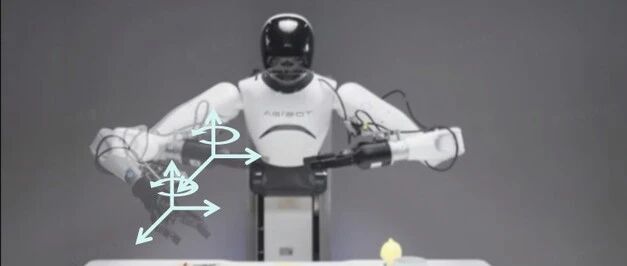
Core Insights - The article discusses the launch of RoboBrain-X0, an open-source general framework for embodied intelligence that enables various robots to perform complex tasks under zero-shot generalization and lightweight fine-tuning conditions [3][4][39]. - RoboBrain-X0 aims to break the dependency on single robot systems by achieving heterogeneous embodiment unified modeling, thus providing a practical path for general embodied intelligence [5][9]. Group 1: Technical Innovations - RoboBrain-X0 integrates multimodal capabilities from RoboBrain 2.0 and real robot action data, achieving unified modeling of vision, language, and actions for cross-embodiment generalization [3][4]. - The model demonstrates significant zero-shot pick-and-place generalization capabilities, with a high data efficiency and transferability compared to traditional models [6][9]. - The introduction of an "action tokenizer" mechanism allows for the compression of complex control commands into simpler, transferable action tokens, enhancing training and inference efficiency [16][17]. Group 2: Evaluation and Performance - RoboBrain-X0 has shown superior performance in both simulation and real-world applications, achieving a 96.3% success rate in the Libero simulation platform, outperforming leading models [29][33]. - In real-world evaluations, RoboBrain-X0 achieved an overall success rate of 48.9%, significantly higher than the baseline model π0, particularly excelling in basic pick-and-place tasks with a 100% success rate [33][36]. Group 3: Industry Implications - The open-sourcing of RoboBrain-X0 provides a reusable and scalable foundation for the global embodied intelligence industry, shifting the focus from low-level development to high-level innovation and application [39][40]. - The framework allows for rapid adaptation of robotic products, akin to installing applications, thereby promoting the decoupling of software and hardware and fostering ecosystem prosperity [39].