Workflow
ZTE(00763)
icon
Search documents
A股午评:创业板指跌2.37%,农业银行创历史新高
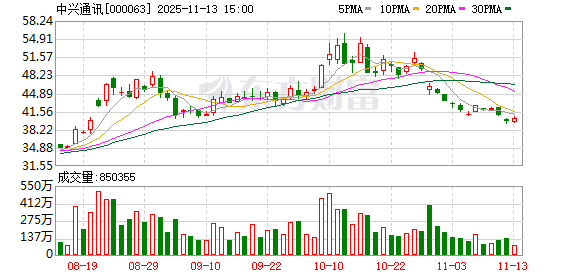
Market Overview - The market experienced a downward trend in early trading, with the Shenzhen Composite Index and ChiNext Index dropping over 2% at one point. By the end of the morning session, the Shanghai Composite Index fell by 1%, the Shenzhen Composite Index by 1.99%, and the ChiNext Index by 2.37% [1] Sector Performance - The port and shipping sector continued to show strength, with Haitong Development achieving a second consecutive trading limit increase. Defensive sectors, including coal and gas stocks, performed well, with Dayou Energy hitting five trading limits in six days and Guo New Energy achieving three trading limits in four days [1] - The banking sector saw fluctuations, with Agricultural Bank of China rising over 2% to reach a historical high [1] Declining Stocks - The data center power supply concept faced significant declines, with stocks like Igor and Zhongheng Electric hitting the trading limit down. Additionally, several heavyweight stocks, including Sungrow Power and ZTE, experienced substantial drops [2] Trading Volume - The total trading volume for the Shanghai and Shenzhen markets reached 1.18 trillion yuan, a decrease of 32.6 billion yuan compared to the previous trading day [3] Individual Stock Highlights - Sungrow Power led in trading volume with over 11.6 billion yuan, followed by ZTE, Zhongji Xuchuang, and Sanhua Intelligent Control, which also had high trading volumes [4]
创业板指跌近2.4%,农行11连阳创历史新高
Market Overview - On October 17, A-share indices weakened, with the Shanghai Composite Index down 1%, the Shenzhen Component Index down nearly 2%, the ChiNext Index down 2.37%, and the STAR 50 Index down 2.62% [1] - Nearly 4,192 stocks in the Shanghai and Shenzhen markets declined [1] Sector Performance - Sectors such as power grid equipment, semiconductor chips, photovoltaic wind power, and nuclear fusion experienced significant declines [4] - The banking sector rose against the trend, with the banking index achieving seven consecutive days of gains. Agricultural Bank of China saw its stock price reach a historical high [4] - The Hong Kong Hang Seng Technology Index fell nearly 2.7%, and the Hang Seng Index dropped 1.5% [4] Recent Trends - Traditional sectors like banking, coal, ports, and liquor have shown strong performance, contrasting with the recent downturn in technology and communication sectors [7] - Since October, the coal sector has increased by 9.53%, and the banking sector has risen by 5.53% [8] Analyst Insights - Analysts suggest that the current liquidity environment is becoming more accommodative, which may boost market risk appetite [8] - There is a recommendation for balanced allocation between growth and value styles due to the crowded midstream manufacturing sector, which may increase short-term volatility [8] - The technology sector remains a focal point, with expectations of a rebound following recent corrections, as the domestic technology landscape continues to evolve positively [9]
半日主力资金丨加仓交通运输板块 抛售电力设备板块
Di Yi Cai Jing· 2025-10-17 03:44
Group 1 - Main capital inflow was observed in the transportation, pharmaceutical, banking, real estate, steel, and coal sectors [1] - Notable individual stock inflows included Huaten Technology, Changshan Beiming, and Dongxin Peace, with net inflows of 1.682 billion, 1.251 billion, and 0.612 billion respectively [1] - Significant capital outflows were seen in the electric equipment, electronics, machinery, communication, automotive, and computer sectors [1] Group 2 - Major individual stock outflows included ZTE Corporation, Sunshine Power, and Yingweike, with net outflows of 2.577 billion, 2.302 billion, and 0.973 billion respectively [1]
港股中兴通讯跌超10%
Mei Ri Jing Ji Xin Wen· 2025-10-17 03:31
每经AI快讯,10月17日,港股中兴通讯跌超10%。 ...
中兴通讯A股成交额超100亿元,现跌8.11%。
Xin Lang Cai Jing· 2025-10-17 03:19
中兴通讯A股成交额超100亿元,现跌8.11%。 ...
绿色站点数字化单元落地房山
Zhong Guo Xin Wen Wang· 2025-10-17 03:11
近年来,"极致休眠"技术因具备"近零能耗"潜力而备受关注,它通过基站内置电源模块关闭设备供电, 让基站在闲时"休眠",能耗归零,一旦有通话接入又能秒级进入工作状态,兼顾节能效果与网络稳定, 被认为是通信网络节能的关键突破口。 但现有通信网络中的大量4G、5G基站由于受硬件架构限制,无法大规模推广"极致休眠"技术,直到 GSDU试点成功。GSDU创新采用通用端口设计,在尺寸规格上遵循标准尺寸设计,能够原位替换原有 配电单元,电源线也可充分复用,还支持热插拔操作,极大地简化了部署流程,降低了部署成本和难 度。北京移动与中兴通讯合作攻坚,将基站供电模块替换为GSDU模块,让基站后台网管一方面控制供 电功能,一方面实时监控基站业务需求,无业务时通过GSDU模块智能控制基站下电休眠,有业务需求 时则快速响应,及时上电唤醒。在保障用户使用感知的同时实现"极致休眠"。根据试点站点的能耗统 计,基于GSDU的"极致休眠"生效后,基站闲时能耗降至0瓦,单站日均节电1.45度,能耗降低近16%。 (完) 中新网北京新闻10月15日电 中国移动北京公司(北京移动)与中兴通讯合作,近日在北京市房山区成 功完成首个绿色站点数字单元GS ...
别再将科技绑上地缘博弈的战车
Huan Qiu Shi Bao· 2025-10-17 03:11
Core Viewpoint - The statement by the Israeli Prime Minister highlights Israel's technological achievements but also reflects global anxieties regarding the weaponization of communication devices and digital technology, primarily driven by the systemic practices of the United States and other Western countries [1][2]. Group 1: U.S. Digital Hegemony - The establishment of U.S. digital hegemony is rooted in its dominance over the global information and communication technology (ICT) ecosystem, including monopolies on hardware and standards [1]. - The U.S. government has been revealed to use legal tools to compel domestic tech companies to create backdoors in communication devices, transforming them into potential intelligence-gathering points [1][2]. - The U.S. controls software ecosystems and data collection, leveraging its market dominance to gather vast amounts of data, which feeds into a global surveillance network [2]. Group 2: Impact on Global Relations - The U.S. employs a narrative strategy to deflect attention from its own surveillance practices, labeling other nations as digital threats while suppressing competitors like Huawei and ZTE without solid evidence [2][3]. - The U.S. has utilized its position in global financial and technological standards to impose restrictions on foreign competitors, thereby maintaining its technological edge [3]. - The enactment of laws like the Cloud Act allows the U.S. to demand data from companies worldwide, undermining other nations' sovereignty [3][4]. Group 3: Consequences of Digital Weaponization - The "Snowden Paradox" has led to a global trust crisis, as revelations about U.S. surveillance practices have caused other nations to reassess their data sovereignty and cybersecurity [4]. - The rise of "sovereign internet" and data localization trends reflects a global response to U.S. actions, leading to fragmentation of the digital space and hindering global innovation [4]. - The U.S. faces a dilemma of interdependence, as attempts to decouple from China may backfire, impacting its own technological ecosystem and innovation capabilities [4][5]. Group 4: Role of Chinese Tech Companies - Chinese tech companies are positioned as both victims of U.S. hegemony and as challengers to the existing monopolistic order through their pursuit of self-reliance and innovation [5]. - Initiatives like the Global Data Security Initiative and Global AI Governance Initiative from China propose an alternative to the hegemonic model, advocating for cooperation and mutual benefit [5]. - The call for a multilateral, democratic, and transparent global digital governance system emphasizes the need to return technology to its original purpose of serving human development [5].
现货黄金大涨触及4370美元/盎司;商务部:适时推出新的稳外贸政策丨盘前情报
Market Overview - On October 16, the A-share market experienced a pullback after an initial rise, with the Shanghai Composite Index closing up 0.1% and the Shenzhen Component Index down 0.25% [2][3] - The total trading volume in the Shanghai and Shenzhen markets was 1.93 trillion yuan, a decrease of 141.7 billion yuan from the previous trading day, marking a return below 2 trillion yuan since September 10 [2] - Nearly 4,200 stocks in the market declined, with coal, insurance, and port shipping sectors showing the highest gains, while precious metals, semiconductors, and wind power sectors faced the largest declines [2] International Market - The New York stock market saw declines on October 16, with the Dow Jones Industrial Average down 301.07 points (0.65%), the S&P 500 down 41.99 points (0.63%), and the Nasdaq Composite down 107.54 points (0.47%) [4][5] - In contrast, European stock indices rose, with the FTSE 100 up 11.34 points (0.12%), the CAC 40 up 111.59 points (1.38%), and the DAX up 90.82 points (0.38%) [4][5] - International oil prices fell, with WTI crude oil down $0.81 to $57.46 per barrel (1.39%) and Brent crude down $0.85 to $61.06 per barrel (1.37%) [4][5] Gold Market - On October 16, gold prices reached new highs, with London gold closing up 2.85% at $4,326.48 per ounce, and COMEX gold futures up 3.4% at $4,344.30 per ounce [8] Semiconductor Industry - TSMC reported stronger-than-expected AI demand, raising its revenue growth forecast for 2025 to the mid-30% range and projecting a fourth-quarter gross margin of 59% to 61% [9] - The semiconductor industry is experiencing a slow recovery, with storage chip prices rebounding, and investment opportunities are suggested in AIOT, AI-driven sectors, and domestic innovation in semiconductor equipment and materials [10] Nuclear Power Sector - The "Linglong No. 1," the world's first land-based commercial modular small reactor, successfully completed cold testing, paving the way for future operations and expected to generate 1 billion kWh annually [10] - The nuclear power industry is gaining attention for investment opportunities, particularly in operators with higher profit margins compared to other segments of the industry [11] Trade Policies - The Ministry of Commerce announced plans to strengthen policy reserves and introduce new measures to stabilize foreign trade, highlighting the need for effective implementation of existing policies and support for foreign trade enterprises [7]
AI光提速电话会议-“光、液冷、国产算力”正提速
2025-10-16 15:11
Summary of AI Industry Conference Call Industry Overview - The AI chip demand is surging, driving the development of the industry chain, with major players like Meta and Google accelerating their ASIC chip deployments and repeatedly raising their demand forecasts for 2026, particularly with Google's V7 chip set to fully adopt liquid cooling technology [1][2] Key Points and Arguments - **Liquid Cooling Technology**: - Liquid cooling has become a standard for AI giants, with Google planning to fully adopt it by 2026 and Meta already implementing it in their self-developed chips [1][3] - Infinet is collaborating with Google to develop a universal CDU suitable for various ASIC chips, indicating a trend towards silent liquid cooling in the future [1][4] - **High-Speed Optical Modules**: - The evolution towards 1.6T optical modules is evident, with Google's V7 chip primarily utilizing this technology, benefiting leading companies like Zhongji Xuchuang and Xinyi Sheng [1][5] - The demand for CW light sources is also increasing, positively impacting companies like Yuanjie Technology [1][5] - **OCS Switches**: - Google's OCS switches are expected to achieve over 50% growth next year, benefiting manufacturers like Dekoli and Guangku Technology, as well as component suppliers like Tengjing Technology and Juguang Technology [1][6] - **Competitive Advantages**: - Infinet stands out in the global AI industry chain due to its comprehensive solutions and delivery capabilities, having secured clients like Intel, Meta, Google, and OpenAI [1][7][8] - Zhongji Xuchuang and Xinyi Sheng are recognized as leaders in the high-speed optical module sector, while Yuanjie Technology is a key supplier in the CW light source market [1][8] Additional Insights - **Market Dynamics**: - The global AI industry chain is accelerating, particularly in overseas markets, with OpenAI collaborating with major chip companies like Broadcom, AMD, and NVIDIA, creating a significant siphoning effect [2] - The domestic AI computing card market is currently facing a supply shortage, but improvements are expected in 2026, with major domestic players like Alibaba, ByteDance, and Tencent likely to increase their AI investments significantly [11] - **Emerging Technologies**: - The supernode technology is anticipated to explode in 2026, presenting opportunities across various sectors, including chips, machine manufacturing, optical modules, liquid cooling, copper connections, and server power supplies [12][13] - **AIDC Sector Outlook**: - The AIDC sector, which includes data center construction and power systems, is expected to see improved bidding progress as domestic chip supply increases in 2026, benefiting companies in cooling, power supply, and data center management [14] - **Market Volatility**: - Short-term market fluctuations due to tariff disturbances are not expected to alter the long-term growth trajectory of the AI industry, with upcoming catalysts likely to positively impact the entire industry chain [15]
中兴通讯_人工智能_通用服务器中标;计算基础设施和边缘人工智能推动增长;中性评级
2025-10-16 13:07
Summary of ZTE Conference Call Company Overview - **Company**: ZTE Corporation (0763.HK) - **Industry**: Telecommunications and AI Infrastructure Key Points and Arguments Financial Performance - ZTE's server and storage revenues increased by **200% YoY** in 1H25, with AI servers contributing **55%** of total revenues [1][2] - Projected **3Q25 revenues** are expected to grow **26% YoY**, compared to **21% YoY** in 2Q25, with a gross margin stabilizing at **31%** [1] - Estimated **net income** for 3Q25 is projected to be **Rmb2.4 billion**, reflecting a **12% YoY** growth [1] Market Position and Growth Drivers - ZTE is positioned as a major beneficiary in the telecom and enterprise AI data center market, supplying GPU servers, general servers, storage, and networking cards [2] - Recent procurement wins include: - **Rmb3 billion** general server procurement from ICBC [2] - **Rmb1.9 billion** PC server procurement from China Mobile [2] - **Rmb5 billion** AI inferencing server procurement from China Mobile [2] - The demand for AI and general computing infrastructure in China is increasing, with ZTE benefiting from comprehensive product lines and long-term customer relationships [2] Capital Expenditure Trends - Chinese Cloud Service Providers (CSPs) are expected to increase capital expenditures by **65%** in 2025, **20%** in 2026, and **9%** in 2027 [2][8] Earnings Revisions - 2026-27E net income estimates have been revised up by **1%** and **2%** respectively due to higher revenue expectations [11] - Revenue estimates for 2026E and 2027E have been increased by **1%** and **2%** respectively [11] Valuation and Price Target - The 12-month target price for ZTE's H-shares has been raised by **14%** to **HK$43.6**, reflecting a market re-rating of AI infrastructure players [1][12] - The target P/E multiple for H-shares is now **19.2x**, up from **17.0x** [11] - The 12-month target price for A-shares is raised by **13.6%** to **Rmb67.6** [12] Risks and Considerations - Key risks include faster or slower-than-expected demand in telecom infrastructure and potential non-operating gains or losses that could impact earnings estimates [22] Revenue Mix - ZTE is seeing an increasing contribution from non-telecom business segments, indicating diversification in revenue sources [13] Additional Important Information - The company maintains a **Neutral rating** due to fair valuation despite positive growth outlook [1] - The report emphasizes the importance of considering ZTE's normal earnings power without factoring in non-operating items, which have historically varied significantly [22]