
ZTE(00763)

Search documents
崇达技术:公司主要为中兴通讯供应5G基站收发信PCB主板、服务器产品
Mei Ri Jing Ji Xin Wen· 2025-11-13 08:07
Core Viewpoint - The company is a significant strategic supplier for ZTE Corporation, which plays a crucial role in the future 6G infrastructure development. The company aims to enhance collaboration with ZTE through service optimization and technological synergy [1]. Group 1: Company Relationship with ZTE - ZTE is recognized as an important strategic customer for the company, which has been awarded the "Best Delivery Support Award" by ZTE again in 2025 [1]. - The company primarily supplies ZTE with PCB mainboards for 5G base stations and server products [1]. Group 2: Future Collaboration and Strategy - The company plans to strengthen its service system and enhance technological collaboration to address industry changes alongside ZTE [1]. - There is a focus on reinforcing technological accumulation and innovation capabilities in high-end communication and server PCB sectors to seize market opportunities [1].

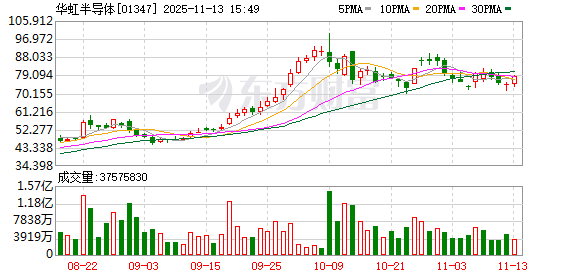
港股芯片股午后拉升 华虹半导体(01347.HK)涨超5%
Mei Ri Jing Ji Xin Wen· 2025-11-13 07:52
Core Viewpoint - Hong Kong chip stocks experienced a significant afternoon rally, indicating positive market sentiment in the semiconductor sector [2] Company Performance - Hua Hong Semiconductor (01347.HK) rose by 5.78%, reaching HKD 78.75 [2] - Semiconductor Manufacturing International Corporation (00981.HK) increased by 2.32%, trading at HKD 74.95 [2] - ZTE Corporation (00763.HK) saw a gain of 1.91%, with shares priced at HKD 30.98 [2] - Shanghai Fudan Microelectronics Group (01385.HK) climbed by 1.27%, valued at HKD 41.44 [2]


芯片股午后拉升 华虹半导体涨超5% 小摩称AI和半导体上升周期将延长至2027年
Zhi Tong Cai Jing· 2025-11-13 07:39
Group 1 - Semiconductor stocks experienced a rally in the afternoon, with notable increases in shares of Huahong Semiconductor (+5.78%), SMIC (+2.32%), ZTE (+1.91%), and Shanghai Fudan (+1.27%) [1] - Alibaba has reportedly launched a secret project called "Qianwen," aimed at developing a personal AI assistant app to compete directly with ChatGPT, leveraging its Qwen model [1] - Morgan Stanley's latest report indicates that concerns over an AI bubble persist, but the AI-driven semiconductor upcycle is far from peaking, with projections for global semiconductor revenue growth of 18% in 2026 and 11% in 2027 [1]
港股异动 | 芯片股午后拉升 华虹半导体(01347)涨超5% 小摩称AI和半导体上升周期将延长至2027年
智通财经网· 2025-11-13 07:36
Group 1 - Semiconductor stocks experienced a rally in the afternoon, with notable increases in shares of Huahong Semiconductor (+5.78% to HKD 78.75), SMIC (+2.32% to HKD 74.95), ZTE (+1.91% to HKD 30.98), and Shanghai Fudan (+1.27% to HKD 41.44) [1] - Alibaba has reportedly launched a secret project called "Qianwen," aimed at developing a personal AI assistant app to compete directly with ChatGPT, leveraging the Qwen model [1] - JPMorgan's latest research indicates that despite ongoing concerns about an AI bubble, the semiconductor upcycle driven by AI is far from peaking, with expectations for global semiconductor revenue to grow by 18% in 2026 and 11% in 2027 [1]
中兴通讯涨2.11%,成交额20.75亿元,主力资金净流入9191.80万元
Xin Lang Zheng Quan· 2025-11-13 03:35
Core Insights - ZTE Corporation's stock price increased by 2.11% on November 13, reaching 40.57 CNY per share, with a trading volume of 2.075 billion CNY and a market capitalization of 194.068 billion CNY [1] - The company has seen a year-to-date stock price increase of 1.98%, but has experienced a decline of 4.77% over the last five trading days and 24.91% over the last 20 days [1] - For the period from January to September 2025, ZTE reported a revenue of 100.52 billion CNY, reflecting a year-on-year growth of 11.63%, while net profit attributable to shareholders decreased by 32.69% to 5.322 billion CNY [2] Financial Performance - ZTE has cumulatively distributed dividends of 17.137 billion CNY since its A-share listing, with 8.114 billion CNY distributed over the last three years [3] - As of September 30, 2025, the top ten circulating shareholders of ZTE have seen reductions in their holdings, with Hong Kong Central Clearing Limited holding 76.8764 million shares, down by 11.3435 million shares from the previous period [3] Market Activity - The net inflow of main funds into ZTE was 91.918 million CNY, with large orders accounting for 26.05% of total purchases and 26.44% of total sales [1] - ZTE has appeared on the "Dragon and Tiger List" three times this year, with the most recent instance on October 17, where it recorded a net buy of -554 million CNY [1]
中国光伏行业协会回应不实信息;国际金价重返4200美元|盘前情报
2 1 Shi Ji Jing Ji Bao Dao· 2025-11-13 00:45
Market Overview - On November 12, the A-share market showed a slight decline, with the Shanghai Composite Index down 0.07%, the Shenzhen Component Index down 0.36%, and the ChiNext Index down 0.39% [2][3] - The total trading volume in the Shanghai and Shenzhen markets was 1.95 trillion yuan, a decrease of 48.6 billion yuan compared to the previous trading day [2] Sector Performance - The insurance, pharmaceutical, and oil & gas sectors saw the largest gains, while sectors such as cultivated diamonds, photovoltaics, and controllable nuclear fusion experienced the most significant declines [2] International Market - In the U.S. stock market, the Dow Jones Industrial Average rose by 326.86 points (0.68%) to close at 48,254.82 points, while the S&P 500 increased by 4.31 points (0.06%) to 6,850.92 points. The Nasdaq Composite fell by 61.84 points (0.26%) to 23,406.46 points [4][5] - European markets also saw gains, with the FTSE 100 up 0.12%, the CAC 40 up 1.04%, and the DAX up 1.22% [4] Commodity Prices - International oil prices fell, with WTI crude oil down 4.18% to $58.49 per barrel and Brent crude down 3.76% to $62.71 per barrel [4][5] Industry News - The China Photovoltaic Industry Association issued a statement refuting rumors aimed at discrediting the photovoltaic industry, emphasizing ongoing efforts to promote industry self-discipline and combat malicious short-selling [6] - The National Energy Administration announced plans to promote the application of renewable energy for heating, encouraging the development of multi-energy coupling comprehensive energy supply stations [7][8] Investment Insights - According to Debang Securities, the short-term market may continue to see a structural trend dominated by "new energy + policy themes," with a focus on the progress and effects of the "anti-involution" policy in the photovoltaic sector [12] - Pacific Securities noted that technology stocks are expected to show differentiation, with those supported by performance likely to maintain upward momentum, while those without may face significant corrections [12] Capital Market Developments - The Shanghai Stock Exchange International Investor Conference highlighted the importance of stabilizing the capital market and enhancing its internal stability, with plans to deepen reforms and expand long-term investment [9][10]





欧盟打压中国电信产品损人害己
Xin Lang Cai Jing· 2025-11-12 23:21
Core Viewpoint - The European Commission is exploring methods to phase out equipment from Huawei and ZTE in telecom networks, labeling them as "high-risk suppliers" despite a lack of evidence supporting security concerns [1] Group 1: Regulatory Actions - The European Commission is pushing for legislation to ban member states from using products from Huawei and other high-risk suppliers [1] - This move reflects ongoing tensions regarding the security of Chinese telecom equipment, which has been a recurring theme in EU policy discussions [1] Group 2: Security Concerns - Claims regarding the security risks of Huawei's equipment, such as potential backdoors for cyberattacks, have been deemed baseless and absurd by various analysts [1] - German cybersecurity agencies have evaluated Huawei products and found no suspicious components or backdoors [1] - UK intelligence agencies have stated that the security risks associated with Huawei's 5G equipment are manageable [1] Group 3: Industry Impact - Chinese telecom companies, represented by Huawei, are focusing on technological innovation to build core competitiveness [1] - The ongoing narrative around security risks and market access barriers is seen as an attempt to hinder the development of Chinese telecom technology and industry [1] - The exclusion of Chinese telecom firms from the EU market is predicted to ultimately harm the EU's own interests [1]

董一凡:欧盟“去风险”,最终却自缚手脚
Huan Qiu Wang· 2025-11-12 22:45
Group 1 - The European Commission is pushing for legislation to mandate EU member states to exclude Huawei and ZTE equipment from mobile communication networks, reflecting a trend of increasing geopolitical and ideological concerns in EU-China economic relations [1][2] - Since 2019, the EU has been emphasizing "5G security issues," with the European Commission developing policy recommendations and the U.S. government exerting pressure on EU countries regarding security concerns [1][2] - The EU's focus has shifted from "development" to "security" in the context of 5G and infrastructure, with the European Commission regularly promoting the implementation of 5G security measures [1][2] Group 2 - The European Commission's 5G policies remain at the recommendation level, and their implementation depends on member states' legislative actions, which may be influenced by the Commission's efforts to create a sense of security threat [2] - The Commission's rhetoric regarding "high-risk" companies like Huawei and ZTE is seen as politically motivated and detrimental to EU-China technological and economic cooperation, potentially empowering anti-China sentiments within member states [2][4] - The EU's approach to security and trade relations with China may undermine its own competitiveness, as it faces challenges such as market fragmentation and outdated infrastructure in the digital economy [3][4] Group 3 - Chinese telecommunications companies like Huawei and ZTE offer world-leading efficiency and performance in equipment and technology, which surpasses the traditional competition based on price and labor costs [3] - The EU's insistence on excluding Huawei and ZTE could lead to significant increases in telecom system costs and service disruptions, hindering the optimization of critical infrastructure [4] - The EU needs to reconsider its politicization of economic issues and demonstrate a pragmatic attitude in managing bilateral trade relations with China to enhance its competitiveness [4]
研报掘金丨国泰海通:维持中兴通讯“增持”评级,目标价60.13元
Ge Long Hui· 2025-11-12 10:00
Core Viewpoint - ZTE Corporation's Q3 profitability was primarily impacted by fluctuations in quarterly revenue structure, with a significant decline in net profit year-on-year and quarter-on-quarter [1] Financial Performance - For the first three quarters of 2025, the net profit attributable to shareholders was 5.322 billion yuan, representing a year-on-year decrease of 32.69% [1] - In Q3 2025, the net profit attributable to shareholders was 264 million yuan, showing a year-on-year decline of 87.84% and a quarter-on-quarter decline of 89.85% [1] Business Segments - The computing power business is experiencing accelerated growth, leveraging industry-leading chip design capabilities to strengthen long-term competitiveness in the AI sector [1] - The operator business faced challenges due to delivery schedules and downstream demand, but the computing power segment continues to gain momentum [1] Valuation and Rating - Based on comparable company valuations, a 2025 price-to-earnings ratio of 40 times is suggested, corresponding to a target price of 60.13 yuan, maintaining a "buy" rating [1]

中兴通讯(000063):运营商业务承压影响利润,发力芯片坚定AI转型
Haitong Securities International· 2025-11-12 08:02
Investment Rating - The report maintains an "Outperform" rating for the company, projecting a target price of RMB 60.13 based on a 2025 PE of 40x [5][9]. Core Insights - The operator business is under pressure due to delivery pace and downstream demand, but the computing power business is accelerating its growth [1]. - Revenue for the first three quarters of 2025 reached RMB 100.52 billion, a year-on-year increase of 11.63%, while net profit attributable to shareholders was RMB 5.32 billion, down 32.69% year-on-year [5][9]. - The computing power business saw significant growth, with government and enterprise business up 130% year-on-year and computing power business scale reaching approximately RMB 25 billion, up 180% year-on-year [5][9]. Financial Summary - Total revenue projections for 2025-2027 are RMB 141.34 billion, RMB 155.97 billion, and RMB 173.35 billion, respectively [5][9]. - Net profit attributable to shareholders is projected at RMB 7.19 billion, RMB 8.32 billion, and RMB 9.92 billion for the same period [5][9]. - The gross profit margin for Q3 2025 was 30.55%, down 9.88 percentage points year-on-year, while the net profit margin was 5.29%, down 3.49 percentage points year-on-year [5][9]. Business Performance - The operator business's revenue is under pressure due to a decline in capital expenditure and changes in delivery pace, while the government and enterprise/server business has shown accelerated growth [5][9]. - The company is focusing on enhancing its chip business, which is expected to become a new profit engine, leveraging self-developed chips and AI servers [5][9]. - The company won a major breakthrough award at the 2025 China Computing Power Conference for its intelligent computing super node system [5][9].