CCB(00939)

Search documents
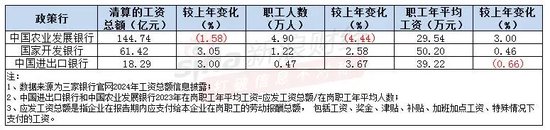
哪家政策行薪酬最高?国开行2024年人均薪酬50.2万
Xin Lang Cai Jing· 2026-01-09 01:15
近期,多家银行披露了2024年度职工工资情况。 从薪酬表现看,三家政策性银行年度人均薪酬分化明显。其中,国家开发银行职工年平均工 资最高,为50.2万元;中国进出口银行较上年微降,为39.22万元;中国农业发展银行2024年 清算的工资总额及职工人数均有下降,但人均薪酬逆势上涨,增至29.54万元。此外,国有 大行中的工行、农行、中行、建行、交行也披露了2024工资分配信息,人均薪酬均超23万 元,交行在五大行中排名首位,达31.64万元。 此外,上述银行的职工队伍普遍呈现扩张之势,2024年仅中国农业发展银行和工商银行职工 人数缩减,其他均较上年增加,整体来看,中国进出口银行涨幅超3.6%;国家开发银行和 交通银行均超2.5%。 国开行2024人均薪酬超50万, 进出口银行微降 | 政策行 | 清算的工资 | 较上年变化 | 职工人数 | 较上年变化 | In REFER | 技 上年变化 | | --- | --- | --- | --- | --- | --- | --- | | 总额(亿元) | | %) | (万人) | (%) | 工资(万元) | (%) | | 中国农业发展银行 | 144.7 ...




智通港股通持股解析|1月9日
智通财经网· 2026-01-09 00:33
Core Insights - The top three companies by Hong Kong Stock Connect shareholding ratios are China Telecom (71.61%), Gree Power (69.82%), and Kaisa New Energy (67.97%) [1] - The largest increases in shareholding over the last five trading days were seen in the Tracker Fund of Hong Kong (+4.898 billion), Xiaomi Group-W (+2.104 billion), and Hang Seng China Enterprises (+2.034 billion) [1] - The largest decreases in shareholding over the last five trading days were recorded for Tencent Holdings (-3.674 billion), China Mobile (-2.390 billion), and Zijin Mining (-792 million) [1] Group 1: Hong Kong Stock Connect Shareholding Ratios - China Telecom (00728) holds 9.938 billion shares with a shareholding ratio of 71.61% [1] - Gree Power (01330) holds 0.282 billion shares with a shareholding ratio of 69.82% [1] - Kaisa New Energy (01108) holds 0.170 billion shares with a shareholding ratio of 67.97% [1] - Tianjin Chuangye Environmental Protection (01065) holds 0.229 billion shares with a shareholding ratio of 67.36% [1] - Other notable companies include China Shenhua (66.29%) and Southern Hang Seng Technology (65.38%) [1] Group 2: Recent Increases in Shareholding - Tracker Fund of Hong Kong (02800) saw an increase of +4.898 billion with a change of +18.6086 million shares [1] - Xiaomi Group-W (01810) increased by +2.104 billion with a change of +5.53495 million shares [1] - Hang Seng China Enterprises (02828) increased by +2.034 billion with a change of +2.19962 million shares [1] - Other companies with significant increases include Ping An Insurance (+2.027 billion) and Kuaishou-W (+1.709 billion) [1] Group 3: Recent Decreases in Shareholding - Tencent Holdings (00700) experienced a decrease of -3.674 billion with a change of -5.9645 million shares [3] - China Mobile (00941) decreased by -2.390 billion with a change of -2.9561 million shares [3] - Zijin Mining (02899) saw a decrease of -792 million with a change of -2.1294 million shares [3] - Other companies with notable decreases include China Unicom (-764 million) and Xinda Biopharmaceuticals (-596 million) [3]




多家银行推出资产提升活动,奖励达标客户
Mei Ri Jing Ji Xin Wen· 2026-01-09 00:29
Group 1 - Several banks, including Jiangsu Bank, Agricultural Bank, Construction Bank, and Nanjing Bank, have launched asset enhancement activities to encourage customers to increase their bank assets [1] - Jiangsu Bank announced that customers who increase their average monthly assets in the first three months of the year compared to the end of the previous year will receive related rewards [1] - The trend of banks initiating asset enhancement programs indicates a competitive environment in the banking sector aimed at attracting and retaining customers [1]



智通港股沽空统计|1月9日
智通财经网· 2026-01-09 00:26
Group 1 - The core point of the news highlights the short-selling ratios and amounts for various companies, indicating significant market activity and investor sentiment towards these stocks [1][2][3] Group 2 - The top three companies by short-selling ratio are Anta Sports-R (82020) and Li Ning-R (82331) at 100.00%, and Tencent Holdings-R (80700) at 90.68% [1][2] - The highest short-selling amounts are recorded for Alibaba-W (09988) at 3.199 billion, Meituan-W (03690) at 1.835 billion, and Xiaomi Group-W (01810) at 1.518 billion [1][3] - Tencent Holdings-R (80700) has the highest deviation value at 45.50%, followed by Beike-W (02423) at 40.51% and China National Offshore Oil-R (80883) at 40.26% [1][3]


智通ADR统计 | 1月9日





智通财经网· 2026-01-08 22:22
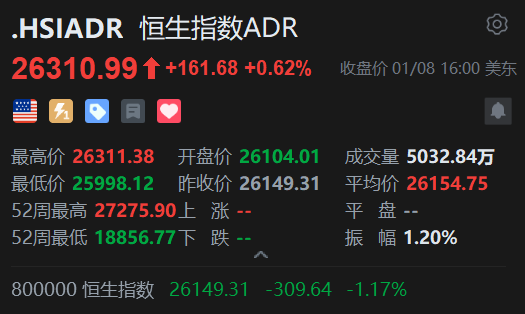
Market Overview - The Hang Seng Index (HSI) closed at 26,310.99, up by 161.68 points or 0.62% as of January 8, 16:00 Eastern Time [1] - The index reached a high of 26,311.38 and a low of 25,998.12 during the trading session, with a trading volume of 50.328 million shares [1] Major Blue-Chip Stocks Performance - HSBC Holdings closed at HKD 125.439, up by 0.92% compared to the Hong Kong close [2] - Tencent Holdings closed at HKD 615.197, down by 0.13% compared to the Hong Kong close [2] Stock Price Movements - Tencent Holdings: Latest price HKD 616.000, down by HKD 8.500 or 1.36%, with an ADR price of 615.197, reflecting a decrease of 0.13% [3] - Alibaba Group: Latest price HKD 142.600, down by HKD 3.300 or 2.26%, with an ADR price of 150.458, reflecting an increase of 5.51% [3] - HSBC Holdings: Latest price HKD 124.300, down by HKD 2.900 or 2.28%, with an ADR price of 125.439, reflecting an increase of 0.92% [3] - Other notable movements include Meituan-W down by 3.35% and JD.com down by 2.02% [3]
建行开年一周披露罚单超560万,信贷违规成监管重点
Guan Cha Zhe Wang· 2026-01-08 13:46
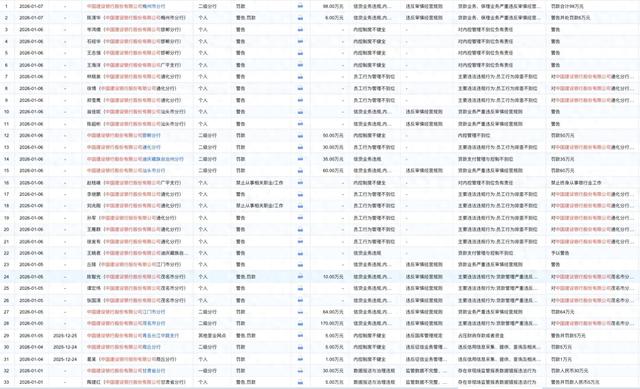
Core Viewpoint - The recent administrative penalties against China Construction Bank (CCB) branches signal a continued strict regulatory environment in the Chinese banking sector, with a focus on compliance and risk management [1][5]. Summary by Categories Regulatory Actions - In the first week of 2026, CCB was fined over 5.6 million yuan across multiple branches for various violations, indicating a strong stance from the National Financial Supervision Administration [1][5]. - The Gansu branch was fined 300,000 yuan for reporting inaccuracies in non现场监管报表 (off-site regulatory reports), marking the beginning of the regulatory actions for the year [1][5]. Violations Identified - Key issues identified include violations in credit business management, inaccurate data reporting, and failures in internal controls [3][5]. - The highest penalty of 1.7 million yuan was imposed on the Maoming branch for severe violations in loan management and factoring business [3][4]. Individual Accountability - The regulatory actions also targeted individuals, with significant penalties including lifetime bans from the banking industry for certain individuals, reflecting a trend towards personal accountability in regulatory enforcement [3][4]. Regulatory Trends - The series of penalties reflects a broader trend of tightening financial regulations in China, emphasizing the importance of compliance in credit management and internal governance [5][6]. - The regulatory environment is evolving towards more stringent and detailed oversight, particularly in critical areas such as loan management and corporate governance [5][6].
建设银行黑龙江省分行深耕绿色金融助力生态龙江建设
Zhong Guo Jin Rong Xin Xi Wang· 2026-01-08 12:53
Group 1 - The core viewpoint of the article emphasizes the commitment of China Construction Bank's Heilongjiang branch to integrate green finance into its development strategy, aligning with the "dual carbon" goals and ecological revitalization initiatives in the region [2][3]. Group 2 - The bank has established a comprehensive green finance service system that includes mechanisms for policy alignment, customer service, and product innovation, aiming to enhance the internal motivation of various institutions to support green development [3]. - A green finance committee has been set up, along with special incentive policies to break down and implement green credit targets, facilitating priority approval and funding for green projects [3]. - As of November 2025, the bank's green loan balance is projected to reach 27.5 billion yuan [3]. Group 3 - The bank has innovated its product offerings to meet diverse financing needs in the green sector, launching the province's first carbon-neutral equity merger investment and green asset-backed securities [4]. - Over 20 billion yuan has been allocated in loans to support green logistics and high-standard farmland construction, contributing to national food security [4]. - The bank has conducted 191 promotional events to stimulate green consumption, particularly in the electric vehicle market, enhancing public awareness of green consumption [4]. Group 4 - The bank has provided tailored financial solutions to local enterprises facing funding challenges for green transformation, such as a 37.5 million yuan loan for a major thermal power company to upgrade its emissions systems [5]. - A credit line of 120 million yuan was granted to a recycling company to enhance its operations, demonstrating the bank's proactive approach to supporting green initiatives [5]. - The bank has invested 140 million yuan in a project aimed at protecting 44,000 acres of black soil, which is expected to increase grain production by 20% [5]. Group 5 - The continuous financial support from the bank is crucial for the growth of green industries and the establishment of ecological safety in Heilongjiang, driving high-quality development in the region [6].

【攻略】商户收款到账了 有据可查
中国建设银行· 2026-01-08 07:52
Core Viewpoint - The "CMB Huidongni" App provides a comprehensive merchant service that simplifies payment processing, enhances financial management, and offers tailored loan products for businesses [2][3]. Group 1: Advantages of "CMB Huidongni" App Merchant Services - The app integrates multiple payment methods into one tool, allowing funds to be directly deposited into the user's CMB card or corporate account without the need for withdrawal [4]. - It offers intelligent data analysis services, enabling merchants to easily track account balances, transaction details, and generate business reports for the past thirty days [5]. - The app features a dedicated "Merchant Cloud Loan" product with a maximum limit of 3 million yuan, a term of up to 36 months, and is available without collateral, allowing for flexible usage and daily interest calculation [8]. Group 2: Application Process - Businesses can apply to become a merchant by entering their information, completing identity verification, and submitting required documents through the app [12][13]. - Users can track their application progress in real-time within the app [13]. Group 3: Additional Services - The "CMB Huidongni" WeChat mini-program offers more convenient services for users [19].

数字人民币有利息了
中国建设银行· 2026-01-08 07:52
Core Viewpoint - The introduction of interest on digital renminbi by the People's Bank of China marks a significant development in the digital currency landscape, enhancing its appeal and functionality for users [2][9]. Group 1: What is Digital Renminbi? - Digital renminbi is a legal digital currency issued by the People's Bank of China, operating under a dual-layer system where the central bank issues it to operational institutions, which then distribute it to the public, eliminating speculation opportunities [4]. Group 2: How to Obtain and Use Digital Renminbi? - Users can access digital renminbi by selecting a designated operational institution through the digital renminbi app or directly via the China Construction Bank mobile banking app, where they can open and use a digital renminbi wallet [6][7]. Group 3: Interest on Digital Renminbi - Starting from January 1, 2026, China Construction Bank will pay interest on the balance of digital renminbi wallets at the bank's current deposit rate, with interest calculated quarterly based on the balance as of the last interest payment date [9]. - Interest payment dates are set for March 20, June 20, September 20, and December 20 each year, and users can check their interest amounts in the digital renminbi app or the bank's mobile app after these dates [9][10].
【关注】数字人民币App迎来2.0版本
中国建设银行· 2026-01-08 07:52
Core Viewpoint - The digital renminbi has transitioned from the "digital cash era" to the "digital deposit currency era," with the digital renminbi App upgraded to version 2.0, enhancing user experience and introducing new features [1]. Group 1: Interest on Wallet Balance - Starting from January 1, 2026, China Construction Bank will pay interest on the balance of the real-name digital renminbi wallet at the bank's current deposit rate, with interest calculation rules consistent with current deposits [1]. Group 2: Wallet Interface Updates - The wallet interface has been redesigned, incorporating traditional floral patterns as main visual elements, with ten different flower designs representing ten operating institutions, including the lotus for China Construction Bank [6][8]. - The background features traditional decorative patterns such as phoenix and sheep horn motifs, enhancing the cultural aesthetic of the interface [9]. - A dynamic color-changing effect is embedded in the floral patterns, visible when the phone is shaken, showcasing a unified yet distinctive design across different operating institutions [10]. Group 3: Personalized Skin Functionality - The 2.0 version introduces a wallet skin setting feature, offering four thematic series: seasons, famous paintings, national style, and daily life, with a total of 16 skins available for user selection [11]. Group 4: Digital Renminbi App Overview - The digital renminbi App serves as the primary platform for personal users to manage digital renminbi assets, aggregating wallet access from various operating institutions for unified management [15]. - The app's core payment module adheres to unified standards while allowing differentiated services from various institutions, reflecting the dual-layer operational structure of the digital renminbi system [15].