CNCB(00998)

Search documents
中信银行(601998) - H股公告-董事名单及彼等角色及职能
2025-12-18 10:45
王彥康 付亞民 998 董事名單及彼等角色及職能 中信銀行股份有限公司(「本行」)第七屆董事會(「董事會」)成員如下: 執行董事 方合英 (董事長) 蘆葦 (行長) 胡罡 非執行董事 魏強 獨立非執行董事 廖子彬 周伯文 王化成 宋芳秀 - 1 - 董事會現有五個委員會。下表提供第七屆董事會成員所屬委員會的委員資料。 | | 戰略與 可持續發展 | 風險管理 | | 關聯交易 | 提名與薪酬 | 消費者權益 | | --- | --- | --- | --- | --- | --- | --- | | 董事╱董事會委員會 | 委員會 | 委員會 | 審計委員會 | 控制委員會 | 委員會 | 保護委員會 | | 方合英 | | | | | | | | (董事長,執行董事) | C | | | | | | | 蘆葦 | | | | | | | | (執行董事,行長) | M | C | | | | | | 胡罡 | | | | | | | | (執行董事) | | M | | | | | | 魏強 | | | | | | | | (非執行董事) | M | | | | | | | 王彥康 | | | | | | ...
中信银行(601998) - 中信银行股份有限公司关于不再设置监事会相关事项的公告
2025-12-18 10:45
证券代码:601998 证券简称:中信银行 公告编号:临2025-084 中信银行股份有限公司 近日,本行收到《国家金融监督管理总局关于中信银行修改公司章程的批复》 (金复〔2025〕725号),修订后的《中信银行股份有限公司章程》已获核准生 效。自2025年12月16日起,本行不再设置监事会,由董事会审计委员会行使《中 华人民共和国公司法》和监管制度规定的监事会职权,《中信银行股份有限公司 监事会议事规则》、监事会议题管理办法、监事会下设各专门委员会相关议事规 则等监事会相关公司治理制度同时废止。魏国斌先生、孙祁祥女士、李蓉女士、 程普升先生、张纯先生、曾玉芳女士不再担任本行监事,并均确认与本行无不同 意见,亦无任何其他事项需知会本行股东及债权人,无任何针对本行的正在发生 或将要发生的诉讼和争议。 本行全体监事在任期间,忠实勤勉、恪尽职守,强化重点领域监督,积极提 升监督质效,在完善监事会监督体系,促进本行稳健经营,维护本行、股东、员 工和社会等各方利益方面发挥了积极作用,谨此对全体监事为本行作出的重要贡 献表示衷心感谢! 特此公告。 1 中信银行股份有限公司董事会 2025年12月18日 关于不再设置监事 ...
中信银行:公司章程修订获监管核准,不再设置监事会
Xin Lang Cai Jing· 2025-12-18 10:41
12月18日金融一线消息,中信银行发布公告,近日,该行收到《国家金融监督管理总局关于中信银行修 改公司章程的批复》(金复〔2025〕725 号),国家金融监督管理总局已核准该行修订后的公司章程。 该行公司章程自 2025 年 12 月 16 日起生效,修订后的《中信银行股份有限公司股东会议事规则》和 《中信银行股份有限公司董事会议事规则》同时生效。 另一则公告显示,近日,该行收到《国家金融监督管理总局关于中信银行修改公司章程的批复》(金复 〔2025〕725号),修订后的《中信银行股份有限公司章程》已获核准生效。自2025年12月16日起,该 行不再设置监事会,由董事会审计委员会行使《中华人民共和国公司法》和监管制度规定的监事会职 权,《中信银行股份有限公司监事会议事规则》、监事会议题管理办法、监事会下设各专门委员会相关 议事规则等监事会相关公司治理制度同时废止。魏国斌先生、孙祁祥女士、李蓉女士、程普升先生、张 纯先生、曾玉芳女士不再担任该行监事,并均确认与该行无不同意见,亦无任何其他事项需知会该行股 东及债权人,无任何针对该行的正在发生或将要发生的诉讼和争议。 责任编辑:李琳琳 12月18日金融一线消息,中 ...


中信银行(601998) - 中信银行股份有限公司章程
2025-12-18 10:31
中信银行股份有限公司章程 (经国家金融监督管理总局 2025 年 12 月 16 日金复〔2025〕725 号 核准并生效) | | | | 第一章 | 总 | 则 | 4 | | --- | --- | --- | --- | | 第二章 | | 经营宗旨和范围 | 7 | | 第三章 | 股份 | | 8 | | | 第一节 | 股份发行 | 8 | | | 第二节 | 股份增减和回购 | 11 | | | 第三节 | 股份转让 | 14 | | | 第四节 | 优先股的特别规定 | 17 | | 第四章 | | 党组织(党委) | 20 | | 第五章 | | 股东和股东会 | 22 | | | 第一节 | 股东的一般规定 | 22 | | | 第二节 | 控股股东和实际控制人 | 31 | | | 第三节 | 股东会的一般规定 | 33 | | | 第四节 | 股东会决议 | 44 | | 第六章 | | 董事和董事会 | 51 | | | 第一节 | 董事 | 51 | | | 第二节 | 独立董事 | 58 | | | 第三节 | 董事会 | 67 | | | 第四节 | 董事会专门委员会 | 7 ...
中信银行:不再设置监事会
Xin Lang Cai Jing· 2025-12-18 10:28
中信银行公告,近日,本行收到《国家金融监督管理总局关于中信银行修改公司章程的批复》,修订后 的《中信银行股份有限公司章程》已获核准生效。自2025年12月16日起,本行不再设置监事会,由董事 会审计委员会行使《中华人民共和国公司法》和监管制度规定的监事会职权,《中信银行股份有限公司 监事会议事规则》、监事会议题管理办法、监事会下设各专门委员会相关议事规则等监事会相关公司治 理制度同时废止。魏国斌先生、孙祁祥女士、李蓉女士、程普升先生、张纯先生、曾玉芳女士不再担任 本行监事。 ...
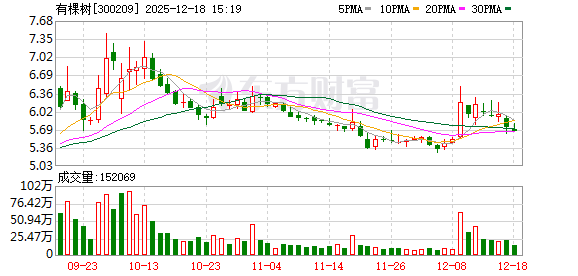
有棵树:向银行申请授信并接受股东担保
Zheng Quan Ri Bao· 2025-12-18 07:19
Core Viewpoint - The company, 有棵树, announced its intention to apply for a comprehensive credit facility of up to 200 million RMB from CITIC Bank's Changsha branch, with a portion guaranteed by related shareholders [2] Group 1 - The company plans to apply for a total credit limit of no more than 200 million RMB [2] - An amount of 100 million RMB of this credit will be guaranteed without charge by related shareholder Wang Wei and his concerted action party, Shenzhen Tianxingyun Supply Chain Co., Ltd. [2]

银行集中清理贵金属“睡眠账户”!你的资金可能被转出,快自查
Sou Hu Cai Jing· 2025-12-18 05:41
Core Viewpoint - Several banks are adjusting their personal precious metals trading business with the Shanghai Gold Exchange, focusing on cleaning up long-term inactive customer accounts [1][3][4] Group 1: Bank Actions - Industrial and Commercial Bank of China announced on December 15 that it will strengthen management of its business and will start transferring funds and closing related business functions for customers with no positions, no inventory, no debts, and a remaining balance in their margin accounts starting December 19 [1] - China Construction Bank required customers meeting the "three no" conditions to withdraw funds and terminate contracts, with unified processing of related accounts planned [3] - Agricultural Bank of China announced on October 22 that it would begin terminating business agreements with customers who had no positions for a month starting October 29 [3] Group 2: Industry Trends - Other banks, including Postal Savings Bank, CITIC Bank, and Ningbo Bank, have also announced similar business adjustments, indicating a broader trend of tightening regulations on personal precious metals trading [3] - Since July 2022, major commercial banks have completely suspended new account openings for this type of business, reflecting a contraction in related services [3] Group 3: Account Management - The adjustments primarily target "sleeping accounts" that have long been inactive but still hold idle funds, aiming to improve account management efficiency and reduce operational and compliance costs [4] - Banks recommend that customers with existing positions pay attention to market risks and manage their positions wisely [4]




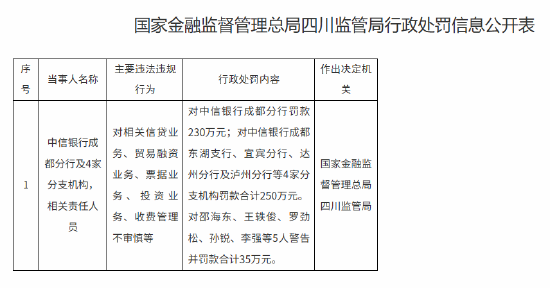
中信银行成都分行及4家分支机构合计被罚480万元:投资业务、收费管理不审慎等
Xin Lang Cai Jing· 2025-12-18 03:50
12月18日金融一线消息,国家金融监督管理总局四川监管局行政处罚信息公开表显示,因相关信贷业 务、贸易融资业务、票据业务、投资业务、收费管理不审慎等,中信银行成都分行被罚款230万元;中 信银行成都东湖支行、宜宾分行、达州分行及泸州分行等4家分支机构被罚款合计250万元;邵海东等5 名相关责任人员被警告并罚款合计35万元。 | 国家金融监督管理总局四川监管局行政处罚信息公开表 | | --- | 12月18日金融一线消息,国家金融监督管理总局四川监管局行政处罚信息公开表显示,因相关信贷业 务、贸易融资业务、票据业务、投资业务、收费管理不审慎等,中信银行成都分行被罚款230万元;中 信银行成都东湖支行、宜宾分行、达州分行及泸州分行等4家分支机构被罚款合计250万元;邵海东等5 名相关责任人员被警告并罚款合计35万元。 | 序 | 当事人名称 | 主要违法违规 | 行政处罚内容 | 作出决定机 | | --- | --- | --- | --- | --- | | 물 | | 行为 | 对中信银行成都分行罚款 | # | | | 中信银行成 | 对相关信贷业 | 230万元;对中信银行成都 | | | | | 务 ...
中信银行5个项目获2024年度中国人民银行金融科技发展奖
Xin Hua Wang· 2025-12-18 02:19
Core Insights - The People's Bank of China has officially announced the winners of the 2024 Financial Technology Development Award, with CITIC Bank winning five awards in total, including first, second, and third prizes [1][4] - The Financial Technology Development Award is the only ministerial-level technology award in China's financial industry, recognizing outstanding financial technology innovations annually [1] Group 1: Award Details - CITIC Bank has accumulated 75 awards since participating in 2009, including 4 first prizes, 32 second prizes, and 39 third prizes, covering various fields such as architecture transformation, IT innovation, digital transformation, data governance, and risk prevention [1] - The first prize-winning project, "Sky Project," provides strong technological support for product delivery and stable business operations in enterprise digital transformation, achieving multiple domestic firsts and securing 11 authorized invention patents [1] - The second prize-winning project, "Dual Engine Intelligent Risk Control," integrates large language models with traditional AI technologies, creating a comprehensive intelligent risk control system that enhances efficiency in fraud prevention and asset management [2] - The third prize-winning project, "Core Big Data Comprehensive Upgrade," established a digital infrastructure with a layered architecture, effectively addressing various service scenarios in financial big data [3] Group 2: Strategic Implications - CITIC Bank is committed to its "Digital CITIC" strategy, focusing on major innovations and applications to accelerate the development of leading technological capabilities and promote the construction of an intelligent bank [4] - The recognition from the awards reflects the industry's high regard for CITIC Bank's financial technology practices and its strategic investments to gain a competitive edge in digitalization [4] - Moving forward, CITIC Bank aims to leverage "digital finance" to empower significant financial initiatives and steadily advance its strategy of becoming a leading digital bank, contributing to the construction of a strong financial nation [4]
构建适配服务生态 持续提升科技金融服务能力
Jin Rong Shi Bao· 2025-12-18 01:50
Core Insights - The article emphasizes the need to build an adaptable service ecosystem for technology finance, focusing on the alignment between financial supply and the diverse needs of technology enterprises at different development stages [1][3][4]. Group 1: Financial Ecosystem Trends - The financing needs of technology enterprises vary across their lifecycle stages, requiring different types of financial support from various institutions such as venture capital, banks, and insurance [3][4]. - The current financing structure in China is predominantly indirect, with banks playing a crucial role in supporting technology enterprises throughout their lifecycle [4][5]. Group 2: Role of Banks and Financial Institutions - Banks are not only fund providers but also play a guiding role in aggregating resources from different financial institutions to support technology enterprises [4][5]. - The recent expansion of Asset Investment Company (AIC) licenses allows banks to provide integrated financial services, combining funding and capital support for technology innovation [5][6]. Group 3: Challenges and Opportunities for Local Banks - Local banks, despite not having direct access to AIC licenses, can leverage their local information advantages and agile decision-making to better serve small and early-stage technology enterprises [6][7]. - Local banks should enhance their understanding of technology innovation and develop specialized research capabilities to improve their service offerings in technology finance [8]. Group 4: Enhancing Service Capabilities - Banks need to establish a differentiated assessment and incentive mechanism to support the complexities of technology finance, ensuring that frontline staff are motivated to engage in this area [8][9]. - A specialized approval mechanism is necessary for banks to efficiently manage the unique characteristics of technology enterprises, which often involve high-tech and asset-light models [8][9]. Group 5: Exit Strategies in Equity Investment - The exit phase in equity investment is critical, with current methods such as IPOs and mergers facing significant challenges, necessitating improvements in exit channels [9][10]. - Policy and market improvements are needed to create a more favorable environment for investment exits, including enhancing the inclusivity of various market platforms [11][12]. Group 6: Collaborative Efforts from Regulatory Bodies - Regulatory bodies should facilitate collaboration among finance, technology, and fiscal departments to convert the social effects of innovation into economic benefits for technology enterprises [12][13]. - Financial institutions should be incentivized to support technology enterprises through various funding mechanisms, including risk-sharing funds and technology financial rewards [12][13].