
HUA HONG SEMI(01347)

Search documents
国内外AI年报分析展望




2026-02-04 02:27
Summary of the Conference Call on AI Annual Report Analysis Industry Overview - The conference focused on the analysis and outlook of AI annual reports, particularly in the TMT (Technology, Media, and Telecommunications) sector, with a specific emphasis on domestic and international AI companies [1][2][4]. Key Points and Arguments General Market Sentiment - The period from October 31 to March is characterized as a performance vacuum, where the focus is on thematic investments rather than immediate earnings results [2][3]. - The spring market is expected to see a resurgence, with significant activity anticipated around March [3][4]. North American Companies - North American companies, particularly those involved in AI and cloud computing, have reported earnings that exceeded expectations, indicating strong capital expenditure in AI [4][6]. - Companies like Microsoft and Meta have shown robust spending on AI infrastructure, reflecting a positive outlook for the sector [4][6]. - Despite some domestic companies underperforming, their stock prices have rebounded, suggesting that market sentiment is more focused on thematic trends rather than immediate earnings [5][6]. Domestic AI Companies - Domestic AI companies are experiencing a supply-demand imbalance, with strong demand for AI-related products and services, despite some companies reporting earnings below expectations [6][7]. - The industry is characterized by a shortage of materials and components, which is driving prices up and creating a favorable environment for growth [6][7][10]. Future Growth Projections - There is a consensus that the growth trajectory for AI companies will continue to be strong, with expectations for significant growth in 2026 and beyond [8][9]. - Many companies are currently undervalued, trading at price-to-earnings (P/E) ratios between 15x to 20x, which presents a potential investment opportunity [8][9]. Specific Company Insights - Companies like Wan, Tianfu Communication, and others are highlighted for their potential despite recent earnings misses, as the overall industry outlook remains positive [4][6][7]. - The demand for GPUs and AI chips is expected to remain high, with domestic companies like Cambrian facing challenges but still showing potential for recovery [9][10]. Application and Innovation - The conference emphasized the importance of AI applications, particularly in gaming and media, with companies like Tencent and ByteDance leading the charge [14][15]. - The emergence of AI-driven applications is seen as a significant growth area, with expectations for increased investment and innovation in this space [14][15]. Regulatory and Market Concerns - There are concerns regarding potential regulatory impacts on the gaming industry, but these are largely viewed as unfounded and not likely to affect the overall market significantly [15][16]. - The market is currently experiencing volatility, but analysts suggest that this presents buying opportunities for fundamentally strong companies [21][22]. Additional Important Insights - The conference highlighted the importance of monitoring capital expenditure trends among major tech companies, as this will influence the demand for AI infrastructure and services [36][37]. - The potential for new technologies, such as diamond-based cooling materials for semiconductors, was discussed as a future growth area [24][25]. - Analysts recommend focusing on companies with strong fundamentals and growth potential, particularly in the AI and semiconductor sectors, as the market continues to evolve [22][23][39].
港股芯片股盘初走低,上海复旦(01385.HK)跌超4%,华虹半导体(01347.HK)、兆易创新(03986.HK)、中芯国际(00981.HK)、中...
Jin Rong Jie· 2026-02-04 01:49
Group 1 - Hong Kong chip stocks opened lower, with Shanghai Fudan (01385.HK) dropping over 4% [1] - Other stocks such as Hua Hong Semiconductor (01347.HK), Zhaoyi Innovation (03986.HK), SMIC (00981.HK), ZTE Corporation (00763.HK), and Biren Technology (06082.HK) also declined [1] - In contrast, InnoCare Pharma (02577.HK) saw a strong performance, rising over 6% [1]


A股低开,贵金属板块走强
第一财经· 2026-02-04 01:48
Market Overview - The A-share market opened lower with the Shanghai Composite Index down 0.08%, the Shenzhen Component down 0.39%, and the ChiNext Index down 0.80% [3][4] - The Hong Kong market also opened lower, with the Hang Seng Index down 0.14% and the Hang Seng Tech Index down 0.87% [5][6] Sector Performance - The storage chip sector experienced significant declines, with companies like Deep Kangjia A hitting the daily limit down, and others such as Puran, Lanke Technology, Baiwei Storage, and Shannon Chip also opening lower [2] - The AI computing power industry chain saw a downturn, particularly in the storage and CPO sectors, while semiconductor and consumer electronics themes were among the hardest hit [4] - Conversely, gold, basic metals, and oil and gas sectors showed signs of rebound [4]



华虹半导体取得金属硅化物形成方法专利
Jin Rong Jie· 2026-02-03 11:55
国家知识产权局信息显示,华虹半导体(无锡)有限公司取得一项名为"金属硅化物的形成方法"的专 利,授权公告号CN115527846B,申请日期为2022年10月。 天眼查资料显示,华虹半导体(无锡)有限公司,成立于2017年,位于无锡市,是一家以从事计算机、 通信和其他电子设备制造业为主的企业。企业注册资本253685.180069万美元。通过天眼查大数据分 析,华虹半导体(无锡)有限公司共对外投资了1家企业,参与招投标项目2944次,专利信息1986条, 此外企业还拥有行政许可117个。 声明:市场有风险,投资需谨慎。本文为AI基于第三方数据生成,仅供参考,不构成个人投资建议。 本文源自:市场资讯 作者:情报员 ...
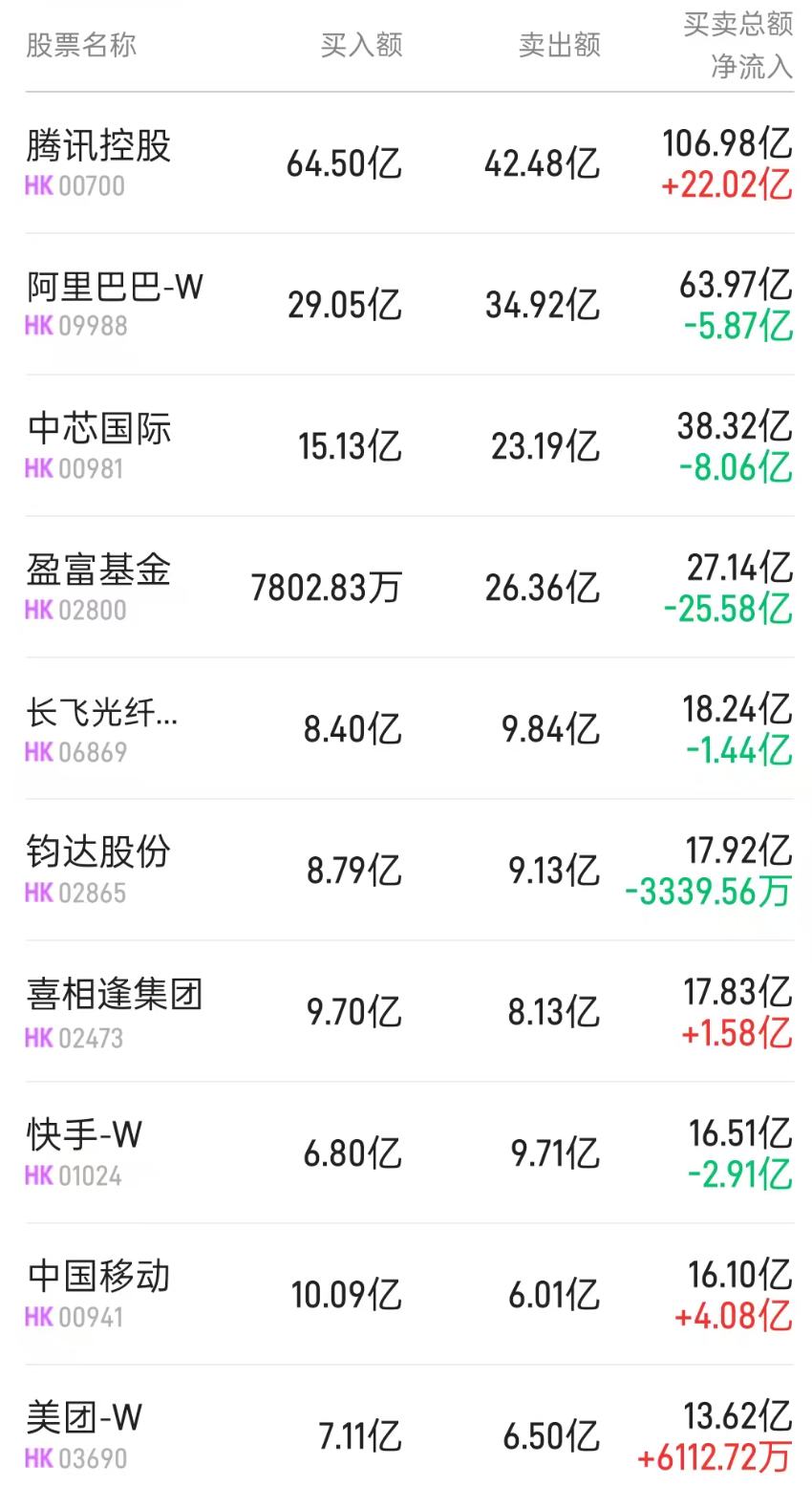
北水成交净买入9.52亿 科网及芯片股明显分化 内资抛售盈富基金超37亿港元
Zhi Tong Cai Jing· 2026-02-03 11:15
Core Viewpoint - The Hong Kong stock market experienced significant net buying and selling activities, with notable movements in major stocks such as Tencent, Alibaba, and China Mobile, reflecting investor sentiment and market dynamics [1][5][6]. Group 1: Net Buying and Selling Activities - Northbound trading recorded a net buying of HKD 9.52 billion, with the Shanghai Stock Connect contributing HKD 17.33 billion in net buying, while the Shenzhen Stock Connect saw a net selling of HKD 7.81 billion [1]. - Tencent (00700) led the net buying with HKD 22.02 billion, followed by Southbound Hang Seng Technology (03033) with HKD 6.69 billion, and China Mobile (00941) with HKD 4.07 billion [1][5]. - The most significant net selling was observed in the Yingfu Fund (02800) with HKD 25.58 billion, followed by Semiconductor Manufacturing International Corporation (00981) with HKD 8.06 billion, and Alibaba-W (09988) with HKD 5.87 billion [1][5]. Group 2: Stock Performance and Market Sentiment - The technology sector showed a clear divergence, with Tencent and Meituan-W (03690) experiencing net buying, while Alibaba-W faced substantial net selling due to market rumors regarding potential tax rate adjustments [5][6]. - China Mobile's net buying was supported by Morgan Stanley's analysis, suggesting that the company would be less impacted by potential VAT rate increases due to its higher profit margins [5]. - Xiaomi Group-W (01810) reported a net buying of HKD 3.29 billion, attributed to strong electric vehicle deliveries and ongoing investments in AI and robotics [6]. Group 3: Industry Trends and Future Outlook - The semiconductor industry is experiencing price increases, with domestic chip manufacturers announcing price hikes of up to 80%, indicating a continuing trend into the first half of 2026 [6]. - The overall market sentiment is influenced by external factors, including global risk asset movements, which have led to liquidity pressures and a decline in Asian stock markets [7].


南向资金追踪|净买入超9亿港元 大举加仓腾讯减持中芯国际和阿里
Xin Lang Cai Jing· 2026-02-03 10:32
Core Viewpoint - Southbound funds in Hong Kong experienced a decrease in trading volume, with a total of approximately HKD 126.4 billion, down by HKD 11.9 billion from the previous day, representing 37.72% of the total turnover of the Hang Seng Index, marking a short-term low [2]. Group 1: Southbound Fund Flow - Southbound funds recorded a net inflow of approximately HKD 0.952 billion today, with the Shanghai-Hong Kong Stock Connect seeing a net inflow of about HKD 1.733 billion, while the Shenzhen-Hong Kong Stock Connect had a net outflow of HKD 0.781 billion [2]. - The largest ETF, the Tracker Fund of Hong Kong (盈富基金), faced a net sell-off of HKD 3.762 billion, indicating continued outflows from certain funds [2]. Group 2: Individual Stock Performance - Tencent Holdings (0700.HK) saw a significant net buy of HKD 1.955 billion, despite a price drop of 2.92% [2][4]. - China Mobile (00941.HK) experienced a net buy of HKD 0.408 billion, with a slight price increase of 0.38% [2][4]. - Meituan-W (03690.HK) had a net buy of HKD 0.241 billion, with a price decline of 1.74% [2][4]. - Notable net outflows included Semiconductor Manufacturing International Corporation (00981.HK) at HKD 1.577 billion, Alibaba-W (09988.HK) at HKD 1.199 billion, and Kuaishou-W (01024.HK) at HKD 0.368 billion [2][4]. Group 3: Recent Trading Trends - Over the past five trading days, Tencent Holdings saw an increase of 663,000 shares, indicating continued short-term inflow [3]. - In contrast, China Mobile and Meituan-W experienced reductions in holdings of 4.164 million shares and 655,000 shares respectively, suggesting a trend of outflow [3]. - Kuaishou-W had an increase of 424,000 shares, indicating a short-term inflow despite a price drop of 4.61% [3].




北水动向|北水成交净买入9.52亿 科网及芯片股明显分化 内资抛售盈富基金(02800)超37亿港元
智通财经网· 2026-02-03 09:57
Summary of Key Points Core Viewpoint - The Hong Kong stock market experienced significant net buying and selling activity on February 3, with a total net buy of 9.52 billion HKD from Northbound trading, primarily driven by Tencent and Southern Hang Seng Technology stocks, while notable sell-offs occurred in the Yingfu Fund and Alibaba [1][4]. Group 1: Northbound Trading Activity - Northbound trading saw a net buy of 17.33 billion HKD through the Shanghai Stock Connect and a net sell of 7.81 billion HKD through the Shenzhen Stock Connect [1]. - The most bought stocks included Tencent (00700), Southern Hang Seng Technology (03033), and China Mobile (00941) [1]. - The most sold stocks were Yingfu Fund (02800), SMIC (00981), and Alibaba-W (09988) [1]. Group 2: Stock Performance Details - Tencent Holdings had a net inflow of 22.02 billion HKD, with total trading volume of 106.98 billion HKD [2]. - Alibaba-W experienced a net outflow of 5.87 billion HKD, with total trading volume of 63.97 billion HKD [2]. - SMIC saw a net outflow of 8.06 billion HKD, with total trading volume of 38.32 billion HKD [2]. - Yingfu Fund faced a significant net outflow of 25.58 billion HKD, with total trading volume of 27.14 billion HKD [2]. Group 3: Market Sentiment and Influences - Market rumors suggested potential tax rate adjustments for the financial and internet value-added services sectors, which negatively impacted stock prices, particularly for Tencent and other internet companies [4]. - However, tax experts clarified that the current VAT rate remains unchanged at 6%, dismissing the rumors as unfounded [4]. - China Mobile received a net buy of 4.07 billion HKD, with analysts noting its resilience against potential profit margin pressures due to its higher profitability [5]. - Xiaomi Group-W had a net buy of 3.29 billion HKD, attributed to strong electric vehicle deliveries and ongoing investments in AI and robotics [5]. Group 4: Chip Sector Dynamics - The semiconductor sector showed mixed results, with Hua Hong Semiconductor receiving a net buy of 2.56 billion HKD, while SMIC faced a net sell of 15.77 billion HKD [5]. - The chip industry is experiencing a price increase trend, with some domestic chip manufacturers announcing price hikes of up to 80% [6]. - Yingfu Fund's significant net sell was influenced by global risk-off sentiment and liquidity pressures, although a mid-term positive outlook for Chinese assets remains [6].
港股芯片股回暖,兆易创新(03986.HK)涨超6%,ASMPT(00522.HK)、华虹半导体(01347.HK)、天域半导体(02658.HK)、上...
Jin Rong Jie· 2026-02-03 02:14
Group 1 - The core viewpoint of the article highlights a recovery in Hong Kong's chip stocks, with notable gains in several companies [1] Group 2 - Zhaoyi Innovation (03986.HK) experienced a rise of over 6% [1] - Other companies that saw increases include ASMPT (00522.HK), Huahong Semiconductor (01347.HK), Tianyu Semiconductor (02658.HK), Shanghai Fudan (01385.HK), Innodisk (02577.HK), and Birun Technology (06082.HK) [1]

早报(02.03)| 刚刚,SpaceX完成对xAI收购;美印成贸易协议:关税降至18%!稳定币、低空经济传利好
Ge Long Hui· 2026-02-03 00:24
Group 1 - Trump and Modi reached a trade agreement to reduce tariffs on Indian goods from 25% to 18% and cancel an additional 25% tariff on Indian purchases of Russian oil. India committed to purchasing over $500 billion worth of U.S. goods in sectors including energy, technology, agriculture, and coal [2] - SpaceX announced the completion of its acquisition of xAI, with SpaceX valued at approximately $1 trillion and xAI at around $250 billion, resulting in a combined valuation of $1.25 trillion [2] Group 2 - The U.S. Labor Statistics Bureau will not release the January non-farm employment report due to a partial government shutdown, and the December job openings report will also be postponed [4] - U.S. stock markets saw all three major indices rise, with the Dow Jones up 1.05%, S&P 500 up 0.54%, and Nasdaq up 0.56%. Notable tech stocks like Intel rose nearly 5%, while Nvidia fell over 2% [5][6] - The Nasdaq Golden Dragon China Index fell 0.65%, with significant declines in Chinese stocks such as XPeng down 8.2% and BYD down 6.7% [5] Group 3 - The U.S. dollar index increased by 0.64%, while the offshore and onshore RMB showed slight fluctuations [8] - Gold and silver experienced significant volatility, with spot gold dropping over 4% and silver declining nearly 7%. WTI crude oil futures fell by approximately 4.71% [6][8] Group 4 - The Chinese manufacturing PMI for January rose to 50.3, indicating continued expansion, driven by improvements in employment and new orders [22] - Citigroup raised its GDP forecast for Hong Kong to 3.2% for the year, reflecting a more stable recovery in major industries [24]



全球资本瞄准中国资产 境内ETF出海引“活水”
Shang Hai Zheng Quan Bao· 2026-02-02 18:45
Core Viewpoint - The article highlights the increasing interest of global funds in Chinese assets, with domestic ETFs actively expanding internationally through various exchanges, providing richer investment tools for global investors [1][2]. Group 1: Domestic ETFs Going International - Domestic ETFs have been expanding internationally, with significant milestones including the listing of the first cross-border ETFs on the Hong Kong Stock Exchange and the Singapore Exchange [2]. - Notable ETFs that have gone international include the Southern Eastern Huatai-PB China Solar Industry ETF, the Southern Eastern Huatai-PB Shanghai Dividend ETF, and the Southern Eastern Huatai-PB CSI A500 ETF [2]. - The trend reflects a shift from single-market listings to multi-exchange listings and from traditional broad-based ETFs to smart beta and thematic indices, indicating growing international investor interest in China's structural investment opportunities [3]. Group 2: Inflow of Foreign Capital into Chinese Assets - Recent data shows a continuous net inflow of both active and passive foreign capital into Chinese assets, with active foreign capital accelerating [4]. - As of January 28, active foreign capital has seen three consecutive weeks of inflow, while passive foreign capital also maintains a net inflow [4]. - Several China-themed ETFs listed in the U.S. have shown significant growth, particularly in the technology sector, with the Invesco China Technology ETF's assets increasing from $2.818 billion to $3.161 billion, a growth of 12.17% [4]. Group 3: Positive Outlook from International Asset Management Firms - Major international asset management firms, including Franklin Templeton and Invesco, have released optimistic investment outlooks for 2026, citing attractive valuations in Chinese stocks and potential for market growth [6]. - The outlook emphasizes the vibrancy and breakthrough progress in key areas such as technology innovation and industrial upgrades, which are expected to support market performance [6]. - Analysts suggest that the A-share market's overall valuation has rebounded from low levels, with no signs of overheating, indicating a favorable environment for growth opportunities [6][7]. Group 4: Key Investment Areas - Key sectors identified for investment opportunities include consumer electronics, lithium battery supply chains, the financial sector, and emerging sub-sectors related to domestic demand expansion [7]. - The consumer electronics sector is expected to remain in a major innovation cycle, while the lithium battery market is projected to grow due to favorable policies supporting electric vehicle demand [7].
