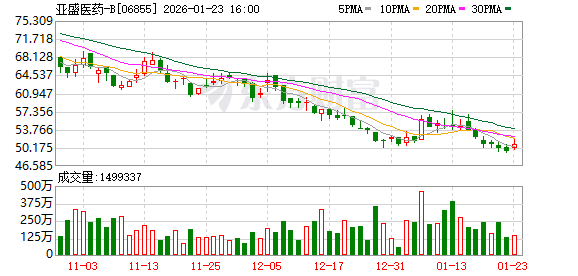
ASCENTAGE(06855)

Search documents
亚盛医药董事长杨大俊:以持续创新筑根基,全球布局启新程
Zhong Guo Zheng Quan Bao - Zhong Zheng Wang· 2026-01-24 04:37
Core Insights - The company, Ascentage Pharma, is focused on addressing unmet clinical needs in oncology and has established a strong positioning in global innovation through its deep expertise in apoptosis pathways and related drug development [1][2] Pipeline and Product Development - Ascentage Pharma has developed a rich pipeline of innovative drugs, including the next-generation BTK-targeted protein degrader APG-3288, which is a highlight of its global innovation strategy [2] - The company has successfully launched two major Class 1 new drugs: Nilotinib, approved in 2021 as China's first third-generation BCR-ABL inhibitor, and Lisenglitazone, set to be approved in July 2025 as China's first domestically developed Bcl-2 inhibitor [2][3] - Lisenglitazone is expected to break the nine-year monopoly of AbbVie’s Bcl-2 inhibitor Venetoclax, with a broader approval scope for chronic lymphocytic leukemia (CLL) patients compared to Venetoclax [3] Research and Development Strategy - The company adheres to two core principles: focusing on unmet clinical needs and ensuring true innovation, which have been pivotal in the successful launch of its core products [3] - Ascentage Pharma employs a rigorous pipeline selection process based on three criteria: addressing unmet clinical needs, emphasizing disease biology research, and ensuring drug viability [4] Global Development and Commercialization - The company is conducting over 40 clinical trials globally, including three global Phase III trials for Nilotinib, which have received approval from the FDA and EMA [5][6] - Ascentage Pharma has established significant partnerships, including a major collaboration with Takeda for Nilotinib, which has provided substantial financial benefits and enhanced brand recognition [6] - The company plans to list on NASDAQ in January 2025, becoming the first biopharmaceutical company to achieve dual listing in Hong Kong and the U.S., which is crucial for attracting international investors [7] Financial Performance and Market Strategy - In the first half of 2025, Ascentage Pharma reported revenues of 234 million yuan, with Nilotinib sales reaching 217 million yuan, a 93% increase year-on-year due to its inclusion in the national medical insurance directory [8] - The company has developed a dual approach for commercializing its products, partnering with established firms for initial market entry while building its own commercialization team for long-term growth [8][9] - Following the approval of Lisenglitazone, the company quickly signed agreements with major pharmaceutical distributors to facilitate rapid market entry and patient access [9] Future Outlook - Ascentage Pharma aims to expand its commercialization team significantly, from over 200 to 400 members by 2026, to enhance market presence and patient accessibility [9] - The company plans to accelerate multiple key global Phase III clinical projects and push for the inclusion of Lisenglitazone in the medical insurance directory, continuing its global innovation strategy [9]
亚盛医药董事长杨大俊:以持续创新筑根基 全球布局启新程
Zhong Guo Zheng Quan Bao· 2026-01-23 23:15
Core Insights - The company aims to transform into a biopharmaceutical enterprise by focusing on clinical needs and leveraging its expertise in apoptosis pathways and innovative drug development [2][4] Company Overview - Established in 2009, the company specializes in developing innovative drugs for unmet clinical needs in oncology, with a strong pipeline including key products like APG-3288, a next-generation BTK-targeted protein degrader [2][4] - The company has successfully launched two major Class 1 new drugs: Nairike, approved in 2021, and Lishengtuo, expected to be approved in July 2025 [2][3] Product Highlights - Lishengtuo breaks the nine-year monopoly of AbbVie’s Bcl-2 inhibitor Venetoclax, representing a significant achievement after 21 years of development [3][4] - Nairike addresses limitations of first and second-generation treatments for chronic myeloid leukemia, filling a domestic treatment gap [4][10] Clinical Development - The company is conducting over 40 clinical trials globally, including three global Phase III studies for Nairike and four for Lishengtuo, with significant milestones achieved in regulatory approvals [6][7] - Lishengtuo is the only Bcl-2 inhibitor currently advancing in Phase III trials for high-risk myelodysplastic syndromes (MDS) [7] Global Expansion Strategy - The company emphasizes a dual approach of clinical and business development, with significant partnerships, including a major collaboration with Takeda for Nairike [8][9] - The company plans to list on NASDAQ in January 2025, marking a significant step in its global market strategy [8] Financial Performance - In the first half of 2025, the company reported revenues of 234 million yuan, with Nairike sales reaching 217 million yuan, a 93% increase year-on-year due to its inclusion in the national medical insurance directory [9][10] - The company has over 3 billion yuan in cash reserves, indicating strong financial health [10] Commercialization Strategy - The company has developed a short- and long-term commercialization plan for Nairike, partnering with established firms to enhance market penetration [10][11] - Following the launch of Lishengtuo, the company has signed agreements with major pharmaceutical distributors to expedite its market entry [10] Future Outlook - The company plans to expand its commercial team significantly, aiming for 400 members by 2026, to enhance its market presence in the hematology oncology sector [11] - The focus will remain on advancing key global clinical projects and integrating Lishengtuo into the medical insurance system [11]

亚盛医药董事长杨大俊: 以持续创新筑根基 全球布局启新程
Zhong Guo Zheng Quan Bao· 2026-01-23 22:30
Core Insights - The company aims to transform into a biopharmaceutical enterprise by focusing on innovative drug development and global commercialization, driven by clinical needs [1][10] - The company has established a strong pipeline of innovative drugs targeting unmet clinical needs, particularly in oncology [2][3] Company Overview - Founded in 2009, the company specializes in developing innovative drugs for oncology and other areas with unmet clinical needs, leveraging expertise in apoptosis pathways and protein degradation [2] - The company has successfully launched two major first-class innovative drugs: Nairike and Lishengtuo, with the former being the first third-generation BCR-ABL inhibitor in China [2][3] Product Highlights - Lishengtuo, as China's first original Bcl-2 inhibitor, is expected to break the monopoly of AbbVie’s Venetoclax, with a projected global sales of $2.6 billion in 2024 and over $3 billion in 2025 [3] - Nairike has been recognized for addressing limitations of previous treatments for chronic myeloid leukemia, with ongoing global clinical trials [3][5] Research and Development Strategy - The company’s R&D pipeline is guided by three core criteria: focusing on unmet clinical needs, emphasizing disease biology, and ensuring drug viability [4] - The company adheres to a principle of "early failure, low-cost failure" to balance R&D investment and output [4] Global Expansion and Clinical Trials - The company is conducting over 40 clinical trials globally, including three pivotal Phase III studies for Nairike and four for Lishengtuo [5][6] - The company has received approvals from the FDA and EMA for several clinical studies, marking significant milestones in its internationalization efforts [5][6] Commercialization Strategy - The company reported a revenue of 234 million yuan in the first half of 2025, with Nairike sales reaching 217 million yuan, a 93% increase year-on-year [8] - The company has established partnerships with major pharmaceutical distributors to enhance the commercialization of Lishengtuo, achieving rapid market penetration [9] Future Outlook - The company plans to expand its commercial team significantly, aiming to enhance market share and patient accessibility for its core products [9] - The transition to a biopharmaceutical company will rely on self-generated sales profits to fund ongoing innovation, distinguishing it from traditional biotech models [10]
JPM医疗年会Day 3回顾:从创新到执行和兑现
GLP1减重宝典· 2026-01-16 15:29
Core Insights - The article emphasizes the significant advancements and global presence of Chinese companies in the biopharmaceutical sector, particularly at the JPM 2026 conference, showcasing their capabilities in both service and innovation [7][10]. Group 1: Chinese Companies at JPM 2026 - WuXi Biologics reported a substantial increase in its CRDMO business, achieving 209 comprehensive project collaborations by 2025, up from 150 in 2024, with a focus on complex projects like bispecific antibodies and ADCs [7][8]. - Ascentage Pharma highlighted its global innovation pipeline, featuring key products like the third-generation BCR-ABL inhibitor and BCL-2 inhibitor, which are driving growth in hematological oncology [9]. - Approximately 24 Chinese innovative pharmaceutical companies presented their clinical data and R&D progress at the conference, indicating a shift from being followers to systemic innovators in the global market [9][10]. Group 2: Multinational Pharmaceutical Companies - AbbVie projected an 8% revenue growth for 2025, with a 19% increase in sales from growth platforms, emphasizing the potential of its core immunology products [11]. - Sanofi reiterated its commitment to commercializing respiratory and vaccine-related assets while enhancing its pipeline through external collaborations [11]. - Gilead focused on its long-term strategy in virology, aiming for extended dosing forms and broader disease coverage [12]. Group 3: Healthcare Services and Capital Markets - The third day of the conference saw a shift towards discussions on cash flow, asset quality, and operational resilience among healthcare systems, with many reporting progress in cost control and operational integration [13]. - There was a cautious approach to mergers and acquisitions, with executives indicating a preference for manageable, cash-flow-positive targets rather than high-premium, long-cycle assets [13]. Group 4: Overall Conference Signals - The overall tone of the conference shifted towards practicality, focusing on verifiable results and execution capabilities rather than speculative narratives [14].

出发前就约了四五十家公司洽谈!“全球医药行业春晚”的中国面孔:参会者背景更多元,肿瘤药不再是“独宠”
Mei Ri Jing Ji Xin Wen· 2026-01-15 13:56
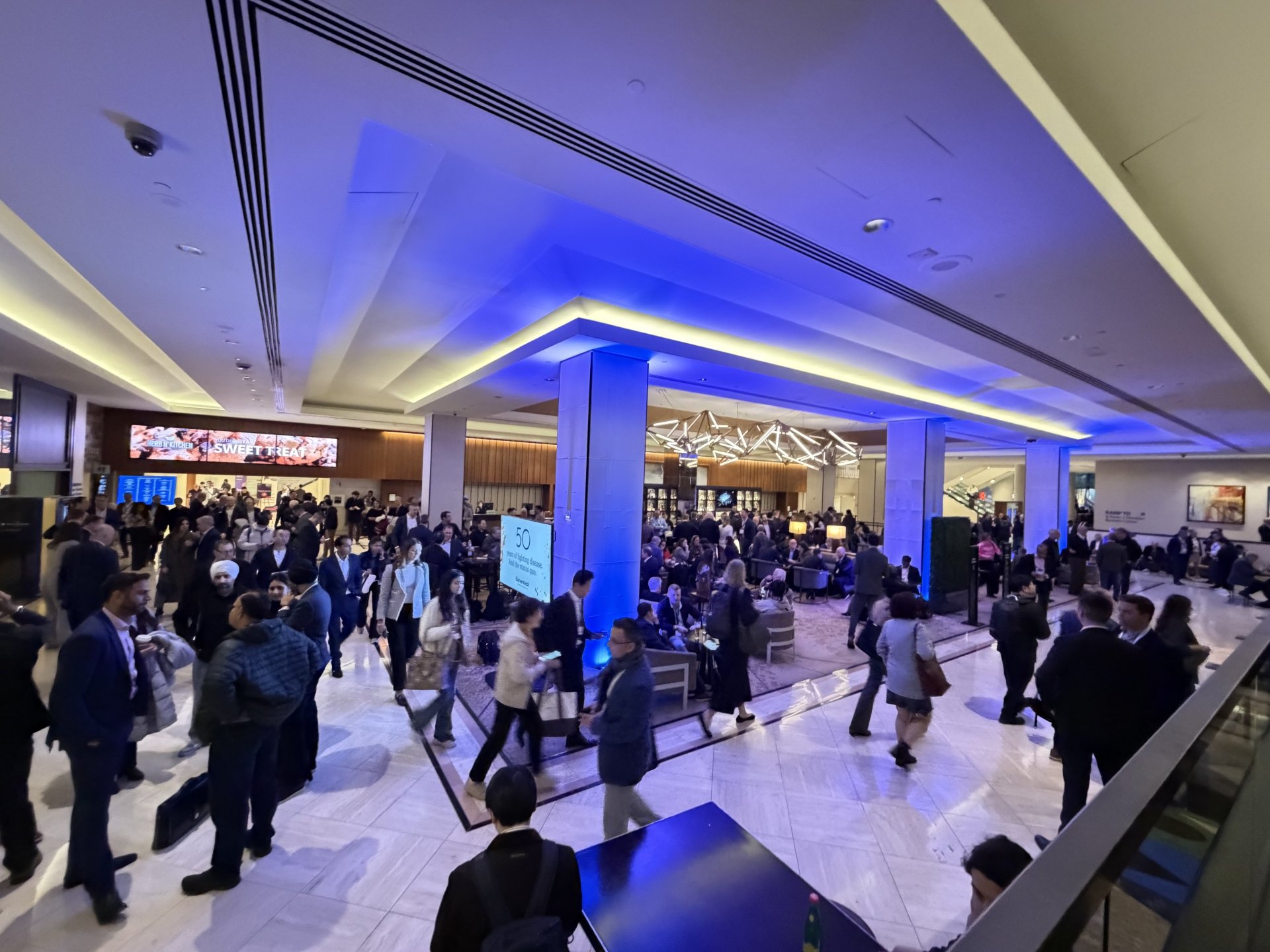
Core Insights - The 44th J.P. Morgan Healthcare Conference (JPM) is a significant event in the global healthcare sector, attracting over 8,000 participants, with a strong representation from biotechnology and pharmaceutical companies [1][3] - Chinese pharmaceutical companies are increasingly participating in JPM, focusing on collaboration and showcasing their innovative pipelines, particularly in the context of a booming merger and acquisition landscape in the industry [1][4] Group 1: Conference Overview - The conference is recognized as a "barometer" for development and investment in the pharmaceutical sector, featuring industry leaders and innovators discussing trends and opportunities [3] - Key areas of focus at this year's conference include biotechnology and pharmaceuticals, which account for 35% and 33% of participating companies, respectively [3] Group 2: Chinese Pharmaceutical Companies - At least 30 Chinese pharmaceutical companies are participating, with several being regular attendees, indicating a growing presence in the global market [4][5] - Notable Chinese companies presenting include BeiGene, Zai Lab, and Legend Biotech, with significant advancements in their clinical pipelines being highlighted [4] Group 3: Investment Trends - Investors are increasingly interested in the integration of AI in pharmaceuticals and how multinational companies are addressing patent cliffs and BD strategies [4][5] - The perception of Chinese pharmaceutical companies is shifting from mere asset providers to co-creators of global pharmaceutical innovation, reflecting their growing capabilities [9] Group 4: Company Innovations - Companies like China Biologic Products are undergoing significant innovation transformations, aiming for over 50% of their revenue from innovative products by 2025 [7] - Yuyuan Pharmaceutical, previously seen as a generic drug company, is transitioning to focus on nucleic acid and peptide innovative drugs, indicating a strategic shift in their business model [8]



JPM峰会上的中国医疗公司,现在都走了到哪一步?
GLP1减重宝典· 2026-01-13 14:15
Core Viewpoint - The article discusses the evolving landscape of the Chinese healthcare sector, particularly in the context of the upcoming JP Morgan Healthcare Conference, highlighting the diversification of Chinese companies and their strategic positioning in the global market [4][29]. Group 1: Conference Overview - The JP Morgan Healthcare Conference is the largest and most informative international healthcare investment and business development meeting, scheduled for January 12-15, 2026, in San Francisco [4]. - Approximately 22 Chinese companies are participating, categorized into four distinct roles: transaction-oriented innovative drug companies, disclosure companies at commercialization or regulatory milestones, supply-side platforms for global R&D and production outsourcing, and device companies focusing on efficiency and international expansion [4]. Group 2: Supply-Side Platforms - Supply-side platform companies are becoming essential in the global innovation chain, as they focus on delivering stable and efficient R&D and production capabilities, especially during periods of increased volatility in innovative drug companies [6][8]. - WuXi Biologics is shifting its focus from project quantity to project quality, emphasizing capacity utilization and long-term contract stability as key indicators of its value in the global biopharmaceutical supply chain [8]. Group 3: Cross-Border Licensing and Outbound Companies - The pricing logic for Chinese innovative drugs in cross-border licensing has evolved, with a focus on the overall deliverable capabilities rather than just the individual molecules [14]. - Companies like Kelun-Blotech and BaiLi Tianheng are exemplifying this trend by integrating their platforms into global R&D systems and establishing long-term collaborations with multinational pharmaceutical companies [16][18]. Group 4: Regulatory and Commercialization Companies - Companies that have accumulated clinical data and registration progress are transitioning towards verifiable sales and profit curves, shifting their valuation logic from future expectations to tangible cash flows [19]. - Zai Lab and Antengene are in the early commercialization stages, with their success hinging on their products' acceptance in clinical settings and the speed of prescription growth [21][23]. Group 5: Medical Device Companies - Mindray Medical is recognized for its comprehensive coverage of hospital workflows, with a focus on multi-product synergy rather than single-device performance, which is crucial for establishing long-term customer relationships [26]. - MicroPort Scientific is navigating a challenging environment where operational efficiency and cash flow management are critical for sustaining long-term clinical validation and international expansion [28]. Group 6: Industry Trends and Insights - The Chinese healthcare sector is transitioning from a phase of visibility to one of selection, where companies must clearly define their positions and deliverables in a high-intensity global exchange [29]. - The differentiation among Chinese companies in the global system is accelerating, with a clear divide between transaction-oriented innovative drug companies and those that have crossed critical regulatory milestones, focusing on verifiable growth [31].


亚盛医药(06855) - 截至二零二五年十二月三十一日止股份发行人的证券变动月报表
2026-01-07 14:51
第 1 頁 共 10 頁 v 1.1.1 FF301 股份發行人及根據《上市規則》第十九B章上市的香港預託證券發行人的證券變動月報表 截至月份: 2025年12月31日 狀態: 新提交 致:香港交易及結算所有限公司 公司名稱: 亞盛醫藥集團 呈交日期: 2026年1月7日 I. 法定/註冊股本變動 | 1. 股份分類 | 普通股 | 股份類別 | 不適用 | | 於香港聯交所上市 (註1) | | 是 | | | --- | --- | --- | --- | --- | --- | --- | --- | --- | | 證券代號 (如上市) | 06855 | 說明 | | | | | | | | | | 法定/註冊股份數目 | | | 面值 | | 法定/註冊股本 | | | 上月底結存 | | | 500,000,000 | USD | | 0.0001 USD | | 50,000 | | 增加 / 減少 (-) | | | 0 | | | USD | | 0 | | 本月底結存 | | | 500,000,000 | USD | | 0.0001 USD | | 50,000 | 本月底法定/註冊 ...
亚盛医药-B布局新一代BTK降解剂,APG-3288 IND申请获美国FDA许可
Zhi Tong Cai Jing· 2026-01-07 09:15
Core Viewpoint - Ascentage Pharma-B (06855) has received FDA approval for its new drug application (IND) for APG-3288, a next-generation BTK-targeted protein degrader, marking a significant advancement in the company's clinical research for treating relapsed/refractory B-cell malignancies [1][3]. Group 1: Clinical Research and Drug Development - The clinical study for APG-3288 is a global, multicenter, open-label Phase I trial aimed at evaluating the safety, tolerability, pharmacokinetics (PK), and preliminary efficacy in patients with relapsed/refractory hematologic malignancies [3]. - BTK plays a crucial role in the activation, proliferation, and survival of B-cells, with abnormal activation linked to various B-cell malignancies, including multiple types of lymphomas and chronic lymphocytic leukemia (CLL) [3][4]. - The global BTK market has grown into a nearly $30 billion space, reflecting the increasing demand for effective treatments [3]. Group 2: Mechanism and Advantages of APG-3288 - APG-3288 is a novel, highly selective BTK degrader developed using the PROTAC technology platform, which promotes the degradation of BTK through the formation of a ternary complex with Cereblon E3 ligase [5][6]. - Unlike traditional BTK inhibitors that merely inhibit activity, APG-3288 aims to degrade the BTK protein, potentially overcoming resistance issues associated with existing BTK inhibitors [6][7]. Group 3: Combination Therapy Potential - APG-3288 has significant potential for combination therapy with Ascentage Pharma's approved BCL-2 inhibitor, Lisocabtagene Maraleucel, which could lead to new treatment pathways for CLL [8][9]. - The combination of BTK inhibitors and BCL-2 inhibitors is expected to provide a complementary mechanism of action, enhancing therapeutic efficacy and addressing the challenges of treatment resistance [8][9]. Group 4: Strategic Importance and Future Directions - The approval of APG-3288's IND is a critical milestone for Ascentage Pharma, reflecting its commitment to advancing treatment options in hematologic malignancies [10]. - The company plans to expedite the global clinical development of APG-3288, exploring its potential in blood cancers and other BTK-related diseases, thereby aiming to benefit a larger patient population [10].
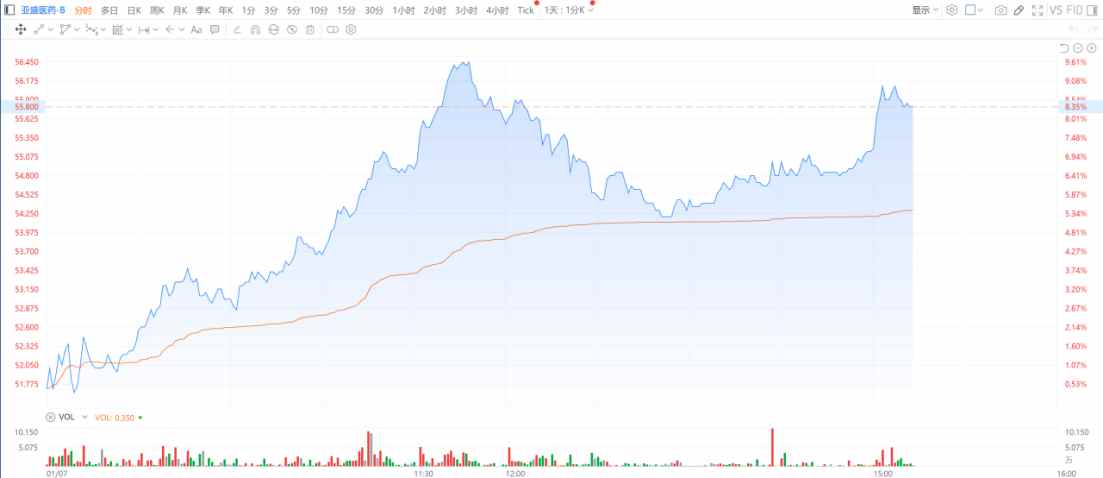
亚盛医药-B(06855)布局新一代BTK降解剂,APG-3288 IND申请获美国FDA许可
智通财经网· 2026-01-07 09:14
Core Viewpoint - Ascentage Pharma-B (06855) has received FDA approval for its new drug application (IND) for APG-3288, a next-generation BTK-targeted protein degrader, marking a significant advancement in the company's clinical research for treating relapsed/refractory B-cell malignancies [1][3]. Group 1: Clinical Research and Drug Development - The clinical study for APG-3288 is a global, multi-center, open-label Phase I trial aimed at evaluating the safety, tolerability, pharmacokinetics (PK), and preliminary efficacy in patients with relapsed/refractory hematologic malignancies [3]. - BTK is a key kinase in the B-cell receptor (BCR) signaling pathway, and its abnormal activation is closely associated with various B-cell malignancies, including multiple types of lymphomas and chronic lymphocytic leukemia (CLL) [3][4]. - The global BTK market has grown into a nearly $30 billion space, reflecting the increasing demand for effective treatments in this area [4]. Group 2: Mechanism and Advantages of APG-3288 - APG-3288 is designed to degrade rather than inhibit BTK, providing a novel solution to overcome resistance issues associated with traditional BTK inhibitors [5][6]. - Preclinical studies indicate that APG-3288 demonstrates superior BTK degradation capability, higher selectivity, and better pharmacokinetic characteristics compared to other investigational BTK degraders [6]. Group 3: Combination Therapy Potential - APG-3288 has significant potential for combination therapy with Ascentage Pharma's approved BCL-2 inhibitor, which could lead to new treatment pathways for CLL [6][7]. - The combination of BTK inhibitors and BCL-2 inhibitors is expected to create a synergistic effect, enhancing treatment efficacy by targeting different mechanisms involved in tumor cell survival [7][8]. - Ascentage Pharma's BCL-2 inhibitor has shown promising clinical data, supporting its potential for use in combination therapies, particularly in patients with limited treatment options [7][8]. Group 4: Strategic Importance and Future Directions - The approval of APG-3288's IND is a major milestone for Ascentage Pharma, reflecting its commitment to advancing treatment options in hematologic malignancies [8]. - The company plans to accelerate the global clinical development of APG-3288 and explore its therapeutic potential in other BTK-related diseases, aiming to benefit a larger patient population [8].
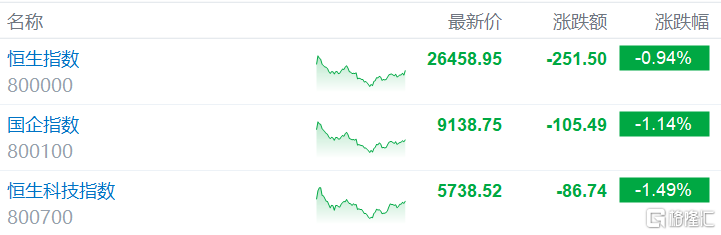
港股收评:恒指跌0.94,科网股全天弱势,创新药、铝业股齐涨
Ge Long Hui A P P· 2026-01-07 08:40
Market Overview - The Hong Kong stock market indices showed weakness, with the Hang Seng Index down 0.94% to 26,458.95, the Hang Seng Tech Index down 1.49% to 5,738.52, and the Hang Seng China Enterprises Index down 1.14% to 9,138.75 [1][2] Sector Performance - Major technology stocks collectively declined, with Alibaba down over 3%, and Netease and Kuaishou down over 2% [4][5] - The automotive sector faced significant losses, with BYD, NIO, and Xpeng all dropping over 3% [7] - Oil stocks also fell, with Kunlun Energy and China National Offshore Oil Corporation down over 3% [8][9] - Real estate stocks performed poorly, with Sunac China down 8.27% and several other major developers declining [10] - Chinese brokerage stocks were under pressure, with GF Securities down over 4% [11] Notable Gainers - The paper industry saw gains, with Nine Dragons Paper up 8.97% and Lee & Man Paper up 6.92% [14] - The innovative drug sector was active, with Ascentage Pharma-B and Tonghua Dongbao Pharmaceutical-B both rising over 8% [16] - Aluminum stocks rose, with Nanshan Aluminum International up over 10% [18] - Coal stocks strengthened, with Feishang Non-Ferrous Coal up over 34% [19] - The restaurant sector saw increases, with Ronghui Holdings up over 13% [21] - Solar energy stocks had some upward movement, with GCL-Poly Energy up over 24% [22] Investment Outlook - According to Galaxy Securities, the Hong Kong stock market is expected to see increased trading activity and a potential upward trend, with a focus on technology and consumer sectors due to supportive policies and low valuations [24]