SUNSHINE INS(06963)

Search documents
固本培元,资负相生:保险行业2026年度投资策略
Huachuang Securities· 2025-12-02 11:42
Core Insights - The report emphasizes the dual-driven business model of the insurance industry, focusing on both assets and liabilities, with a long-term outlook on liability cost optimization driving valuation recovery [8][9] - The insurance sector is currently at a cyclical turning point, with improving operational quality and a focus on cost reduction strategies, particularly in life insurance [9][10] Industry Overview - The insurance sector's total market capitalization is approximately 32,040.19 billion, with a circulating market value of 22,048.26 billion [4] - The report indicates a significant increase in the insurance index, with a 13.8% rise over the past 12 months, although it has underperformed relative to the broader market in the last six months [5] Company Profit Forecasts and Valuations - Key companies such as China Life, China Pacific, and Ping An are projected to have varying EPS growth rates, with China Life expected to see EPS of 6.34 in 2025 and 4.10 in 2026, while Ping An is forecasted to reach 8.02 in 2025 and 8.83 in 2026 [3] - The report maintains a "Buy" recommendation for several companies, including China Life and China Pacific, based on their projected performance and valuation metrics [3] Investment Themes - The report highlights the importance of the "cost reduction trifecta" in life insurance, focusing on product innovation, channel expansion, and dynamic adjustment of preset interest rates [8][9] - In property insurance, the "reporting and operation integration" is expected to optimize costs and enhance profitability, particularly in non-auto insurance segments [9][10] Short-term and Long-term Outlook - Short-term performance is closely tied to equity market trends, with expectations of continued growth in 2025, but potential pressure on performance in 2026 due to investment factors [9][10] - Long-term, the report anticipates that improvements in life insurance costs will drive valuation recovery, with a projected NBV growth rate of over 15% for listed insurance companies in 2026 [9][10] Regulatory Environment - The introduction of a dynamic adjustment mechanism for preset interest rates is expected to alleviate liability costs and enhance the attractiveness of dividend insurance products [24][38] - Recent regulatory guidance aims to stabilize dividend levels in insurance products, preventing excessive competition and ensuring sustainable growth [38][39]





IDG、阳光保险、腾讯投资的「轻松健康集团」通过聆讯,冲刺香港IPO
Xin Lang Cai Jing· 2025-12-01 10:49
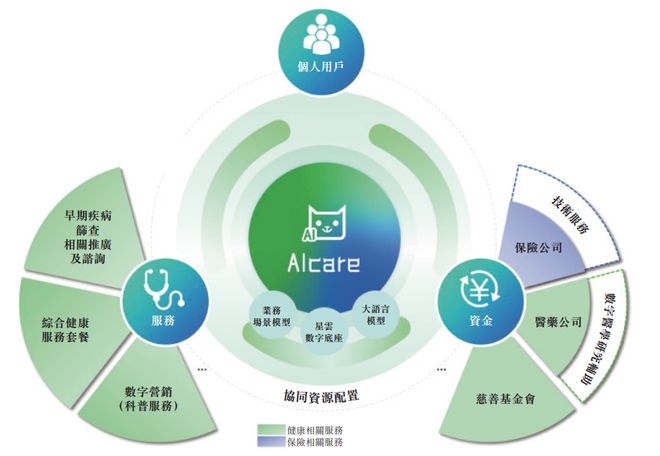
Core Viewpoint - QingSong Health Corporation is preparing for an IPO on the Hong Kong Stock Exchange, aiming to leverage its position as a leading provider of integrated health services and health insurance solutions in China [1][2]. Company Overview - QingSong Health Corporation is ranked 10th in China's digital integrated health services and health insurance market based on revenue for 2024, and 7th in the digital health services market [1][8]. - The company offers a variety of health-related services, including digital marketing, digital medical research support, comprehensive health service packages, and early disease screening promotion and consulting services [1][3]. Financial Performance - For the fiscal year ending December 31, 2024, the company's revenue was approximately RMB 9.45 billion, with a net profit of about RMB 0.1 billion [1][5]. - The revenue for the first half of 2025 was RMB 6.56 billion, with a net profit of RMB 0.86 billion [1][5]. - The company has shown a compound annual growth rate (CAGR) of 54.95% in revenue from 2022 to 2025 [5]. User and Insurance Metrics - As of June 30, 2025, the company had 168.4 million registered users, with annualized premium income from sold insurance products totaling RMB 4.93 billion [2]. - The annualized premium income from sold insurance products has decreased from RMB 13 billion in 2022 to RMB 4.93 billion in 2025 [2]. Market Context - The market for digital integrated health services and health insurance in China is projected to grow from RMB 727 billion in 2020 to RMB 2,365 billion in 2024, with a CAGR of 34.3% [7]. - The market is expected to reach RMB 7,485 billion by 2029, with a projected CAGR of 25.9% from 2024 to 2029 [7]. Competitive Landscape - Comparable companies in the industry include Ping An Good Doctor, Health 160, and Health Road, with varying market capitalizations and financial metrics [11]. - QingSong Health Corporation's recent fiscal year revenue of RMB 9.45 billion positions it competitively within this landscape [11]. Management Structure - The board of directors consists of eight members, including two executive directors, three non-executive directors, and three independent non-executive directors [12]. Shareholder Structure - Major shareholders include Yang through various entities controlling 38.94% of voting rights, IDG China with 12.89%, and Sunshine Insurance with 10.56% [14]. Financing History - The company has undergone seven financing rounds, with the most recent raising approximately $75 million in December 2019 [15].

保险业:理赔捐赠同步 服务保障并行
Jin Rong Shi Bao· 2025-12-01 01:32
Core Viewpoint - The insurance industry in Hong Kong has rapidly mobilized to support rescue and recovery efforts following a severe fire incident in Tai Po, demonstrating its role as an economic stabilizer and social safety net through emergency response measures and significant financial contributions [1][4]. Group 1: Emergency Response Actions - Multiple insurance companies, including China Life, China Pacific, and Taikang Insurance, activated emergency response plans immediately after the fire, establishing management teams and simplifying claims processes to ensure rapid support for affected clients [2][3]. - China Life's overseas branch initiated emergency claims services, proactively contacting policyholders to ensure timely assistance [2]. - China Taiping Insurance quickly identified affected clients and established a claims hotline, demonstrating a commitment to rapid response and support [3]. Group 2: Financial Contributions - Insurance institutions have collectively donated over 60 million HKD to aid in rescue efforts, with AIA Hong Kong contributing 20 million HKD for emergency assistance and community recovery [4][6]. - China Ping An announced a donation of 10 million HKD for emergency relief and recovery efforts, emphasizing its commitment to supporting affected communities [4][5]. - Taikang Insurance pledged 10 million RMB for urgent relief and community rebuilding, showcasing the industry's solidarity with the affected population [6]. Group 3: Reinsurance Support - Reinsurance companies, such as China Re, played a crucial role in stabilizing market confidence by providing essential support for local insurers in managing disaster-related claims [7][8]. - China Re activated its emergency response mechanism to assist direct insurers in assessing losses and expediting claims processes, reinforcing the insurance system's resilience [7]. - Qianhai Reinsurance established a dedicated task force to support claims services and ensure timely compensation for affected areas, enhancing the overall response capability of the insurance sector [8].

血脉相连!友邦、阳光、平安等险企各捐赠千万援助香港;太平积极处理超20亿保额理赔;保险资管业协会更名添“银行”|13精周报
13个精算师· 2025-11-29 03:03
Regulatory Dynamics - The China Insurance Asset Management Association has been renamed to include "Bank," marking a new phase in self-regulation for the banking and insurance asset management industry [8] - Beijing has upgraded vehicle insurance real-name authentication to a dual-factor verification system using "facial recognition + mobile verification" [9] - The Beijing Financial Regulatory Bureau reported that the insurance depth and density in the region remain the highest in the country [10] - Shenzhen's insurance industry reported a premium income growth rate of 12.2% in the first ten months, leading among first-tier cities [12] - Guangdong supports insurance funds to legally increase equity investment ratios and actively participate in merger and acquisition projects [13] - Shaanxi has established mechanisms to support insurance funds in setting up private equity venture capital funds [14] Company Dynamics - Taikang Life has increased its stake in Hong Kong-listed Fuhong Hanlin by purchasing 51,850 shares, raising its holding to 5.26% [16] - China Life has increased its stake in China National Railway Signal & Communication by 115,800 shares [17] - Dajia Life has invested over 20 billion in the Huage Nengrong (Shenzhen) Expressway [18] - China Life and Cainiao have jointly established a logistics investment fund with a scale exceeding 1.7 billion [19] - Caixin Jixiang and Guoshou Capital have laid out the first water and electricity private REIT in the country [20] - China Post has been approved to operate insurance agency business [25] - 法巴天星 has been approved to commence operations, with significant stakes held by both the French insurance group and Xiaomi [26] Industry Dynamics - The recent fire in Hong Kong's Tai Po district highlighted the low penetration rate of home insurance in mainland China, with many older residential areas lacking coverage [62] - Insurance capital has accelerated its equity investments, with 37 instances of stake acquisitions this year, the highest in nearly a decade [63] - The China Insurance Investment Fund became the largest winner in the IPO of "domestic Nvidia" Moer Thread, acquiring 437,520 shares [64][65] - The insurance industry is optimistic about the upcoming market trends, with expectations of a "spring surge" in stock market activity [66] - The China Actuarial Association suggests that insurance products should shift towards being less sensitive to interest rates [67] Personnel Changes - Zhao Yulong has been elected as the president of the China Insurance Industry Association [38] - He Xin has been approved to serve as the chairman of Dongfang Jiafu Life Insurance [40] - The board of directors of Zhong An Online has elected Yin Hai as chairman [41] - Key management adjustments have been made at China Reinsurance [42]


守望相助的金融力量:多家金融机构紧急支援香港大埔火灾
Zhong Guo Jing Ying Bao· 2025-11-28 11:44
Core Viewpoint - The financial industry in Hong Kong has actively responded to the fire disaster at Wangfuk Court in Tai Po, demonstrating its social responsibility through donations and volunteer services [1][2][5] Group 1: Emergency Donations and Support - Sunshine Insurance Group was the first to donate 10 million HKD for emergency relief efforts [2] - Other insurance companies, including China Pacific Insurance, China Ping An, and Taikang Life, also contributed to the donation efforts [2] - Bank of China Hong Kong established a donation account to collect funds for affected residents, while China Construction Bank International raised 2 million HKD for emergency relief and community rebuilding [2] Group 2: Volunteer Services and Humanitarian Support - Sunshine Insurance organized volunteers to provide essential supplies such as hygiene products and emergency food to affected residents [3] - Volunteers arrived in the disaster area to assist with material distribution and support for affected individuals [3] - Other financial firms also formed volunteer teams to participate in disaster relief efforts [3] Group 3: Emergency Response Plans - Several financial institutions activated emergency response plans to support affected individuals [4] - Bank of Communications (Hong Kong) provided immediate support services and set up emergency service stations [4] - Various insurance companies initiated emergency claims processes to facilitate timely support for affected clients [4] Group 4: Industry Maturity and Systemic Support - The financial response to the disaster involved a wide range of institutions, indicating a mature and professional approach to social responsibility [5] - The total donations were significant and purpose-driven, reflecting an evolution from traditional funding to a comprehensive support model [5]

守望相助,血脉相连!阳光保险、平安保险、中银香港、建银国际等金融机构积极捐赠驰援香港
智通财经网· 2025-11-28 11:28
Core Viewpoint - The financial industry in Hong Kong has actively responded to the fire disaster at Wong Fuk Court in Tai Po, demonstrating its social responsibility through donations and support for affected residents [1][2][5] Group 1: Emergency Donations and Support - Sunshine Insurance Group was the first to donate 10 million HKD for emergency relief efforts [2] - Other insurance companies, including China Pacific Insurance, China Ping An, and Taikang Life, also contributed to the donation efforts [2] - Bank institutions like Bank of China (Hong Kong) and China Construction Bank (Asia) initiated fundraising and support measures for the affected residents [2] Group 2: Volunteer Services and Humanitarian Support - Sunshine Insurance organized volunteers to provide essential supplies and support to affected individuals, including hygiene products and emergency food [3] - Various financial companies formed volunteer teams to assist in disaster relief and encouraged employees to participate in blood donation drives [3] Group 3: Emergency Response Plans - Multiple financial institutions activated emergency response plans to provide timely support to affected individuals, including setting up emergency service stations and extending branch operating hours [4] - Insurance companies implemented streamlined claims processes and established dedicated service hotlines to assist with claims and support [4] - The financial sector's rapid response highlights its role in urban disaster prevention and recovery, contributing to community stability [4][5]

阳光保险(6963.HK)捐赠1000万港元,紧急驰援香港大埔灾后援助
Ge Long Hui A P P· 2025-11-28 04:57
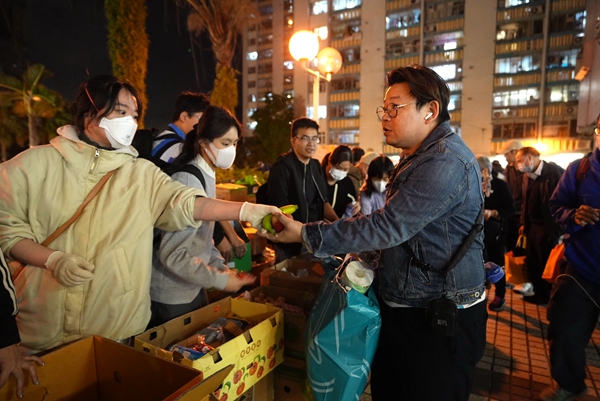
Core Viewpoint - The article highlights the immediate response of Sunshine Insurance to a fire disaster in Hong Kong, showcasing the company's commitment to social responsibility through financial and material support for affected individuals [1] Group 1: Company Response - Sunshine Insurance donated 10 million HKD through its Sunshine Insurance Charity Foundation to assist victims of the fire disaster [1] - The charity foundation's volunteers quickly mobilized to purchase essential supplies such as hygiene products, emergency food, and drinking water based on the needs outlined by the Hong Kong government [1] Group 2: Volunteer Efforts - The first group of volunteers arrived in the disaster area on the same night of the incident to coordinate with local temporary shelters [1] - Volunteers assisted in distributing supplies, comforting affected individuals, and maintaining order at the disaster site, demonstrating a proactive approach to disaster relief [1]
参与救助、捐款,中国太保、友邦香港等险企积极应对香港大埔宏福苑火灾事故
Bei Jing Shang Bao· 2025-11-28 02:27
Group 1 - A major fire occurred in Hong Kong's Tai Po district, resulting in significant casualties and prompting a response from various insurance companies [1] - China Pacific Insurance (CPIC) activated its emergency response mechanism, offering multiple customer service initiatives to support affected individuals, including a donation of 10 million HKD [1] - AIA Hong Kong pledged to donate 20 million HKD through its charitable foundation for immediate assistance and recovery efforts, while proactively contacting potentially affected clients [2] Group 2 - Other participating insurers include China Ping An, Sunshine Insurance, and Waterdrop, which are also involved in providing insurance coverage related to the fire incident [3] - Taiping Hong Kong confirmed it underwrote various insurance policies for the affected area, including construction all-risk insurance and public liability insurance [3] - Qianhai Reinsurance, as an active player in the Hong Kong market, is set to provide compensation for claims related to property, engineering, and employer liability insurance following the fire [3]
阳光保险20251127
2025-11-28 01:42
Summary of Sunshine Insurance Conference Call Company Overview - **Company**: Sunshine Insurance - **Date**: November 27, 2025 Key Points Industry Insights - The life insurance industry is facing challenges with the predetermined interest rate dropping to historical lows, with traditional products at only 2.0% [2][3] - Concerns exist regarding the growth rate and competitiveness of life insurance products, particularly due to a sales slump attributed to product switching and annual task adjustments by insurance companies [2][3] Sales and Growth Expectations - The bank insurance business is expected to benefit from banks' net interest margin pressures and strong demand for middle-income products, with an anticipated premium growth in the coming year [2][3] - Individual insurance business is under significant transformation pressure due to regulatory changes and intense competition for new customers [2][3][4] Agent Workforce and Productivity - Sunshine Insurance is focusing on high-quality transformation of its agent workforce, with approximately 49,000 agents currently, maintaining a per capita productivity of about 28,000 yuan [2][5] - The company is reducing management layers to enhance personal development among agents, although the number of active agents has slightly decreased [5] Product Strategy - Dividend insurance has become mainstream, with a significant increase in its share of new policies, expected to reach 70%-80% [6][7] - The company plans to diversify its product offerings by increasing the proportion of individual insurance channels for protection products and mid-term savings products [7] Asset Allocation Strategy - Fixed income assets constitute 75% of the company's portfolio, with over 75% in long-term bonds and approximately 200 billion yuan in ultra-long bonds [8] - The company aims to maintain a stable asset duration and will selectively overweight certain assets, with equity investments making up 15% of the portfolio [8] Regulatory Impact - The implementation of the unified reporting policy for non-auto insurance is expected to cause short-term premium fluctuations but may lead to improved profitability in the long run [10] - The company has established a special task force to develop differentiated strategies in response to regulatory changes [10] Health Insurance Development - The guidance for promoting high-quality development in health insurance provides opportunities for traditional and potential dividend health insurance products [11][12] - The company plans to focus on health insurance once regulatory details are clarified [12] Financial Management - Sunshine Insurance has developed a cost management approach aligned with regulatory directions, allowing for more precise management of various costs [13] - The company is also exploring opportunities in inclusive finance, particularly in agricultural insurance and health insurance, despite current high costs [14] Future Investments - Sunshine Insurance has recently invested 20 billion yuan in a private equity fund and plans to continue allocating funds in line with its investment strategy [18] Industry Trends - The insurance industry is adopting measures to combat "involution," focusing on product strength, risk management, and customer service rather than competing on commissions [17] This summary encapsulates the key insights and strategic directions of Sunshine Insurance as discussed in the conference call, highlighting the challenges and opportunities within the life insurance sector.
捐赠数千万港元!中国平安、阳光保险、水滴等险企驰援香港大埔火灾救援
Bei Jing Shang Bao· 2025-11-27 14:45
Core Viewpoint - A major fire occurred in Hong Kong's Tai Po district, resulting in significant casualties and prompting various sectors to respond with support and donations for emergency relief efforts [1] Group 1: Insurance Industry Response - China Ping An initiated a donation of 10 million HKD for emergency relief and post-disaster recovery efforts, providing essential supplies and financial support to affected residents [1] - Sunshine Insurance Group announced an emergency donation of 10 million HKD to assist in the fire rescue efforts in Tai Po [1] - Waterdrop Inc. pledged a donation of 1 million HKD to support the rescue efforts for residents impacted by the fire [1] - Yunfeng Financial Group and its subsidiary, Wantong Insurance, committed to a donation of 10 million HKD specifically for medical treatment, emergency housing, and transitional living assistance for affected residents [1] - The Fosun Public Welfare Foundation, in collaboration with Fosun International and other affiliated companies, donated 10 million HKD for urgent rescue and post-disaster reconstruction efforts [1]