CBC(600132)

Search documents
啤酒概念涨1.14%,主力资金净流入13股
Zheng Quan Shi Bao Wang· 2025-05-28 08:35
Core Insights - The beer sector experienced a rise of 1.14%, ranking 7th among concept sectors, with 15 stocks increasing in value, led by Lehui International, Qingdao Beer, and Zhujiang Beer, which rose by 10.02%, 3.05%, and 3.05% respectively [1][2][3] - The sector saw a net inflow of 0.92 billion yuan, with 13 stocks receiving net inflows, and five stocks exceeding 10 million yuan in net inflow, with Lehui International leading at 392.99 million yuan [2][3] Sector Performance - The beer concept sector had a positive performance with notable gains from key players such as Lehui International, Qingdao Beer, and Chongqing Beer, while stocks like Jinzongzi and Zhuhai Zhongfu faced declines [1][2] - The top gainers in the beer sector included Lehui International with a 10.02% increase, followed by Qingdao Beer at 3.05% and Chongqing Beer at 2.64% [3][4] Fund Flow Analysis - Lehui International, *ST Lanhua, and Jinhui Wine had the highest net inflow ratios at 11.44%, 7.57%, and 6.64% respectively, indicating strong investor interest [3][4] - The main inflow of funds was concentrated in Lehui International, which attracted 392.99 million yuan, followed by Qingdao Beer and Chongqing Beer with inflows of 270.70 million yuan and 224.53 million yuan respectively [2][3]




食品饮料行业周观点:白酒行业逐步施压,餐供龙头边际修复
GOLDEN SUN SECURITIES· 2025-05-25 06:23
Investment Rating - The report maintains an "Increase" rating for the food and beverage industry, indicating a positive outlook for key players in the sector [5]. Core Insights - The white liquor industry is experiencing gradual pressure, with a focus on rational targets for 2025. The report emphasizes three main investment lines: leading brands with competitive advantages, high-certainty regional brands, and flexible stocks benefiting from recovery and increased risk appetite [1][2]. - The beer sector shows a slight decline in production, with a 0.6% year-on-year decrease in the first four months of 2025. However, there is potential for recovery in the upcoming peak season, suggesting a favorable investment window [3]. - The report highlights the broad recovery potential in the catering supply space, with leading companies expected to benefit from improved performance and market expansion strategies [4][7]. Summary by Sections White Liquor - The industry consensus is shifting towards stable, high-quality growth with a focus on market share rather than aggressive growth targets. Key strategies include product innovation, market penetration, and international expansion [2]. - Major companies like Guizhou Moutai and Shanxi Fenjiu are focusing on maintaining market stability and enhancing their brand presence among younger consumers [2]. Beer and Beverage - The beer production for January to April 2025 was 11.44 million kiloliters, reflecting a slight decline. However, April showed a 4.8% increase in production, indicating potential for recovery [3]. - The beverage sector is characterized by intense competition, but new product launches and recovery in consumer demand are expected to sustain high growth [3]. Catering Supply - The report notes significant opportunities for leading companies in the catering supply sector, particularly with the introduction of new products and expansion into new categories [4][7]. - Companies like Three Squirrels are diversifying their product lines and enhancing their distribution channels to capture more market share [7].





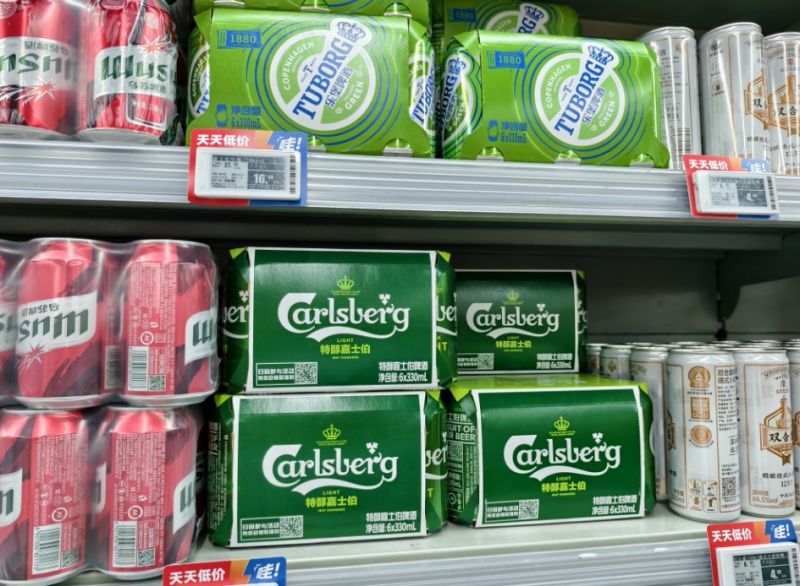
嘉士伯新获“山城啤酒”商标注册证 此前称拥有“山城”品牌完整所有权
Jing Ji Guan Cha Wang· 2025-05-25 03:34
Core Viewpoint - The ongoing trademark dispute between Carlsberg's Chongqing Brewery and Chongqing Jiawei Brewery over the "Shancheng Beer" brand has intensified, with recent trademark registrations by Carlsberg indicating a strategic move to solidify its ownership and market position [1][3][5]. Group 1: Trademark Registration and Ownership - Carlsberg's Chongqing Brewery has recently obtained multiple trademark registrations for "Shancheng Beer" between May 6 and May 19, 2025, asserting its complete ownership of the brand [1]. - The trademark registrations include various designs and names associated with "Shancheng Beer," highlighting Carlsberg's commitment to securing its brand identity [4][5]. - Chongqing Jiawei claims that the agreement to use the "Shancheng" trademark was intended to provide them with permanent usage rights, which they argue is essential for their sustainable development [5]. Group 2: Legal Disputes and Market Dynamics - The legal battle between Chongqing Brewery and Chongqing Jiawei has been ongoing, stemming from Jiawei's role as a contract manufacturer for "Shancheng Beer" [1][2]. - Following a legal defeat, Chongqing Brewery emphasized that it has sufficient production capacity and criticized the partnership with Jiawei as detrimental to its interests [1][5]. - Chongqing Jiawei contends that the collaboration has significantly benefited Carlsberg and Chongqing Brewery, enhancing their market position and brand authority in the region [2]. Group 3: Future Implications - The recent trademark registrations by Carlsberg may lead to renewed conflicts with Chongqing Jiawei, as the latter's rights to the "Shancheng" brand are closely tied to the existing sales agreements, which are set to expire in January 2029 [5]. - The ongoing trademark battle and the associated legal disputes could have significant implications for both companies' market strategies and brand positioning in the competitive beer industry [5].


格局裂变!啤酒寒冬中这一战谁是赢家:重庆啤酒加码“山城”商标控制权,业绩压力待缓解
Hua Xia Shi Bao· 2025-05-23 13:01
Core Viewpoint - The ongoing legal disputes between Chongqing Beer and its subsidiary, Jiawei Beer, are significantly impacting the company's financial performance, with a reported 16.61% decline in net profit for 2024 amid a weak beer consumption market [2][5][6]. Trademark Registration - Carlsberg Chongqing Beer, a subsidiary of Chongqing Beer, successfully registered the "Mountain City Beer" trademark on May 21, 2024, after multiple applications [3][4]. - The company has filed over ten applications for the "Mountain City Beer" trademark as part of its routine management and protection of trademark assets [3][4]. Financial Performance - In 2024, Chongqing Beer reported a revenue of 14.645 billion yuan, a decrease of 1.15% year-on-year, and a net profit of 1.115 billion yuan, down 16.61% [5][6]. - The decline in net profit is attributed to provisions for losses related to the ongoing disputes with Jiawei Beer, amounting to 254 million yuan [6]. Internal Disputes - The disputes primarily revolve around a 20-year exclusive distribution agreement signed in 2009, with allegations of breach of contract from Jiawei Beer against Chongqing Beer [5][6]. - Jiawei Beer claims that Chongqing Beer has violated the agreement since 2011, leading to a court ruling in 2023 that ordered Chongqing Beer to pay 353 million yuan to Jiawei Beer [5][6]. Market Conditions - The overall beer market in China is under pressure, with both international and local brands experiencing declining sales [7]. - In 2024, the revenue from international brands was 5.308 billion yuan, a modest increase of 0.58%, while local brand revenue fell to 8.862 billion yuan, a decrease of 3.3% [7]. Future Outlook - Chongqing Beer maintains a cautiously optimistic view for the beer industry in 2025, anticipating a more favorable environment due to improving macroeconomic conditions, despite ongoing challenges such as increased competition and cost fluctuations [8][9].
啤酒、饮料攻防战:互相卷进对方的赛道|新酒饮变局
2 1 Shi Ji Jing Ji Bao Dao· 2025-05-23 01:02
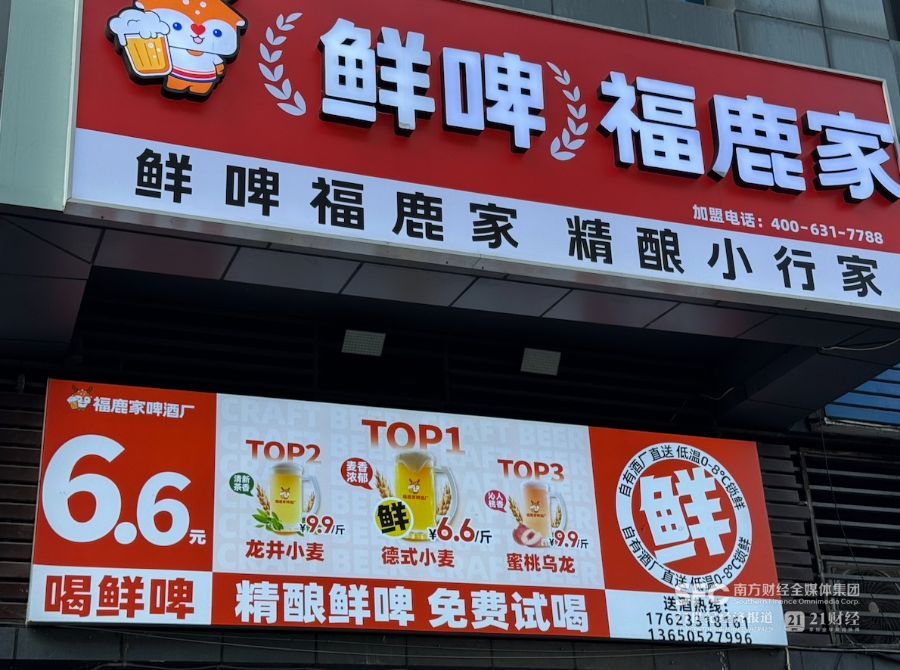
Core Viewpoint - The beverage industry is undergoing significant transformation, with a focus on new alcoholic beverages such as craft beer, pre-mixed drinks, non-alcoholic beverages, and low-alcohol options becoming key growth areas for companies [1][2]. Group 1: New Beverage Trends - The emergence of "fresh beer" stores like "Xianpifulu" in Chongqing offers a variety of craft beer at competitive prices, attracting consumers with low-cost options [2][5]. - The store's pricing strategy includes selling 500ml beers for as low as 6.6 yuan, significantly lower than traditional craft beer prices [5][20]. - Companies are increasingly blurring the lines between alcoholic and non-alcoholic beverages, with major beer brands launching soft drink lines to leverage existing distribution channels [6][12]. Group 2: Market Dynamics - Beer companies like Chongqing Beer and Yanjing Beer are expanding into the soft drink market, launching products like "Dali Cang'e" and "Beisite Jia Bing" to capture a share of the growing beverage market [6][8]. - The soft drink market is projected to grow at an annual rate of 8.58%, while beer production is expected to decline by 1.9% in 2024, prompting beer companies to diversify into beverages [12][13]. - The competitive landscape in the beverage industry is intense, with established brands dominating various segments, making it challenging for new entrants to gain market share [15][22]. Group 3: Strategic Considerations - The strategy of beer companies entering the beverage market is driven by the potential for channel synergy and the need to adapt to changing consumer preferences [11][12]. - Companies are leveraging their existing distribution networks to introduce new products, enhancing production efficiency and market reach [12][13]. - The low entry barriers for new beverage products have intensified competition, requiring companies to innovate rapidly to maintain relevance [22][28]. Group 4: Challenges in the Alcoholic Beverage Sector - Beverage companies venturing into alcoholic drinks face challenges related to product positioning, distribution, and quality expectations from consumers [23][25]. - Recent launches of low-alcohol products by beverage brands have not gained significant traction in the market, indicating potential misalignment with consumer preferences [26][27]. - The need for high-quality base alcohol in pre-mixed drinks is critical, as consumer expectations for taste and quality continue to rise [27][28].
包销纠纷一审判赔超3亿后 重啤子公司多个山城啤酒商标获批
Nan Fang Du Shi Bao· 2025-05-22 14:34
Group 1 - The core point of the news is that Chongqing Beer has successfully registered the "Mountain City Beer" trademark, which is part of its routine management and protection of its trademark assets [2] - The trademark registration was conducted by Carlsberg Chongqing Beer Co., Ltd., a subsidiary of the listed company Chongqing Beer, which has registered a total of 9 "Mountain City Beer" trademarks this year [2] - The trademarks are classified under category 32, which pertains to beer beverages, with application dates set for May 29, 2024, and September 30, 2024, and registration announcement dates for April 14, 2025, and April 28, 2025 [2] Group 2 - The attention surrounding the "Mountain City Beer" trademark is linked to ongoing distribution disputes between Chongqing Beer and its affiliate Chongqing Jiawei Beer Co., Ltd., primarily focused on the distribution agreement rather than trademark ownership [3] - The historical context includes a joint venture established in 1997, where Chongqing Beer became the major shareholder, and subsequent changes in ownership and operational structure leading to the current disputes [3] - The disputes intensified in 2024, with Chongqing Jiawei accusing Carlsberg of monopolizing the "Mountain City" brand and Chongqing Beer countering that Jiawei was attempting to leverage public opinion to gain control over the brand post-2029 [3] Group 3 - As of March 14, 2023, Chongqing Beer lost a first-instance court ruling regarding the distribution dispute, which ordered the company to pay approximately 353 million yuan to Chongqing Jiawei, and Chongqing Beer has since appealed the decision [4]
啤酒行业深度:攻守兼备,优质龙头已进入击球区
Soochow Securities· 2025-05-22 09:02
Investment Rating - The report maintains an "Overweight" rating for the beer industry, indicating a favorable investment outlook for high-quality leading companies [2]. Core Insights - The current market conditions present an opportunity for high-quality leading companies in the beer sector, with low channel inventory and the approach of the beer consumption peak season. Recommended stocks include Qingdao Beer, Yanjing Beer, and China Resources Beer, which are expected to show resilience and growth [2][46]. - The beer industry is anticipated to experience a recovery in 2025, supported by policy measures aimed at stimulating consumption and improving the restaurant and retail sectors [46][49]. Summary by Sections 1. Review of 2024 - Beer leaders continue to improve profitability, but growth rates are slowing down. The overall consumption remains weak, impacting sales and pricing [10][11]. - Consumer willingness to spend has decreased quarterly, leading to pressure on sales and prices. The effective demand in the domestic market is insufficient, and restaurant consumption remains sluggish [17][21]. - Qingdao Beer has actively reduced inventory, resulting in a 5.83% decline in sales to 7.54 million tons, while Pearl River Beer and Yanjing Beer have shown positive sales growth [29][30]. 2. Outlook for 2025 - The beer sector is expected to be both offensive and defensive, with supportive policies likely to enhance the recovery of the restaurant channel and stabilize income expectations [46][47]. - There is strong support for sales and pricing due to resilient consumer demand and ongoing product optimization. The disposable income growth among the middle-income group is notably faster, indicating robust consumer purchasing power [47][48]. - The free cash flow of leading beer companies is expected to remain high, with steady improvements in dividend rates and payout ratios, driven by significant enhancements in net profit margins since 2018 [58][59]. 3. Investment Recommendations - The report suggests increasing exposure to high-quality leading companies in the beer sector, particularly those with strong growth potential and resilient business models [2][46]. - Key companies to watch include Qingdao Beer, Yanjing Beer, and China Resources Beer, which are positioned well for both growth and defensive strategies in the upcoming market environment [2][46].

重庆啤酒(600132) - 重庆啤酒股份有限公司2024年年度股东大会会议资料
2025-05-20 08:30
重庆啤酒股份有限公司 二零二四年年度股东大会 会议资料 二零二五年五月二十九日 本次会议采取现场投票与网络投票相结合的方式。本次股东大会将通过上海证券交 易所交易系统向公司股东提供网络投票平台,股东可以在网络投票时间内通过上述系统 行使表决权。 现场会议召开时间为:2025 年 5 月 29 日(星期四)下午 14:00; 网络投票时间为:2025 年 5 月 29 日(星期四)上午 9:30-11:30,下午 13:00-15:00。 五、投票表决的有关事宜 股东大会会议须知 尊敬的股东及股东代表: 您好! 欢迎参加重庆啤酒股份有限公司 2024 年年度股东大会。为保证本次会议的顺利进行, 以下事项希望得到您的配合和支持。 一、董事会以维护全体股东的合法权益、维持大会正常秩序和提高议事效率为原则, 认真履行《公司章程》规定的职责,做好召集、召开股东大会的各项工作。 二、股东参加股东大会依法享有发言权、质询权、表决权等权利。股东参加股东大 会,应认真履行其法定权利和义务,不得侵犯其他股东的权益,不得扰乱大会的正常秩 序。 三、大会设立秘书处,具体负责大会有关程序方面的事宜。 四、参加会议的基本情况 1、出席本 ...
重庆啤酒(600132) - 重庆啤酒股份有限公司2024年环境、社会和公司治理报告(英文版)
2025-05-20 08:16
ABOUT THE REPORT PRESIDENT'S MESSAGE ABOUT US SIX TTZAB AMBITIONS KEY FOCUS AREAS APPENDICES ABOUT THE REPORT This report represents the third Environmental, Social and Governance ("ESG") report of Chongqing Brewery Co., Ltd. (the "Company"). Its primary purpose is to present our ESG policies, management practices, and performance to stakeholders, providing a more comprehensive understanding of our ESG efforts. Time Span The report covers the period from January 1, 2024 to December 31, 2024 ("2024", "report ...
西部A股上市公司的10位“打工皇帝”:谁的年薪最高?
Sou Hu Cai Jing· 2025-05-20 05:59
伴随着西部A股上市公司披露了2024年年报,高管的薪酬情况随之曝光。 黄桷树财经整理了西部A股上市公司的10位"打工皇帝"。 第一位是创维数字(000810.SZ)副总经理张恩利。 张恩利,男,1979年出生,空军工程大学电力电子与电力传动专业硕士研究生学历,高级工程师,深圳市高层次后备级人才。 2024年,张恩利从创维数字获得的税前报酬总额为890.53万元。截至2024年末,张恩利持有2.5万股创维数字。 值得一提的是,张恩利虽然位列榜首,但他惨遭大幅降薪,2023年他的税前报酬是1482.2万元,2024年的税前报酬实际上降幅为40%。 第二位是重庆啤酒(600132.SH)总裁Lee Chee Kong(中文名:李志刚)。 Lee Chee Kong,男,53岁,马来西亚国籍,毕业于马来西亚北方大学工商管理专业。 在任职于嘉士伯前,Lee Chee Kong曾担任希丁安亚洲区总裁并兼任中国区董事总经理。更早前,他曾担任亨氏中国董事总经理职位,并且在高露洁棕榄 中国及亚太地区长时间从事管理工作。 2024年,龚晖从隆鑫通用获得税前报酬总额为639.91万元。截至2024年末,龚晖持有142.925万股隆 ...