
CBC(600132)

Search documents
*ST兰黄首次回购股票约26万股;华致酒行称未来门店发展将主要依托三种业态模式丨酒业早参
Mei Ri Jing Ji Xin Wen· 2025-05-14 00:46
Group 1: *ST Lan Huang - The company announced its first stock repurchase on May 13, buying back approximately 259,600 shares, which accounts for 0.14% of its total share capital, with a total transaction amount of about 1.86 million yuan [1] - The repurchase was conducted at a maximum price of 7.25 yuan per share and a minimum price of 7.10 yuan per share, funded by the company's own and raised funds [1] - The repurchase plan, approved in March, aims to use 20 million to 30 million yuan for share buybacks, with a maximum price limit of 9.70 yuan per share, indicating the company's confidence in future development [1] Group 2: Huazhi Wine - The company reported a year-on-year profit decline for 2024 and the first quarter of 2025, attributing it to a cyclical deep adjustment in the liquor industry and a decrease in the market price of major liquor brands, leading to reduced gross margins and revenue [2][3] - In response to the changing economic environment, the company is adjusting its store development strategy to a multi-format collaborative model, focusing on three types of store formats: "Huazhi Wine", "Huazhi Wine Cellar", and "Huazhi Preferred" [2] - The differentiated marketing strategy and product supply system for different store formats aim to enhance market adaptability and competitiveness, allowing the company to better reach various consumer groups [3] Group 3: Moutai Cultural Tourism - The "Central Video × Moutai Cultural Tourism" music festival is set to take place on May 17, 18, and 20, featuring stars like Han Hong and Xiao Jingteng, with a focus on brand promotion and youth engagement [4] - This event represents an important step in Moutai Cultural Tourism's strategy to modernize its brand and integrate cultural tourism, enhancing brand exposure through cross-industry activities [4] - The music festival is part of Moutai's efforts to inject new momentum into its cultural tourism business, showcasing innovative attempts at brand rejuvenation [4]


观酒|主业增长乏力布局饮料等外业,啤酒公司能做好副业吗?
Nan Fang Du Shi Bao· 2025-05-13 09:23
Core Viewpoint - The beer industry is experiencing performance pressure, leading companies to explore diversification through cross-industry ventures to boost growth and attract investment [1][4][5]. Group 1: Industry Trends - Major beer companies in China, including Chongqing Beer, Qingdao Beer, and Yanjing Beer, are increasingly engaging in cross-industry expansions, particularly into beverage and liquor sectors, as a response to declining beer sales [1][2][4]. - The trend of diversification is seen as a way to build a "second growth curve" and create a competitive advantage, although it may take around five years for these new ventures to significantly impact performance [1][6]. Group 2: Company Strategies - Chongqing Beer has launched new beverage products, such as Cang'e soda, leveraging existing distribution channels in strong markets like Xinjiang and Chongqing [2][3]. - Qingdao Beer is pursuing a full acquisition of a Huangjiu (yellow wine) factory and has integrated its beverage business with existing operations, aiming to avoid competition with its beer products [2][3]. - Yanjing Beer has introduced a new soda brand, Best, and plans to utilize its beer distribution channels to penetrate the market quickly, focusing on dining establishments [3][4]. Group 3: Performance Insights - Despite some positive signs in Q1, overall performance for major beer companies remains mixed, with revenue and profit declines reported for several firms in 2024 [4][5][7]. - The sales volume for beer has decreased, with notable declines for companies like China Resources Beer and Qingdao Beer, attributed to high previous year bases and changing consumer preferences [5][6]. Group 4: Market Outlook - Analysts suggest that while cross-industry ventures are necessary for growth, the actual benefits may take time to materialize, with successful examples from other industries taking over a decade to develop [6]. - The diversification trend among beer companies is expected to continue, driven by changing consumer environments and the need for companies to establish strong brand recognition [6].




天风证券晨会集萃-20250513
Tianfeng Securities· 2025-05-12 23:43
Group 1 - The report highlights the core viewpoint that the company, Qii 712 (603712), is a key supplier in military wireless communication, with a focus on independent research and innovation in military communication technology [2] - The company reported a revenue of 216 million yuan in Q1 2025, a decrease of 55.88% year-on-year, and a net profit of -54.02 million yuan, down 440.23% year-on-year [2] - The report anticipates that the company will benefit from the increasing defense spending and the expanding market for military private network wireless communication [2] Group 2 - The report on the pet economy indicates a strong growth momentum, with the fifth TOPS Pet Expo showcasing over 1,200 exhibitors and a 43% increase in visitor numbers compared to the previous year [3] - Exports of pet food from China reached 82,400 tons in the first quarter of 2025, reflecting a year-on-year growth of 19.68% [3] - The report suggests that the pet economy is transitioning from "scale expansion" to "value creation," with leading companies focusing on innovation and brand development [3] Group 3 - The report on Aosaikang (002755) indicates a total revenue of 509 million yuan in Q1 2025, a year-on-year increase of 13.39%, and a net profit of 54.73 million yuan, up 73.50% year-on-year [4] - Aosaikang's SmartKine platform is highlighted as a promising innovation in the field of immunotherapy, aiming to selectively activate the immune system to target tumor cells [4] - The report projects significant revenue growth for Aosaikang, with expected revenues of 1.90 billion, 2.89 billion, and 5.30 billion yuan for 2025, 2026, and 2027 respectively [30] Group 4 - The report on Zhongji Xuchuang (300308) shows a revenue of 6.67 billion yuan in Q1 2025, a year-on-year increase of 37.82%, and a net profit of 1.58 billion yuan, up 56.83% year-on-year [33] - The company is focusing on the development of 800G and 1.6T optical modules, with expectations for increased demand in the second half of 2025 [33] - The report emphasizes the strategic partnership with CarLink to develop vehicle-mounted optical communication modules, aiming to enhance smart vehicle capabilities [33]






财报解读|2024年啤酒业绩集体降速,场景化与多元化增长路线初现
Di Yi Cai Jing· 2025-05-12 10:07
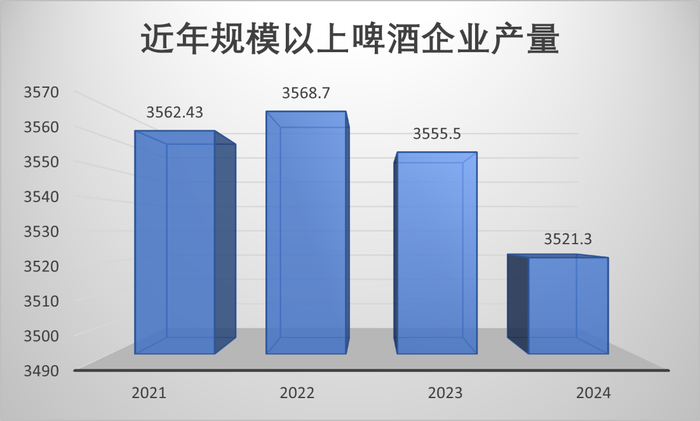
Core Insights - The beer industry is experiencing a slowdown in growth for 2024, with major companies reporting their first negative revenue growth in three years due to various factors including weather and market conditions [1][2]. Industry Performance - Major beer companies such as Budweiser APAC, China Resources Beer, Tsingtao Brewery, and Chongqing Brewery have reported revenue declines ranging from 1% to 13% in 2024, with Budweiser APAC experiencing the largest drop at 13% [2]. - The total beer production in China for 2024 was 35.213 million kiloliters, a decrease of 0.6% year-on-year, making beer the only declining category in the food and beverage sector [2]. - In the first two months of 2025, the cumulative production of major beer companies in China fell by 4.9% [3]. Shifts in Growth Strategy - The beer industry is transitioning from a focus on high-end products to a more diversified approach, including scenario-based layouts and multi-category operations to seek new growth [4][5]. - Companies are adapting to changing consumer preferences, with a shift from high-priced products to better value-for-money options, particularly in the mid-range price segment [5]. Diversification Efforts - Qingdao Beer announced a 665 million yuan acquisition of 100% equity in Jimo Huangjiu, marking its entry into the yellow wine market to diversify its product offerings [7]. - Other companies like Yanjing Beer and Chongqing Beer are also expanding into non-beer beverages, with Yanjing launching a new soda product and Chongqing introducing various soft drinks [7][8]. - The beverage industry is showing stable growth, with a 7.9% increase in all-channel growth for 2024, indicating potential opportunities for beer companies to expand into this sector [7][8].
2025年第19周:食品饮料行业周度市场观察
艾瑞咨询· 2025-05-12 09:29
Group 1: Plant-Based Beverage Industry - The plant-based beverage industry is experiencing a divergence in performance among major companies, with some like Yangyuan Beverage seeing profit growth despite a slight revenue decline, while others like Huanlejia face declines in both revenue and profit [2] - Traditional plant-based beverages are limited by seasonal demand and face competition from emerging categories, necessitating innovation to meet the health-conscious preferences of younger consumers [2] Group 2: Chinese Condiment Industry - The Chinese condiment industry has evolved from a focus on export during the planned economy era to becoming a global rule-maker, with companies like Haitian Flavoring and Lee Kum Kee leading the way [3][4] - The industry is leveraging cultural exports and technological innovation to reshape its landscape, emphasizing quality and innovation to support the globalization of Chinese flavors [4] Group 3: Community Supermarkets - Community supermarkets are gaining traction, with brands like Ole' and Hema NB expanding rapidly, focusing on middle-class consumers and enhancing product quality and efficiency [5] - The core competitiveness of community supermarkets lies in product control and operational efficiency, requiring deep supply chain engagement and digital tool application [5] Group 4: Health and Wellness Trends - There is a growing trend among young consumers towards "light wellness" products, with a focus on health-conscious beverages that are low in sugar and calories [6] - Boxed water products have seen significant sales growth, with products like fig and flaxseed water experiencing a 130% increase in sales [6] Group 5: Instant Food Market - The instant food market is shifting from high-end products to a focus on affordability, with budget products now accounting for nearly 50% of the instant noodle market [7] - Future opportunities lie in diversifying flavors and adjusting strategies to meet the differentiated demands of various market segments [7] Group 6: Aging Population and Bakery Market - The aging population is driving demand for soft-textured baked goods, with health-oriented and age-appropriate products becoming market hotspots [9] - Innovations inspired by Japanese practices, such as low-sugar and low-salt options, are key directions for the industry [9] Group 7: Snack Food Market Forecast - The Chinese snack food market is projected to grow to 972 billion yuan by 2025, with nut snacks holding the largest market share [10] - The industry is witnessing a shift towards health-oriented ready-to-eat products, with e-commerce and live streaming becoming significant growth drivers [10] Group 8: Beverage Market Dynamics - The beverage market is undergoing adjustments, with significant growth in electrolyte water and tea beverages, while packaged water sales are declining [12] - Companies like Nongfu Spring and Eastroc Beverage are experiencing contrasting performance, highlighting the competitive landscape [12] Group 9: Pre-made Dishes Market - The pre-made dishes market is experiencing a cooling phase, with many leading companies facing revenue declines due to changing consumer demands and increased competition [14] - Opportunities remain in local specialties and high-end products, with new retail channels emerging as growth points [14] Group 10: Health Drink Innovations - The market for Chinese herbal health drinks is expanding rapidly, with sales increasing from 0.1 billion yuan in 2018 to an expected 10 billion yuan by 2028 [19] - Companies are focusing on packaging, formulation, and marketing to differentiate themselves in a competitive landscape [19] Group 11: Functional Beverage Market - The functional beverage market is becoming increasingly diverse, with brands like Zhenguanzhuang entering the market with zero-sugar options targeting health-conscious consumers [32] - The collaboration between Zhenguanzhuang and Super Extreme Drink aims to fill market gaps and cater to the preferences of the younger generation [32] Group 12: Snack Food IPO Trends - Recent trends show a surge in snack food companies seeking IPOs in Hong Kong, with brands like Three Squirrels aiming to solidify their market position [21] - These companies face challenges related to competition and growth bottlenecks, despite their ambitions for expansion [21]








重庆啤酒:产品结构下移,成本红利加快兑现-20250512
Tianfeng Securities· 2025-05-12 07:45
Investment Rating - The report maintains a "Buy" rating for Chongqing Brewery, with an expected relative return of over 20% within the next six months [6][17]. Core Views - The company reported a revenue of 4.355 billion yuan in Q1 2025, a year-on-year increase of 1.46%, and a net profit of 473 million yuan, up 4.59% year-on-year [1]. - The sales volume in Q1 2025 reached 883,500 tons, reflecting a 1.93% increase year-on-year, with a slight decline in beer business price per ton by 0.3% to 4,804 yuan [2]. - The report highlights a decrease in costs leading to a slight improvement in profitability, with a net profit margin of 21.6%, up 0.7 percentage points year-on-year [3]. Financial Performance Summary - Revenue projections for 2025-2027 are estimated at 14.86 billion yuan, 15.21 billion yuan, and 15.61 billion yuan, with growth rates of 1%, 2%, and 3% respectively [3]. - The net profit for the same period is forecasted to be 1.28 billion yuan, 1.35 billion yuan, and 1.42 billion yuan, with growth rates of 15%, 5%, and 5% respectively [3]. - The report provides a detailed financial outlook, including EBITDA and earnings per share (EPS) estimates, with EPS projected to be 2.65 yuan in 2025 [5][12].
重庆啤酒(600132):产品结构下移,成本红利加快兑现
Tianfeng Securities· 2025-05-12 07:14
Investment Rating - The investment rating for the company is "Buy" with a target price not specified [6][17]. Core Views - The company reported a revenue of 4.355 billion yuan in Q1 2025, a year-on-year increase of 1.46%, and a net profit of 473 million yuan, up 4.59% year-on-year [1]. - The sales volume in Q1 2025 was 883,500 tons, reflecting a 1.93% increase year-on-year, with a slight decrease in beer business price per ton by 0.3% to 4,804 yuan [2]. - The company is focusing on high-end products, with revenue from high-end products (above 8 yuan) reaching 2.603 billion yuan, a year-on-year increase of 1.21% [2]. - The net profit margin improved by 0.7 percentage points to 21.6% in Q1 2025, driven by a decrease in cost per ton by 1.5% [3]. Financial Performance Summary - Revenue projections for 2025-2027 are estimated to grow at 1%, 2%, and 3%, respectively, with corresponding revenues of 14.86 billion, 15.21 billion, and 15.61 billion yuan [3]. - The net profit for the same period is expected to grow by 15%, 5%, and 5%, with net profits of 1.282 billion, 1.352 billion, and 1.421 billion yuan [3]. - The company maintains a stable financial position with a projected PE ratio of 22X, 20X, and 19X for the years 2025, 2026, and 2027, respectively [3]. Market and Product Insights - The company is increasing its investment in non-current drink products, which is showing gradual results, while waiting for the recovery of current drink scenarios [3]. - The revenue from different regions showed balanced growth, with the Northwest region generating 1.178 billion yuan, the Central region 1.835 billion yuan, and the Southern region 1.231 billion yuan in Q1 2025 [2].
Z世代不爱豪饮爱微醺,存量博弈下啤酒巨头如何“大象转身”?
Xin Lang Cai Jing· 2025-05-12 05:40
Core Insights - The Chinese beer market is entering a new phase characterized by stock competition and structural adjustments, with a projected 0.6% decline in production for 2024, marking the beginning of a "volume reduction and price increase" cycle [1][3] - Major beer companies are experiencing revenue declines, with the top five companies reporting a 4% drop in total revenue, while profit performance is increasingly divergent [3][5] Industry Performance - In 2024, the beer industry saw a 5.7% decline in revenue, making it the only category in the food and beverage sector to experience negative growth [5] - Key players like China Resources Beer, Budweiser APAC, and Tsingtao Brewery reported revenue declines of 0.76%, 8.9%, and 5.3% respectively, while Chongqing Brewery's revenue fell by 1.15% [5][8] - The total sales volume for major companies also decreased, with China Resources Beer down 2.5% and Budweiser APAC down 11.8% [8] Profitability Trends - Tsingtao Brewery managed a slight profit increase of 1.81%, while Yanjing Brewery saw a significant profit growth of 63.74%, contrasting with declines in profits for other major players [3][10] - Yanjing Brewery's revenue grew by 3.2%, allowing it to surpass Chongqing Brewery and become the fourth largest in the industry [10] Market Dynamics - The beer market is witnessing a shift in consumer preferences, particularly among younger generations who favor lighter drinking experiences, leading to a decrease in traditional beer consumption [12][13] - The restaurant industry is facing challenges, with a significant reduction in the number of registered dining establishments, impacting beer sales in on-premise channels [12][13] Strategic Responses - Companies are adapting by exploring new sales channels such as e-commerce and instant retail to meet changing consumer demands [13][14] - The rise of craft beer is also influencing the market, with a notable increase in the number of craft beer companies established in recent years [14] High-End Market Challenges - Despite efforts to target the high-end market, growth appears to be plateauing, with many companies facing competition from lower-priced craft beers [15][16] - Companies like Qingdao Beer and China Resources Beer are focusing on brand building and product innovation to maintain competitiveness in the high-end segment [15][18]
食品饮料2024年年报&2025年一季报总结:白酒主动降速减压、提高分红率,大众品关注新渠道/新品类机会
China Post Securities· 2025-05-12 03:23
Industry Investment Rating - The investment rating for the food and beverage industry is "Outperform the Market" and is maintained [2] Core Viewpoints - The food and beverage industry is experiencing a mixed performance across various segments, with opportunities in new channels and product categories. The report highlights the need for companies to adapt to changing consumer preferences and market dynamics [5][6][7] Summary by Relevant Sections 1. Baijiu Sector - The baijiu sector achieved a total revenue of CNY 440.515 billion in 2024, with a year-on-year growth of 6.89%, and a net profit of CNY 166.778 billion, up 7.50%. In Q1 2025, revenue was CNY 152.933 billion, growing 1.82%, and net profit was CNY 63.340 billion, increasing 2.33% [15][19] - High-end baijiu brands like Moutai, Wuliangye, and Luzhou Laojiao are expected to see stable growth targets of around 9%, 5%, and steady progress respectively for 2025 [19][21] - The report notes that companies are increasing dividend rates to enhance returns for investors, with expected dividend yields for major brands ranging from 1.39% to 6.28% in 2025 [18] 2. Frozen Food - The frozen food industry is facing a slowdown in growth, with leading companies like Anjijia showing resilience while others like Qianwei Central Kitchen are under pressure due to product structure. The industry is seeking breakthroughs in products and channels to improve revenue and profit [6] 3. Snack Foods - The snack food sector is experiencing differentiation, with leading companies leveraging product innovation and channel expansion to drive growth. Salted Fish's brand "Big Demon King" has shown significant results from brand investment [6] 4. Soft Drinks - The soft drink segment is seeing high growth from brands like Dongpeng, while companies like LuLu and Master Kong maintain operational resilience. New products in the health drink category are also performing well [6] 5. Pet Food - The pet food industry remains highly prosperous, with leading companies like Guibao Pet and Zhongchong Co. showing revenue growth rates of 21.22% and 19.15% respectively in 2024 [7] 6. Bakery Products - The bakery sector is recovering, with significant growth in supermarket channels driven by new product launches. Companies like Angel Yeast are expanding their international business, contributing to overall growth [8] 7. Dairy Products - Yili's revenue is stabilizing with better-than-expected profit performance, while New Dairy is seeing continuous profit margin improvements. Yili aims for a total revenue of CNY 119 billion in 2025 [8] 8. Beer - The beer market is witnessing a recovery in consumption, with major brands like Qingdao Beer and Chongqing Beer showing positive sales growth in Q1 2025 [9] 9. Seasoning Products - The seasoning industry is under pressure, but companies like Haitian are performing steadily, with core products like soy sauce maintaining growth [9]




重庆啤酒(600132)公司调研报告:加快非即饮啤酒高端化新品布局 啤酒外拓展多元品类
Xin Lang Cai Jing· 2025-05-11 08:22
Group 1 - The company is accelerating new product launches in the beer category, focusing on high-end products and a higher proportion of canned offerings [1] - Multiple new products have been introduced since 2025, including "Carlsberg Smooth 5°" and "Ushuaia Beer Tianshan Original Brew" [1] - The company is also expanding into non-beer categories, such as carbonated drinks and functional beverages, leveraging production capacity and channel resources [2] Group 2 - The current consumption environment shows pressure on the ready-to-drink channel, with notable holiday siphoning effects [3] - In April, the overall restaurant industry faced challenges, with a slight decline in the industry prosperity index compared to March [3] - The company continues to promote high-end products in non-ready-to-drink channels and is diversifying its product offerings [3] Group 3 - Revenue forecasts for the company are projected at 14.83 billion, 15.01 billion, and 15.29 billion yuan for 2025-2027, with year-on-year growth rates of 1.3%, 1.2%, and 1.8% respectively [4] - The expected net profit for the same period is 1.27 billion, 1.30 billion, and 1.36 billion yuan, with growth rates of 14.0%, 2.5%, and 4.7% respectively [4]