Workflow
CBC(600132)
icon
Search documents
啤酒行业专题报告:渠道变革,精酿崛起
Investment Rating - The report rates the beer industry as "Buy" [1] Core Insights - The beer industry is entering a new normal characterized by stock competition, with structural opportunities arising from category and channel changes. The demand for beer in China has been gradually declining in 2023, and it is expected to follow a long-term downward trend similar to overseas experiences. The average selling price (ASP) of leading companies is projected to increase by only 0.4% in 2024 due to weaker-than-expected demand recovery and inflation decline [4][7] - The rise of craft beer represents a significant opportunity for the industry, with leading companies likely to benefit from this trend. The penetration rate of craft beer in China is estimated to be around 3%, which is still significantly lower than the 5-15% levels seen in developed countries [4][20] - New retail channels are rapidly growing, driven by consumer demands for convenience, rationality, and differentiation. The estimated sales of beer through new retail channels are around 30 billion yuan, with a penetration rate of approximately 6% and an annual growth rate of about 20% [4][61] Summary by Sections 1. Industry New Phase: Stock Era, Channel Change, Craft Beer Rise - The beer industry in China is experiencing a new normal with both volume and price entering a downward trend. The production volume is expected to decline by 0.4% in 2023 and 1.0% in 2024 [7][4] - The concentration of leading companies is expected to decrease slightly, with the CR5 ratio projected to drop by 3.5 percentage points to around 74.8% in 2024 [14][4] 2. Category Change: Demand Shift Creates Opportunities, Large Companies to Benefit - The demand for beer in China is at a turning point, with potential for big single product opportunities. The younger generation is becoming the main consumer group, leading to a shift in drinking culture towards personal preference [23][24] - The craft beer market is expected to grow significantly, with an estimated annual growth rate in sales exceeding double digits. The penetration rate of craft beer is projected to reach around 3% by 2025 [29][30] 3. Channel Change: Demand Stock Competition, Impact on Structure Manageable - The structure of beer distribution channels is changing, with a decline in traditional on-premise sales and an increase in new retail channels. The new retail channel is expected to account for about 6% of total beer sales, with significant growth in instant retail and membership warehouse stores [56][61] - The rapid growth of new retail channels is driven by improved logistics efficiency and changing consumer preferences for convenience and differentiated products [57][61]
非白酒板块1月12日涨0.7%,中信尼雅领涨,主力资金净流出552.71万元
Market Overview - The non-liquor sector increased by 0.7% compared to the previous trading day, with CITIC Niyah leading the gains [1] - The Shanghai Composite Index closed at 4165.29, up by 1.09%, while the Shenzhen Component Index closed at 14366.91, up by 1.75% [1] Stock Performance - CITIC Niyah (600084) closed at 5.50, with a rise of 3.58% and a trading volume of 88,100 shares, amounting to a transaction value of 47.58 million yuan [1] - Other notable performers include: - Huichuan Beer (600573) at 12.14, up 1.76% with a transaction value of 138 million yuan [1] - Bailun Co. (002568) at 22.40, up 1.63% with a transaction value of 212 million yuan [1] - Guo Yue Longshan (600059) at 9.40, up 1.08% with a transaction value of 114 million yuan [1] Capital Flow - The non-liquor sector experienced a net outflow of 5.53 million yuan from institutional investors, while retail investors saw a net inflow of 48.56 million yuan [2] - The capital flow for specific stocks shows: - Guo Yue Longshan had a net inflow of 589.39 thousand yuan from retail investors [3] - Chongqing Beer (600132) had a net outflow of 581.71 thousand yuan from institutional investors [3] - ST Xifa (000752) saw a significant net outflow of 319.82 thousand yuan from institutional investors [3]
固德威目标价涨幅超49% 三花智控评级被调低丨券商评级观察
Core Insights - On January 8, 2023, brokerage firms provided target prices for listed companies, with notable increases for GCL-Poly Energy, Haiguang Information, and China Pacific Insurance, showing target price increases of 49.60%, 40.27%, and 29.61% respectively, across the photovoltaic equipment, semiconductor, and insurance industries [1][2]. Group 1: Target Price Increases - GCL-Poly Energy (688390) received a target price of 111.00 yuan, reflecting a 49.60% increase from the latest closing price [2]. - Haiguang Information (688041) has a target price of 339.00 yuan, indicating a 40.27% increase [2]. - China Pacific Insurance (601601) has a target price of 60.85 yuan, showing a 29.61% increase [2]. Group 2: Brokerage Recommendations - On January 8, 30 listed companies received brokerage recommendations, with Jinggong Steel Structure, Helen Zhe, and China Chemical each receiving one recommendation [2]. - One company, Allwinner Technology (300458), had its rating upgraded from "Hold" to "Buy" by Zhongyou Securities [3]. Group 3: Rating Downgrades - Two companies experienced rating downgrades: Haixia Co. (002320) was downgraded from "Buy" to "Hold" by Tianfeng Securities, and Sanhua Intelligent Control (002050) was downgraded from "Buy" to "Hold" by Northeast Securities [4]. Group 4: First-Time Coverage - Seven companies received first-time coverage on January 8, including Jieli Rigging (002342) rated "Hold" by Northeast Securities, and Shenchi Electromechanical (603109) rated "Buy" by CITIC Securities [5]. - Other companies receiving first-time ratings include Chenguang Co. (603899) with a "Recommended" rating, and Jinhua New Materials (920015) with a "Hold" rating [5].
重庆啤酒1亿和解,但山城啤酒的“雷”留到了3年后
Guan Cha Zhe Wang· 2026-01-08 01:20
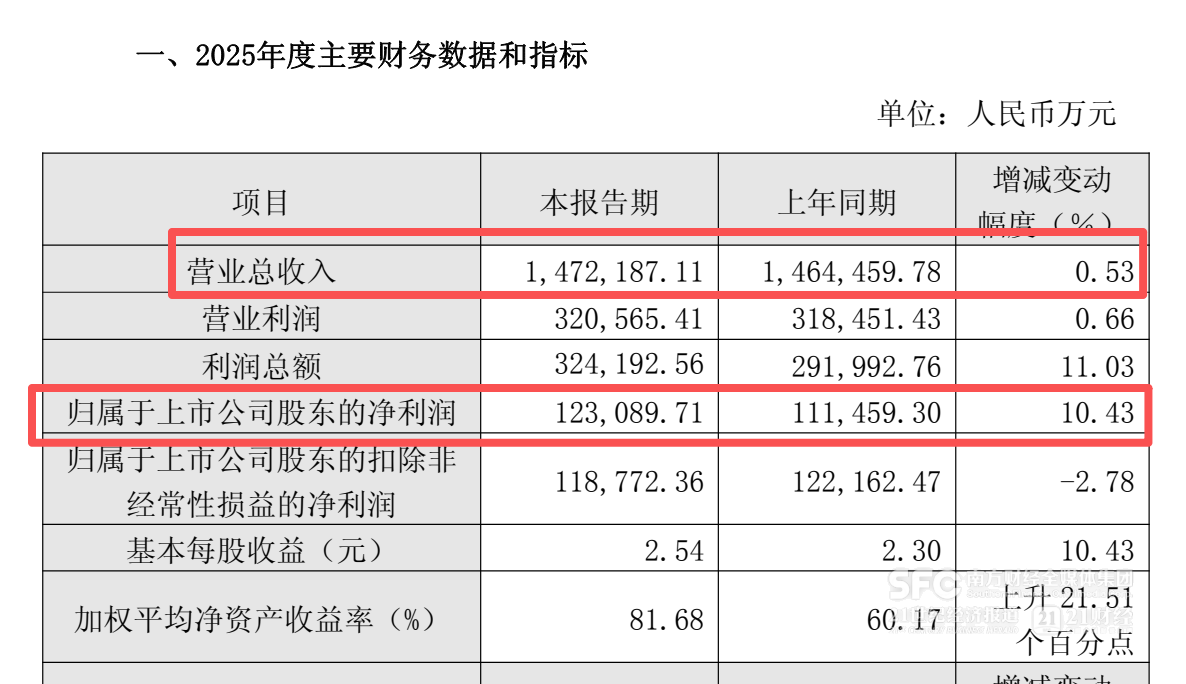
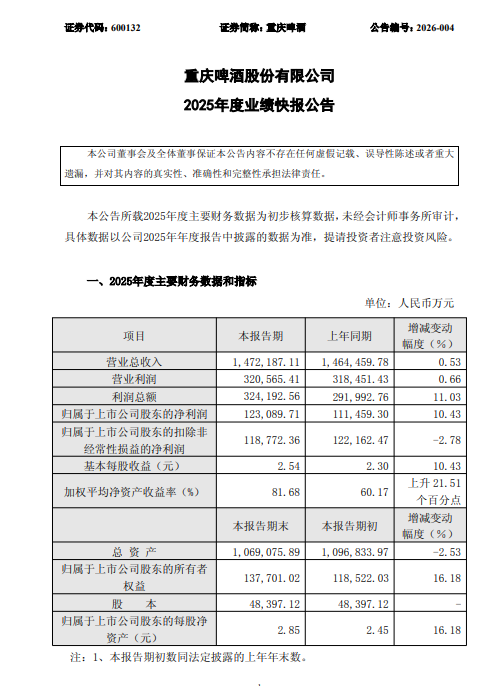
Core Viewpoint - The long-standing dispute between Chongqing Beer and its affiliate Chongqing Jiawei Beer has reached a resolution through a mediation agreement, halting ongoing litigation and establishing a three-year transitional cooperation period [1][3][29] Financial Summary - Chongqing Beer will make a one-time payment of 100 million yuan (excluding tax) to Jiawei to settle all disputes related to "volume-price difference settlement" before December 31, 2025 [3][5] - The payment will not impose significant financial pressure on Chongqing Beer, which had a cash balance of 2.46 billion yuan as of June 2025 [7] - The agreement is expected to increase Chongqing Beer's total profit by approximately 37.11 million yuan and net profit attributable to shareholders by about 19.08 million yuan for the year 2025 [5][16] Operational Summary - During the three-year transitional period, Chongqing Beer will purchase 142,600 hectoliters of beer annually from Jiawei at an average price of 4,000 yuan per hectoliter [5][20] - If Jiawei's annual sales fall short of the agreed volume, Chongqing Beer has the right to demand compensation based on the shortfall [5][20] - The agreement aims to stabilize Chongqing Beer's production capacity and supply chain, allowing the company to focus on high-end product development and market penetration [16][21] Strategic Summary - The mediation agreement allows Chongqing Beer to regain control over the "Shancheng" brand and Jiawei's production capacity after the contract expires in 2028 [17][20] - The resolution of disputes over brand usage rights and sales agreements is crucial for both companies as they navigate the competitive landscape of the beer industry [12][29] - The agreement does not address the ownership of the "Shancheng" trademark, leaving potential future conflicts unresolved [22][29] Industry Context - The Chinese beer industry has seen a decline in production volume from 50.62 million hectoliters in 2013 to 37.89 million hectoliters in 2023, despite an increase in revenue from 167.8 billion yuan to 203 billion yuan [12] - The shift towards premium products has become a key growth area, with Chongqing Beer successfully increasing its price per ton from 2,700 yuan in 2013 to 4,820 yuan in 2023 [13] - The ongoing competition in the industry highlights the challenges faced by brands like "Shancheng," which struggle to maintain profitability amid rising costs and changing consumer preferences [14][20]
重庆啤酒18年包销纠纷了结增利1908万 啤酒卖不动年砸25亿销售费
Chang Jiang Shang Bao· 2026-01-07 02:05
长江商报消息●长江商报记者 沈右荣 1月5日晚,重庆啤酒披露,公司与参股公司重庆嘉威啤酒有限公司(以下简称"嘉威")之间的合同纠 纷,在法院调解下,得以结案。公司方向嘉威一次性支付截至2025年底的全部量价差结算款1亿元(不 含税),并对2026年至2028年的产品包销方面的合作方式进行约定。 此次诉讼由嘉威啤酒在2023年发起,近年来,双方因包销协议的履行细节而产生争议。 重庆啤酒称,此次调解完成,公司拟将此前计提的预计负债2.54亿元冲回,拟计提一次性支付的量价差 结算款等负债约2.17亿元。此番会计处理,预计将增加2025年归母净利润1907.96万元。 近年来,重庆啤酒"卖不动"。2024年,公司销售费用25.13亿元,但当年的营业收入为146.45亿元,同比 下降1.15%。2025年前三季度,公司营业收入及归母净利润同比双降。 卸下历史包袱后,重庆啤酒该如何破局? 多年包销纠纷达成和解 重庆啤酒的包销纠纷终于了结。 重庆啤酒(600132.SH)长达18年的包销纠纷终于经法院调解得以化解。 增长乏力归母净利连续下降 重庆啤酒业绩增长乏力,急需突围。 嘉威是重庆啤酒的参股公司,双方于2007年签署《 ...
重庆啤酒18年包销纠纷了结增利1908万 啤酒卖不动年砸25亿销售费营收仍降
Chang Jiang Shang Bao· 2026-01-06 23:40
重庆啤酒(600132)(600132.SH)长达18年的包销纠纷终于经法院调解得以化解。 1月5日晚,重庆啤酒披露,公司与参股公司重庆嘉威啤酒有限公司(以下简称"嘉威")之间的合同纠纷, 在法院调解下,得以结案。公司方向嘉威一次性支付截至2025年底的全部量价差结算款1亿元(不含 税),并对2026年至2028年的产品包销方面的合作方式进行约定。 此次诉讼由嘉威啤酒在2023年发起,近年来,双方因包销协议的履行细节而产生争议。 重庆啤酒称,此次调解完成,公司拟将此前计提的预计负债2.54亿元冲回,拟计提一次性支付的量价差 结算款等负债约2.17亿元。此番会计处理,预计将增加2025年归母净利润1907.96万元。 近年来,重庆啤酒"卖不动"。2024年,公司销售费用25.13亿元,但当年的营业收入为146.45亿元,同比 下降1.15%。2025年前三季度,公司营业收入及归母净利润同比双降。 卸下历史包袱后,重庆啤酒该如何破局? 多年包销纠纷达成和解 重庆啤酒的包销纠纷终于了结。 嘉威是重庆啤酒的参股公司,双方于2007年签署《战略合作协议》、2009年签署《产品包销框架协 议》、2016年签署《补充协议》 ...
重庆啤酒、嘉威“窝里斗”两年画句号,3.53亿索赔降至1亿
Xin Lang Cai Jing· 2026-01-06 11:11
Core Viewpoint - The long-standing legal dispute between Chongqing Beer and its subsidiary Chongqing Jiawei has been resolved through mediation, allowing both parties to focus on improving performance and reducing legal risks [2][3][31]. Group 1: Mediation Outcome - On January 6, Chongqing Beer announced that it reached a mediation agreement with Chongqing Jiawei, concluding a two-year legal battle [2][30]. - The original court ruling required Chongqing Beer to pay approximately 353 million yuan, but the mediation reduced this to a one-time payment of 100 million yuan by December 31, 2025 [2][30]. - The mediation is expected to alleviate financial burdens and stabilize operational expectations for Chongqing Beer [3][31]. Group 2: Financial Implications - The mediation agreement allows Chongqing Beer to reverse a previously accrued liability of approximately 254 million yuan and recognize a new liability of about 217 million yuan, resulting in an estimated profit increase of 37.11 million yuan for 2025 [7][53]. - The agreement also locks in a sales volume of 142,600 kiloliters per year at a price of 4,000 yuan per kiloliter for the years 2026 to 2028, providing financial stability [53][54]. Group 3: Strategic Challenges - Chongqing Beer faces challenges in a competitive market and pressure from consumer downgrade, which has slowed its high-end strategy and national expansion efforts [8][36]. - The company must consolidate its market position in Southwest China while establishing a competitive advantage in its nationwide strategy [36][54]. Group 4: Historical Context - The relationship between Chongqing Beer and Chongqing Jiawei dates back to before 2013, characterized by an unequal partnership that has evolved over time [39][40]. - The original sales agreement, signed in 2009, has been a source of contention, with Chongqing Jiawei benefiting significantly from the arrangement [39][42]. - The strategic shift towards high-end brands has created conflicts between the two companies, as Chongqing Beer focuses on national brands while Chongqing Jiawei relies on local brands for stable revenue [40][54].
非白酒板块1月6日涨0.86%,*ST兰黄领涨,主力资金净流出1692.41万元
Market Overview - The non-baijiu sector increased by 0.86% compared to the previous trading day, with *ST Lanhua leading the gains [1] - The Shanghai Composite Index closed at 4083.67, up 1.5%, while the Shenzhen Component Index closed at 14022.55, up 1.4% [1] Stock Performance - The top-performing stock was *ST Lanhua, closing at 676 with a rise of 4.98% and a trading volume of 25,300 shares [1] - Other notable stocks included Zai Liang Beer, which rose by 1.78% to 12.00, and Mogaogongsi, which increased by 1.31% to 5.42 [1] - The overall trading volume and turnover for various stocks in the non-baijiu sector were significant, with Zai Liang Beer achieving a turnover of 418 million yuan [1] Capital Flow - The non-baijiu sector experienced a net outflow of 16.92 million yuan from institutional investors, while retail investors saw a net outflow of 6.90 million yuan [2] - Conversely, speculative funds recorded a net inflow of 23.83 million yuan [2] Individual Stock Capital Flow - Qingdao Beer had a net inflow of 22.44 million yuan from institutional investors, representing 8.06% of its total capital flow [3] - *ST Lanhua saw a net inflow of 6.04 million yuan from institutional investors, accounting for 25.51% of its capital flow [3] - In contrast, Huichuan Beer experienced a net outflow of 2.87 million yuan from institutional investors, indicating a negative sentiment [3]
重庆啤酒20260105
2026-01-05 15:42
Summary of the Conference Call for Chongqing Beer (2025) Industry Overview - The beer industry is experiencing a shift towards non-consumption channels, with companies actively developing these avenues due to weak performance in on-premise sales [2][3][4]. Key Points Company Initiatives - Carlsberg China is launching new products in 2025, including special packaging for the Spring Festival and commemorative cans for Liverpool's UEFA Champions League victory [2][3]. - The company is exploring new product categories beyond beer, such as energy drinks and carbonated beverages [2][3]. - The non-consumption channel is projected to account for approximately 56%-57% of overall sales in 2025, maintaining a stable share compared to previous years [2][6]. Sales Performance - In the first three quarters of 2025, premium product sales showed growth, with Carlsberg and Fenghua Xueyue brands achieving double-digit growth [2][5]. - The company’s filling rate is expected to increase from 18%-19% in 2023 to around 29% by the end of 2025, with a target to reach the industry average of 35%-40% in the future [2][7]. Regional Market Insights - The Xinjiang market is performing well, driven by tourism and optimized brand structure for the Wusu brand [2][10]. - However, the Chongqing and Yunnan regions have seen a decline due to external environmental factors, although the Fenghua Xueyue brand has performed well in traditional and low-alcohol beer segments [2][10][11]. Cost and Profitability - The company anticipates a cautious outlook for gross margins due to rising aluminum can prices and a slower decline in raw material costs [3][18]. - The effective tax rate has increased from 19-20% in 2024 to nearly 24% in the first three quarters of 2025, with expectations to maintain this level in 2025 and 2026 [3][17]. Future Outlook - The company plans to continue focusing on non-consumption channels and product innovation, with collaborations with platforms like JD.com and Waimai Songjiu for customized products [3][14][15]. - A stable high dividend policy will be maintained, reflecting the company's commitment to shareholder returns [3][19]. Additional Considerations - The company is not considering outsourcing production but prefers to maintain brand integrity through customized product offerings [3][15]. - The impact of a one-time litigation cost from the previous year is expected to affect net profit by approximately 10 million to over 9 million [3][16]. - Preparations for the Spring Festival include launching new promotional products and marketing campaigns [3][20].
年度投资策略报告:底部向阳,寻找结构性亮点-20260105
Overall Industry Review - The food and beverage sector significantly underperformed the market, with a year-to-date decline of -0.62%, lagging behind the Shanghai Composite Index by 15.0 percentage points [7][11] - The snack sector showed strong performance with a year-to-date increase of 28.88%, driven by channel expansion and a total revenue growth of 30.97% in the first three quarters of 2025 [11] - The beverage sector, particularly soft drinks, benefited from travel demand and low-price, high-frequency consumption, achieving a revenue and profit growth in double digits [11][14] Alcoholic Beverages - The liquor sector exhibited weak performance, with a decline in sales and prices, particularly for white liquor, which saw a year-on-year revenue drop of -5.83% and a net profit decline of -6.93% in the first three quarters of 2025 [11][44] - The overall white liquor sector's revenue decreased by -5.8% and net profit by -6.9% in the first three quarters of 2025, with a significant drop in Q3, where total revenue fell by -18.4% [44] - The report indicates that the white liquor industry is in a prolonged adjustment phase, with the current downturn lasting 57 months, marking the longest adjustment period in history [35][40] Future Outlook - The central economic work conference emphasized the importance of boosting domestic demand in 2026, with expectations for policy support to stimulate recovery [3] - The report suggests focusing on sectors with low bases for recovery, such as frozen foods and beverages, which are expected to benefit from demand recovery and new product opportunities [3][4] - The report highlights the potential for structural opportunities in the food and beverage sector, particularly in overseas markets and cost improvements, recommending companies like Anqi Yeast and Mijiu Group for their overseas expansion strategies [4][34] Investment Strategies - The report identifies four key investment themes for 2026: opportunities in overseas markets, cost benefits, new product launches, and value-for-money consumption [4] - Companies with strong platform capabilities and innovative products, such as Dongpeng Beverage and Wancheng Group, are recommended for their potential in the beverage sector [4] - The report also emphasizes the importance of identifying companies that can adapt to a low-inflation, low-confidence environment by offering high-value products [14]