
SCSF(600779)

Search documents
水井坊二季度业绩“变脸”,净利润同比转亏约8500万元
Mei Ri Jing Ji Xin Wen· 2025-07-14 12:02
Core Viewpoint - Water Jiufang reported a significant decline in both revenue and net profit for the first half of the year, indicating challenges in the white liquor industry due to high inventory levels and weak consumer demand [2][3][4]. Financial Performance - The company expects to achieve a revenue of 1.498 billion yuan in the first half of the year, a year-on-year decrease of 12.84% [2]. - The net profit attributable to shareholders is projected to be 105 million yuan, down 56.52% from the previous year, representing a decrease of 137 million yuan [2]. - The adjusted net profit after excluding non-recurring items is expected to be 48 million yuan, a decline of 78.74% year-on-year [2]. - In Q1, the company reported a revenue of 959 million yuan and a net profit of 190 million yuan, suggesting a Q2 revenue of approximately 539 million yuan, a year-on-year decrease of about 31.34% [2]. Industry Context - The white liquor industry is undergoing a deep adjustment phase, with traditional consumption scenarios like business banquets facing ongoing pressure [3]. - The overall consumption performance during the Spring Festival was below expectations, leading to higher-than-expected channel inventory levels, which affected subsequent months' shipment volumes [3]. - The trend of weak consumer demand intensified in Q2, further impacting the inventory reduction process and slowing down the recovery of shipments [3]. Inventory Management - Water Jiufang emphasizes channel inventory levels as a core KPI for management, with daily monitoring of sales data [3]. - The company reported a sales volume increase of 543,000 liters in the first half of the year, a year-on-year increase of 14.54%, all from mid-to-high-end liquor [3][5]. Pricing Strategy - The company has faced challenges due to high channel inventory and sluggish terminal sales, leading to low-price dumping and sales disruptions among distributors [4]. - Water Jiufang is focusing on stabilizing its pricing system, particularly for its core product, Zhenniang No. 8, which contributes over 50% of its annual revenue [5]. - The company has implemented measures to control the distribution of Zhenniang No. 8 and stabilize its value chain, including halting sales of certain product specifications until further notice [5].


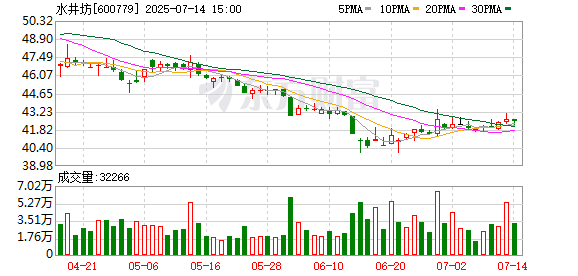
水井坊(600779) - 2025 Q2 - 季度业绩预告
2025-07-14 09:10
股票代码:600779 股票简称:水井坊 编号:2025-021 四川水井坊股份有限公司 2025 年半年度业绩预告 预计 2025 年半年度公司实现归属于母公司所有者的扣除非经常性损益 的净利润为 4,849 万元。 一、本期业绩预告情况 (一)业绩预告期间 2025 年 1 月 1 日至 2025 年 6 月 30 日。 (二)业绩预告情况 1、经财务部门初步测算,预计 2025 年半年度公司实现归属于母公司所有者 的净利润为 10,541 万元,与上年同期相比,预计减少 13,701 万元,同比下降 56.52%;预计 2025 年半年度公司实现营业收入 149,780 万元,预计减少 22,072 万元,同比下降 12.84%;预计销售量与上年同期相比增加 543 千升,同比增加 14.54%,销售量全部来自中高档酒。 2、预计 2025 年半年度公司实现归属于母公司所有者的扣除非经常性损益的 净利润为 4,849 万元,与上年同期相比,预计减少 17,954 万元,同比下降 78.74%。 本公司董事会及全体董事保证本公告内容不存在任何虚假记载、误导性 陈述或者重大遗漏,并对其内容的真实性、准确性和 ...
水井坊:预计2025年半年度净利润同比下降56.52%
news flash· 2025-07-14 09:02
水井坊(600779)公告,预计2025年半年度公司实现归属于母公司所有者的净利润为1.05亿元,同比减 少1.37亿元,下降56.52%;预计实现营业收入14.98亿元,同比减少2.21亿元,下降12.84%。预计销售量 与上年同期相比增加54.3万升,同比增加14.54%。预计2025年半年度公司实现归属于母公司所有者的扣 除非经常性损益的净利润为4849万元。 ...
湾财周报 大事记 外卖大战,奶茶店迎泼天富贵;罗马仕停工
Nan Fang Du Shi Bao· 2025-07-13 14:51
Company News - Romashi has officially ceased operations and closed multiple flagship stores on various platforms due to ongoing quality issues, with employees reportedly packing their belongings and seeking legal counsel for unpaid benefits [8][9] - The first low-altitude economy asset-backed security (ABS) in China has been listed on the Shenzhen Stock Exchange, with a total issuance scale of 584 million yuan, aimed at supporting the development of the low-altitude economy [11] - Muyuan Foods, known as "Pig King," has reported a staggering net profit increase of 9 times for the first half of 2025, with expected profits between 10.5 billion to 11 billion yuan, driven by increased pig sales and reduced breeding costs [12][13] - Renrenle, once a leading retail chain, has officially delisted from the stock market after entering the delisting period on June 13, 2025, marking the end of its 15-year journey in A-shares [14] - Knight Dairy has been investigated for significant losses in futures trading and failure to disclose these losses in a timely manner, highlighting the struggles of regional dairy companies [15][16] - Seres Group has projected a net profit of 2.7 billion to 3.2 billion yuan for the first half of 2025, representing a year-on-year increase of 66.2% to 97% [16] - GAC Fiat Chrysler has been declared bankrupt due to its inability to repay debts, as confirmed by the management [17] - Honda China reported a 24% year-on-year decline in vehicle sales for the first half of 2025, with total sales of 315,152 units [18] Industry Insights - The real estate market in Chengdu has outperformed Shanghai, with over 176,000 homes sold in the first half of 2025, making it the top city for residential transactions in China [19] - Hong Kong's real estate market has seen a resurgence, with 37,000 transactions in the first half of 2025, the highest in three and a half years [20] - Guangdong has 17 banks listed among the world's top 1,000 banks, reflecting a strong presence in the financial sector [21] - Santander Bank has received approval to establish a branch in Shenzhen, expanding the presence of foreign financial institutions in the region [22][23] - The banking wealth management market has shown resilience, with a total market size of 30.97 trillion yuan as of June 2025, despite declining deposit rates [25]




食品饮料周观点:中报窗口期,预期回归、分化加剧-20250713
GOLDEN SUN SECURITIES· 2025-07-13 14:28
Investment Rating - The report maintains an "Increase" rating for the food and beverage industry, indicating a positive outlook for selected companies within the sector [4]. Core Insights - The report highlights a significant differentiation within the industry, particularly in the liquor segment, where companies are actively seeking transformation amid market pressures. It emphasizes three main investment themes: leading brands, high-certainty regional brands, and flexible companies benefiting from recovery [1][2]. - In the beer and beverage sector, companies like Yanjing and Zhujiang are expected to show strong profit growth, with Yanjing projected to achieve a net profit of 1.06 to 1.14 billion yuan, reflecting a year-on-year increase of 40% to 50% [3]. Summary by Sections Liquor Industry - The liquor industry is experiencing a challenging half-year, with demand and policy impacts leading to a slowdown in sales. The report anticipates that the performance expectations for the mid-year and the entire year of 2025 have been largely adjusted [2]. - Key players like Kweichow Moutai and Wuliangye are focusing on service enhancement and transformation strategies to navigate the current market conditions. The report suggests that the upcoming month of September will be critical for assessing the impact of policies and consumer demand [2]. Beer and Beverage Sector - Yanjing Beer is expected to achieve a net profit of 1.06 to 1.14 billion yuan for the first half of 2025, marking a year-on-year increase of 40% to 50%. Zhujiang Beer is also projected to see a profit increase of 15% to 25% [3]. - Eastroc Beverage is forecasted to generate revenue of 10.63 to 10.84 billion yuan, with a net profit of 2.31 to 2.45 billion yuan, reflecting a growth of 33% to 42% year-on-year [3]. Consumer Goods - The report notes that companies like Youyou Foods and Miaokelando are expected to report significant profit increases, with Youyou Foods projecting a revenue growth of 40.91% to 50.77% [7]. - The overall consumer goods sector is highlighted as a space to watch for growth, particularly for companies that are innovating and expanding their market reach [7].




行业周报:白酒布局机会渐显,新消费择优长期持有-20250713
KAIYUAN SECURITIES· 2025-07-13 14:07
Investment Rating - The industry investment rating is "Positive" (maintained) [1] Core Viewpoints - The food and beverage index increased by 0.8% from July 7 to July 11, ranking 23rd among 28 sectors, performing in line with the CSI 300 index. The sub-sectors of liquor (+1.4%), health products (+1.4%), and beer (+1.2%) showed relatively strong performance [11][12] - The current liquor market is experiencing downward pressure due to unexpected restrictions on alcohol consumption, leading to a decline in demand. However, it is anticipated that the liquor sector will find a bottom in the second half of the year, presenting potential investment opportunities [11][12] - The report suggests focusing on leading liquor companies such as Kweichow Moutai, Luzhou Laojiao, Shanxi Fenjiu, and others for strategic investments. Additionally, it recommends identifying high-quality new consumption companies that align with industry trends for long-term holding [11][12] Summary by Sections Weekly Insights - Strategic focus on leading liquor companies and maintaining high-quality new consumption stocks. The liquor sector is expected to stabilize and present investment opportunities in the second half of the year [11][12] Market Performance - The food and beverage index's performance is consistent with the broader market, with specific sub-sectors like liquor and health products outperforming [12][13] Upstream Data - Some upstream raw material prices are declining, with whole milk powder prices showing a year-on-year increase of 19.9%, while fresh milk prices have decreased by 6.5% year-on-year [15][20] Liquor Industry News - The market price of Kweichow Moutai has been steadily increasing, indicating a recovery in market confidence. Other companies are also taking measures to stabilize their pricing strategies [39] Recommended Portfolio - Recommended stocks include Kweichow Moutai, Shanxi Fenjiu, Ximai Food, and others, focusing on companies with strong growth potential and favorable market conditions [4][45]


酒企停货潮持续 水井坊、沱牌舍得加入战局
Xin Lang Zheng Quan· 2025-07-11 10:01
Core Viewpoint - The ongoing suspension of sales by major liquor companies, including Sichuan Tuopai Shede and Shui Jing Fang, reflects a strategic response to the intense price competition and inventory pressures in the Chinese liquor industry [1][2][3] Company Actions - Sichuan Tuopai Shede announced a suspension of orders for its Tuopai Tequ 2.0 (20-year and 30-year) starting July 10, with a date for resuming orders to be announced later [1] - Shui Jing Fang implemented a full-channel suspension of its core product, Zhen Niang No. 8 (500ml), and enhanced control over its e-commerce channels [1] - Shui Jing Fang also introduced measures to stabilize the value chain and manage promotional offers for its Zhen Niang No. 8 (520ml) [1] Industry Context - The liquor industry is experiencing a significant inventory pressure, with a shift in consumer drinking habits leading to a more rational approach to consumption [3][4] - The price competition in the 300-400 RMB range, particularly affecting Zhen Niang No. 8, has severely compressed profit margins for distributors [2] - Major liquor companies, including Wuliangye and Luzhou Laojiao, have also adopted similar suspension measures to stabilize prices [3] Financial Performance - Shui Jing Fang reported a revenue of 5.217 billion RMB in 2024, a year-on-year increase of 5.32%, and a net profit of 1.341 billion RMB, up 5.69% [2] - In the first quarter of 2025, revenue growth slowed to 2.74%, and net profit growth was 2.15%, indicating a trend of decelerating growth [2] Strategic Implications - The decision to suspend core products is seen as a necessary move to alleviate channel inventory pressure and create space for price recovery [2][4] - The industry is transitioning from a "channel pressure" model to a "sales-driven" model, focusing on actual product sales rather than merely pushing inventory [3] - The success of these measures in stabilizing prices and restoring consumer confidence will be crucial for the long-term viability of liquor companies [4]
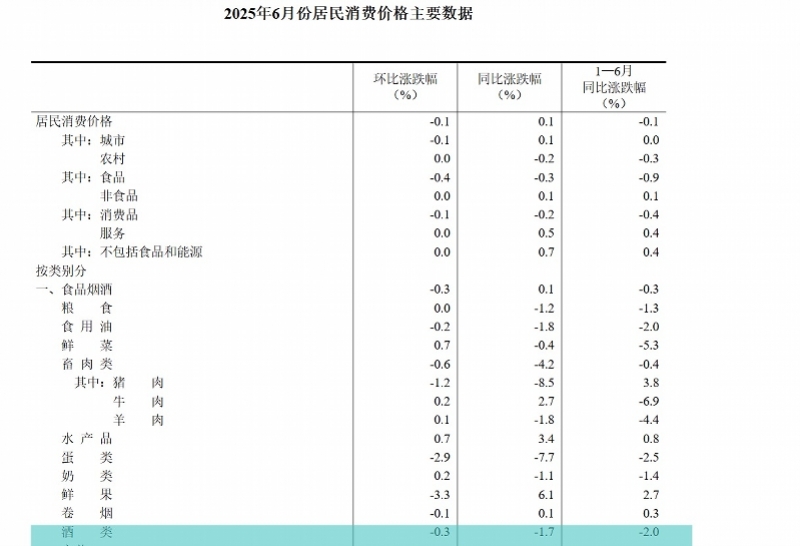
国家统计局:6月酒类价格同比下降1.7%,酒价何时止跌?
Nan Fang Du Shi Bao· 2025-07-11 06:35
Core Viewpoint - The white liquor market is experiencing a downward price trend, driven by changes in consumer demand and market dynamics, as indicated by recent data from the National Bureau of Statistics [1][5]. Price Trends - National data shows that liquor prices have decreased by 1.7% year-on-year and 0.3% month-on-month as of June 2025, with an overall decline of 2.0% in the first half of the year [1][2]. - The price of premium liquor brands, such as Feitian Moutai, has dropped from over 3000 yuan to below 2000 yuan, indicating a significant reduction in market premium [4]. Consumer Behavior - There is a noticeable shift in consumer preferences, with younger consumers moving away from traditional high-alcohol liquor towards lower-alcohol options and craft beers, leading to a contraction in the white liquor market [5][6]. - The demand for high-priced liquor for business banquets and gifts has decreased, particularly among small and medium-sized enterprises facing financial pressures [5][6]. Supply and Inventory Issues - The white liquor industry is facing overproduction and high inventory levels, with a reported production decline of 7.2% year-on-year in the first quarter of 2025 [5][6]. - Companies are resorting to price reductions as a means to clear excess inventory, with distributors eager to recover funds through lower pricing strategies [6]. Market Dynamics - The rise of e-commerce and live-streaming sales has intensified price competition and increased price transparency, reducing the ability of traditional channels to maintain high prices [6]. - The shift from "face consumption" to a more rational consumer mindset emphasizes value for money and quality, challenging the high-end liquor market's previous status as a social currency [6].

白酒股异动拉升,皇台酒业触及涨停
news flash· 2025-07-11 02:21
Core Viewpoint - The liquor stocks have experienced significant upward movement, with Huangtai Liquor (000995) hitting the daily limit, and Jinzhongzi Liquor (600199) rising over 4% [1] Company Performance - Huangtai Liquor (000995) reached its daily limit, indicating strong investor interest [1] - Jinzhongzi Liquor (600199) saw an increase of more than 4%, reflecting positive market sentiment [1] - Other companies such as Laobai Gan Liquor (600559), Wuliangye (000858), and Shuijingfang (600779) also experienced upward movement, suggesting a broader trend in the sector [1] Market Activity - There is a notable influx of dark pool funds into these liquor stocks, indicating increased trading activity and potential investor confidence [1]


高盛:中国白酒_ 政策风险延长周期,拐点尚不明朗;下调四只股票评级
Goldman Sachs· 2025-07-11 01:05
Investment Rating - The report downgrades four stocks: Fen Wine, Luzhou Laojiao, ZJLD to Neutral from Buy, and Anhui Gujing to Sell from Neutral, while maintaining Buy on Kweichow Moutai and Wuliangye [9][36]. Core Insights - The current cycle for the spirits industry is likely prolonged due to the impact of the new austerity policy, with uncertainties on when the cycle will bottom out [1][14]. - The report anticipates policy headwinds to persist from 2Q25 to 2Q26, followed by a modest impact in 2H26 as improper dining restrictions for civil servants normalize [2][14]. - The spirits industry is expected to see a decline in total addressable market (TAM) by 10% to 14% in 2025-27E, with a forecasted decline of over 6% in 2025 and a -2% decline in 2026 [2][14]. Summary by Sections Risk Profiling - A policy impact ranking analysis indicates that upper mid-end and commercial banquet-focused products will face greater pressure, while Moutai is expected to remain resilient due to its gifting demand and limited exposure to government-related banquet consumption [2][12]. Earnings and Valuation Analysis - The report projects +1%/+5% aggregated topline growth for 2025/26E, down from previous estimates of +6%/+9%, with high-end spirits expected to grow by +5%/+5% and upper-mid-high end spirits facing declines of -10%/+2% [2][14]. - A bear case analysis suggests potential earnings downside risks of 6% to 18% for most spirits names compared to the base case [2][14]. Industry Growth Forecast - The spirits industry growth forecast has been revised down to a greater than 6% decline in 2025 and a -2% decline in 2026, compared to prior forecasts of +4%/+3% growth [2][14]. - The report highlights that the spirits industry has been consolidating, with leading players gaining market share, particularly in the super premium segment [2][25]. Company-Specific Insights - Moutai's wholesale price stability is supported by various measures, and the report suggests that a price below RMB 1,800 could hurt distributor profits, leading to market volatility [8][14]. - The report revises down sales and net profit estimates for various companies, including a 1% to 19% reduction for most names, reflecting the impact of the new policy [36][37].

