Friend (605050)

Search documents
福然德:累计回购股份数量为217.91万股
Mei Ri Jing Ji Xin Wen· 2025-09-01 08:25
Group 1 - The company, Furande (SH 605050), announced that as of August 31, 2025, it has repurchased a total of 2.1791 million shares, accounting for 0.4422% of its total share capital [1] - The highest transaction price for the repurchased shares was 14.67 CNY per share, while the lowest was 8.97 CNY per share, with a total payment amounting to approximately 25.7166 million CNY [1] - For the year 2024, the company's revenue composition shows that supply chain services accounted for 99.93%, while other businesses contributed 0.07% [1] Group 2 - As of the report, the market capitalization of Furande is 8.2 billion CNY [1]

福然德: 福然德股份有限公司2025年第二次临时股东大会会议资料
Zheng Quan Zhi Xing· 2025-09-01 08:19
Core Viewpoint - The company is holding its second extraordinary general meeting of shareholders in 2025 to discuss various governance and management proposals aimed at improving its operational structure and compliance with legal regulations [8][11]. Meeting Procedures - The company has established guidelines to ensure the orderly conduct of the meeting, including restrictions on entry for non-shareholders and the requirement for identification and authorization documents for registration [1][2]. - Shareholders must arrive on time for registration, as late arrivals will not have their votes counted [2]. - Shareholders have the right to speak, ask questions, and vote, but must register in advance and adhere to time limits for their remarks [2][3]. Voting Process - The voting will be conducted through a combination of on-site and online methods, utilizing the Shanghai Stock Exchange's voting system [3][5]. - Any improperly filled or unsubmitted ballots will be considered as abstentions [3]. Meeting Agenda - The agenda includes several key proposals, such as the abolition of the supervisory board and amendments to the company's articles of association and internal management systems [8][13]. - Specific proposals include the revision of various governance documents, including the rules for board meetings, shareholder meetings, and independent director work systems [14][15][16][18][20][22][25][27][29][32]. Governance Changes - The company plans to eliminate the supervisory board, transferring its responsibilities to the audit committee of the board of directors, and will revise related governance documents accordingly [8][13]. - The company is also updating its profit distribution, fundraising, external guarantee, and investment decision-making management systems to align with current regulations and operational needs [18][20][22][25][29].
福然德: 福然德股份有限公司关于以集中竞价交易方式回购公司股份的进展公告
Zheng Quan Zhi Xing· 2025-09-01 08:19
Group 1 - The company announced a share repurchase plan with a total expected amount of 40 million to 80 million RMB, aimed at employee stock ownership plans or equity incentives [1][2][3] - The repurchase period is set from December 24, 2024, to December 23, 2025, with the initial announcement made on December 25, 2024 [1][2] - As of August 31, 2025, the company has repurchased a total of 2.1791 million shares, representing 0.4422% of the total share capital, with a total payment of approximately 25.716598 million RMB [3][4] Group 2 - The maximum repurchase price was updated to not exceed 14.68 RMB per share following the approval of the 2024 profit distribution plan [2][3] - The repurchase price range has been set between 8.97 RMB and 14.67 RMB per share, with the highest transaction price recorded at 14.67 RMB [3][4] - The company will adhere to relevant laws and regulations during the repurchase process and will disclose information regarding the progress of the share repurchase [4]
福然德披露股份回购进展 累计回购217.91万股
Xin Lang Cai Jing· 2025-09-01 08:06
Core Viewpoint - The company has announced the progress of its share repurchase plan, which aims to enhance employee stock ownership and equity incentives [1] Summary by Relevant Sections Share Repurchase Plan - The share repurchase plan was first disclosed on December 25, 2024, with an implementation period from December 24, 2024, to December 23, 2025 [1] - The expected repurchase amount is between 40 million and 80 million yuan [1] Repurchase Progress - As of August 31, 2025, the company has repurchased a total of 2,179,100 shares, accounting for 0.4422% of the total share capital [1] - The cumulative amount spent on repurchases is approximately 25.72 million yuan [1] - The actual repurchase price ranged from 8.97 yuan per share to 14.67 yuan per share [1] - In July 2025, the company repurchased 266,000 shares [1]
福然德(605050.SH):已累计回购217.91万股
Ge Long Hui A P P· 2025-09-01 08:06
Group 1 - The company, Furan De (605050.SH), announced that as of August 31, 2025, it has repurchased a total of 2.1791 million shares, accounting for 0.4422% of its total share capital [1] - The highest transaction price for the repurchased shares was 14.67 CNY per share, while the lowest transaction price was 8.97 CNY per share [1] - The total amount paid for the repurchased shares reached 25.716598 million CNY, excluding transaction commissions and other fees [1]
福然德(605050) - 福然德股份有限公司关于以集中竞价交易方式回购公司股份的进展公告
2025-09-01 08:00
证券代码:605050 证券简称:福然德 公告编号:2025-039 福然德股份有限公司 关于以集中竞价交易方式回购公司股份的进展公告 二、回购股份的进展情况 本公司董事会及全体董事保证本公告内容不存在任何虚假记载、误导性陈述 或者重大遗漏,并对其内容的真实性、准确性和完整性承担相应法律责任。 | 回购方案首次披露日 | 2024 12 日 | 年 | 月 | 25 | | | | --- | --- | --- | --- | --- | --- | --- | | 回购方案实施期限 | 2024 12 日至 2025 年 | 年 | 月 | 24 | 12 | 月 23 日 | | 预计回购金额 | 4,000 万元~8,000 万元 | | | | | | | 回购用途 | □减少注册资本 √用于员工持股计划或股权激励 □用于转换公司可转债 | | | | | | | | □为维护公司价值及股东权益 | | | | | | | 累计已回购数量 | 217.91 万股 | | | | | | | 累计已回购股份数占总股本比例 | 0.4422% | | | | | | | 累计已回购金额 | 2,571. ...
福然德(605050) - 福然德股份有限公司2025年第二次临时股东大会会议资料
2025-09-01 08:00
福然德股份有限公司 2025 年第二次临时股东大会 会议资料 中国•上海 2025 年 9 月 1 / 19 福然德股份有限公司 2025 年第二次临时股东大会会议资料 福然德股份有限公司 福然德股份有限公司 2025 年第二次临时股东大会会议资料 2025 年第二次临时股东大会会议须知 各位股东: 为维护全体股东的合法权益,确保福然德股份有限公司(以下简称"公司") 股东大会的正常秩序和议事效率,保证大会顺利进行,公司根据《中华人民共和 国公司法》、《上市公司股东大会规则》、《公司章程》等有关规定,制定本须知。 一、公司负责本次会议的程序安排和会务工作,出席会议人员应当听从工作 人员安排,共同维护好会议秩序。 二、为保证本次会议的正常秩序,除出席会议的股东及股东代表、董事、监 事、董事会秘书、高级管理人员以及见证律师以外,公司有权拒绝其他人员进入 会场。对于影响本次会议秩序和损害其他股东合法权益的行为,公司将按规定加 以制止。 三、参会股东及股东代理人(以下简称"股东")须携带身份证明文件及相 关授权文件办理会议登记手续及有关事宜。股东持有效证件完成会议登记后领取 会议资料。 四、参会股东应当按照会议通知时 ...
短线防风险 138只个股短期均线现死叉
Zheng Quan Shi Bao Wang· 2025-08-29 13:02
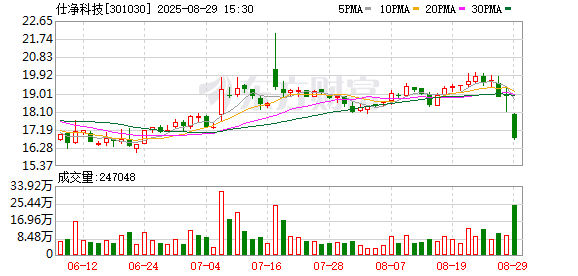
Market Overview - The Shanghai Composite Index is at 3863.48 points, with a change of +0.52% [1] - The total trading volume of A-shares is 23194.40 billion yuan [1] Technical Analysis - A total of 138 A-shares have seen their 5-day moving average cross below the 10-day moving average [1] - Notable stocks with significant distance between their 5-day and 10-day moving averages include: - Shijin Technology: 5-day MA at 18.74 yuan, 10-day MA at 19.12 yuan, difference of -1.98% [1] - *ST Guandian: 5-day MA at 5.05 yuan, 10-day MA at 5.12 yuan, difference of -1.27% [1] - Furande: 5-day MA at 15.27 yuan, 10-day MA at 15.46 yuan, difference of -1.20% [1] Individual Stock Performance - Shijin Technology: Today's change -10.86%, trading turnover 10.44% [1] - *ST Guandian: Today's change -0.21%, trading turnover 0.56% [1] - Furande: Today's change +1.48%, trading turnover 0.71% [1] - Other notable stocks with negative performance include: - Hengshang Energy: -1.13% [1] - Siter Technology: -1.48% [1] - Century Tianhong: -2.13% [1] Additional Stocks with Moving Average Cross - Honglu Steel Structure: 5-day MA at 17.66 yuan, 10-day MA at 17.78 yuan, difference of -0.70% [2] - Shengxiang Biology: 5-day MA at 21.76 yuan, 10-day MA at 21.90 yuan, difference of -0.64% [2] - Other stocks with negative changes include: - Yuanchuang Information: -1.92% [2] - Kelong Shares: -2.28% [2] - Ruikang Medicine: -1.69% [2]
短线防风险 137只个股短期均线现死叉
Zheng Quan Shi Bao Wang· 2025-08-29 12:57
Market Overview - The Shanghai Composite Index closed at 3857.93 points, with a change of 0.37% [2] - The total trading volume of A-shares reached 28301.97 billion yuan [2] Technical Analysis - A total of 137 A-shares experienced a death cross, where the 5-day moving average fell below the 10-day moving average [2] - Notable stocks with significant distance between their 5-day and 10-day moving averages include: - Shijin Technology: 5-day MA at 18.72 yuan, 10-day MA at 19.11 yuan, a difference of -2.03% [2] - Guandian: 5-day MA at 5.05 yuan, 10-day MA at 5.12 yuan, a difference of -1.31% [2] - Furande: 5-day MA at 15.28 yuan, 10-day MA at 15.46 yuan, a difference of -1.16% [2] Individual Stock Performance - Shijin Technology saw a decline of 11.39% with a turnover rate of 12.22% [2] - Guandian experienced a slight decrease of 0.62% with a turnover rate of 0.83% [2] - Furande increased by 1.89% with a turnover rate of 0.90% [2] - Other notable declines include: - Century Tianhong: down 2.59% [2] - Qiji: down 1.63% [2] - Xuanya: down 2.62% [2] Summary of Key Stocks - Stocks with significant declines and their respective metrics include: - Shijin Technology: latest price at 16.73 yuan, deviating -12.45% from the 10-day MA [2] - Guandian: latest price at 4.78 yuan, deviating -6.55% from the 10-day MA [2] - Furande: latest price at 15.12 yuan, deviating -2.21% from the 10-day MA [2]



短线防风险 134只个股短期均线现死叉
Zheng Quan Shi Bao Wang· 2025-08-29 05:22
Market Overview - The Shanghai Composite Index closed at 3849.76 points, with a change of 0.16% [1] - The total trading volume of A-shares reached 1,875.177 billion yuan [1] Technical Analysis - A total of 134 A-shares experienced a "death cross" where the 5-day moving average fell below the 10-day moving average [1] - Notable stocks with significant distance between their 5-day and 10-day moving averages include: - *ST Guandian: 5-day MA at 5.05 yuan, 10-day MA at 5.12 yuan, a difference of -1.27% [1] - Furan De: 5-day MA at 15.26 yuan, 10-day MA at 15.45 yuan, a difference of -1.23% [1] - Si Teqi: 5-day MA at 13.67 yuan, 10-day MA at 13.81 yuan, a difference of -1.00% [1] Individual Stock Performance - *ST Guandian: Today's change of -0.21%, with a turnover rate of 0.44% [1] - Furan De: Today's change of +1.21%, with a turnover rate of 0.57% [1] - Si Teqi: Today's change of -1.93%, with a turnover rate of 2.74% [1] - Other notable stocks include: - Hengshang Energy: -0.40% change, turnover rate of 2.68% [1] - New Ning Logistics: -2.49% change, turnover rate of 2.97% [1] - Century Tianhong: -1.94% change, turnover rate of 2.18% [1]