CANSINOBIO(688185)

Search documents
康希诺生物(06185.HK):DTCP–HIb–MCV4联合疫苗启动I期临床试验并完成首例受试者入组
Ge Long Hui· 2025-12-19 08:37
格隆汇12月19日丨康希诺生物(06185.HK)发布公告,公司研发的吸附无细胞百(组分)白破("DTcP")b型流 感嗜血杆菌(结合)("Hib")-ACYW135群脑膜炎球菌(结合)("MCV4")联合疫苗("DTcP-Hib-MCV4联合疫 苗")于近日正式启动I期临床试验,并完成首例受试者入组。 基于公司的产品管线布局,结合市场对多联疫苗的需求,并形成差异化竞争,公司拟研发DTcP-Hib- MCV4联合疫苗。I期临床试验为评价DTcP-Hib-MCV4联合疫苗在2月龄至6岁人群中接种的安全性及免 疫原性。 ...
康希诺(688185) - 自愿披露关于吸附无细胞百(组分)白破b型流感嗜血杆菌(结合)-ACYW135群脑膜炎球菌(结合)联合疫苗启动I期临床试验并完成首例受试者入组的公告
2025-12-19 08:30
康希诺生物股份公司(以下简称"公司")的吸附无细胞百(组分)白破b型 流感嗜血杆菌(结合)-ACYW135群脑膜炎球菌(结合)联合疫苗(以下简称 "DTcP-Hib-MCV4联合疫苗")于近日正式启动I期临床试验,并完成首例受试者 入组。 一、产品基本情况 随着中国上市疫苗品种的不断增加,越来越多剂次疫苗使用,给家长、孩子 和接种医生也带来了一系列的现实问题,如增加儿童接种的痛苦、增加卫生部门 的接种成本、降低幼儿接种的依从性、增加疑似异常反应的可能,以及加重了疫 苗管理的困难和成本等。因此,开发并推广同时预防多种疾病的联合疫苗成为新 疫苗研发的趋势,联合疫苗具有良好的临床开发前景。 证券代码:688185 证券简称:康希诺 公告编号:2025-046 康希诺生物股份公司 自愿披露关于吸附无细胞百(组分)白破b型流感嗜血杆菌 (结合)-ACYW135群脑膜炎球菌(结合)联合疫苗 启动I期临床试验并完成首例受试者入组的公告 本公司董事会及全体董事保证本公告内容不存在任何虚假记载、误导性陈述 或者重大遗漏,并对其内容的真实性、准确性和完整性依法承担法律责任。 基于公司的产品管线布局,结合市场对多联疫苗的需求,并形 ...
康希诺生物(06185) - 自愿公告 - DTCP–HIb–MCV4联合疫苗啟动I期临床试验并完成...
2025-12-19 08:30
香港交易及結算所有限公司及香港聯合交易所有限公司對本公告的內容概不負 責,對其準確性或完整性亦不發表任何聲明,並明確表示,概不就因本公告全部 或任何部分內容所產生或因依賴該等內容而引致的任何損失承擔任何責任。 CanSino Biologics Inc. 承董事會命 康希諾生物股份公司 Xuefeng YU 董事長 DTCP–HIb–MCV4聯合疫苗 啟 動I期臨床試驗並完成首例受試者入組 本 公 告 由 康 希 諾 生 物 股 份 公 司(「本公司」)自 願 作 出。 本 公 司 欣 然 宣 佈,本 公 司 研 發 的 吸 附 無 細 胞 百(組 分)白 破(「DTcP」)b型流感 嗜 血 杆 菌( 結 合 )(「Hib」)-ACYW135群 腦 膜 炎 球 菌( 結 合 )(「MCV4」)聯 合 疫 苗 (「DTcP-Hib-MCV4聯合疫苗」)於 近 日 正 式 啟 動I期 臨 床 試 驗,並 完 成 首 例 受 試 者 入組。 基於本公司的產品管線布局,結合市場對多聯疫苗的需求,並形成差異化競爭, 本公司擬研發DTcP-Hib-MCV4聯合疫苗。I期臨床試驗為評價DTcP-Hib-MCV4聯 合 疫苗 ...
康希诺:DTcP-Hib-MCV4联合疫苗启动I期临床试验并完成首例受试者入组
Xin Lang Cai Jing· 2025-12-19 08:13
康希诺公告,公司的吸附无细胞百(组分)白破b型流感嗜血杆菌(结合)-ACYW135群脑膜炎球菌 (结合)联合疫苗(简称"DTcP-Hib-MCV4联合疫苗")于近日正式启动I期临床试验,并完成首例受试 者入组。 ...
创新突破、用好工具、扭亏“摘U” 科创成长层三董事长共聚谈“成长”
Zhong Guo Jing Ying Bao· 2025-12-17 07:43
Core Insights - The launch of the Sci-Tech Innovation Board (STAR Market) has significantly transformed the development ecosystem for China's technology industry, particularly benefiting unprofitable "hard tech" companies by providing a supportive environment for long-term investment and innovation [4][5] - As of November 2025, 57 unprofitable companies have listed on the STAR Market, with 22 of them achieving profitability post-listing [4] - The STAR Market has facilitated substantial revenue growth and reduced losses for companies, with 35 firms in the growth layer reporting a 39% year-on-year revenue increase and a 65% reduction in net losses in the first three quarters of 2025 [4] Company Performance and Growth - ChipLink Integration has raised 11 billion yuan since its listing, with revenue growing from 2 billion yuan before listing to 6.5 billion yuan in 2024, effectively doubling its revenue in three years [7] - CanSino has maintained a research and development (R&D) expenditure of over 30%, which has been crucial for its product development and market expansion, particularly during the COVID-19 pandemic [8][15] - Effort, a robotics company, has seen its sales increase from 2,000 units at the time of listing to 16,000 units in 2024, significantly enhancing its market share and competitiveness [10][16] R&D Investment and Innovation - R&D investment is critical for "hard tech" companies, with ChipLink maintaining a 30% R&D expenditure ratio, significantly higher than the industry average of 10% [13] - CanSino's R&D strategy has allowed it to navigate the "valley of death" in vaccine development, leading to profitability in the third quarter of 2025 [15][18] - Effort has shifted from a "follower" to a "leader" in innovation post-listing, focusing on autonomous innovation and the integration of AI technology into its robotics solutions [16] Path to Profitability - Achieving profitability is seen as a natural progression for unprofitable companies on the STAR Market, with both ChipLink and CanSino projecting profitability milestones in the coming years [17][19] - ChipLink anticipates reaching profitability by 2026, supported by increasing market share and improved operational efficiency [19] - Effort aims to achieve profitability through a dual strategy of scaling growth and enhancing profit margins, leveraging its technological advancements [20] Utilization of Growth Tools - The STAR Market's mechanisms, such as mergers and acquisitions and equity incentives, are vital for the growth of "hard tech" companies [21] - ChipLink's acquisition of a 72.33% stake in a peer company exemplifies the effective use of M&A strategies to enhance growth [21] - Both ChipLink and CanSino emphasize the importance of equity incentives to attract and retain talent, which is crucial for long-term success in the tech sector [22]


康希诺跌2.56% 2020年上市募52亿元中信证券保荐
Zhong Guo Jing Ji Wang· 2025-12-16 09:02
Group 1 - The stock price of CanSino Biologics (688185.SH) fell by 2.56% to 62.84 yuan, indicating it is currently in a state of decline since its IPO [1] - CanSino was listed on the Shanghai Stock Exchange's STAR Market on August 13, 2020, with an initial issuance of 24.8 million shares at a price of 209.71 yuan per share [1] - The total funds raised from the IPO amounted to 5.201 billion yuan, with a net amount of 4.979 billion yuan after deducting issuance costs, which was 3.979 billion yuan more than the original plan of 1 billion yuan [1] Group 2 - The issuance costs for CanSino's IPO were 221 million yuan, with underwriting and sponsorship fees accounting for 205 million yuan [2] - CITIC Securities, as the lead underwriter, received an allocation of 496,000 shares, representing 2% of the total shares issued, with an investment amount of 104 million yuan [2]

预告海报丨《硬科硬客》“科创成长层‘成长记’”
Zhong Guo Jing Ying Bao· 2025-12-12 06:41
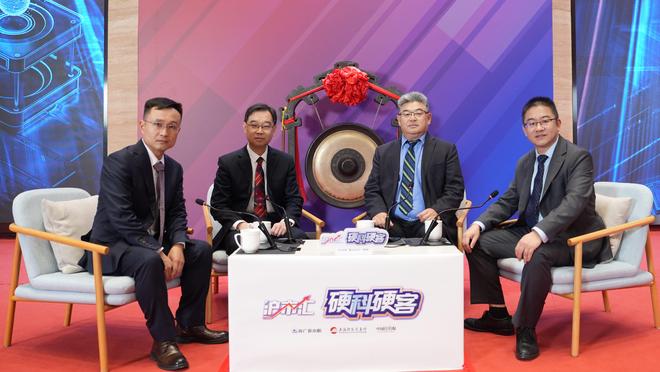
芯联集成董事长兼总经理赵奇、康希诺生物董事长兼CEO宇学峰、埃夫特董事长兼总经理游玮等上市前 未盈利企业代表,共探扭亏为盈"时间表"与"路线图"。 《沪市汇·硬科硬客》第二季第7期"科创成长层'成长记'"即将开播上线。 C 央广资本服 中国经营报 TE = 海 游 游 交 易 所 > S H ANGE FIZY [第二期第7期]科创成长层"成长记" 12月16日起融媒体产品全线输出 x 康希诺生物 芯联集成 重事长兼CEO 董事长兼总经理 4 用用! 东方证券 研究所副所 ...

低至5.5元/支,疫苗价格“跳水”背后
Tai Mei Ti A P P· 2025-12-10 10:15
Core Viewpoint - The HPV vaccine market has shifted dramatically from scarcity and high prices to aggressive price competition, leading to significant revenue declines for many companies in the vaccine industry [3][4][11]. Price Competition and Market Changes - The price of the bivalent HPV vaccine has dropped from 245 yuan to 27.5 yuan, a nearly 90% decrease, while the nine-valent HPV vaccine is being offered in "buy one, get one free" promotions [3]. - The flu vaccine market has also seen price reductions, with the trivalent vaccine dropping to 5.5 yuan and the quadrivalent vaccine decreasing from 128 yuan to 88 yuan [3]. - In the first three quarters of 2025, only 5 out of 14 domestic vaccine companies reported revenue growth, while 10 companies, including industry leader Zhifei Biological, experienced significant profit declines [2][3]. Structural Issues in the Industry - The industry's performance decline is attributed to structural problems rather than cyclical fluctuations, with price wars compressing profit margins and leading to a situation where revenue growth does not translate into profit [4][5]. - The lack of innovation and reliance on technology replication has resulted in oversupply and a lack of differentiation among products, making price competition inevitable [6][9]. Innovation as a Key to Recovery - Companies that focus on innovation, such as CanSino with its quadrivalent meningococcal vaccine, have shown resilience, achieving revenue growth and profitability despite the overall market downturn [6][7]. - The market is willing to pay a premium for differentiated products that offer better protection and safety, indicating that true innovation is essential for avoiding price competition [7]. Challenges to Original Innovation - The high costs and long timelines associated with developing new vaccines, along with regulatory uncertainties, deter companies from pursuing original innovation [9]. - The current regulatory framework is more suited to traditional technologies, creating barriers for new vaccine platforms [9]. Industry Response and Future Directions - The China Vaccine Industry Association has initiated a campaign to oppose "involutionary" competition and promote high-quality development in the vaccine sector [10]. - Companies are encouraged to focus on unmet clinical needs and explore international markets to alleviate domestic competition pressures [10]. - There is a need for improved public awareness and vaccination services to enhance demand and increase vaccination rates, particularly for flu vaccines [10]. Conclusion - The price competition in the vaccine industry is a result of homogeneous competition and represents a transitional phase for industry upgrade [11]. - Successful examples of innovative companies and emerging industry consensus indicate a potential path forward, emphasizing the importance of clinical value over price competition [11].


国产疫苗迎来出海爆发的前夜
Xin Lang Cai Jing· 2025-12-10 08:02
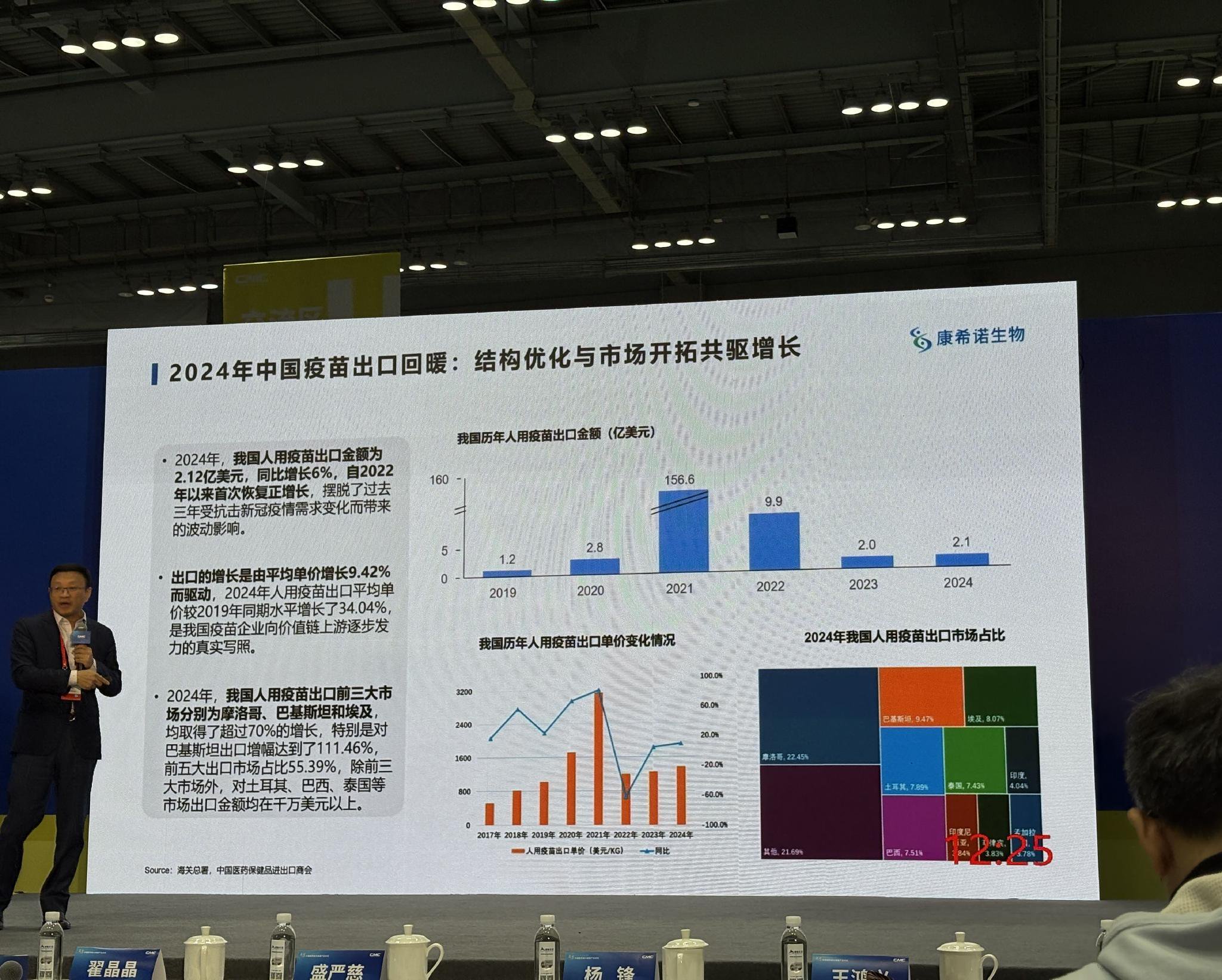
Core Viewpoint - The export of Chinese vaccines is experiencing a recovery, with significant international contracts and an upward trend in export value, driven by increased average prices and a shift towards innovative products [1][9][19]. Group 1: Export Growth and Market Dynamics - Sinovac has signed a long-term contract with the Brazilian Ministry of Health to supply approximately 60 million doses of varicella and rabies vaccines over the next decade, valued at over $700 million [1][21]. - In 2024, China's human vaccine export value is projected to reach $212 million, marking a 6% year-on-year increase and the first growth since 2022 [1]. - The average export price of Chinese human vaccines is expected to rise by 9.42% in 2024, with a 34.04% increase compared to the same period in 2019 [9]. Group 2: Product Development and Innovation - Chinese vaccine companies are expanding their product lines from basic vaccines to more competitive innovative vaccines, with a focus on higher-value categories [8]. - Various vaccines, including the 13-valent pneumococcal vaccine and quadrivalent meningococcal conjugate vaccine, are accelerating entry into international markets [10]. - The HPV vaccine from Wantai Biologics has seen a threefold increase in exports, reaching approximately 15 million doses in 2025 [12]. Group 3: Challenges and Competitive Landscape - The domestic vaccine market is under pressure, with a decline in the number of vaccine approvals from 5,343 in 2021 to 4,202 in 2024, influenced by economic downturns and reduced vaccination willingness [14]. - The competition in the vaccine development space is intense, with many companies pursuing similar vaccine types, leading to a crowded pipeline [17]. - The export strategy is also influenced by cost structures, as companies aim to lower supply costs and improve production efficiency through increased output [18]. Group 4: Strategic Opportunities and Localization - There is a structural opportunity for Chinese vaccine companies to enter markets that are underserved by multinational corporations, particularly in low- and middle-income countries [19]. - Successful international expansion requires not only product sales but also the establishment of localized systems to support long-term growth [20]. - Companies are shifting from simple export models to more integrated approaches, including local production and technology transfer agreements [20].

2025年三季报总结:医疗器械、生命科学上游、疫苗
2025-12-08 00:41
Summary of Conference Call Records Industry Overview - The medical device industry is experiencing overall performance pressure in 2025, but third-quarter revenues have shown a year-on-year increase, with a narrowing decline in net profit attributable to the parent company, primarily due to domestic medical insurance cost control and geopolitical influences. It is expected that normal growth rates will resume in 2026 [1][3][8]. Key Points on Medical Device Sector - **Domestic Market Dynamics**: The slowdown in hospital bidding in 2024 is impacting revenue realization, with an expected boost from the "old-for-new" policy by the end of 2025. The In Vitro Diagnostics (IVD) sector is under pressure due to centralized procurement price adjustments and tax reimbursements [1][4]. - **International Market Challenges**: Companies are strengthening their overseas presence, but initial high costs are pressuring short-term profits. The impact of US-China tariffs on low-value consumables is significant, with expectations of price recovery in the glove industry from late 2025 to 2026 after inventory digestion [1][4][11]. - **Performance Metrics**: In the first three quarters of 2025, the medical device sector reported revenues of 145.7 billion yuan, a year-on-year decline of 2.4%, and a net profit of 26.5 billion yuan, down 14.4%. However, the third quarter showed a positive revenue trend and a narrowing profit decline [3][15]. Specific Sector Insights - **IVD Sector**: The IVD sector saw a year-on-year decline of 14.5% in the first three quarters, but the third quarter showed improvement with revenues of 11.02 billion yuan, benefiting from the implementation of centralized procurement and the release of DRG/DIP 2.0 [16]. - **High-Value Consumables**: This segment experienced a revenue growth of 6.6% year-on-year, with orthopedics showing a significant growth rate of 18.7%. The recovery in cardiovascular surgeries is driving sales, and the ophthalmology sector presents potential due to low penetration rates [17]. - **Medical Equipment**: The medical equipment sector's revenue remained flat, but profit growth was slightly higher. The imaging equipment sector is benefiting from the "old-for-new" projects, with a notable recovery in the endoscope segment [15]. Vaccine Sector Performance - The vaccine sector faced significant pressure, with revenues declining nearly 50% and profits turning negative. However, there is a quarter-on-quarter improvement trend. Future focus includes the recovery of traditional vaccines and the launch of new pipeline products, such as the domestically produced nine-valent HPV vaccine [2][23]. Life Sciences Upstream Sector - The life sciences upstream sector's performance remained stable, with a year-on-year profit growth of 68% in the third quarter, driven by recovering terminal demand and improved gross margins. The sector is benefiting from the expansion of the biopharmaceutical market and policy support [24]. Regulatory Environment and Challenges - The current regulatory environment emphasizes innovation while ensuring safety and efficacy. Domestic companies face challenges in international certifications, particularly with the FDA and CE, due to quality control issues [20][21][22]. Future Outlook - The industry outlook for 2026 includes a focus on self-sufficiency, innovative devices, and accelerated realization of centralized procurement categories. The recovery of orthopedic products is already evident, and international expansion remains a key area of interest [5][7][19].