
Geovis(688568)

Search documents
中科星图股份有限公司关于以集中竞价交易方式回购公司股份的进展公告
Shang Hai Zheng Quan Bao· 2025-08-01 18:34
Group 1 - The company plans to repurchase its shares using funds from its initial public offering and its own funds, with a total repurchase amount between RMB 40 million and RMB 60 million, and a maximum repurchase price of RMB 84.39 per share [2] - The maximum repurchase price was adjusted to RMB 56.55 per share following the implementation of the 2024 annual equity distribution [3] - As of July 31, 2025, the company has repurchased a total of 1,476,724 shares, accounting for 0.1824% of the total share capital, with a total expenditure of approximately RMB 49.96 million [4] Group 2 - The company will continue to make repurchase decisions based on market conditions and will fulfill its information disclosure obligations in a timely manner [6] - The repurchase progress complies with relevant laws and regulations as well as the company's repurchase plan [5]

中科星图:累计回购公司股份1476724股
Zheng Quan Ri Bao· 2025-08-01 13:41
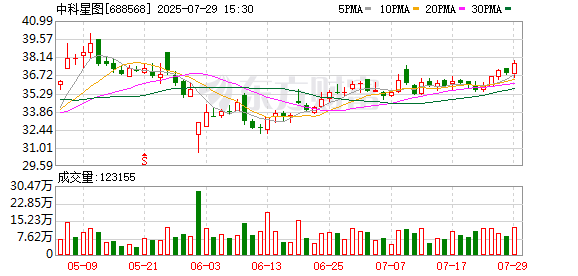
Group 1 - The core point of the article is that Zhongke Xingtou announced a share buyback plan, indicating a commitment to enhancing shareholder value [2] - As of July 31, 2025, the company has repurchased a total of 1,476,724 shares [2] - The repurchased shares account for 0.1824% of the company's total share capital [2]

中科星图(688568) - 中科星图股份有限公司关于以集中竞价交易方式回购公司股份的进展公告
2025-08-01 09:32
中科星图股份有限公司(以下简称"公司")于 2025 年 4 月 14 日召开第三 届董事会第四次会议、第三届监事会第四次会议,于 2025 年 5 月 7 日召开 2025 年第一次临时股东大会,审议通过《关于以集中竞价交易方式回购公司股份方案 的议案》。公司拟使用首次公开发行股票取得的超募资金和公司自有资金以集中竞 价交易方式回购公司已发行的人民币普通股(A 股)股票,本次回购的股份拟用 于注销并减少公司注册资本,本次回购的资金总额不低于人民币 4,000 万元(含) 且不超过人民币 6,000 万元(含),回购价格不超过人民币 84.39 元/股(含),回购 期限为自公司股东大会审议通过本次回购方案之日起不超过 12 个月。具体内容详 见公司分别于 2025 年 4 月 15 日、2025 年 5 月 8 日在上海证券交易所网站 1 证券代码:688568 证券简称:中科星图 公告编号:2025-048 中科星图股份有限公司 关于以集中竞价交易方式回购公司股份的进展公告 本公司董事会及全体董事保证本公告内容不存在任何虚假记载、误导性陈述 或者重大遗漏,并对其内容的真实性、准确性和完整性承担法律责任。 | ...
中科星图(688568.SH):累计回购147.67万股公司股份
Ge Long Hui A P P· 2025-08-01 09:23
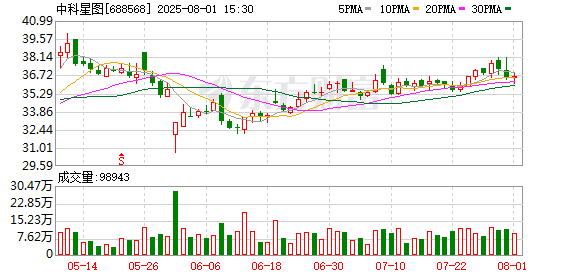
格隆汇8月1日丨中科星图(688568.SH)公布,截至2025年7月31日,公司通过上海证券交易所交易系统以 集中竞价交易方式累计回购公司股份147.67万股,占公司总股本的比例为0.1824%,回购成交的最高价 为36.28元/股,最低价为32.11元/股,支付的资金总额为人民币4995.94万元(不含印花税、交易佣金等 交易费用)。 ...
伊朗探索从GPS迁移至北斗导航系统,行业应用已进入市场化、国际化关键阶段
Xuan Gu Bao· 2025-07-31 00:30
Group 1 - Iran is planning to migrate its positioning services from GPS to China's BeiDou navigation system, emphasizing its advanced architecture and high positioning accuracy, particularly in Asia [1] - The BeiDou system has been recognized as a core global satellite navigation system by the United Nations, with extensive international cooperation agreements and product exports to over 140 countries [1] - The development of BeiDou is entering a critical phase of marketization, industrialization, and internationalization, supported by a three-step construction plan [1][2] Group 2 - The low Earth orbit satellite constellation plan is progressing, with BeiDou technology making breakthroughs and establishing a solid infrastructure for high-precision positioning and spatiotemporal data industries [2] - The "Star Network + BeiDou" framework is expected to form a benchmark technical support system for spatiotemporal data elements [2] Group 3 - Companies involved in BeiDou high-precision navigation chips include Haige Communication, BeiDou Star, and Zhenxin Technology [3] - High-precision time synchronization is provided by Tianao Electronics, while various companies are engaged in boards/terminals and spatiotemporal applications [3]



中科星图成立低空总院:“一体两翼”战略落地,驱动低空经济新引擎
Zheng Quan Shi Bao Wang· 2025-07-29 12:21
Core Viewpoint - The establishment of the Low Altitude Product Research Institute by Zhongke Xingtou marks a significant step in the implementation of its "one body, two wings" strategy, aimed at promoting high-quality development in the low-altitude economy and integrating resources for innovative growth [2][4]. Group 1: Strategic Development - The Low Altitude Product Research Institute is a response to the national low-altitude economic development strategy and aims to transition the company from a project-based to a product-oriented enterprise [3][4]. - The institute will integrate resources from various subsidiaries in cloud services, meteorology, and electromagnetic fields to create a unified low-altitude product development system [3][4]. - The four core tasks identified for the institute include strategic transformation, multi-dimensional support, enhancing product competitiveness, and participating in major research projects [4][7]. Group 2: Technological and Product Innovation - The institute will focus on six specialized departments, including low-altitude safety and AI empowerment, to achieve technical collaboration and resource integration [3][6]. - Zhongke Xingtou has maintained a research and development investment intensity exceeding 20% since its listing in 2020, accumulating over 3,100 intellectual property rights [5][6]. - The company aims to enhance its product ecosystem and support the systematic development of low-altitude products through improved resource coordination and innovation [7]. Group 3: Industry Challenges and Solutions - The low-altitude economy faces challenges such as talent shortages, high regulatory costs, and difficulties in inter-departmental coordination [4][7]. - Zhongke Xingtou's solutions include creating a unified platform to lower industry entry barriers and utilizing AI and big data to optimize regulatory efficiency [4][7]. - The establishment of the Low Altitude Product Research Institute is seen as a key move to address these industry pain points and enhance overall efficiency [7].
2025年中国军事仿真软件行业产业链、政策、发展规模、细分格局、竞争企业及行业发展趋势研判:应用领域和应用方向逐步扩宽,市场规模有望达到220.06亿元[图]
Chan Ye Xin Xi Wang· 2025-07-25 01:31
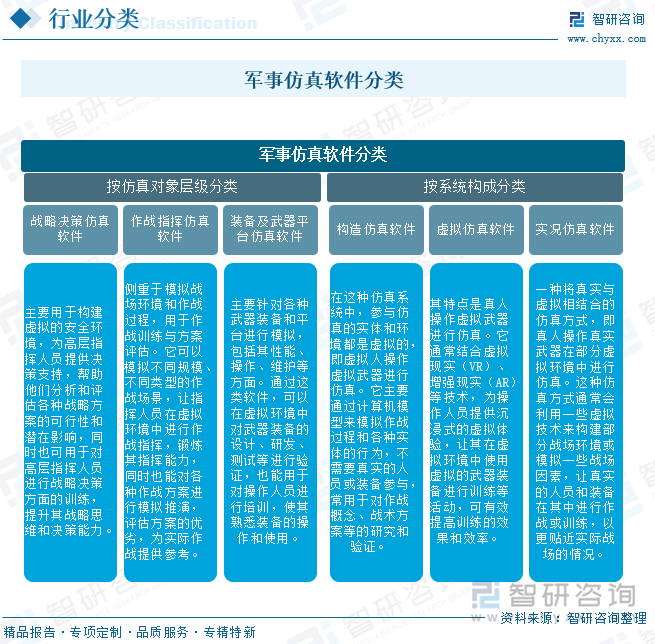
Core Viewpoint - The military simulation software industry in China is experiencing rapid growth, driven by the promotion of self-controlled software in the military, with significant increases in market size and demand projected for the coming years [1][10][12]. Industry Characteristics and Classification - Military simulation software is used for simulating military operations, training, and decision-making, categorized by simulation object levels and system composition [2][4]. - The industry is characterized by high technology intensity, large market potential, significant R&D investment, and long development cycles [4]. Current Development Status - The global military simulation software market is projected to reach $12.758 billion in 2024, with North America and the Asia-Pacific region holding significant market shares [7]. - China's military simulation software industry is growing due to increased national defense spending and military reforms, with a notable rise in demand for simulation technology [9][10]. Market Size and Projections - In 2024, China's military simulation software industry is expected to generate a revenue of 18.445 billion yuan, with a market size of 19.298 billion yuan and a demand for 24,888 sets [10][12]. - By 2025, the industry is projected to reach a revenue of 21.372 billion yuan, with a market size of 22.006 billion yuan and a demand for 29,598 sets [10][12]. Customer Segmentation - In 2024, military academies and research institutes will account for approximately 35.87% of the demand, while military units and agencies will represent about 45.03% [12]. - By 2025, the share of military academies and research institutes is expected to decrease slightly to 34.44%, while military units will increase to 45.44% [12]. Industry Chain - The upstream of the military simulation software industry includes computer and network equipment manufacturing, while the downstream consists of military and defense industrial enterprises with stable and increasing demand for simulation technology [14]. Policy Environment - The military simulation technology has gained recognition in enhancing research efficiency and optimizing combat strategies, supported by national policies focusing on defense informationization and intelligent combat training [16][17]. Competitive Landscape - The industry features two main types of competitors: state-owned entities with strong technical and financial backing, and private enterprises like Huaru Technology, which excel in market development and innovation [18][20]. - Foreign companies face challenges in entering the domestic military simulation market due to confidentiality restrictions [18]. Key Companies - Huaru Technology focuses on military simulation products and services, achieving comprehensive market coverage across various military branches and applications [20][21]. - Zhongke Xingtou integrates space and air capabilities, providing high-quality space information services and achieving significant revenue growth [24]. Future Trends - The military simulation software industry is expected to evolve with advancements in high-performance computing, artificial intelligence, and virtual reality technologies, enhancing the capabilities and applications of simulation software [26].
专访中科星图陈伟:从万亿到10万亿 低空经济安全优先
2 1 Shi Ji Jing Ji Bao Dao· 2025-07-16 23:59
Core Insights - The low-altitude economy is evolving into a significant market, with estimates suggesting it could reach a scale of 10 trillion yuan, indicating its status as an economic system formed by multiple industries [1] - The strategic collaboration between Zhongke Xingtou and Zhongke Shuguang aims to build an integrated computing architecture and promote technological development and ecosystem expansion in the aerospace information sector [1][3] Industry Development - The low-altitude economy is recognized as a new productive force, with local governments actively implementing policies to support its development [3] - Various regions, including Hubei, Tianjin, Guangdong, and Jiangsu, have begun testing provincial low-altitude flight service platforms, while others like Beijing and Shandong are also advancing similar initiatives [3] - The development of low-altitude economy infrastructure requires significant upfront investment, and progress varies across different regions [3][4] Infrastructure and Investment - The initial investment and operational costs for low-altitude economy infrastructure are substantial, similar to the economic benefits derived from metro or highway networks [4] - A gradual approach to investment is recommended, focusing on essential infrastructure like takeoff and landing sites before expanding further [4] Safety and Technology - Ensuring safety in low-altitude operations is crucial for orderly development, with current safety concerns being a major bottleneck [5] - Zhongke Xingtou is leveraging high-precision geographic data and edge computing to enhance flight safety and route planning [5] Future Directions - The establishment of the Star Map Low Altitude Cloud platform reflects Zhongke Xingtou's commitment to the low-altitude economy, which has been in development since 2018 [5] - The company aims to explore innovative applications in logistics and public infrastructure management, integrating AI to replace high-risk manual inspections [6] - Future business development will focus on regions with high enthusiasm for low-altitude economy, such as Chongqing, Jiangsu, and Xiamen, to build experience and showcase successful scenarios [6]
科创AIETF(588790)盘中涨超2%冲击4连涨,规模、份额续创新高,机构预计AI推动的算力投资未来依然强劲
Sou Hu Cai Jing· 2025-07-16 02:32
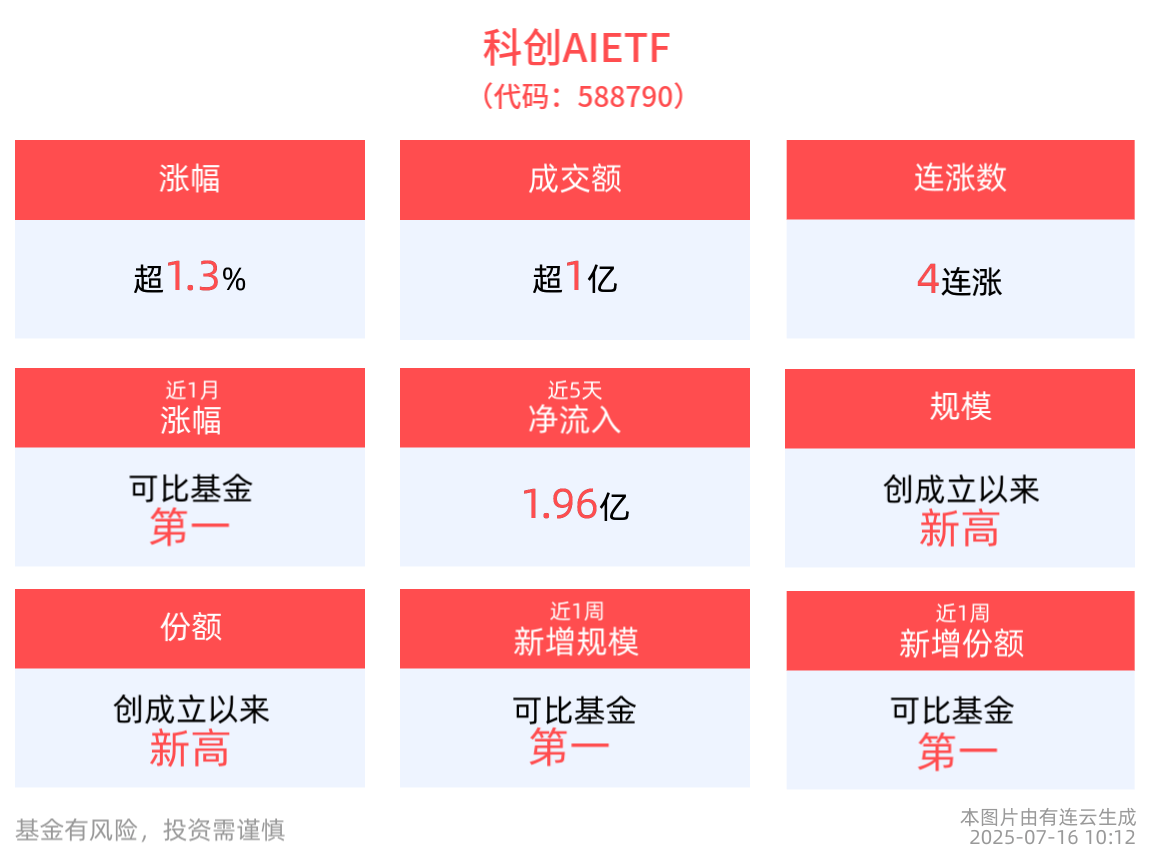
Core Viewpoint - The AI sector continues to show strong growth, with significant demand for computing power, and the market is currently observing fluctuations due to short-term price increases and tariff issues in the U.S. [4] Group 1: Market Performance - As of July 16, 2025, the Shanghai Stock Exchange Sci-Tech Innovation Board Artificial Intelligence Index (950180) rose by 1.58%, with notable increases in stocks such as Cambricon (688256) up 6.76%, Foxit Software (688095) up 6.27%, and Yuntian Lifeng (688343) up 5.06% [3] - The Sci-Tech AI ETF (588790) experienced a mid-day increase of over 2%, currently up 1.37%, marking a potential four-day consecutive rise [3] - The latest size of the Sci-Tech AI ETF reached 4.707 billion yuan, a record high since its inception, ranking first among comparable funds [4] Group 2: Fund Performance - The Sci-Tech AI ETF's net value increased by 10.55% over the past six months, ranking first among comparable funds [5] - The fund's highest single-month return since inception was 15.59%, with an average monthly return of 9.71% during rising months [5] - The fund's management fee is 0.50% and the custody fee is 0.10%, which are relatively low compared to comparable funds [5] Group 3: Investment Trends - The fund has seen a net inflow of 1.78 billion yuan recently, with three out of the last five trading days showing net inflows totaling 196 million yuan [4] - Leverage funds are increasingly being allocated to the Sci-Tech AI ETF, with a net purchase amount of 17.9721 million yuan this month [4] - The index tracked by the Sci-Tech AI ETF is currently valued at a historical low, with a price-to-book ratio (PB) of 7.71, below 85.29% of the time since the index's inception, indicating strong valuation attractiveness [5][6]


中科星图陈伟:从万亿到10万亿,低空经济安全优先
2 1 Shi Ji Jing Ji Bao Dao· 2025-07-15 13:43
Core Viewpoint - The low-altitude economy is evolving into a significant market, with estimates suggesting it could reach a scale of 10 trillion yuan, indicating it is not merely an industry but an economic system formed by multiple industries [1]. Industry Development - The low-altitude economy is recognized as a new productive force, with local policies being rapidly implemented to support its development [3]. - The current management structure for low-altitude economy development is primarily at the provincial and municipal levels, focusing on establishing unified flight service regulatory platforms [3]. - Various regions, including Hubei, Tianjin, Guangdong, and Jiangsu, have begun testing provincial low-altitude flight service platforms since June [3]. Infrastructure Investment - The initial investment and operational costs for low-altitude economy infrastructure are substantial, similar to the costs associated with metro or highway networks [4]. - It is recommended to proceed in an orderly manner with initial investments, focusing on essential infrastructure like take-off and landing sites before expanding further [4]. Safety Considerations - Ensuring safety is crucial for the orderly development of the low-altitude economy, with airspace and flight safety being significant bottlenecks [6]. - The company is providing high-precision terrain and environmental information to enhance flight safety and avoid collisions [6]. Business Development - The establishment of the low-altitude cloud platform by the company is a result of its accumulated experience in the low-altitude economy sector, aiming to support investment and development [6]. - Future business development will focus on regions with high enthusiasm for low-altitude economy, such as Chongqing, Jiangsu, and Xiamen, to build experience and capabilities [7].