TYN(000591)

Search documents
太阳能风扇帽海外被抢购,“降温经济”热浪中的创新启示
Qi Lu Wan Bao· 2025-07-27 03:54
Core Insights - The rise of the solar fan hat from Yiwu, Zhejiang, highlights the intersection of "cooling economy" and "innovation economy," demonstrating how innovative products can effectively address consumer needs in extreme heat [1][2][3] - The success of the solar fan hat illustrates that innovation does not always require advanced technology; rather, it can stem from the clever combination of existing technologies to meet practical demands [1][2] - The "cooling economy" reflects a growing trend of integrating modern technology and materials into traditional consumer goods, enhancing functionality and user experience [1][2] Industry Trends - The "cooling economy" is characterized by a variety of innovative products such as smart wearable air conditioners, graphene cooling patches, and portable mini fans, all aimed at alleviating summer discomfort [1][2] - The emergence of "small but beautiful" innovations that address real-world problems can be as impactful as high-tech advancements, emphasizing the importance of understanding and fulfilling unmet daily needs [2][3] - Companies facing challenges like demand stagnation and overcapacity should focus on innovation rather than engaging in price wars, which can harm consumer rights and industry integrity [2][3] Strategic Recommendations - To escape the "involution" trap, companies should prioritize innovation as a means to enhance competitiveness and create new growth opportunities by addressing unfulfilled consumer needs [3] - Businesses are encouraged to leverage their strengths and explore new technologies, materials, and processes to develop products that genuinely meet consumer demands [3] - The success of the "cooling economy" serves as a reminder that innovation can thrive in response to real needs, urging companies to balance high-tech aspirations with grounded, practical solutions [3]

海尔申请太阳能随动控制系统等相关专利,能够为空调机房提供稳定的电能供应
Jin Rong Jie· 2025-07-26 01:41
Core Insights - The State Intellectual Property Office of China has reported that Qingdao Haier Air Conditioning Electronics Co., Ltd., Qingdao Haier Air Conditioning Co., Ltd., and Haier Smart Home Co., Ltd. have applied for a patent titled "Solar Tracking Control System, Solar Tracking Control Method, and Electronic Device" with publication number CN120371027A, filed on December 2024 [1] - The patent describes a solar tracking control system that includes a servo subsystem, an analog signal subsystem, and a spatiotemporal scheduling subsystem, which work together to optimize the angle of solar panels based on light intensity and current spatiotemporal information [1] Company Overview - Qingdao Haier Air Conditioning Electronics Co., Ltd. was established in 1999 in Qingdao, primarily engaged in the manufacturing of specialized equipment, with a registered capital of approximately 9.67 billion RMB. The company has invested in 15 enterprises and participated in 4,353 bidding projects, holding 127 trademark records and 5,000 patent records [2] - Qingdao Haier Air Conditioning Co., Ltd. was founded in 1996 in Qingdao, focusing on the manufacturing of electrical machinery and equipment, with a registered capital of approximately 9.36 billion RMB. The company has invested in 19 enterprises and participated in 3,430 bidding projects, holding 259 trademark records and 5,000 patent records [2] - Haier Smart Home Co., Ltd. was established in 1994 in Qingdao, also engaged in the manufacturing of electrical machinery and equipment, with a registered capital of approximately 94.38 billion RMB. The company has invested in 58 enterprises and participated in 1,698 bidding projects, holding 285 trademark records and 5,000 patent records [2]

欧盟再次对中国太阳能玻璃启动双反复审,中欧贸易摩擦再次升级!
Sou Hu Cai Jing· 2025-07-25 13:22
Group 1 - The European Commission has initiated a second anti-dumping and countervailing "sunset review" against Chinese solar glass, reminiscent of actions taken in 2013 and 2019, with current tariffs set to expire in 2025 [1][3] - European solar glass manufacturers are facing significant challenges, with local production capacity at only 8 GW while demand has surged to 56 GW in 2023, leading to a heavy reliance on imports from China, which are priced approximately 25% lower [3] - The EU aims to use these tariffs to buy time for its "Net Zero Industrial Act," targeting a 40% domestic supply chain share by 2030, but investment in the entire supply chain has lagged, with new glass furnace projects underfunded compared to leading Chinese firms [3] Group 2 - The Chinese Ministry of Commerce has responded strongly to the EU's tariff actions, indicating potential countermeasures that could include tariffs on polysilicon, silicon wafers, and luxury goods, which may escalate trade tensions [4] - The imposition of tariffs could extend the payback period for European consumers investing in rooftop solar from 7 years to 10 years, highlighting the potential economic impact on the market [4]


中国太阳能_追踪盈利拐点_政策驱动 7 月上游价格上涨,但需求疲软下交易平淡-China Solar_ Tracking profitability inflection_ Policy driven upstream price hike in July but muted transaction amid demand weakness
2025-07-25 07:15
Summary of China Solar Industry Conference Call Industry Overview - The conference call focused on the **China Solar** industry, particularly the dynamics of supply, demand, and pricing within the solar value chain [1][3][20]. Key Highlights - **Profitability Tracker**: The China Solar Profitability Tracker monitors monthly supply/demand and inventory dynamics, along with cash gross profit (GP) and EBITDA margin trends for covered companies [1]. - **Price Increases**: A policy-driven price hike occurred in July, with upstream prices for Poly increasing by **34%** and Wafer by **21%**. Domestic Poly future quotes surged over **60%**, reaching **Rmb49-51/kg** [6][20]. - **Demand Weakness**: Despite price increases, transaction volumes remained muted due to weak demand. Global module demand fell by **67% month-over-month** and **17% year-over-year** to **45GW** in June [6][21]. - **Cyclical Bottom**: The industry is believed to be at a cyclical bottom, with a potential inflection point expected around **2H26** as demand turns [3]. Profitability Insights - **Cash Profitability Improvement**: Spot price implied cash profitability improved for Tier 1 players, with upstream segments showing stronger sequential recovery [8][11]. - **Average Cash GPM Changes**: The average cash gross profit margin (GPM) for Poly was **28%**, Wafer **5%**, Cell **1%**, Module **11%**, and Glass **-12%** [11]. Inventory and Production Dynamics - **Production Forecast**: Poly production is expected to increase by **7%** in July, while other segments like Wafer and Cell are projected to decline by **11%** and **5%**, respectively [13]. - **Inventory Days**: Inventory days are likely to rebound to **39 days** in July from **34 days** in June, indicating intensifying inventory pressure in the Poly segment [14][17]. Investment Recommendations - **Preferred Segments**: The report recommends a "Buy" on Cell & Module and Film, while advising a "Sell" on Glass, Poly, Wafer, and Equipment [3]. - **Long-term Outlook**: Mid-to-long run normalized profitability is expected to remain low due to a slowdown in demand growth in China [3]. Additional Insights - **Market Dynamics**: The successful pass-through of upstream price hikes to downstream operators is crucial but appears challenging given the softer demand outlook [21]. - **Global Module Demand Forecast**: The full-year installation forecast suggests a **42% year-over-year** decline in global module demand, averaging **33GW** per month in **2H2025** [6]. This summary encapsulates the critical insights and data points from the conference call, providing a comprehensive overview of the current state and future outlook of the China Solar industry.
欧盟对华太阳能玻璃发起第二次双反日落复审调查
news flash· 2025-07-25 03:39
Core Viewpoint - The European Commission has initiated a second sunset review investigation into anti-dumping and anti-subsidy measures on solar glass originating from China, following applications from Interfloat Group and GMB Glasmanufaktur Brandenburg GmbH, to assess potential damage to the EU domestic industry if current measures are lifted [1]. Group 1 - The investigation period for the sunset review is set from July 1, 2024, to June 30, 2025, while the injury investigation period covers January 1, 2022, until the end of the review period [1]. - The specific EU CN codes for the products involved in this investigation are ex7007 19 80, with TARIC codes including 700719 80 12, 7007 19 80 18, 7007 19 80 80, and 7007 19 80 85 [1]. Group 2 - The European Commission previously initiated an anti-dumping investigation on solar glass from China on February 28, 2013, followed by an anti-subsidy investigation on April 27, 2013 [2]. - The final rulings on the first anti-dumping and anti-subsidy measures were made on May 14, 2014, and a first sunset review investigation was initiated on May 14, 2019, with the final ruling on that review issued on July 23, 2020 [2].
正泰斥资7亿美元 将在土耳其建5GW太阳能硅片、电池、组件一体化工厂
news flash· 2025-07-24 09:18
Core Viewpoint - Chint New Energy plans to invest $700 million in constructing a second solar module manufacturing plant in Balıkesir, Turkey, with operations expected to begin by the end of 2025 [1] Group 1: Investment and Expansion Plans - The company has acquired land in a local organized industrial zone for the new facility [1] - The initial focus of the plant will be on photovoltaic silicon wafers and battery production, targeting an annual capacity of 3 GW [1] - Full production is anticipated by 2028, with an expanded annual capacity of 5 GW and the introduction of finished solar modules [1]

伊拉克石油副部长:计划到2030年实现1.2万兆瓦的太阳能发电能力。
news flash· 2025-07-24 09:04
Core Viewpoint - Iraq's Deputy Minister of Oil announced plans to achieve a solar power generation capacity of 12,000 megawatts by 2030 [1] Group 1 - The target of 12,000 megawatts of solar power capacity reflects Iraq's commitment to diversifying its energy sources [1] - This initiative is part of a broader strategy to enhance renewable energy production in the country [1] - The development of solar energy is expected to contribute to Iraq's energy security and sustainability goals [1]
中国太阳能_关于反内卷的关键问答-China Solar_ Key Q&As on Anti-Involution
2025-07-23 02:42
Summary of China Solar Conference Call Industry Overview - The conference focused on the solar industry in China, particularly the polysilicon segment, in light of recent government policies aimed at regulating competition and addressing overcapacity [1][2][3]. Key Points and Arguments 1. **Market Reaction to Policy Changes**: Following the Central Commission for Financial and Economic Affairs meeting on July 1, share prices for polysilicon companies (Tongwei, GCL, Daqo) increased by an average of 32%, indicating positive market sentiment towards potential regulatory changes [1]. 2. **Price Increases**: Polysilicon asking prices rose from Rmb35 per kg to Rmb49 per kg, a 40% increase within two weeks, reflecting expectations of improved pricing power in the industry [1][14]. 3. **Anti-Involution Campaign**: The campaign aims to discourage local protectionism and excessive competition, with a focus on establishing a legal framework to ensure fair competition and prevent below-cost pricing [12][13]. 4. **Potential Capacity Buyout Fund**: Discussions are ongoing regarding a tail polysilicon capacity buyout fund, which could involve Rmb40-80 billion to acquire excess capacity, with preliminary government support noted [13][15]. 5. **Profitability Outlook**: While there is optimism about price recovery, normalized profitability is expected to remain low due to a slowdown in demand growth in China [3][24]. Implementation Details 1. **Regulatory Framework**: The revised Anti-Unfair Competition Law is set to take effect on October 15, 2025, enhancing enforcement against below-cost competition [12]. 2. **Production Control**: Future policies will focus on controlling production and preventing new capacity expansion, with specific details still under discussion [19]. 3. **Demand-Side Policies**: The introduction of demand-side policies is crucial to ensure a stable demand outlook, which remains uncertain [19][20]. Beneficiaries of Anti-Involution 1. **Liquidity-Constrained Companies**: Companies like GCL Tech, Tongwei, and Xinyi Solar are expected to benefit from improved cash flows due to regulatory changes [11][38]. 2. **Upstream Integrated Players**: Tier 1 module manufacturers, such as Tongwei and Longi, are likely to see significant benefits from a steeper industry cost curve [11][38]. 3. **High-Efficiency Module Producers**: Companies producing high-efficiency modules may benefit from price hikes in mainstream products [11][38]. Risks and Challenges 1. **Execution Challenges**: The ability to pass through module price hikes to downstream operators is uncertain, especially given the current oversupply situation [20]. 2. **Dependence on Policy Enforcement**: The success of the Anti-Unfair Competition Law and its impact on profitability will depend on effective enforcement and potential penalties for violations [24]. Conclusion - The solar industry in China is at a critical juncture with the potential for significant regulatory changes aimed at stabilizing prices and improving profitability. However, the successful implementation of these policies and their impact on market dynamics remain to be seen [3][15].
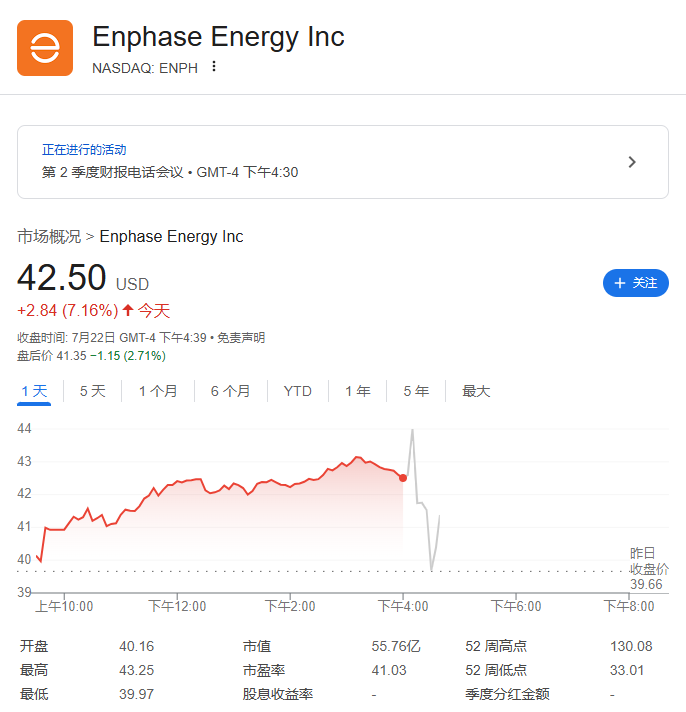
光伏逆变器生产商Enphase Energy二季度营收3.632亿美元,分析师预期3.593亿美元。二季度Microinverter部门发货量153万,分析师预期160万。二季度总体电池发货量190.9 MWH,分析师预期164.34 MWH。明年加速转向光伏租赁业务,正加产品的大租赁融资可及性。欧洲家用太阳能市场面临挑战。ENPH美股盘后冲高回落,跌6.61%。
news flash· 2025-07-22 20:48
Group 1 - Enphase Energy reported Q2 revenue of $363.2 million, exceeding analyst expectations of $359.3 million [1] - The Microinverter segment shipped 1.53 million units in Q2, below the analyst forecast of 1.6 million units [2] - Total battery shipments in Q2 reached 190.9 MWh, surpassing the analyst expectation of 164.34 MWh [3] Group 2 - The company plans to accelerate its shift towards solar leasing business next year, enhancing the accessibility of large-scale leasing financing [3] - The European residential solar market is facing challenges [4] - Following the earnings report, Enphase's stock experienced a post-market drop of 6.61% [5]

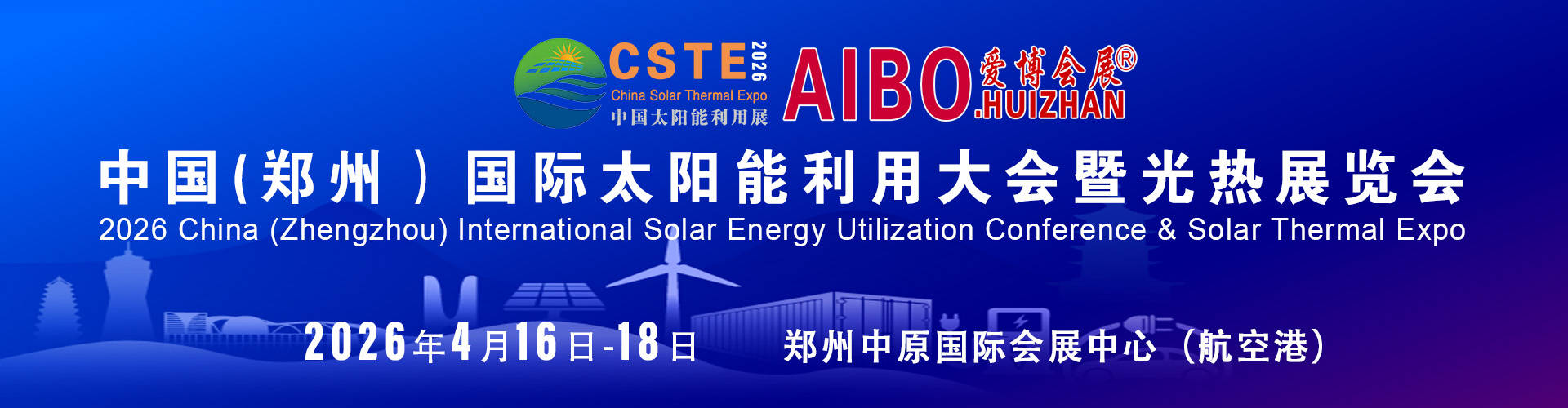
同聚中原·共赢未来,2026中部(河南郑州)太阳能利用光热展览会
Sou Hu Cai Jing· 2025-07-22 15:20
Core Insights - The Chinese solar thermal power industry is experiencing rapid growth, becoming a significant driver of global clean energy transition, with a cumulative installed capacity of 838.2 MW by the end of 2024, accounting for 10.6% of the global total [2] - Strong government support through various policies has facilitated the development of the solar thermal power sector, leading to 34 ongoing projects with a total capacity of 3,300 MW and 37 planned projects with approximately 4,800 MW [2] - The industry chain has reached a scale with around 440,000 entities involved, predominantly private enterprises, indicating a diversified market structure and significant technological innovation [3] Industry Development Stages - The solar thermal power industry in China has undergone three clear stages: the demonstration phase (2015-2020), the scale-up phase (2020-2030), and the anticipated large-scale commercialization phase post-2030 [7] - Successful demonstration projects have laid a solid foundation for future growth, with expectations of rapid capacity expansion and cost reduction in the upcoming years [7] Strategic Significance - The development of the solar thermal power industry is strategically important for reducing dependence on fossil fuels, creating job opportunities, and enhancing China's competitiveness in the global energy sector [8] - The industry is expected to play a crucial role in achieving carbon peak and carbon neutrality goals, with projections indicating that installed capacity could exceed 10 GW by 2030 [13] Future Outlook - The ongoing push for carbon neutrality and the construction of new power systems will provide broader development opportunities for solar thermal power [13] - The industry is expected to complement other renewable energy sources, improving overall efficiency and economic viability [13]