太阳能发电

Search documents
国家能源局负责人会见新加坡贸工部副常秘
国家能源局· 2026-03-19 11:15
Core Viewpoint - The meeting between China's National Energy Administration and Singapore's Ministry of Trade and Industry aims to enhance cooperation in the energy sector, focusing on advanced technologies and modernization efforts in both countries [1][3]. Group 1: Energy Cooperation - China and Singapore have a close energy cooperation relationship and are willing to strengthen policy communication and collaboration in key areas [3]. - The framework for cooperation is outlined in the Memorandum of Understanding on Energy Cooperation between the National Energy Administration of China and Singapore's Ministry of Trade and Industry [3]. Group 2: Areas of Collaboration - Singapore is advancing its energy modernization efforts and seeks to deepen cooperation with China in areas such as advanced nuclear energy, solar power generation, grid modernization, and new energy technologies [3].


有色新能源周度报告-20260313
中盛期货· 2026-03-13 11:48
1. Report Industry Investment Rating No relevant content provided. 2. Core Viewpoints of the Report - The report analyzes the price trends, supply - demand situations, and market outlooks of various non - ferrous metals and new energy - related products. It also provides trading strategies for key varieties such as lithium carbonate and tin [34][37]. 3. Summary by Relevant Catalogs 3.1 Domestic Main Metal Spot Price Trends - Copper: The futures主力合约CU2604 closed at 100310 yuan/ton on March 13, 2026, down 740 yuan (-0.73%) from March 6. The average price of 1 copper in Shanghai spot was 100570 yuan/ton, down 550 yuan (-0.54%) [4]. - Aluminum: The futures主力合约AL2605 closed at 25070 yuan/ton on March 13, up 285 yuan (1.15%) from March 6. The average price of A00 aluminum in Shanghai spot was 25110 yuan/ton, up 670 yuan (2.74%) [4]. - Zinc: The futures主力合约ZN2604 closed at 24140 yuan/ton on March 13, down 120 yuan (-0.49%) from March 6. The average price of 0 zinc in Shanghai spot was 24120 yuan/ton, down 40 yuan (-0.17%) [4]. - Lead: The futures主力合约PB2604 closed at 16555 yuan/ton on March 13, down 220 yuan (-1.31%) from March 6. The average price of 1 lead ingot was 16425 yuan/ton, down 175 yuan (-1.05%) [4]. - Nickel: The futures主力合约NI2605 closed at 136930 yuan/ton on March 13, down 210 yuan (-0.15%) from March 6. The average price of 1 electrolytic nickel was 141350 yuan/ton, up 850 yuan (0.60%) [4]. - Alumina: The futures主力合约AO2605 closed at 2956 yuan/ton on March 13, up 124 yuan (4.38%) from March 6. The alumina price in Foshan spot was 2700 yuan/ton, up 20 yuan (0.75%) [4]. - Industrial silicon: The futures主力合约SI2605 closed at 8675 yuan/ton on March 13, down 15 yuan (-0.17%) from March 6. The average price of 553 silicon was 9500 yuan/ton, up 100 yuan (1.06%) [4]. - Lithium carbonate: The futures主力合约LC2605 closed at 152080 yuan/ton on March 13, down 4080 yuan (-2.61%) from March 6. The average price of battery - grade lithium carbonate (99.5%) was 158350 yuan/ton, up 3550 yuan (2.29%) [4]. - Polysilicon: The futures主力合约PS2605 closed at 42040 yuan/ton on March 13, up 925 yuan (2.25%) from March 6. The price of N - type polysilicon material was 46000 yuan/ton, down 3000 yuan (-6.12%) [4]. - Tin: The futures主力合约SN2604 closed at 374110 yuan/ton on March 13, down 19550 yuan (-4.97%) from March 6. The average price of 1 tin in Shanghai spot was 386800 yuan/ton, down 10250 yuan (-2.58%) [4]. 3.2 Copper Inventory Trends in Major Exchanges - LME copper inventory was 31.24 million tons on March 13, 2026, up 3.02 million tons (10.70%) from March 6 [16]. - COMEX copper inventory was 59.22 million tons on March 13, down 0.75 million tons (-1.25%) from March 6 [16]. - SHEF copper inventory was 43.35 million tons on March 13, up 0.84 million tons (1.98%) from March 6 [16]. 3.3 Processing Fees of Copper and Tin Concentrates - As of March 13, 2026, the spot TC of copper concentrate was - 57.2 US dollars/ton, with a slight weekly decline, remaining at an extreme historical negative value. The spot RC of copper concentrate was - 5.72 cents/pound, and the tight supply expectation at the mine end still exists [20]. - Since March, the processing fees of 60 - grade tin concentrates in Jiangxi, Guangxi, and Hunan have all increased by about 2000 yuan, indicating that the supply - side tension has passed and the pricing logic has changed [26]. 3.4 Lithium Spodumene Concentrate Index - As of March 13, 2026, the latest quote of lithium spodumene concentrate (CIF China) was 2210 US dollars/ton, up 55 US dollars/ton weekly [23]. 3.5 Non - ferrous Metal Demand Side - In February 2026, China's automobile production and sales were 1.672 million and 1.805 million vehicles respectively, with a month - on - month decrease of 31.7% and 23.1%, and a year - on - year decrease of 20.5% and 15.2%. From January to February, automobile production and sales were 4.122 million and 4.152 million vehicles respectively, with a year - on - year decrease of 9.5% and 8.8% [29]. - From January to February 2026, the production and sales of new energy vehicles were 1.735 million and 1.71 million vehicles respectively, with a year - on - year decrease of 8.8% and 6.9%. The new energy vehicle sales accounted for 41.2% of the total new vehicle sales [29]. - In 2025, the housing construction area of real estate development enterprises was 6.5989 billion square meters, a year - on - year decrease of 10.0%. The new housing start - up area was 587.7 million square meters, a decrease of 20.4%. The housing completion area was 603.48 million square meters, a decrease of 18.1% [31]. - As of the end of 2025, the cumulative installed power generation capacity in China was 3.89 billion kilowatts, a year - on - year increase of 16.1%. Among them, the installed capacity of solar power generation was 1.2 billion kilowatts, a year - on - year increase of 35.4%, leading in growth rate; the installed capacity of wind power was 640 million kilowatts, a year - on - year increase of 22.9% [33]. 3.6 Strategy Recommendations 3.6.1 Lithium Carbonate - The lithium carbonate futures showed wide - range fluctuations this week. The主力2605 contract closed at 152080 yuan/ton, with a weekly decline of 2.61% and an amplitude of 16.19%. The price center has moved down. The supply has increased as some upstream salt factories have resumed production after maintenance. The demand has increased with the 55% year - on - year growth of national lithium iron phosphate production from January to February. The inventory has been decreasing but at a slower pace. The export ban on unprocessed lithium minerals in Zimbabwe has had an impact. In the short term, it may maintain wide - range fluctuations, and the geopolitical situation should be closely monitored [34]. - Short - term: Double - top suppression is obvious, and it may maintain wide - range fluctuations. - Medium - to - long - term: Focus on the actual demand fulfillment [35]. 3.6.2 Tin - The Shanghai tin主力2604 contract fell 4.97% this week, closing at 374410 yuan/ton. Indonesia's tin production quota in 2026 has increased significantly compared with 2025, and the resumption of production in Myanmar has accelerated. The current tin price is still relatively high, and downstream orders have decreased significantly. The domestic tin ingot social inventory has been accumulating. In the short term, it is weakly running. In the future, the core variables are the supply increase from Myanmar and Indonesia and the downstream demand, especially in the photovoltaic and AI fields [37]. - Short - term: Weakly running. - Medium - to - long - term: Pay close attention to the actual downstream demand and new policy guidance [38].
信义光能(00968):25H2光伏玻璃盈利能力同环比改善,减值拖累较大
Guolian Minsheng Securities· 2026-03-10 15:36
Investment Rating - The report maintains a "Buy" rating for Xinyi Solar (0968.HK) [4] Core Views - The company's revenue for 2025 is projected at 20.861 billion CNY, a year-on-year decrease of 4.8%, while the net profit attributable to shareholders is expected to be 845 million CNY, down 16.2% year-on-year [3][8] - The profitability of photovoltaic glass improved in the second half of 2025, with a significant reduction in costs contributing to this improvement, despite a large impairment loss of 2.3 billion CNY [8] - The photovoltaic industry is expected to stabilize, with a cautious approach to capacity expansion and production resumption [8] Financial Forecasts - Revenue projections for 2026, 2027, and 2028 are 20.194 billion CNY, 21.600 billion CNY, and 23.090 billion CNY respectively, with growth rates of -3.2%, +7.0%, and +6.9% [3] - Net profit attributable to shareholders is forecasted to be 1.612 billion CNY in 2026, 1.999 billion CNY in 2027, and 2.504 billion CNY in 2028, reflecting growth rates of 90.9%, 24.0%, and 25.2% respectively [3] - The earnings per share (EPS) is expected to increase from 0.09 CNY in 2025 to 0.27 CNY in 2028 [3] Market Dynamics - The average price of 2.0mm photovoltaic coated glass in the second half of 2025 is projected to be 11.9 CNY, reflecting a year-on-year decrease of 5% [8] - The domestic market price of heavy soda ash decreased by 27% year-on-year in the second half of 2025, contributing to improved profitability for the company [8] - The photovoltaic industry is experiencing a cooling phase, with a slight decrease in production capacity expected by the end of 2025 [8]
现代汽车集团将投资1万亿韩元建设制氢设施,另投资1.3万亿韩元用于太阳能发电。
Xin Lang Cai Jing· 2026-02-27 04:05
Group 1 - Hyundai Motor Group will invest 1 trillion won to build hydrogen production facilities [1] - The company will also invest 1.3 trillion won in solar power generation [1]

法国启动第三个长期能源计划
Zhong Guo Hua Gong Bao· 2026-02-27 02:39
Core Insights - The French government has officially launched the third long-term energy plan (PPE3) for the period from 2026 to 2035, focusing on energy supply stability, carbon neutrality by 2050, and stable energy prices [1] Group 1: Energy Consumption Targets - France aims to reduce final energy consumption by approximately 30% from 2023 levels, targeting 1100 terawatt-hours (TWh) by 2035 [1] - Fossil fuel consumption is projected to decrease significantly from 900 TWh to about 330 TWh, with its share in final energy consumption dropping from 60% in 2030 to 40%, and further to 30% by 2035 [1] Group 2: Renewable Energy Goals - The plan includes expanding hydropower capacity to 28.7 gigawatts (GW) by 2035 and introducing 15 GW of offshore wind power through large-scale project tenders [2] - Solar power targets are set to reach 48 GW by 2030 and between 55-80 GW by 2035, while onshore wind power aims for 31 GW by 2030 and 35-40 GW by 2035 [2] - A bidding mechanism will be implemented for solar power, with an annual cap of 2.9 GW until 2028, and onshore wind projects will have two annual tenders of 800 megawatts (MW) each [2] Group 3: Promotion of Low-Carbon Energy - Non-electric low-carbon energy sources such as renewable heat, biomethane, biofuels, and hydrogen will also be promoted [2] - The target for hydrogen production capacity from electrolysis is set at 4.5 GW by 2030 and 8 GW by 2035, with increased investment support for industrial production facilities [2] - The EU will promote hydrogen applications in aviation and maritime sectors through regulations like "ReFuel EU Aviation" and "FuelEU Maritime" [2]
Clearway Energy (NYSE:CWEN) - A Beacon in the Clean Energy Investment Landscape
Financial Modeling Prep· 2026-02-24 20:16
Core Viewpoint - Clearway Energy is a significant player in the U.S. clean energy sector with a diverse portfolio and a stable cash flow strategy through long-term power purchase agreements [1][2] Company Overview - Clearway Energy has a market capitalization of approximately $7.93 billion, indicating its substantial presence in the energy sector [2] - The company offers a dividend yield of 4.7%, appealing to investors seeking reliable income [1] Stock Performance - Clearway Energy's stock price recently decreased by 2.58% to $38.91, with a trading range between $37.04 and $39.70 for the day and a 52-week range of $25.63 to $41.51 [3] - RBC Capital set a new price target for Clearway Energy at $42, suggesting a potential increase of 9.02% from its current trading price of $38.53 [2] Industry Context - The growing demand for clean energy positions companies like Clearway Energy, Chevron, and Kinder Morgan as attractive long-term investments, particularly for those seeking durable dividend income [4]


【环球财经】截至2026年1月底土耳其太阳能和风电装机容量约占全国发电总装机容量三分之一
Xin Hua Cai Jing· 2026-02-24 14:12
Core Insights - Turkey's renewable energy capacity, specifically solar and wind, has reached approximately one-third of the country's total installed power capacity, highlighting the growing importance of these energy sources in Turkey's energy structure [1] Group 1: Renewable Energy Capacity - As of January 2026, solar power capacity stands at 25,827 megawatts, while wind power capacity is at 14,862 megawatts [1] - The total installed power capacity in Turkey is 123,284 megawatts, with renewable energy accounting for 77,114 megawatts, which is 62.5% of the total capacity [1] Group 2: Government Initiatives - The Turkish government aims to increase the combined capacity of solar and wind power to 120,000 megawatts by 2035 as part of its strategy to optimize energy structure and enhance energy supply security [1] - Turkey has signed an agreement with Saudi Arabia to develop solar power projects in central and southern Turkey, with a total investment of approximately $2 billion [1] - The projects initiated through intergovernmental agreements are expected to contribute to long-term electricity price stability, with the first 2,000 megawatts of solar projects to supply power at a fixed price for 25 years [1]
《关于支持风电开发建设 规范使用林地草地有关工作的通知》出台 | 中电联发布《2025-2026年度全国电力供需形势分析预测报告》
Xin Lang Cai Jing· 2026-02-24 11:08
Policy Updates - The National Forestry and Grassland Administration and the National Energy Administration issued a notice to support the development of wind power projects, encouraging the efficient use of forest and grassland areas, particularly in desertified regions [1][18] - The notice aims to promote high-quality development of wind power by regulating the use of land and enhancing project supervision, effective until December 31, 2030 [1][18] Industry Insights - The China Electricity Council released the "2025-2026 National Power Supply and Demand Analysis and Forecast Report," predicting that national electricity consumption will exceed 10 trillion kilowatt-hours for the first time in 2025, reaching 10.37 trillion kilowatt-hours, a 5.0% increase year-on-year [4][20] - By the end of 2025, the total installed power generation capacity is expected to reach 3.89 billion kilowatts, a 16.1% increase from the end of the 13th Five-Year Plan, with non-fossil energy sources accounting for over 60% of the total capacity [4][20] - The report forecasts that in 2026, electricity consumption will grow to between 10.9 and 11 trillion kilowatt-hours, with a year-on-year growth of 5% to 6%, and that new installed capacity will exceed 4 million kilowatts, with renewable energy sources expected to contribute over 3 million kilowatts [5][21]
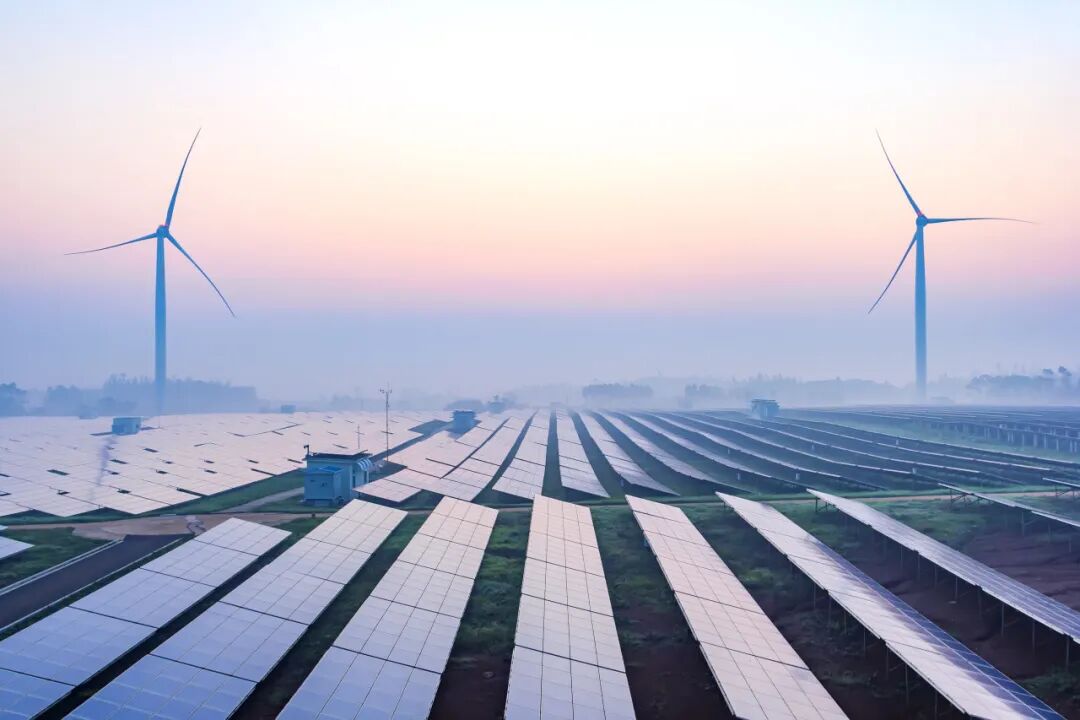
来论|成本革命与规模效应:中国在全球能源转型中的关键角色
Xin Lang Cai Jing· 2026-02-23 23:45
Core Insights - The global clean energy transition is entering a critical acceleration phase, with significant cost reductions in solar power, battery storage, and electric vehicles, primarily driven by China [1][3][4] - The authors emphasize the need for global cooperation, particularly between developing countries and China, to leverage manufacturing advantages and meet climate goals while enhancing local modernization and industrialization [1][7] Group 1: Cost Reductions and Global Impact - Over the past 15 years, the price of solar photovoltaic components has decreased by over 90%, largely due to China's manufacturing scale and continuous innovation [4][5] - The rapid expansion of electric vehicles in China has accelerated global adoption, providing consumers with more choices and improving technology maturity [5][6] - The global deployment of low-cost clean technologies from China is particularly impactful in developing economies, where it serves as a foundation for modernization and industrialization [5][6] Group 2: Structural Changes in Energy Markets - The growth of clean electricity capacity now consistently exceeds overall energy demand growth, indicating a structural decoupling from fossil fuel consumption [5][6] - The transition to clean energy, termed "Clean Energy Shift" (CES), is characterized by the faster growth of clean energy supply compared to total energy demand [5][6] - China's domestic energy transition has been a significant driver of this global trend, with large-scale deployment leading to cost reductions and strengthened supply chains [6][7] Group 3: International Cooperation and Trade - Rising tariff barriers and trade restrictions could hinder the energy transition at a critical time, emphasizing the need for international cooperation through shared investments and technology transfer [7][8] - Initiatives like the "Climate Prosperity agenda" promote cooperation among vulnerable countries, combining climate action with development priorities [7][8] - The expansion of clean energy should be viewed as a positive-sum game, where knowledge and technology can be replicated globally, enhancing energy sovereignty and resilience [6][7] Group 4: Policy Recommendations and Future Outlook - Addressing challenges such as investment in high-carbon infrastructure and regulatory delays requires practical policy measures to lower capital costs and upgrade transmission networks [7][8] - A development-oriented narrative focusing on scale, affordability, and shared prosperity is essential for sustaining political and economic support for climate action [8] - The experience of China highlights the importance of speed, scale, and coordination in accelerating the clean energy transition globally [8]
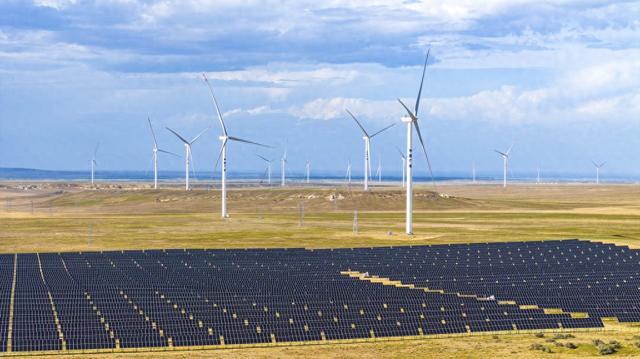
Brookfield Renewable Corporation (NYSE: BEPC) Overview
Financial Modeling Prep· 2026-02-16 02:00
Core Insights - Brookfield Renewable Corporation (NYSE:BEPC) is a significant player in the renewable energy sector, with a diverse portfolio including hydroelectric, wind, and solar power plants, and an installed capacity of approximately 12,723 megawatts [1][5] - The consensus price target for BEPC's stock has remained stable at an average of $36, with Morgan Stanley setting a higher target of $39, indicating positive expectations for the company's future performance [2][5] - The company's strong operational performance and strategic positioning in the renewable energy market contribute to its stable price target, with a noted structural shift in global power markets driven by increased electricity demand [3][5] Market Trends and Future Outlook - Investors should keep an eye on upcoming company news or earnings reports that may influence analysts' perspectives and impact BEPC's stock target price [4] - Broader market trends in renewable energy and potential regulatory changes are crucial factors that could shape future price targets for BEPC, as the world increasingly embraces sustainable energy solutions [4]