ROBAM(002508)

Search documents
家电行业周报(26年第3周):12月家电内外销景气持续承压,美国家电需求回归稳健增长-20260119
Guoxin Securities· 2026-01-19 09:50
Investment Rating - The report maintains an "Outperform the Market" rating for the home appliance industry [5][6][12] Core Insights - The home appliance sector is expected to recover in 2026, driven by the continuation of national subsidies and improvements in export performance. It is recommended to actively invest in leading white goods companies [1][12][18] - December retail performance for home appliances showed signs of bottoming out, with major appliances experiencing a decline of over 20% in domestic retail sales, while small appliances showed slightly better demand [1][19] - The report highlights that the U.S. home appliance retail sales saw a slight increase in November, indicating a gradual return to stable growth despite challenges such as tariffs and inflation [3][12] Summary by Sections 1. Core Recommendations - Key recommendations include investing in leading companies in the white goods sector such as Midea Group, Haier Smart Home, TCL Smart Home, Gree Electric, and Hisense Home Appliances. For small appliances, Stone Technology and Bear Electric are recommended [4][12][13] 2. Research Tracking and Investment Thoughts - December retail performance for home appliances continued to face pressure due to high base effects, with significant declines in major appliances. However, small appliances showed relative stability, particularly in air fryers [1][19] - December exports of home appliances decreased by 8.1% year-on-year, with air conditioners facing the most significant pressure, while refrigerators and washing machines showed modest growth [2][37] - U.S. home appliance retail sales increased by 0.8% year-on-year in November, with inventory levels returning to normal [3][12] 3. Key Data Tracking - The home appliance sector achieved a relative return of +0.23% this week compared to the broader market [49] - Raw material prices for copper and aluminum decreased by 0.5% and 0.7% respectively, while cold-rolled steel prices also saw a decline [51] - Shipping indices for routes to the U.S. West Coast, East Coast, and Europe showed slight increases, indicating a stabilization in shipping costs [64] 4. Company Announcements and Industry Dynamics - Notable company announcements include Midea Group's ongoing efforts in overseas markets and Gree Electric's dividend distribution plans [71][72] - The report discusses the structural adjustments in the air conditioning export market and the anticipated trends for 2026, highlighting the challenges and opportunities in the global supply chain [74]






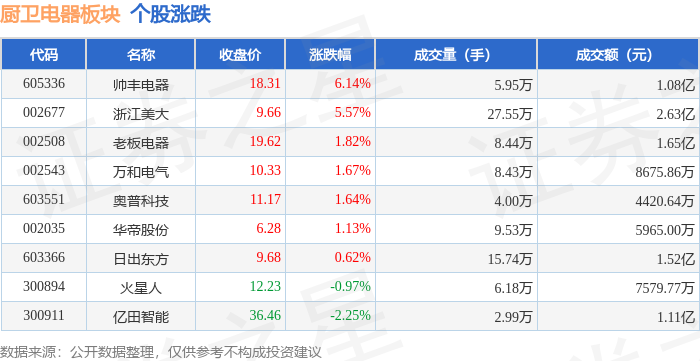
厨卫电器板块1月19日涨1.51%,帅丰电器领涨,主力资金净流出3587.81万元
Zheng Xing Xing Ye Ri Bao· 2026-01-19 08:52
Group 1 - The kitchen and bathroom appliance sector increased by 1.51% on January 19, with Shuaifeng Electric leading the gains [1] - The Shanghai Composite Index closed at 4114.0, up 0.29%, while the Shenzhen Component Index closed at 14294.05, up 0.09% [1] - Key stocks in the kitchen and bathroom appliance sector showed varied performance, with Shuaifeng Electric rising by 6.14% to a closing price of 18.31 [1] Group 2 - The main capital flow in the kitchen and bathroom appliance sector showed a net outflow of 35.88 million yuan, while retail investors had a net inflow of 29.57 million yuan [1] - Shuaifeng Electric had a net inflow of 2.30% from main capital, despite a net outflow from retail and speculative capital [2] - Other companies like Boss Electric and Vatti had significant retail inflows, with Boss Electric seeing 16.04 million yuan from retail investors [2]


老板电器拟亿元涉足智能机器人 累计分红68亿货币资金加理财达87亿
Chang Jiang Shang Bao· 2026-01-15 23:58
Core Viewpoint - Boss Electric, a leading kitchen appliance manufacturer, is venturing into the smart robot sector by investing 100 million yuan in Utcook Intelligence International Holdings Limited to explore the smart cooking robot niche market [1][2][5]. Company Overview - Boss Electric specializes in the research, production, and sales of kitchen appliances and has a strong influence in the industry [3]. - The company has demonstrated robust profitability since its listing in 2010, achieving annual profits exceeding 1 billion yuan each year, with net profits consistently above 1 billion yuan since 2016 [3][9]. - As of the third quarter of 2025, Boss Electric reported a net profit of 1.157 billion yuan [3][10]. Financial Performance - Since its IPO, Boss Electric has accumulated profits of 17.144 billion yuan and distributed cash dividends totaling 6.847 billion yuan [4][12]. - The company has maintained a healthy financial status, with a debt-to-asset ratio of 31.40% as of September 2025, and has not engaged in equity refinancing since its listing [4][13]. - The operating revenue for 2025 was reported at 7.312 billion yuan, reflecting a year-on-year decrease of 1.14%, while the net profit showed a decline of 3.73% [10]. Strategic Move into Smart Robotics - The investment in Utcook is aimed at fostering technological innovation and ecological integration within the smart kitchen appliance sector, particularly in the smart cooking robot market [5][6]. - Utcook, established in 2024, focuses on providing commercial smart cooking robot solutions and has developed a range of products supported by over 1,000 patents [6][7]. - The collaboration is expected to leverage Boss Electric's leadership in the kitchen appliance industry and Utcook's expertise in smart cooking technology to explore new market opportunities [7][8].
老板电器四十七年:厨房里的“第三次进化”
Jing Ji Guan Cha Wang· 2026-01-15 10:15
Core Insights - The article emphasizes the shift in the tech industry from computational power to the physical application of AI, particularly in the kitchen, highlighting the need for AI to solve real-world problems rather than just generating images or data [2][3] - The kitchen appliance industry is facing challenges as traditional hardware competition based on parameters like suction power and firepower is becoming less effective, leading to a need for innovation that addresses user experience and cooking capabilities [3][4][5] Industry Trends - The competition in the kitchen appliance sector has been primarily focused on hardware specifications, which has led to a lack of innovation that addresses the actual needs of users [3][4] - Young consumers face challenges not just in cleaning up smoke but also in deciding what to cook and mastering cooking techniques, indicating a shift in consumer needs [4][5] Company Strategy - Boss Electric is positioning itself to "leapfrog" the competition by developing the "Shishen" AI cooking model, which elevates the competition from hardware to software and algorithms [6][8] - The "Shishen" model is the first AI cooking model in China, trained on 47 years of culinary data, and is designed to assist users in meal preparation by integrating with kitchen appliances [8][9] Business Performance - In Q3 2025, Boss Electric reported significant growth, with digital kitchen appliance sales increasing by 55%, demonstrating a clear consumer willingness to pay for enhanced user experiences [9][10] - The user base for the Shishen app exceeded 6 million by the end of 2025, with a 30% increase in monthly active users in Q3 alone [10] Data and Innovation - Boss Electric has secured seven data property registration certificates, marking a significant milestone in the kitchen appliance industry by treating data as a core asset rather than a byproduct [14][15] - The company has applied for 9,448 patents, with a leading number of patents related to the AI cooking model, establishing a strong technological barrier in the industry [15] Market Expansion - Boss Electric is expanding into the commercial kitchen sector with a strategic investment of 100 million yuan in Youte Smart Kitchen, leveraging the Shishen model to enhance cooking standards in commercial settings [18][19] - The Shishen model's capabilities are being utilized to standardize cooking processes in commercial kitchens, demonstrating its versatility beyond home use [19] Cultural Engagement - In 2025, Boss Electric partnered with the Michelin Guide to democratize culinary skills, allowing users to replicate Michelin-level dishes at home through the Shishen app [21][24] - The company is also focusing on cultural initiatives, such as the "Xunxianji" IP activity, to reconnect people with cooking and fresh ingredients, enhancing the brand's presence and relevance in the culinary space [27][28]
猛砸1个亿,盯上炒菜机器人,厨电巨头“杀”入餐厅后厨
Xin Lang Cai Jing· 2026-01-15 06:18
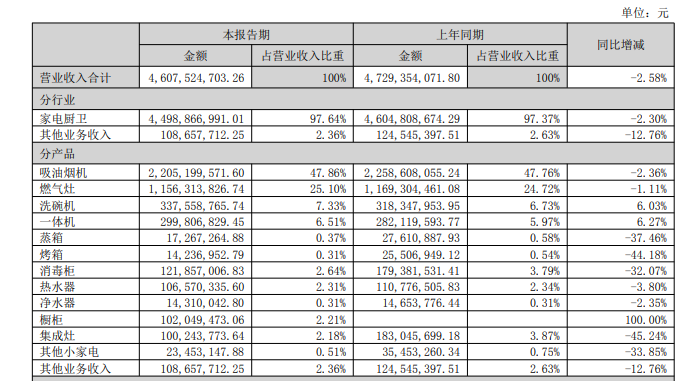
Core Viewpoint - The investment by Boss Electric in Yout Intelligent Kitchen signifies a strategic move into the commercial kitchen sector, particularly focusing on the development of smart cooking technology and the growing market for cooking robots [1][2][3]. Company Summary - Boss Electric announced a strategic investment of 100 million RMB in Yout Intelligent Kitchen to enhance collaboration in smart cooking technology [1]. - The investment reflects Boss Electric's intention to expand from consumer kitchen appliances to the B2B commercial kitchen equipment market [2]. - Yout Intelligent Kitchen, based in Zhuhai, specializes in providing automated solutions for the restaurant industry, targeting chains, school cafeterias, and central kitchens [2][8]. Financial Performance - Boss Electric's financial reports indicate a challenging growth environment, with a slight revenue increase of 0.10% to 11.213 billion RMB in 2024, while net profit decreased by 8.97% to 1.577 billion RMB [4]. - In the first half of 2025, revenue fell by 2.58% to 4.608 billion RMB, and net profit dropped by 6.28% to 712 million RMB [4][6]. - The company has faced declining sales across major product lines, with significant drops in revenue for several categories, including a 44.18% decline in ovens and a 45.24% decline in integrated stoves [6][7]. Market Trends - The cooking robot market is gaining traction as restaurants seek to standardize food production with fewer, more stable staff, making cooking robots a viable solution [2][14]. - The increasing chain restaurant rate in China is projected to reach 25% by 2025, driven by rising labor costs and a shortage of skilled workers [14]. - The value of cooking robots is being reassessed as they offer stable, controllable, and predictable production capabilities, addressing the challenges of high labor costs [14][18]. Competitive Landscape - The cooking robot market is becoming increasingly competitive, evolving from simple device comparisons to an ecosystem that integrates supply chains, scenarios, and data [19][22]. - Recent investments in cooking robot companies indicate a growing interest in the sector, with multiple firms securing funding to enhance their technological capabilities [11][13]. - The establishment of national standards for commercial smart cooking machines is expected to drive product standardization and quality improvement in the industry [21].

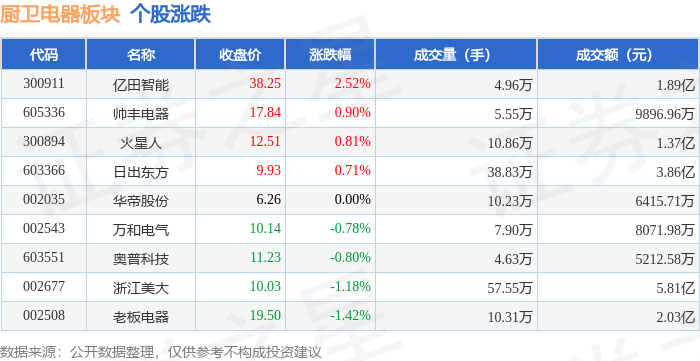
厨卫电器板块1月14日跌0.22%,老板电器领跌,主力资金净流出3054.64万元
Zheng Xing Xing Ye Ri Bao· 2026-01-14 08:50
Market Overview - The kitchen and bathroom appliance sector experienced a decline of 0.22% on January 14, with Boss Electric leading the drop [1] - The Shanghai Composite Index closed at 4126.09, down 0.31%, while the Shenzhen Component Index closed at 14248.6, up 0.56% [1] Stock Performance - Key stocks in the kitchen and bathroom appliance sector showed varied performance, with the following notable changes: - Yichu Xiangneng (300911) increased by 2.52% to 38.25 [1] - Shuaifeng Electric (605336) rose by 0.90% to 17.84 [1] - Mars Man (300894) gained 0.81% to 12.51 [1] - Boss Electric (002508) fell by 1.42% to 19.50 [1] - Zhejiang Meida (002677) decreased by 1.18% to 10.03 [1] Capital Flow - The kitchen and bathroom appliance sector saw a net outflow of 30.54 million yuan from institutional investors, while retail investors had a net inflow of 3.04 million yuan [1] - The detailed capital flow for key stocks is as follows: - Boss Electric (002508) had a net inflow of 15.71 million yuan from institutional investors but a net outflow of 22.49 million yuan from retail investors [2] - Yichu Xiangneng (300911) experienced a net inflow of 16.20 million yuan from institutional investors [2] - Shuaifeng Electric (605336) saw a net outflow of 7.85 million yuan from institutional investors [2]
家电行业2025年年报前瞻:黎明前夕,沉潜以待
Guolian Minsheng Securities· 2026-01-14 08:22
Investment Rating - The report maintains a "Recommend" rating for the home appliance industry [1] Core Insights - The industry is at a turning point, with expectations for improved performance in 2026 as domestic demand stabilizes and export orders recover [35] - The report highlights the resilience of leading companies in the white goods sector, with a focus on their ability to navigate through challenging market conditions [7][10] - The overall market dynamics indicate a potential for growth in emerging markets, alongside innovation and product expansion in domestic markets [35] Summary by Sections 1. White Goods - External sales are recovering steadily, while internal sales are expected to remain stable in Q4 2025. Leading companies are well-positioned to benefit from favorable demand and cost environments [7][10] - Q4 2025 internal sales for air conditioners, refrigerators, and washing machines are projected to decline by 31%, 11%, and 6% respectively, due to high base effects from the previous year [10] - External sales for refrigerators and washing machines are expected to show modest growth, with a 3% increase for refrigerators and a 9% increase for washing machines [10] 2. Black Goods - The report indicates that the color TV market is under pressure, with internal sales declining significantly due to high base effects from previous subsidies [15] - External sales remain relatively stable, with a slight decline of 2% expected in Q4 2025 [15][16] - Leading brands are expected to improve their profitability through product innovation and market share gains [15] 3. Cleaning Appliances - External sales continue to grow, while internal sales face challenges due to high base effects from previous subsidies [19] - The report notes a decline in retail sales for floor cleaning machines and washing machines, with internal sales dropping by 25% and 8% respectively [20] - The external market shows strong growth, particularly in Europe and Asia-Pacific, although competition remains intense [21] 4. Small Appliances - Domestic prices are rising, but external demand remains weak, with overall growth in retail sales expected to be between 0-10% [30] - The report highlights structural improvements in pricing and product upgrades, which may support profit margins in the domestic market [30] - External sales are under pressure due to overall weak demand in international markets [30] 5. Post-Cycle - The report indicates a downturn in demand for major kitchen appliances, with significant declines in retail sales across various categories [33] - The real estate market remains sluggish, impacting demand for kitchen appliances, and the report anticipates continued pressure on sales [33] - The upcoming subsidy policies are expected to have limited coverage, which may further affect market dynamics [33] 6. Industry Views and Investment Recommendations - The report suggests that the home appliance sector is poised for recovery in 2026, with expectations for improved fundamentals and potential surprises in export performance [35] - Recommended stocks include leading white goods manufacturers such as Midea Group, Haier Smart Home, Gree Electric, and Hisense Home Appliances, as well as TV manufacturers like Hisense Visual and TCL Electronics [35]

老板电器战略投资优特智厨,加码AI炒菜机器人赛道
2 1 Shi Ji Jing Ji Bao Dao· 2026-01-14 03:21
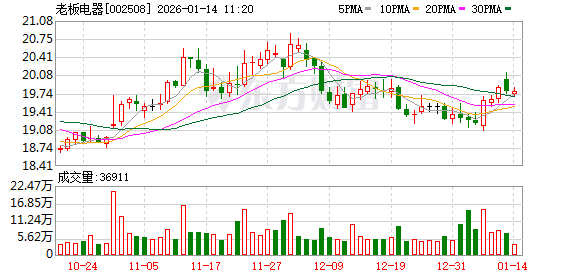
Core Insights - The company is transforming its future by investing 100 million yuan in the smart cooking robot company Utcook Intelligence International Holdings Limited, establishing commercial kitchens as its second growth curve [2] - As a leader in the Chinese kitchen appliance industry for 47 years, the company is seeking high-potential new markets amid challenges in the real estate cycle and intensified competition in home appliances [2] Group 1: Strategic Investment and Market Positioning - The investment in Utcook is seen as a strategic move to penetrate the commercial kitchen market, which is valued at over 1 trillion yuan and has a smart penetration rate of less than 10% [2] - The company aims to leverage its core technology and extensive cooking data to create a replicable and evolving smart cooking capability rather than just selling cooking equipment [3] Group 2: Technological Development - The AI model "Shishen," developed by the company's research institute, is based on 50 million real cooking data points and boasts an accuracy rate of over 98% for dish recognition and health management [3] - The integration of precise temperature control and patented algorithms with the AI system addresses key pain points in the restaurant industry, such as chef shortages and inconsistent flavors [3] Group 3: Ecosystem Collaboration - The company is deepening strategic collaborations with leading platforms, transitioning from traditional government and enterprise clients to chain restaurant channels [4] - Partnerships with Baidu and JD Qixian Xiaochu are aimed at providing integrated AI cooking terminals and standardized kitchen equipment to support rapid expansion in the restaurant network starting in 2026 [6] Group 4: Growth Metrics - In 2025, the company's commercial kitchen business is expected to experience explosive growth, with significant increases in contract amounts, invoicing, and payment collections, alongside a 70% growth in new customer acquisition [7] - The collaboration with Utcook is anticipated to enhance the company's market presence and create a comprehensive solution for commercial kitchen hardware and digital solutions [7] Group 5: Future Outlook - The partnership is set to reshape the kitchen ecosystem, combining smart cooking robots with the company's AI products to create a more complete solution [8] - A more intelligent and responsive commercial cooking service network is being constructed, driven by shared cooking data that will continuously inform technological iterations [9] - The company's transition from a home appliance manufacturer to a smart cooking service provider marks a significant evolution, positioning it to capitalize on the historical turning point in the commercial kitchen sector [10]
老板电器押注炒菜机器人背后:两大拳头产品下滑,业绩双降急寻新引擎
Guo Ji Jin Rong Bao· 2026-01-13 13:01
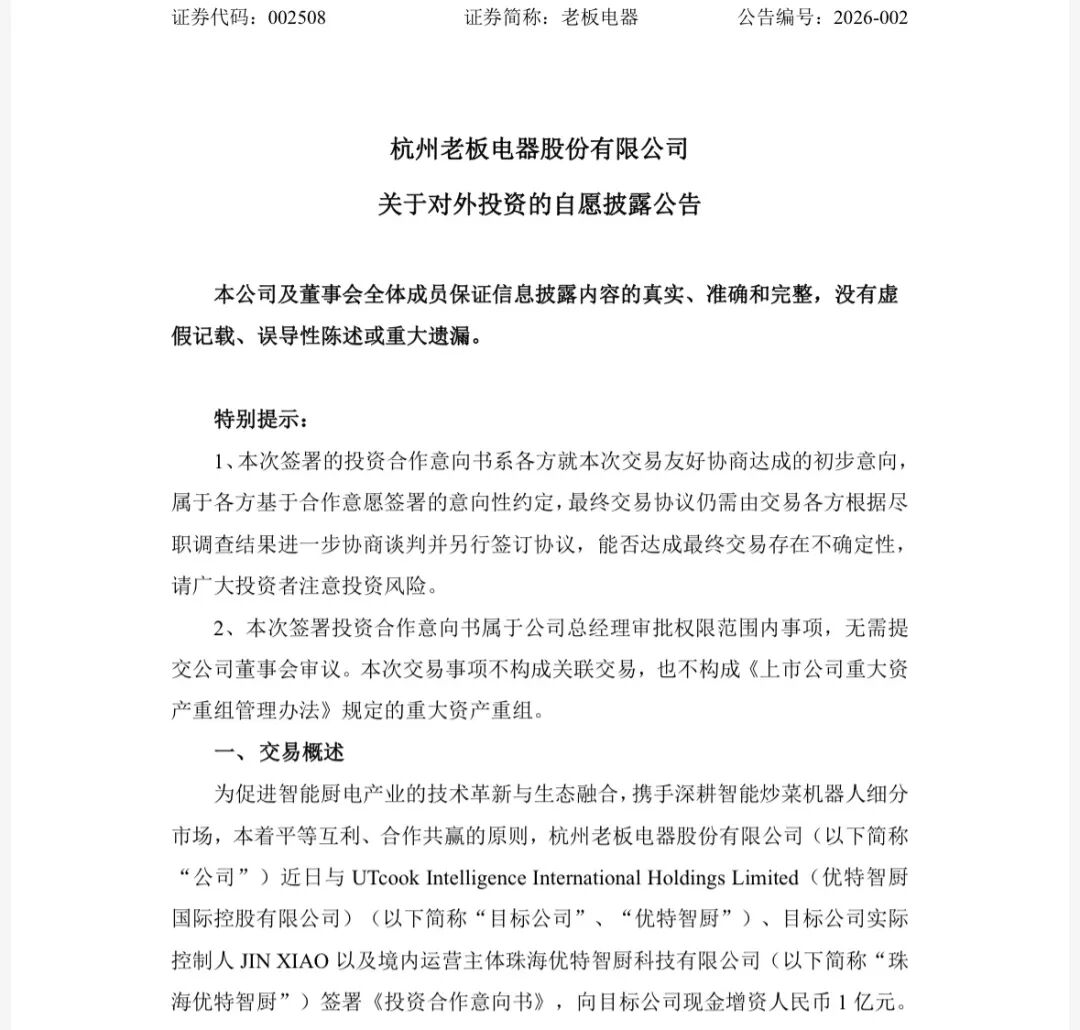
Core Viewpoint - The company, Robam Appliances, is facing declining revenue from its main products and is investing in smart kitchen appliances to seek new growth opportunities [1][8]. Group 1: Investment and Strategic Moves - Robam Appliances signed an investment cooperation letter with Yute Smart Kitchen International Holdings, planning to invest RMB 100 million in Yute Smart Kitchen, which specializes in commercial smart cooking robot solutions [3][5]. - The investment aims to establish a deep strategic partnership to explore the smart cooking robot market [5]. - The company also announced a financial plan to use up to RMB 6.5 billion of idle funds to purchase safe and liquid financial products, having already invested RMB 2.93 billion in financial products over the past 24 months [7]. Group 2: Financial Performance - For the first three quarters of 2025, Robam Appliances reported revenue of RMB 7.312 billion, a year-on-year decline of 1.14%, and a net profit of RMB 1.157 billion, down 3.73% [8]. - The company's flagship products, range hoods and gas stoves, saw revenue declines of 2.36% and 1.11%, respectively, contributing to over 70% of total revenue [10]. - In the first half of 2025, revenue dropped 2.58% to RMB 4.608 billion, with net profit down 6.28% to RMB 712 million [9]. Group 3: Market Challenges - The company is experiencing growth challenges due to a downturn in the real estate market, which has historically driven its sales through the renovation channel [11]. - The number of newly opened renovation projects decreased by 31.8% in the first half of 2025, directly impacting the company's performance [11]. - The company faces increased accounts receivable, with balances reaching RMB 1.721 billion and RMB 736 million in notes receivable as of the third quarter of 2025 [11]. Group 4: Technological Transition - Robam Appliances is transitioning towards AI and digital kitchen appliances, having launched the AI cooking model "Shishen" in June 2024, which has attracted over 5.4 million users [11]. - Despite the focus on AI, the company's resource allocation shows a tendency towards marketing over research and development, with R&D spending down 11.23% to RMB 245 million, only 3.35% of revenue [12].
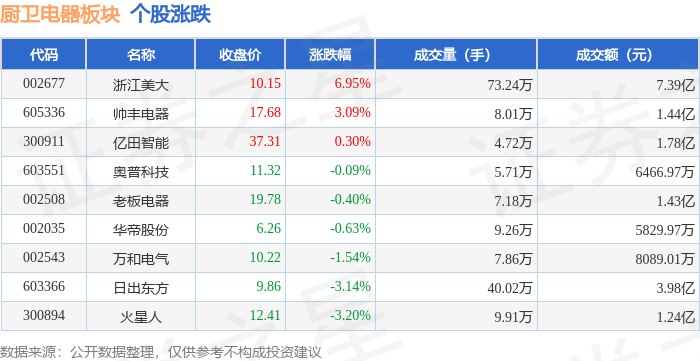
厨卫电器板块1月13日跌0.21%,火星人领跌,主力资金净流入4746.56万元
Zheng Xing Xing Ye Ri Bao· 2026-01-13 08:56
Market Overview - The kitchen and bathroom appliance sector experienced a decline of 0.21% on January 13, with Mars Man leading the drop [1] - The Shanghai Composite Index closed at 4138.76, down 0.64%, while the Shenzhen Component Index closed at 14169.4, down 1.37% [1] Stock Performance - Zhejiang Meida (002677) saw a significant increase in its closing price to 10.15, up by 6.95% with a trading volume of 732,400 shares and a transaction value of 739 million [1] - Shuaifeng Electric (605336) closed at 17.68, up by 3.09%, with a trading volume of 80,100 shares and a transaction value of 144 million [1] - Yitian Intelligent (300911) had a slight increase of 0.30%, closing at 37.31 with a transaction value of 178 million [1] - Other companies like Aopu Technology (603551) and Boss Electric (002508) experienced minor declines of 0.09% and 0.40% respectively [1] Capital Flow - The kitchen and bathroom appliance sector saw a net inflow of 47.47 million from main funds, while retail funds experienced a net outflow of 20.74 million [1] - Detailed capital flow data indicates that Zhejiang Meida had a main fund net inflow of 96.39 million, representing 13.05% of its total [2] - Conversely, Mars Man (300894) faced a net outflow of 7.49 million from main funds, accounting for -6.02% [2]