CAPCHEM(300037)

Search documents
液冷材料:混合及浸没式液冷方案驱动氟化液需求增长
2025-09-24 09:35
Summary of Conference Call Notes Industry Overview - The conference call discusses advancements in liquid cooling solutions, particularly in response to the increasing thermal demands of next-generation chips, such as NVIDIA's Ruby series [1][2][3]. Key Points and Arguments 1. **Emergence of Hybrid Liquid Cooling Solutions** - The industry is exploring hybrid liquid cooling solutions that combine cold plates with silent liquid cooling to manage higher power outputs effectively [1][2]. - Hybrid solutions can handle approximately 70% of the heat through cold plates, reducing the reliance on silent systems and improving stability [1][4]. 2. **Cost and Performance Optimization** - Hybrid liquid cooling significantly reduces the amount of fluorinated liquids required, with each cabinet needing about 500-600 kg (approximately half a ton), leading to a cost of around 150,000 to 200,000 RMB per cabinet [1][6][7]. - This cost is deemed acceptable compared to the overall cabinet cost of over 6 million RMB, indicating a balance between performance and cost [7]. 3. **Market Demand Projections** - The market demand for high-end electronic fluorinated liquids could reach 20 billion RMB if hybrid solutions are successfully implemented [3][11]. - Current production capacity for liquid cooling solutions is around 2,500 to 3,000 tons, with plans for expansion to 5,000 tons specifically for liquid cooling applications [3][14]. 4. **Technological Requirements for Next-Gen Chips** - NVIDIA's Ruby Ultra series requires advanced cooling solutions that exceed the capabilities of traditional single-phase cooling systems, necessitating the adoption of hybrid solutions [3][11]. 5. **Comparison of Cooling Fluids** - R134A is highlighted for its high cooling efficiency and lower cost (around 50,000 RMB), but it faces quota reduction risks [9]. - Hydrofluoroethers are considered a viable alternative due to their adjustable boiling points and high stability, although they may cause corrosion over time [9]. 6. **Challenges with Pure Silent Liquid Cooling** - Pure silent liquid cooling faces issues of high costs and system stability, as it requires a significant amount of liquid (over 1.5 tons) and can lead to instability in high-density interconnect products [5][10]. 7. **New Opportunities for New Materials** - High-end electronic fluorinated liquids, such as perfluoropolyether and perfluoramine, are becoming preferred choices for hybrid solutions due to their superior performance [3][11]. Additional Important Content - **Newzobang's Market Position** - Newzobang is positioned as a leader in liquid cooling cabinet production, with plans to expand its capacity significantly, potentially reaching 10,000 tons [14]. - The company is expected to achieve a service profit of approximately 7.775 billion RMB in 2025, with a total valuation of around 30 billion RMB for its main business [15][16]. - **Strategic Partnerships and Validation** - Newzobang has established partnerships with major companies like Alibaba and ByteDance, which have provided data support for its liquid cooling products [13]. This summary encapsulates the critical insights from the conference call, focusing on the advancements in liquid cooling technologies and the strategic positioning of key players in the industry.


新宙邦&阿科力
2025-09-24 09:35
Summary of Conference Call Records Company and Industry Overview - **Companies Involved**: 新宙邦 (Xinjubang) and 阿科力 (Acoly) - **Industry**: New materials, specifically focusing on lithium battery materials, organic fluorine chemicals, and cooling technologies for data centers Key Points and Arguments Xinjubang's Business and Market Position - Xinjubang has a comprehensive industrial layout with 10 production bases globally by the end of 2024, including 9 in China and 1 in Europe, enhancing customer service and loyalty [2][5] - The company benefits from the growth in the new energy storage, automotive, and AI industries, with lithium battery materials expected to see both volume and price increases [2][5] - Current prices for new energy materials are at historical lows, with lithium hexafluorophosphate prices dropping significantly from 600,000 RMB/ton in 2021 to around 50,000-60,000 RMB/ton now [6] - Domestic apparent consumption of lithium hexafluorophosphate is projected to grow over 30% year-on-year in 2024, with further growth of 20%-30% expected in 2025 due to the development of new energy vehicles [2][6] Organic Fluorine Chemicals Market - The organic fluorine chemicals market is seen as a golden industry, with applications in pharmaceuticals, pesticides, and semiconductors [7] - Xinjubang aims to expand its market share as 3M plans to exit the market, which will create opportunities for domestic companies [7][11] Liquid Cooling Technology - Liquid cooling technology is emerging as a preferred solution for data centers, especially with the rise of AI, which increases cooling demands [9][10] - Immersion cooling is highlighted for its superior heat dissipation efficiency, making it suitable for high-power single-cabinet data centers [10] Acoly's Business Transformation - Acoly is transitioning from its original polyether amine business to focus on the development of cyclic olefin copolymer (COC) materials, which are crucial for optical lenses and pharmaceutical packaging [4][16] - Acoly plans to establish a 10,000-ton COC production facility by the end of 2026, with an additional 20,000-ton expansion planned for 2027 [4][18] - The company has already secured small orders for pharmaceutical packaging, indicating market interest and potential for growth [18][19] Competitive Landscape and Future Outlook - The COC market is characterized by high production difficulty, with only a few companies globally capable of producing it, giving Acoly a competitive edge [17][20] - Acoly is optimistic about its future growth potential, with expectations of significant market share and valuation increases due to successful technology breakthroughs [20] Financial Projections - Xinjubang is projected to achieve a compound annual growth rate (CAGR) of over 20%, potentially reaching 30% by 2026, driven by the demand for its products in the AI and new energy sectors [12] Additional Important Insights - The exit of 3M from the PFAS market, which generates approximately $1.3 billion annually, is expected to benefit domestic companies like Xinjubang and Acoly [11][12] - The overall new energy industry is currently facing challenges with overcapacity and slight losses, but improvements in supply dynamics are anticipated by 2026 [15]

开源证券:新车型有望带动欧洲电车市场放量 新能源车渗透率持续提升
智通财经网· 2025-09-24 09:25
Core Insights - The European electric vehicle (EV) market is experiencing significant growth, with sales in August 2025 reaching 176,000 units, a year-on-year increase of 41.2% and a penetration rate of 31.4%, up by 8.3 percentage points [1][2] - The European Parliament has approved amendments to carbon emission assessments, delaying the tightening of emission targets originally planned for 2025, but the overall trend towards stricter regulations remains unchanged [1] Group 1: Market Performance - In August 2025, battery electric vehicle (BEV) sales reached 114,000 units, a year-on-year increase of 32.3%, while plug-in hybrid electric vehicle (PHEV) sales were 62,000 units, up by 61.5% [2] - Germany saw accelerated growth in electric vehicle sales, with BEV sales of 39,000 units, up 45.7%, and PHEV sales of 24,000 units, up 76.7% [3] - The UK has reintroduced BEV subsidies, with approximately 25% of BEV models qualifying for subsidies as of August, leading to BEV sales of 22,000 units, a 14.9% increase, and PHEV sales of 9,800 units, up 69.4% [4] - France's BEV sales were 17,000 units, a 29.6% increase, despite a general decline in the automotive market, with a penetration rate of 19.4% in August, the highest of the year [5] Group 2: Market Drivers - Spain is promoting electric vehicle adoption through new model launches, promotional activities, and the MOVES III subsidy program, alongside a 15% personal income tax reduction for electric vehicle purchases [6] Group 3: Investment Recommendations - Recommended investments in lithium battery companies include CATL, EVE Energy, and Xinwangda, with beneficiaries such as Innovation Navigation and Guoxuan High-Tech [7] - For lithium materials, recommended companies include Hunan Yueneng, with beneficiaries like Fulian Precision and Wanrun New Energy [7] - Recommendations for electric drive systems include Weimaisi and Fute Technology, with beneficiaries such as Xinrui Technology and Huangshan Gujie [7]





复盘新能源对成长投资的启示
Changjiang Securities· 2025-09-24 08:39
Investment Rating - The report maintains a "Positive" investment rating for the industry [3] Core Insights - The report emphasizes the importance of long-term demand expectations as a key driver for valuation and performance in the lithium battery and photovoltaic sectors [24][28] - It highlights the significant impact of short-term marginal conditions, particularly pricing and production/output data, on market sentiment and stock performance [41][48] Summary by Sections 1. Stock Price Review - The lithium battery market began its upward trend in late 2019, driven by European carbon emission assessments and the rise of new energy vehicle consumption in China [11] - The photovoltaic market saw significant growth from 2020 to 2021 due to global carbon reduction targets and supply constraints, leading to a surge in prices and stock performance [15] - The inverter segment experienced explosive growth driven by demand from energy storage solutions, but faced a sharp decline in 2023 due to inventory issues [19] 2. Key Drivers - **Long-term Demand Expectations - Lithium Batteries** - The report notes that the adjustment of long-term demand expectations directly influences performance and valuation, with significant growth observed in 2020 due to rising demand for new energy vehicles [24] - **Long-term Demand Expectations - Photovoltaics** - The report indicates that from 2020 to 2021, demand expectations for photovoltaics were revised upwards, leading to a bullish market sentiment, but concerns about peak demand in 2023 led to a decline in valuations [29] - **Long-term Demand Expectations - Inverters** - The inverter market's performance was closely tied to demand expectations, with significant growth in 2022 driven by European energy needs, but a subsequent drop in orders in 2023 [33] 3. Short-term Marginal Conditions - **Pricing** - The report highlights that price changes in lithium and silicon materials significantly affect stock prices, with stock prices often leading material price increases [41] - **Production/Output** - Monthly production and shipment data are critical indicators for stock performance, particularly in the energy storage sector, where visibility is limited [48] - **Quarterly Profit Growth Expectations** - Market participants often use quarterly profit growth expectations to gauge industry health, with stock prices typically peaking ahead of profit expectations [49] 4. Other Insights - The report notes that valuation levels are not the primary indicators of market peaks, as fundamental expectations play a more crucial role in determining market trends [59] 5. Outlook - The report expresses optimism for the energy storage market, projecting significant growth in global installations driven by improved demand expectations and favorable market conditions [62][65]



创业板新能源ETF(159261)涨近2%,全固态电池上车测试逐步开启
Xin Lang Cai Jing· 2025-09-23 08:25
Core Viewpoint - The news highlights the significant advancements in solid-state battery technology, with various automotive companies beginning road tests for vehicles equipped with these batteries, indicating a potential shift in the electric vehicle market towards more efficient battery solutions [1][2]. Group 1: Market Performance - As of September 23, 2025, the ChiNext New Energy Index (399266) rose by 1.54%, with notable increases in component stocks such as Terui De (300001) up 15.93%, Xian Dao Intelligent (300450) up 7.49%, and Xin Wang Da (300207) up 6.48% [1]. - The ChiNext New Energy ETF (159261) also saw an increase of 1.91%, with the latest price reported at 1.5 yuan [1]. Group 2: Solid-State Battery Developments - The transition from small-scale testing to medium-scale testing of solid-state batteries is underway, with companies like BMW and Guoxuan High-Tech showcasing road test vehicles equipped with these batteries [1]. - Changan Automobile plans to initiate solid-state battery installation verification in 2026, indicating a growing interest in this technology among major automotive manufacturers [1]. Group 3: Industry Insights - CITIC Securities notes that the period from 2025 to 2026 is expected to see a surge in road tests for solid-state batteries, emphasizing the need to address issues such as battery volume expansion and cycle life degradation [2]. - The consensus among automotive companies like BMW, Mercedes-Benz, and BYD is that battery cells require pressure constraints for optimal performance, suggesting a focus on the materials and manufacturing processes involved in battery production [2]. Group 4: Index Composition - As of August 29, 2025, the top ten weighted stocks in the ChiNext New Energy Index (399266) include CATL (300750), Sunshine Power (300274), and others, collectively accounting for 64.15% of the index [2].



新宙邦:一直高度重视冷却液技术的研发与创新并布局了多种技术路线的冷却液产品
Zheng Quan Ri Bao· 2025-09-22 08:16
Group 1 - The company emphasizes the importance of research and innovation in cooling liquid technology and has developed multiple technical routes for cooling liquid products [2] - The company has a strong technical foundation and quality management system in the fluorinated liquid field, participating in the formulation of several standards and specifications in the liquid cooling sector [2] - The company is actively promoting certification processes with major domestic and international manufacturers and is also working on new types of cooling liquids [2] Group 2 - The company is optimistic about the market potential for data liquid cooling and plans to increase R&D investment to enhance product competitiveness, production capacity, and customer service levels [2] - The company aims to improve its market position and influence in the liquid cooling field while ensuring compliance with relevant disclosure regulations and enhancing communication with the market [2]

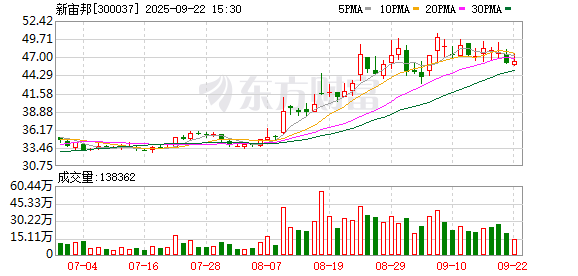
新宙邦:公司已参与制定了多项液冷领域标准及规范,应用于IDC数据中心不同场景的产品已成熟
Mei Ri Jing Ji Xin Wen· 2025-09-22 07:24
Core Viewpoint - The company emphasizes its commitment to the research and innovation of cooling liquid technology, highlighting its established product offerings and ongoing certification efforts with major domestic and international manufacturers [2]. Group 1: Product Development and Market Position - The company has developed various cooling liquid products and has a strong technical foundation in the fluorinated liquid sector [2]. - The company is actively participating in the formulation of multiple standards and specifications in the liquid cooling field [2]. - The products are mature and applicable in different scenarios within IDC data centers [2]. Group 2: Future Strategy and Investor Communication - The company is focused on enhancing its core competitiveness and aims to deliver solid operating performance to reward investor trust [2]. - The management encourages investors to analyze the company’s public information rationally and to be aware of investment risks [2]. - Future product deployment details will be available in the company's periodic reports published on the Giant Tide Information Network [2].
西部证券晨会纪要-20250922
Western Securities· 2025-09-22 01:58
Group 1: Guangdong Hongda (002683.SZ) - The company is a leader in the civil explosives industry, with growth rates exceeding the industry average, and military business is poised for expansion [7][8] - Expected net profits for 2025-2027 are projected at 1.196 billion, 1.415 billion, and 1.772 billion yuan, respectively, with a target price of 47.2 yuan based on a 30x PE for 2025, rated as "Accumulate" [7][8] - Revenue from the domestic regions of Northwest, Southwest, and North China for 2024 is expected to be 2.69 billion, 1.14 billion, and 2.34 billion yuan, respectively, with significant year-on-year growth [8] Group 2: Yangnong Chemical (600486.SH) - The company is positioned as a leader in the pesticide industry, benefiting from an upward trend in industry conditions and a recovery in the market [11][12] - Projected revenues for 2025-2027 are 11.484 billion, 12.325 billion, and 13.536 billion yuan, with net profits of 1.443 billion, 1.654 billion, and 1.884 billion yuan, respectively, rated as "Accumulate" [11][12] - The company is expected to transition from a generic pesticide manufacturer to a CDMO for innovative drugs, enhancing its growth potential [12] Group 3: China Communications Construction Company (601800.SH) - The company holds a leading position in transportation infrastructure and is expected to benefit from increased domestic infrastructure projects and international expansion [14][15] - The company is the largest international engineering contractor in China, with a strong historical presence in overseas markets, contributing to growth [14][15] - A dividend plan has been announced, ensuring stable returns for investors, with a target price of 11.78 yuan based on an 8x PE for 2025, rated as "Buy" [14][15] Group 4: Xinzhou Bang (300037.SZ) - The company is focused on a comprehensive layout in the lithium battery and fluorochemical sectors, with clear growth in demand for fluorochemicals [18][19] - Expected net profits for 2025-2027 are projected at 1.130 billion, 1.501 billion, and 1.859 billion yuan, with significant year-on-year growth rates [18][19] - The company is enhancing its vertical integration and global layout, with ongoing projects in Malaysia and the US expected to boost profitability [18][19] Group 5: Haian Home (600398.SH) - The main brand has shown improvement, with revenue for the first half of 2025 reaching 11.566 billion yuan, a year-on-year increase of 1.73% [21][22] - The company is expanding its direct sales while reducing franchise operations, with a focus on new retail formats [21][22] - Projected net profits for 2025-2027 are 2.421 billion, 2.700 billion, and 2.947 billion yuan, with a growth rate of 12.2%, 11.5%, and 9.1% respectively, rated as "Buy" [24] Group 6: Xtep International (01368.HK) - The main brand has shown steady growth, with revenue for the first half of 2025 reaching 6.838 billion yuan, a year-on-year increase of 7.1% [26][27] - The company is focusing on the running segment, with strong performance in its professional sports line [26][27] - Projected net profits for 2025-2027 are 1.379 billion, 1.516 billion, and 1.664 billion yuan, with growth rates of 11.3%, 9.9%, and 9.8% respectively, rated as "Buy" [28] Group 7: Mindray Medical (300760.SZ) - The company reported total revenue of 16.743 billion yuan for the first half of 2025, a year-on-year decrease of 18.45% [30][31] - International business showed resilience with revenue of 8.332 billion yuan, a year-on-year increase of 5.39%, while domestic revenue declined significantly [30][31] - The company plans to distribute a total of 3.298 billion yuan in cash dividends for 2025, representing 65.06% of its net profit for the first half of the year [31]




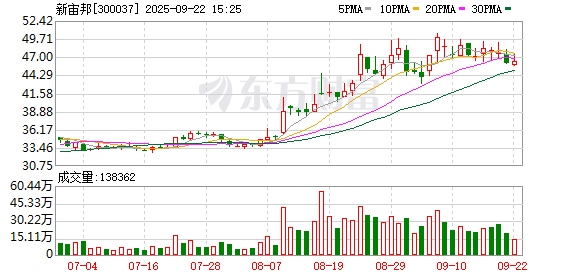
新宙邦(300037):动态跟踪点评:一体化布局完善,氟化工需求增长明确
Western Securities· 2025-09-20 13:47
Investment Rating - The report upgrades the investment rating of the company to "Buy" from "Accumulate" [5] Core Views - The company maintains stable growth in its main business and is building an integrated lithium battery industry layout, with battery chemical business revenue reaching 2.815 billion yuan in H1 2025, a year-on-year increase of 22.77% [1][5] - The demand for fluorochemical products is expected to grow due to the development of new energy, data centers, and digital infrastructure, creating a window for domestic substitution [1] - The company is advancing its projects in Malaysia and the United States, which are expected to enhance profitability as overseas customer volumes increase and the self-supply ratio of hexafluoride rises [1] Summary by Sections Battery Chemicals - In H1 2025, the battery chemicals business achieved revenue of 2.815 billion yuan, with a significant increase in sales volume despite a competitive market and declining prices [1] - The company anticipates an annual shipment volume of over 280,000 tons for the year [1] Fluorochemical Demand - The growth in downstream industries is driving the demand for fluorochemical products, with the company completing customer certifications for its fluorinated liquid products [1] - Key projects such as the annual production of 30,000 tons of high-end fluorinated fine chemicals and 5,000 tons of high-performance fluorinated materials are progressing steadily [1] Electronic Fine Chemicals - The electronic fine chemicals business generated revenue of 679 million yuan in H1 2025, reflecting a year-on-year growth of 25.18% [2] - The semiconductor industry is driving demand, with the company focusing on developing new products for data centers and semiconductor applications [2] Financial Projections - The company is projected to achieve net profits of 1.13 billion yuan, 1.50 billion yuan, and 1.86 billion yuan for the years 2025, 2026, and 2027, respectively, with corresponding EPS of 1.51 yuan, 2.01 yuan, and 2.49 yuan [2][3]
液冷行业点评:英伟达Rubin引领散热革命,微通道液冷技术价值凸显
Shenwan Hongyuan Securities· 2025-09-19 11:24
Investment Rating - The report rates the liquid cooling industry as "Overweight," indicating that it is expected to outperform the overall market [3]. Core Insights - The MLCP (Micro-Channel Liquid Cooling Plate) technology is highlighted as an innovative solution to address the cooling challenges posed by ultra-high power chips, with expected power consumption exceeding 2000W [3][5]. - The report emphasizes the importance of micro-channel design, forced convection, and optimized fluid dynamics in achieving high heat exchange efficiency [5]. - Key companies in the industry are recommended for attention, including Jiangshun Technology, Yingweike, and Kangsheng Co., among others, due to their advancements in liquid cooling technology [5]. Summary by Sections Industry Overview - The MLCP technology utilizes micro-scale fluid channels to achieve efficient heat exchange, capable of handling extreme thermal loads [5]. - The manufacturing processes for micro-channels include etching, 3D printing, and stamping, each with its advantages and limitations [5]. Key Companies and Valuations - Jiangshun Technology: Market cap of 48.74 billion, projected net profit of 1.55 billion in 2024 [6]. - Yingweike: Market cap of 756.61 billion, projected net profit of 4.53 billion in 2024 [6]. - Kangsheng Co.: Market cap of 54.89 billion, with a projected net profit of -0.98 billion in 2024 [6]. - Other notable companies include Nanfeng Co., Huazhu High-Tech, and Yinhong Co., with varying market caps and profit projections [6].